






Finding the Best Maths Tuition in Singapore for Your Child
Aug 19, 2026 |

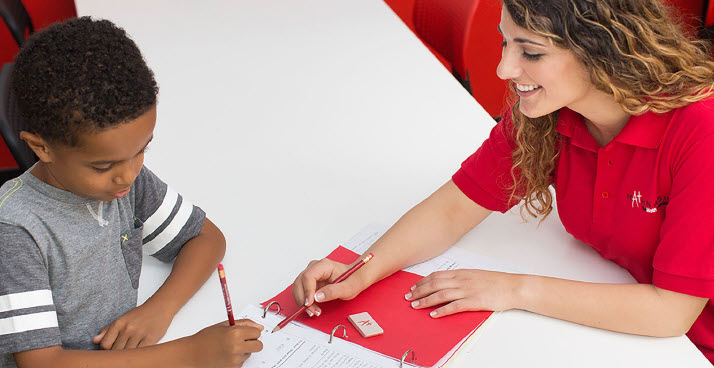
For parents of young children in Singapore, counting is about much more than numbers. It's about watching your child grow with confidence, curiosity, and the skills they'll need as they begin their learning journey. Early maths concepts, such as number bonds, help children develop a deeper understanding of how numbers work.
Many parents share the same questions: Is my child building the right foundational skills? Does confident counting at home reflect real understanding? Will they be ready for the jump to Primary 1, where maths concepts build quickly on what came before?
As a parent, you want your child to do more than memorise numbers—you want them to understand maths with genuine confidence and curiosity. Developing strong number sense is a gradual process that helps children build a solid foundation for future learning. With the right support and meaningful learning experiences, children can develop the understanding and confidence they need to thrive as maths concepts become more complex.
In Singapore’s education system, where the maths curriculum builds quickly from Primary 1 onwards, a strong foundation in number sense sets children up to thrive—not just to keep pace, but to genuinely enjoy and engage with maths as it grows more complex.
The goal is not just for children to “know” maths, but to truly understand it. This is where early support, whether through preschool maths enrichment in Singapore, personalised maths home tuition, or structured learning programmes, can make a lasting difference.
At the core of early childhood maths is something called number sense. This refers to a child’s ability to understand numbers, their relationships, and how they can be used.
Children with strong number sense don’t just memorise numbers, they see and feel how numbers work.
This includes:
For example, a child with good number sense can look at two groups of objects and immediately tell which one is larger, without needing to count each item one by one.
At Mathnasium, number sense is developed through the Mathnasium Method™, a proprietary teaching approach that helps children build a deep understanding of numbers before progressing to more advanced mathematical concepts. Rather than relying on memorisation alone, the programme focuses on five foundational concepts that form the building blocks of mathematical thinking:
Together, these concepts help children develop genuine mathematical understanding, allowing them to recognise patterns, solve problems with confidence, and apply what they learn to new situations rather than simply recalling memorised procedures.
In class, it’s common to see a child confidently count from 1 to 30. However, when shown two groups of counters, one with 6 and another with 8, the same child may start counting each object from the beginning to figure out which is bigger. This is a key warning sign.
It shows that while the child can recite numbers, they may not fully understand what those numbers represent. Identifying these gaps early allows parents to step in before the child faces difficulties in primary school.
In Singapore, many preschool maths enrichment programmes are designed to go beyond memorisation. Instead of focusing only on getting the “right answer”, they emphasise how children think.
This shift is important because the local syllabus increasingly requires:
Children are guided to:
Confidence in maths often drops when a child starts encountering concepts they do not fully understand. Once these gaps appear, they can widen quickly. Early intervention helps prevent this.
By strengthening foundational skills early, children are less likely to feel overwhelmed later. Instead, they approach maths with confidence and curiosity, a crucial advantage in Singapore’s academic environment.
A key concept taught in early maths is number bonds. Number bonds help children understand how numbers can be broken apart and put back together. Instead of seeing numbers as fixed values, children begin to see relationships.
For example:
This helps children:
When children understand number bonds, they are not just solving problems, they are understanding why the answers make sense.
There are many options for maths enrichment in Singapore, and not all programmes are the same. Choosing the right one can significantly impact your child’s learning experience.
Here are a few key factors to consider:
The best programmes focus not just on results, but on building understanding and
confidence over time.
At Mathnasium, we believe early learners thrive with a personalised approach. Unlike traditional rote memorisation methods, our instructors use a customised curriculum that adapts to each child's current knowledge. Lessons also incorporate mental, verbal, visual, tactile, and written teaching approaches to suit different learning styles, helping children develop deeper mathematical understanding, stronger problem-solving skills, and lasting confidence in maths. We pace our instruction carefully to build confidence without overwhelming young students, and our specifically trained tutors focus on cultivating numerical fluency and deep number sense through engaging, hands-on activities that make learning feel natural rather than stressful.
Parents play an important role in reinforcing early childhood maths concepts. The good news is that maths can be practised naturally through everyday activities.
Here are some simple ways to get started:
These small moments help children see maths as part of daily life, rather than something limited to worksheets.
Early childhood maths is not about memorising numbers, it is about understanding how they work. In fact, 94% of parents reported improvements in their child's maths skills after enrolling their children in Mathnasium programmes. When children develop strong number sense, they are better prepared to handle more complex concepts in primary school and beyond.
Whether through maths enrichment Singapore programmes, preschool maths enrichment Singapore centres, or maths home tuition, early support can prevent learning gaps and build lasting confidence.
Don’t wait for difficulties to appear. At Mathnasium, we help children build a strong foundation early, so they can approach maths with clarity and confidence from the very start.
Book a free assessment today, and let’s work together to strengthen your child’s number sense, close any gaps, and set them up for long-term success.
Basic early childhood maths concepts can start as early as age three. At this stage, learning should be play-based, through counting, sorting, and simple everyday interactions.
Not always. However, maths home tuition can be helpful if your child needs more individual attention, a slower pace, or targeted support in specific areas that may not be fully addressed in a classroom setting.
Maths enrichment Singapore programmes often use more hands-on tools, games, and interactive teaching methods. This makes abstract concepts easier to understand and helps children build confidence alongside their skills.
Answer a few questions to see how it works
My Child is:


Mathnasium meets your child where they are and helps them with the customised program they need, for any level of mathematics.
We have over 1,100 centres. Get started now.