
















Celebrate Father's Day with Our FREE Printable Maths Cards
Aug 18, 2026 |
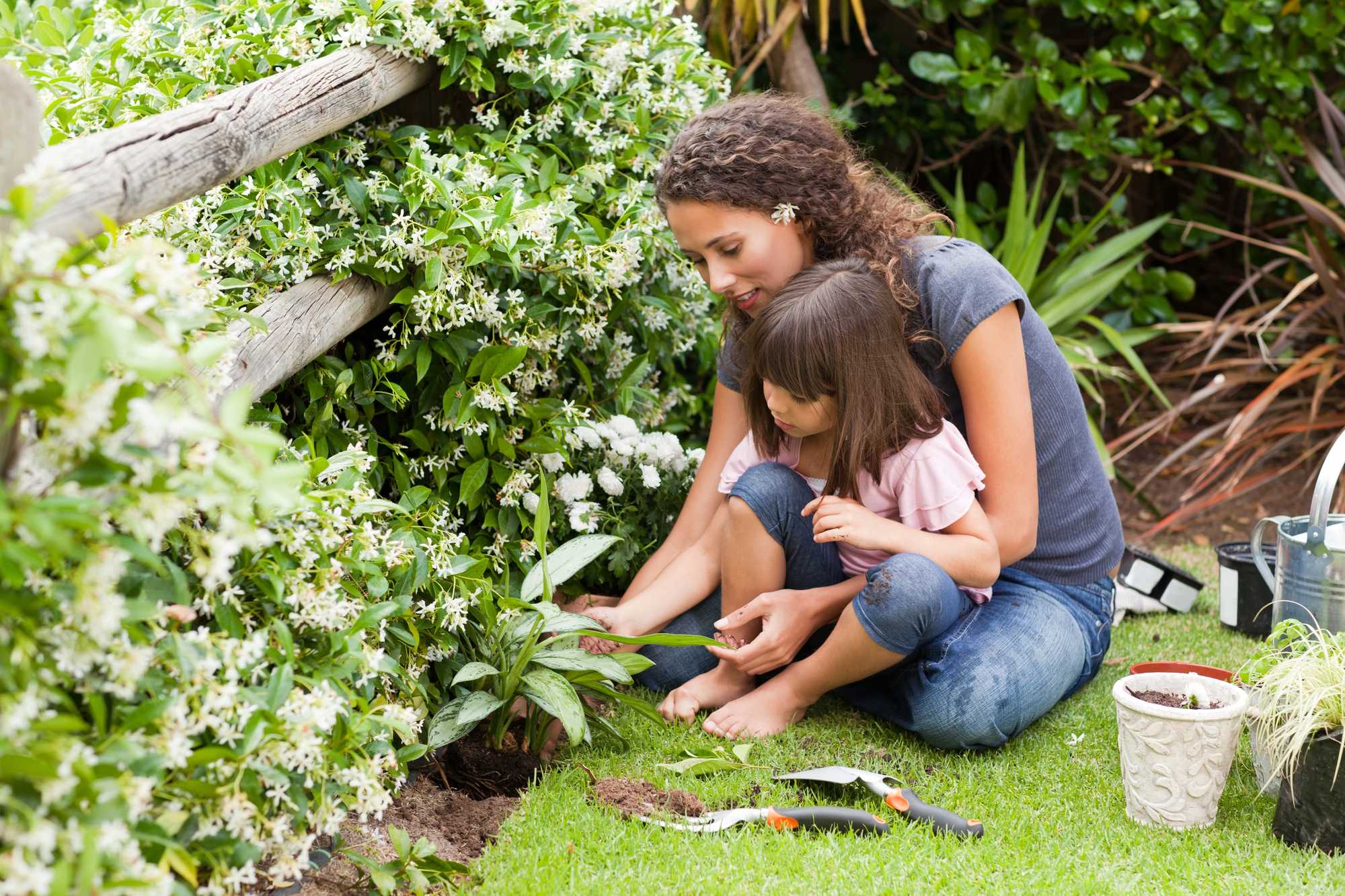
Spring is here, which means warmer days, new growth and more opportunities to get outside!
While the garden might not seem like a classroom, it’s actually a great place for children to practise maths skills in a fun and hands-on way. From counting seeds and measuring plants to spotting shapes and creating simple graphs, there are plenty of ways to bring maths to life outdoors.
Here are some simple garden activities to try this spring!
Grab a ruler or measuring tape and choose a few plants around the garden. Ask your child to measure the height of each one and record their measurements.
Once they have their results, ask questions like:
This is a simple way to practise measurement, comparison and ordering numbers.
Planting seeds is a great opportunity to practise counting and basic number skills.
Give your child a handful of seeds and ask them to count how many they have. You could then divide the seeds between different pots or garden beds.
For younger children, try simple questions such as:
“We have 8 seeds and plant 3. How many do we have left?”
For older children, you could introduce multiplication:
“If we plant 4 rows with 6 seeds in each row, how many seeds will we need?”
Suddenly, planting a garden becomes a maths problem!
Choose a plant and measure it regularly over several weeks. Record the results in a table and see how much it grows each time.
For an extra challenge, ask your child to create a graph showing the plant’s growth.
They can then use their graph to answer questions such as:
This activity combines measurement, data collection, addition and subtraction while showing children how maths can help us understand real-world changes.
Take a closer look at the garden and see how many shapes and patterns you can spot.
Can your child find circles, triangles, rectangles or other shapes? What about repeating patterns in flowers, leaves or garden beds?
You could even challenge them to create their own pattern using leaves, rocks or other safe garden objects.
For example:
leaf, rock, leaf, rock, leaf, rock...
What comes next?
Watering the garden can become a quick lesson in measurement.
Use a measuring jug or cup and ask your child to measure how much water different plants receive.
For example:
“If each plant needs 250 mL of water and we have 4 plants, how much water do we need altogether?”
Older children can work with litres and millilitres, while younger children can focus on comparing amounts such as more, less, full and half-full.
Turn your garden into a maths treasure hunt!
Give your child a list of things to find, count or measure. For example:
Find 10 leaves
Count 5 flowers
Find 3 different types of plants
Spot 4 insects
Find something shorter than 10 cm
Find 3 different shapes
You can make the challenge easier or harder depending on your child’s age and maths ability.
One of the best ways to help children build confidence with maths is to show them that it’s not just something they use in the classroom.
Maths is all around us, including in the garden!
By turning everyday activities into opportunities to count, measure, compare, estimate and solve problems, children can practise important skills without it feeling like extra schoolwork.
So this spring, grab some seeds, a ruler and a watering can, head outside and let the maths grow!
At Mathnasium, we believe maths learning should be engaging, encouraging and tailored to each child. Our instructors help students build their skills and confidence through personalised learning and support.
Want to learn more about how Mathnasium can help your child? Contact your local centre today.
Answer a few questions to see how it works
My Child is:


Mathnasium meets your child where they are and helps them with the customised programme they need, for any level of mathematics.
We have nearly 1,100 neighbourhood centres globally. Get started now.