January 28 is LEGO Day! You might know LEGO® bricks as the fun, colourful building blocks kids use to reconstruct the world, but did you know they also make great mathematical teaching tools? The near-infinite uses of LEGO bricks allow for near-infinite hands-on ways to support student learning. Below, we have listed only a few of these uses. Download our activities to learn how to construct four LEGO math manipulatives and how to use them!
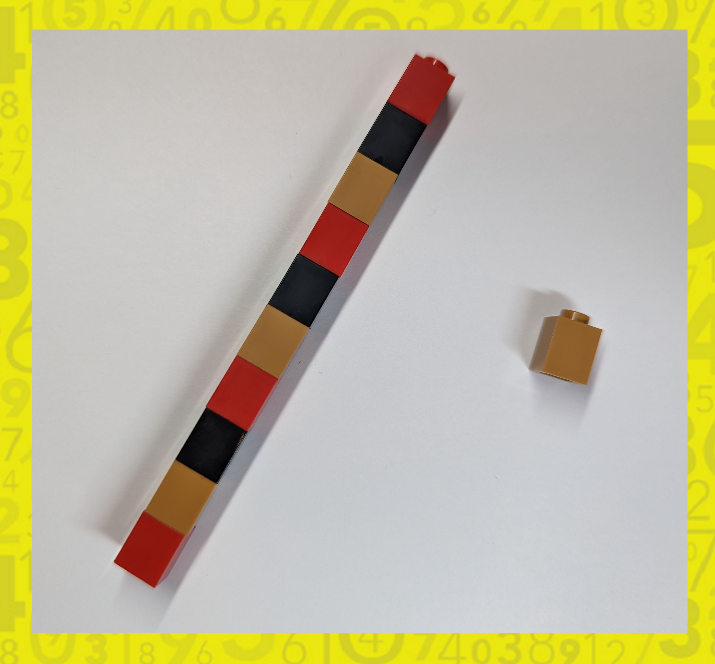
Number Line
A number line is a straight line with numbers located at equal intervals. It extends infinitely in both directions, with numbers increasing in the direction of left to right. As a math manipulative, students can use number lines to compare numbers and count.
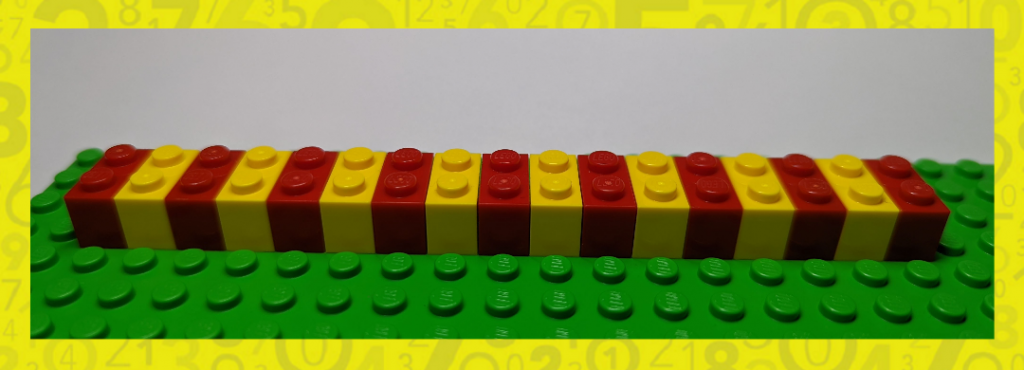
Place value blocks, or base-ten blocks, are blocks modelling our base-ten system. A set begins with one unit (1): a cube measuring 1 centimetre on each side. Ten units create one rod (10), and ten rods create one flat (100).
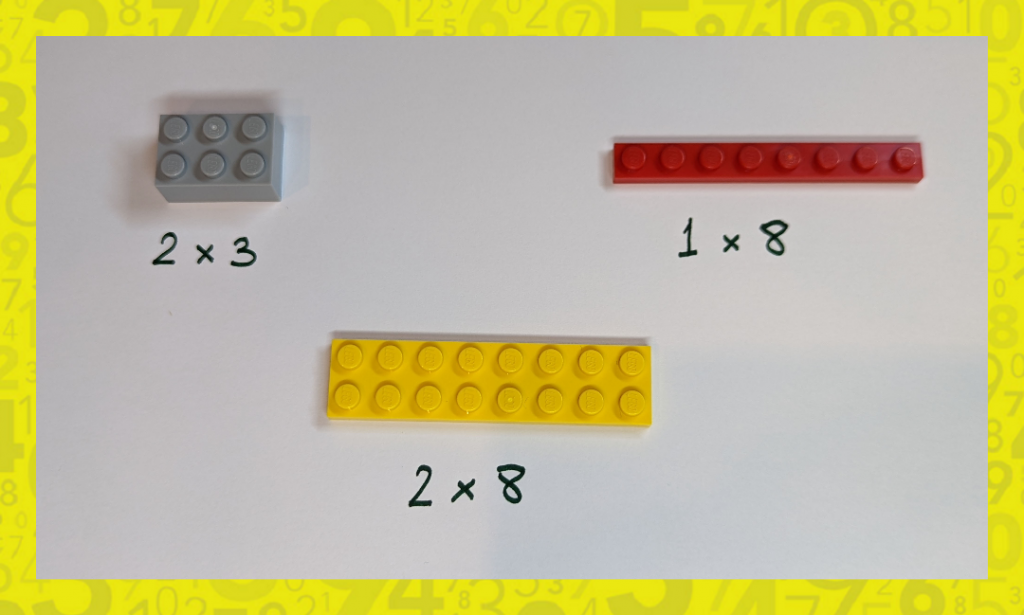
Multiplication arrays demonstrate multiplication statements through arrangements of objects, in rows/columns. They help visualize multiplication problems, to reason through solutions and compare problems.
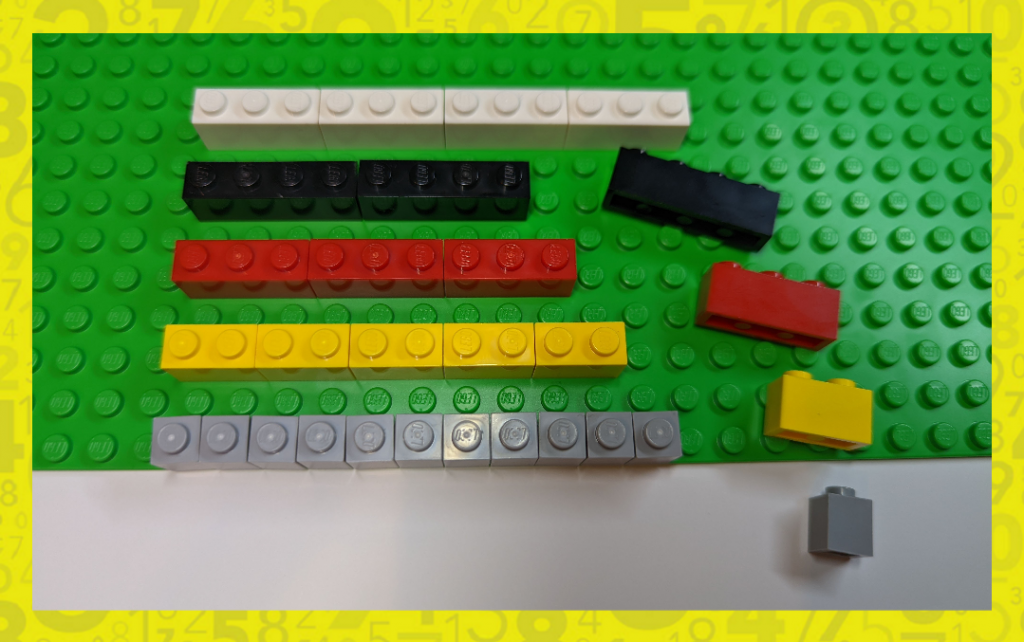
Fraction bars are visual representations of fractions that are constructed relevant to one another. The whole is often divided into halves, thirds, fourths, fifths, sixths, eighths, tenths, and twelfths.
“Only the best is good enough. As children shape their own worlds with LEGO bricks, we play our part in having a positive impact on the world they live in today and will inherit in the future.” — The LEGO Group
Mathnasium’s commitment to changing lives through math parallels The LEGO Group’s commitment to building a positive world for children. Using LEGO bricks as math manipulatives is a wonderful way to show children that math is fun.
Begin by identifying where your child may be struggling in math or where there is an opportunity to extend their thinking. Whether you use LEGO bricks to build patterns or compare fractions, you and your child will find you can do so much more with these bricks!
November 23 is Fibonacci Day, commemorating the Italian mathematician Leonardo of Pisa and the pattern of numbers he popularized, the Fibonacci sequence. Observing the beginning of this sequence, you will notice why we celebrate on this day: 0, 1, 1, 2, 3..
Report card day. You open the envelope, scan the grades, and... what now? Mathnasium answers the question, "What does this actually mean for my child?"
HELP YOUR CHILD ACHIEVE THEIR FULL MATH POTENTIAL
We have over 1,000 centres. in North America. Get started now.
Find a location
Get a math skills assessment for your child
Your child will complete a customized learning plan