Division and multiplication are the same relationship working in two directions, but most 3rd graders learn them as separate operations.
Your child may know 4 × 6 = 24 without seeing that 24 ÷ 6 = 4 is the same fact. That gap is the most common reason division feels harder than anything they have learned before.
Our tutors work with 3rd graders on this every summer. We’ll share with you seven tips that work really well, each one starting with the concept before the procedure, because understanding what division means is what makes the steps stick.
Why Some 3rd Graders Find Division Hard
Division is a major milestone in elementary math because it requires your child to reverse their thinking from multiplication.
That is a much bigger cognitive leap than reversing addition into subtraction, and it is why division feels harder than anything they have learned before.
In our experience, division struggles come down to one of two things:
Both gaps are fixable, and the seven tips that follow address both.
1. Start With What Division Actually Means
When we first start to work on division with a student, we focus on clarifying what division means. We need the concept to click, to become tangible to the student, before we go into the how-to of it.
A simple, clear explanation of what division actually is can change how your child approaches every problem that follows.
Division is splitting a number into equal groups.
For example:
-
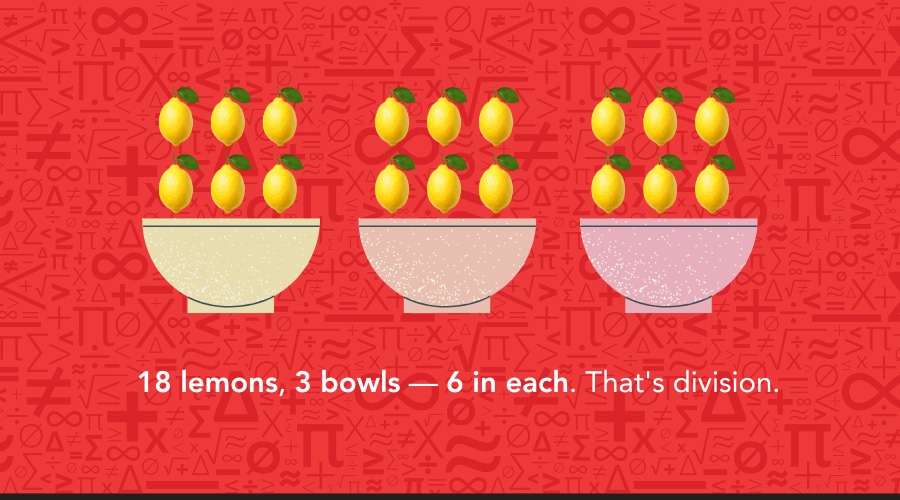
If you have 18 lemons and 3 bowls, division tells you how many lemons are in each bowl.
-
It also works the other way around: if you have 18 lemons and want to give each person 6, division tells you how many people can get your lemons.
That is it. Your child does not need the notation yet. They need the idea.
To help your child experience division before they learn the notation, try this at a picnic or snack break this summer:
-
Grab 15 grapes and ask your child to split them equally into 3 groups.
-
Before introducing any notation, ask: "How many grapes are in each group? How do you know?"
-
Let your child figure out the grouping themselves, then ask: "What would we call this in math?"
Your child can explain what 15 ÷ 3 means in plain words before they write it down. That understanding is what makes the procedure stick.
Here's how to make this part of your routine:
-
Use objects your child actually cares about: building blocks, coins, stickers, or blocks
-
Let your child do the physical grouping before you write anything down
-
Ask: "How do you know everyone has the same amount?" before moving on
📕 You May Also Like: What Is Division in Math? A Simple & Complete Overview
2. Connect Division to Multiplication Facts They Already Know
Your child already knows more division than they realize.
Take 4 × 3 = 12. Read it in reverse, and you get 12 ÷ 4 = 3.
Same numbers, same relationship, different direction. Your child does not need to learn a new fact — they need to see that the one they already know works both ways.
These groups of connected equations are called fact families, and they are one of the most effective ways to build division fluency.
Once your child sees the connection, division stops feeling like a separate operation and starts feeling like something they already understand.
Try this drill on a summer afternoon, at the kitchen table or outside:
-
Write a multiplication fact that your child knows confidently
-
Flip it and ask: "What division problem is hiding in here?"
-
Let them work it out before you confirm the answer
One thing worth checking first: if your child's multiplication facts are not yet fluent, that gap is worth addressing alongside division, not after it.
📕 You May Also Like: Third Grade Multiplication Help: Simple Strategies That Work
3. Build the Vocabulary First
Sometimes the reason your child struggles with a division problem has nothing to do with the math itself. They may understand the concept but get tripped up by the language.
-
The Total: The big number you start with (e.g., 12 crackers).
-
The Groups: How many piles are you making, or how big each pile is?
-
The Quotient: The math name for the final answer.
Textbooks eventually introduce the terms dividend and divisor, but those words sound similar enough to confuse most 3rd graders.
Stick with Total, Groups, and Quotient for now.
We suggest making a reference card with these three terms and a worked example at the start of summer. Your child can keep it nearby during any practice session, whether they are working at home or bringing it along on a trip.
Try this at home:
-
When your child looks at a problem like 20 ÷ 5, ask them to point to each part and name it before solving:
-
"Which number is the total? What is the 5 telling us to do with it?"
-
Naming the parts before solving prevents guessing and helps your child stay oriented as the numbers get harder.
4. Practice Division in Real Life
Summer is full of moments where division comes up naturally, and those moments are worth using.
You could try some of these:
-
Divide a pitcher of lemonade into equal cups. Ask: "How many full cups can we pour?"
-
Figure out how many weeks until an upcoming event by dividing the number of days. Ask: "If there are 28 days until your birthday, how many weeks is that?"
-
Split a pack of trading cards or stickers equally among friends. Ask: "How many does each person get? Is there anything left over?"
We find that when students see division appearing in situations they actually care about, it stops feeling like a school subject and starts feeling like a useful tool.
📕 You May Also Like: 10 Fun Math Games to Play at Home With Your Child
5. Slow Down on Remainders
Remainders are where students most commonly get stuck, and rushing past them is a mistake we see often.
A remainder is what's left over when the groups are as equal as they can be.
Go back to the physical approach from Tip 1, but this time use a number that doesn't split evenly.
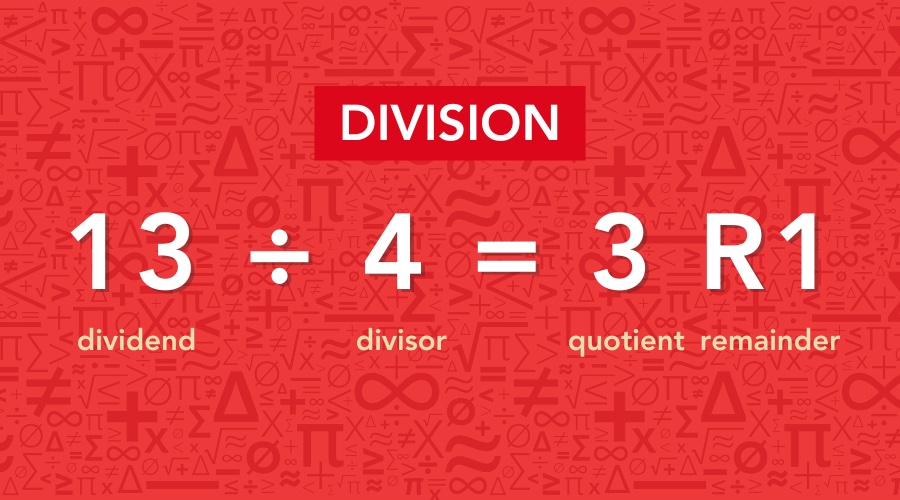
If you are at the beach or on a camping trip, try it with stones. Place 13 on the ground and ask your child to split them equally into 4 groups.
Let them see the leftover stone, then ask: "Can we put this last stone into a group without making the groups unequal?"
Your child will realize that to keep the groups fair, that last stone has to stay on the sidelines. Give them a moment with that realization before you introduce the word remainder.
Try this at home:
-
Start with numbers that divide evenly, then introduce ones that don't
-
Let your child discover the leftover before you name it
-
Ask: "How many are left over? Is there any way to split that evenly?"
Concreteness first, notation second.
6. Keep Sessions Short and End on a Win
Your child will make more progress in twenty minutes of focused practice than in an hour of frustration.
Summer days are full of things your child would rather be doing, and that is actually an advantage. A short, focused session that ends on a win is easier to come back to than a long one that ends in frustration.
We recommend planning sessions that end with a problem your child can solve confidently. If that means returning to an easier problem to close the session, that is worth doing.
Before wrapping up, ask: "Can you show me one more? Pick whichever one you feel most confident about."
Here's how to build this habit:
-
Set a timer for 20 minutes and stick to it
-
End every session with a problem you know your child can solve
-
Acknowledge what they got right before the session closes
Math progress is cumulative, and confidence is part of what makes it stick.
*Note: You’ll find that sessions at summer camps and math programs like ours are usually one hour long. Unlike in the home environment, our learning center and sessions are designed to keep the student engaged with special teaching techniques, math manipulatives, and a fun group environment that makes them a part of a caring community.
7. Find and Fill the Gap That Is Holding Your Child Back
If your child is stuck on division, the root cause is usually one concept back. It might be:
-
Weak multiplication fluency
-
An incomplete understanding of equal groups
-
Gaps in number sense from earlier grades
Drilling division without addressing that gap rarely leads to progress.
We recommend starting one step back.
Ask:
If either question reveals a gap, start there. The most effective catch-up plans start at the root.
Here's a simple diagnostic to try at home:
-
Ask your child to split 15 objects into 3 equal groups. Can they do it?
-
Ask a few multiplication facts up to 10. Do they answer confidently or hesitate?
-
If either reveals a gap, spend the next few sessions there before returning to the division.
Summer is the right window to find and fix that gap.
Fourth grade builds directly on 3rd grade division, and the earlier your child gets the right support, the less catching up they will need to do in September.
Pinpointing where understanding needs support is what our diagnostic assessment is designed to do. If you would rather have that process guided by a specially trained tutor, that is where we come in.

At Mathnasium, a specially trained tutor meets your child where they are and builds understanding step by step.
How Mathnasium of Cerritos Helps 3rd Graders Catch Up in Math During Summer
Mathnasium is a math-only learning center that specializes in exactly the kind of work this article covers: finding where your child's understanding broke down, filling that gap, and building forward from there.
Every student begins with a diagnostic assessment that identifies their strengths, knowledge gaps, and how they naturally think about math.
From those results, we build a personalized learning plan and begin face-to-face instruction with our specially trained tutors, in a caring and fun group environment, in-center or online.
Our teaching approach is the Mathnasium Method™, designed to help your child understand math deeply, one concept at a time, so that division stops feeling like a separate operation and starts feeling like something they already know.
-
94% of parents report an improvement in their child's math skills and understanding
-
93% of parents report their child's improved attitude toward math after attending Mathnasium
-
90% of students report an improvement in their school grades
If you are located in Cerritos, Artesia, Lakewood, Norwalk, or Hawaiian Gardens, our local learning center, Mathnasium of Cerritos, is here for you.
☀️ Check out Our Summer Math Program
Here is how to get started:
-
Fill out the form
-
Speak with an Education Specialist
-
Enroll and attend weekly sessions
📅 Schedule a Free Assessment at Mathnasium of Cerritos
Not near Cerritos?
📍 Find a Mathnasium Learning Center Near You


 (562) 653-9400
 (562) 418-8920