Most parents find out their kid is struggling in math the same way: a grade shows up on a screen and it’s not the one they expected. By then the trouble has usually been building for months.
The good news is that kids leave clues long before the report card does. Most of them show up at home, in small moments that are easy to brush off. Here are eight to watch for, especially if you’re a Marina Hills parent who has a nagging feeling something is off.
1. Homework turns into a two-hour standoff
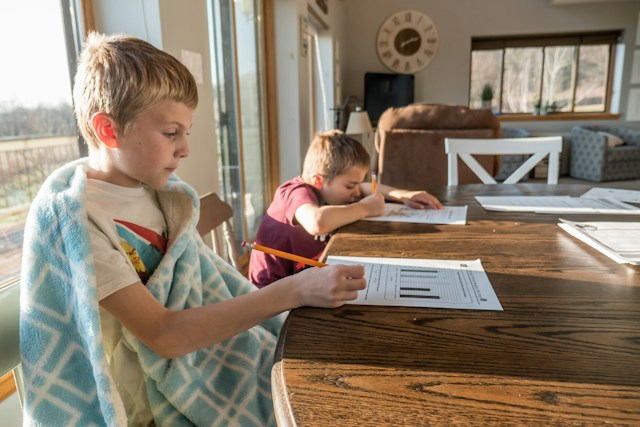
A worksheet that should take twenty minutes eats the whole evening. Your child needs water, then a snack, then a different pencil, and somehow the dog needs attention too. That isn’t laziness. Kids dodge things that make them feel stuck, and math homework is a common target.
Notice the mood as much as the clock. If the kitchen table has become a tense place at 7 p.m., your child may be wrestling with ideas they never quite got the first time.
2. Test days come with a mysterious stomachache
On the morning of a math test, your child suddenly has a headache, a sore stomach, or a strong case of “I think I should stay home.” Sometimes the symptoms are real and sometimes it’s nerves. What matters is the pattern. If it keeps lining up with quizzes and unit tests, it’s worth paying attention to.
This is often math anxiety, and it’s far more common than most parents realize. A kid who dreads being wrong starts dreading the whole subject, and the worry can crowd out what they actually know. They blank on problems they could solve easily at the kitchen counter.
Anxiety tends to grow out of shaky foundations. When a child truly understands the material, a test feels like a challenge. When they’re guessing, it feels like a threat.
3. The grades are sliding, just slowly
Look at the trend instead of the latest score. One dip from an A to a B-plus is nothing. But if you can trace a gentle downhill slope across quizzes, tests, and progress reports, something underneath has shifted.
Slow slides are hard to catch because each grade comes with a perfectly reasonable excuse. It was a tough test. She was tired that week. After three or four of those, the excuses start to look like a gap.
4. Basic facts still take real effort
Counting on fingers is totally normal for a first grader. It’s a different story when a fifth grader reaches for a calculator on simple multiplication, or a seventh grader has to work out 7 times 8 from scratch.
Math fluency works a lot like reading fluency. A child who has to sound out every word can’t follow the story. A child who has to labor over basic facts can’t focus on the fractions, ratios, and equations stacked on top of them.
5. Word problems make them freeze
Some kids handle the computation fine and then fall apart the moment a problem becomes a paragraph. They stare at it, circle random numbers, and guess at the operation.
Word problems test whether a child understands what’s happening, not just whether they can follow steps. A kid who freezes may have memorized procedures without knowing why they work. That can get them through for a while. It stops working when the questions get more layered in middle school and high school.
6. They’ve gone quiet in class
At conferences, listen for a certain phrase from teachers: “She’s very quiet.” A student who used to raise a hand and now sits still is often a student who’s lost and hoping nobody notices.
Teachers have full rooms and a schedule to keep, so they can’t always stop and re-teach one concept for one child. Kids pick up on that fast. Many decide it’s safer to nod along than to admit they’re confused.
7. Homework help at home has stopped working
You’ve probably looked at your child’s math homework and thought, “That’s not how I learned it.” Classrooms today often teach several strategies for the same problem, which can leave parents and kids equally baffled.
The trouble starts when you can’t explain it, your child can’t explain it, and the two of you end up frustrated and no closer to an answer. That’s usually a sign your child needs someone who can present the same idea in a way that finally clicks.
8. A big transition is coming
Some moments in school are harder than others. The jump from elementary to middle school, from pre-algebra into algebra, or from algebra into geometry has a way of exposing old gaps. Kids who coasted through earlier grades can hit a wall when the work starts demanding real reasoning.
If one of those transitions is on the horizon, you don’t have to wait for a struggle to begin. Getting support early often means your child starts the new year feeling ready instead of scrambling.
What to do if this sounds familiar
First, relax a little. Spotting one or two of these signs doesn’t mean something is wrong with your child. It means they could use some help at the right time, and you noticed, which is the hardest part.
Next, talk to your child without any pressure. Ask which part of math feels the hardest right now. Many kids are visibly relieved just to be asked.
Then find out where the gaps really are. Guessing wastes time and money. A good assessment pinpoints which skills are shaky, so the help goes where it’s needed instead of reviewing things your child already knows.
That’s where the math tutors at Mathnasium of Marina Hills come in. Our instructors start by learning how your child thinks about math, then build a personalized plan around what they need. The goal goes beyond a better grade on the next report card. We want your child to leave math class feeling capable instead of defeated.
Don’t wait for the report card
A report card tells you what already happened. The signs above tell you what’s coming, which gives you time to change the story before it’s written.
If you saw your child in even a few of these, now is a great time to reach out. Early support is nearly always faster and easier than climbing out of a hole halfway through the school year.
Ready to see where your child stands? Ask us about an assessment and meet the math tutors who can help your child feel confident again.


 (949) 240-6284
 (949) 240-6284