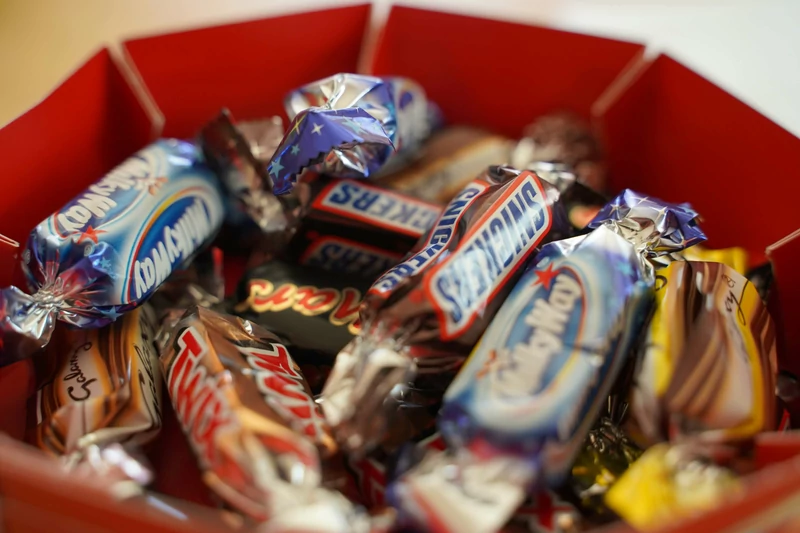
Halloween in Marina Hills is a festive time of costumes, pumpkins, and — of course — tons of candy! But did you know it also presents a real-world chance to incorporate learning in a low-pressure way? Here at Mathnasium of Marina Hills, we believe math can be fun and applicable to the real world when it is tied to our everyday lives.
From trick-or-treat data to candy fractions, here are seven fun ways your family can use math this Halloween to make it meaningful and memorable.
1. Candy Fractions — The Sweetest Math Lesson of All
After the trick-or-treat is over and your kids have dumped their loot on the table, it is time for one of our favorite Mathnasium traditions — Candy Fractions! First, you will want to count the total number of candy pieces. Now group them whatever way makes sense, so by type or by color for example.
Example:
- 10 Snickers
- 8 Kit Kats
- 12 Skittles
- 5 Lollipops
That’s 35 total pieces. Now you can calculate:
- What fraction are Snickers? (10/35)
- What fraction are Kit Kats? (8/35)
- Can any fractions be simplified?
Older kids can go further by converting fractions into decimals or percentages, while younger ones can compare “which pile is bigger.”
This simple activity builds fraction sense and proportional reasoning — all while making Halloween candy a learning tool (and a treat at the end).
2. Pumpkin Geometry — Measuring the Perfect Jack-o’-Lantern
In order to create your pumpkin masterpiece, take a moment to examine some real-world geometry. Grab a flexible tape measure or a piece of string, and measure the circumference of your pumpkin. Using the measurement of circumference, use the formula C ÷ π (3.14) to estimate the diameter of your pumpkin. Test your estimation measuring the diameter with a ruler!
Next, measure the height of your pumpkin and then consider how the volume and surface area may vary among different sizes of pumpkins.
Finally, as you begin carving your perfect pumpkin, discuss the concept of symmetry. How many different ways might you create a symmetrical jack-o’-lantern face for your pumpkin? What if one eye was symmetrical, while the other was not?
This is a fantastic hands-on geometry activity, where math has never been more apparent than connecting it to something your child can design, see and touch! Its no wonder our students love to bring in pictures of their “math-designed” pumpkins at Mathnasium of Marina Hills, you can see the connection to a real-life experience!
3. Trick-or-Treat Time Problems — A Lesson in Estimation
Halloween night in Marina Hills is ideal for estimating and elapsed time practice. Before you step outside, have your child estimate:
- How many houses will they visit each hour?
- How many pieces of candy will they collect?
- What time will they finish if they leave at 6:00 and visit 5 houses every 10 minutes?
When you return home, reflect on the estimates of what happened.
At Mathnasium of Marina Hills, we teach students that estimation isn’t just guessing — it’s logical thinking, pattern recognition, and a great tool for problem-solving. Halloween gives kids the perfect way to apply those ideas in real life.
4. Candy Graphing — Turn Treats into Data
Once the sorting is done, take it a step further by graphing your candy!
You can use a sheet of paper, graph paper, or even a spreadsheet for tech-savvy learners. Have your child make a bar graph or pie chart that represents their candy collection.
Ask questions like:
- Which candy did you get the most of?
- How many more chocolate candies than fruity ones?
- If you gave away 20% of your candy, how many pieces would that be?
This introduces kids to data collection, graphing, and analysis — essential math skills wrapped up in a fun Halloween challenge.
5. Halloween Budget Challenge — Real-Life Math in Action
For upper-elementary and middle school students, turn Halloween into a budgeting challenge.
Give your child a budget of $25 to plan a Halloween celebration. They’ll have to decide how to allocate funds for candy, decorations, costumes, and snacks.
Example:
- $10 for candy
- $5 for decorations
- $7 for a costume
- $3 for spooky music or glow sticks
Then throw in a few “curveballs,” like price changes or a friend wanting to share costume costs.
This playful budgeting activity introduces addition, subtraction, multiplication, and percentages — while helping kids see how math shapes real-world decision-making.
We love teaching kids practical math like this because it builds confidence and independence, both inside and outside the classroom.
6. Probability and Candy Trades
Trading candy with friends is a classic part of Halloween — and it’s also a great introduction to probability and statistics.
Imagine your child has 60 candies: 20 chocolate, 15 gummies, 10 lollipops, and 15 hard candies.
Ask:
- What’s the probability of randomly picking a chocolate candy?
- What’s the probability of getting two chocolates in a row?
- If you pull out five candies, what’s the chance at least one is a gummy?
Then test it out! Put all the candy in a bag, draw candies at random, and record results. Compare the experimental probability with the theoretical one.
It’s a tasty way to make abstract math come to life. And when your child starts predicting outcomes accurately, they’ll see firsthand how math helps explain the world around them.
7. Haunted House Math — Solve Your Way to Safety
Want to turn a regular Halloween evening into an unforgettable math adventure? Create your own Haunted House Math Challenge right at home!
Design each “room” in your house with a spooky math puzzle or riddle. For example:
- Room 1: Solve a multiplication riddle to unlock the door.
- Room 2: Use addition to mix the correct potion ingredients.
- Room 3: Divide 36 candies equally among 6 ghost friends.
- Room 4: Crack a secret code using a number pattern.
Add eerie lighting, sound effects, and costumes for atmosphere — and let your child use their math smarts to “escape” the haunted house.
This combines problem-solving, creativity, and teamwork — and reminds kids that math can be thrilling, not intimidating.
At Mathnasium of Marina Hills, our instructors often use themed games like this to show that math can be playful and empowering.
Bonus: Math-Themed Costumes!
Halloween is the perfect time to get your geek on about math! Here are a few fun ideas:
- A “mad mathematician” with equations on their lab coat.
- A walking calculator or math superhero.
- A “Pi-rate” (because math jokes never get old).
- A geometric shape/3D prism costume made from cardboard.
All these costumes highlight math and imagination – we guarantee you will get smiles (and candy) from everyone.
Mathnasium of Marina Hills — Where Math and Fun Collide
At Mathnasium of Marina Hills, we’re passionate about showing kids that math isn’t something to fear — it’s something to enjoy!
Our expert instructors use the Mathnasium Method™ to help students truly understand math concepts, not just memorize them. We personalize learning plans for every student — from elementary basics to high school algebra and geometry — so each child gains confidence and mastery at their own pace.
Whether your child is catching up, keeping up, or moving ahead, Mathnasium turns math into something to look forward to.
This Halloween, when your kids measure pumpkins, estimate candy, or calculate probabilities, remember: they’re practicing the same problem-solving and reasoning skills that make strong math students.
At Mathnasium of Marina Hills, we believe every child can be successful in math — and have fun doing it.
So go ahead — celebrate Halloween the math way. Because math and candy make the perfect combination! 🎃🍬


 (949) 240-6284
 (949) 240-6284