

Marina Hills
30271 Golden Lantern
, Ste A
Laguna Niguel, CA 92677
Laguna Niguel, CA 92677
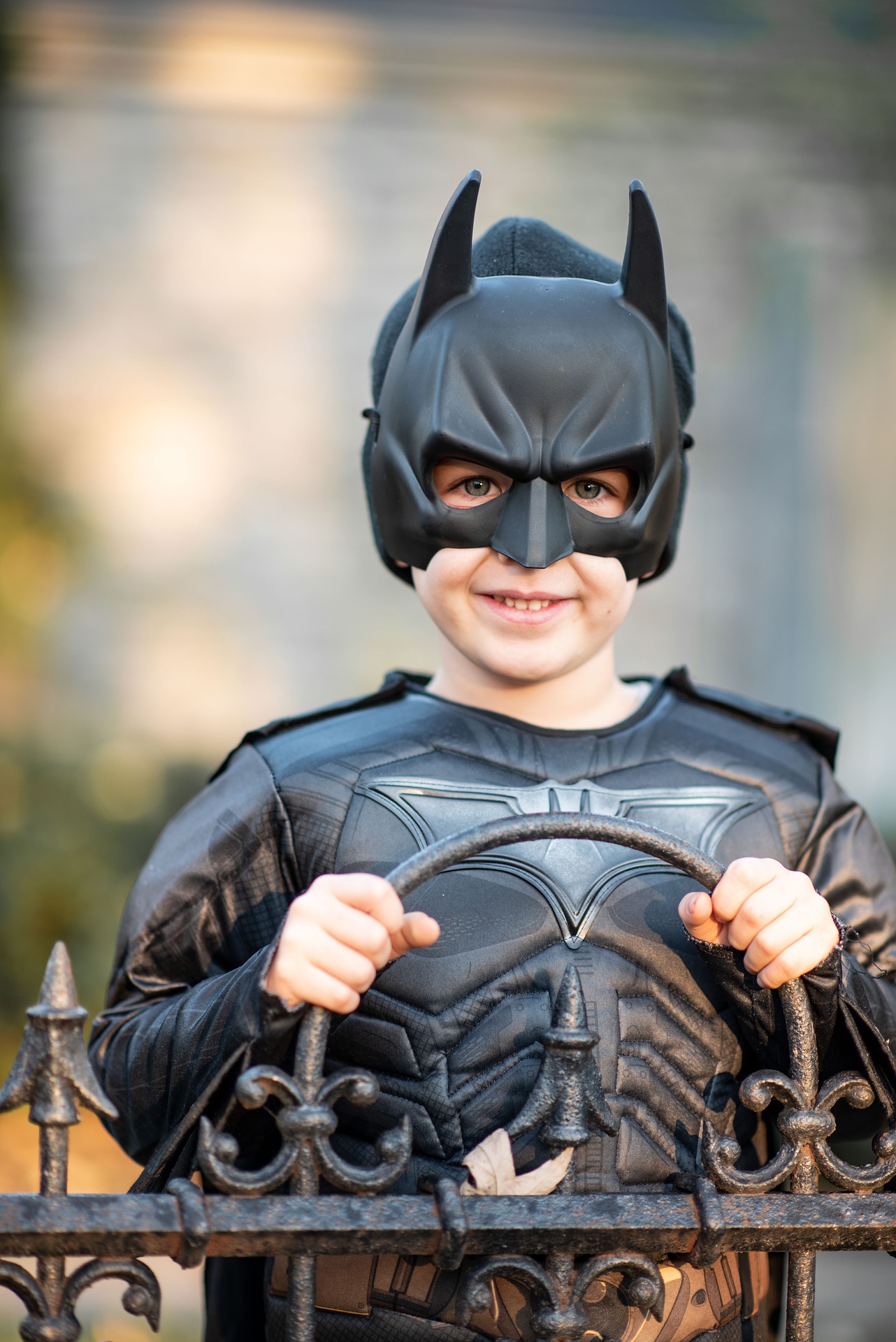
Every October, the same thing happens in homes across Marina Hills. The costumes come out, the pumpkins get carved, and the idea of sitting down with a math worksheet becomes a very hard sell. The good news is that you don't have to sell it at all. Halloween is packed with counting, sorting, measuring, and problem solving, and your child can practice all of it without realizing it's learning.
At Mathnasium of Marina Hills, we see every day that kids build math confidence fastest when numbers feel useful and fun. This parent's guide to sneaking math into Halloween gives you simple, low-prep ideas you can use this week, from candy counting to costume budgets.
Why Halloween Works So Well for Math Practice
Kids are naturally motivated by candy, costumes, and spooky decorations, and motivation is half the battle with math. When a child is excited about an activity, they're more willing to stick with a tricky problem, make a guess, and try again. That willingness is exactly what builds math confidence.
Halloween also gives math a real-world purpose. Instead of "solve problem number seven," the question becomes "how many pieces do we need so every trick-or-treater gets two?" Thinking this way, where numbers help you answer a question you actually care about, helps skills stick long after the holiday ends. It also shows kids that math isn't something that only happens at a desk.
Candy Counting for Little Learners
Candy counting is the classic place to start, and it works at nearly every age. For preschoolers and kindergartners, dump the candy onto the table and count it together, touching each piece as you say the number. Touching matters because it teaches one-to-one correspondence, the idea that each object gets exactly one number. Try counting by twos or fives to introduce skip counting, which sets the stage for multiplication later.
For first and second graders, turn counting into addition and subtraction stories. "You got seven pieces from the first house and four from the second. How many do you have now?" Then flip it: "You ate three. How many are left?" Kids tend to be remarkably precise about subtraction when it involves their own candy stash.
Older kids can estimate first. Hold up a handful and ask them to guess how many pieces are in the whole bag, then count to see how close they were. Estimation is a skill adults use constantly, and a playful guess with no wrong answer is a low-pressure way to practice it.
Sorting and Graphing the Halloween Haul
After a night of trick-or-treating, the living room floor becomes a data lab. Ask your child to sort the candy any way they like. Some kids will sort by type, others by color, size, or whether it has chocolate. Then ask why they chose that rule. Sorting builds classification skills, and explaining their thinking builds mathematical reasoning.
Once everything is sorted, count each pile and make a simple graph. Younger children can line up the actual candy in columns to make a bar graph right on the table. Older children can draw it on paper, label the axes, and choose a scale. From there, the questions write themselves. Which pile is biggest? How many more chocolate bars than lollipops? What fraction of the haul is sour candy? If you counted 40 pieces and 10 are gummies, your child can discover that one quarter of the pile is gummies, which is a surprisingly painless way to meet fractions and percentages.
Try a second round with a new rule, such as sorting by two things at once, like chocolate with nuts versus chocolate without. This introduces the logic behind Venn diagrams, a tool they'll see in school soon enough.
Fair Shares, Trades, and Fractions
Siblings and candy together create the perfect setting for division. If your child collected 24 pieces and wants to share equally with a brother and sister, how many does each person get? What if there's a piece left over? Talking through remainders at the kitchen table is far more memorable than seeing them on a worksheet.
Trading is another hidden math lesson. If one chocolate bar is worth two lollipops in your family's candy market, how many lollipops does a child need to trade for three chocolate bars? Kids quickly start thinking in ratios and proportional reasoning without those words ever coming up. Let them set the exchange rates and negotiate. You may be surprised how sharp their mental math gets when a favorite candy is on the line.
Pumpkin Patch Measuring and Estimating
Pumpkins are measurement gold. Before carving, have your child guess how much a pumpkin weighs, then check on a kitchen scale. Use a string or tape measure to find the distance around the middle, called the circumference, and compare it to the height. Line up several pumpkins and put them in order from lightest to heaviest.
When it's time to carve, count the seeds. Estimate first, then scoop them into groups of ten to count efficiently. This shows kids why grouping makes big numbers manageable, a key idea behind place value. You can even roast the seeds afterward and measure out the salt and oil, which sneaks in a little work with fractions along the way.
Costume and Party Math
Costumes and parties bring real-life budgeting and planning. Give your child a spending limit for costume supplies and let them figure out what fits. How much will three yards of fabric cost at a few dollars per yard? Will there be enough left over for face paint? Decimals and money skills get a real workout in a context that matters to them.
If you're hosting a party, let your child plan the snack table. If twelve guests each get three treats, how many should you buy? If cookies come in packs of eight, how many packs do you need? Questions like these use multiplication, division, and rounding up, and they feel like helping out rather than homework.
Insight for Keeping It Fun
The key to sneaky math is keeping the mood light. Ask questions out loud as part of the conversation instead of quizzing, and let your child take the lead whenever possible. If they get an answer wrong, treat it as a curious moment: "Interesting, how did you get that?" Mistakes are useful information, and a calm response teaches kids that being wrong is simply part of learning.
Match the challenge to your child's level, too. If an activity is too easy, add a twist, like asking them to explain their answer in a second way. If it's frustrating, simplify it or switch to a different one. A few minutes of playful math is better than a long session that ends in tears. And the candy itself makes an excellent reward for good math thinking, within reason, of course.
When Your Child Needs More Than Halloween Fun
Holiday activities are a great way to keep math fresh, but they can't replace consistent, personalized instruction. If your child groans at the mention of math, is falling behind in class, or could use a boost to get ahead, the team at Mathnasium of Marina Hills can help. Our instructors assess each student's strengths and gaps, then build a customized learning plan that makes math make sense.
Ready to turn math from a source of stress into a source of confidence? Contact Mathnasium of Marina Hills today to schedule an assessment, and have a safe and happy Halloween.
Mathnasium of Marina Hills is a math-only learning center for K-12 students in Laguna Niguel, CA. Trusted by over a million parents, Mathnasium uses personalized learning plans and the proprietary Mathnasium Method™ to help students catch up, keep up, and get ahead on their math journey.
Our specially trained tutors deliver face-to-face instruction in a supportive and fun small-group environment, working with students both in center and online to develop a deep understanding of math, build confidence, and improve academic performance.
Schedule Free Assessment
 (949) 240-6284
 (949) 240-6284





