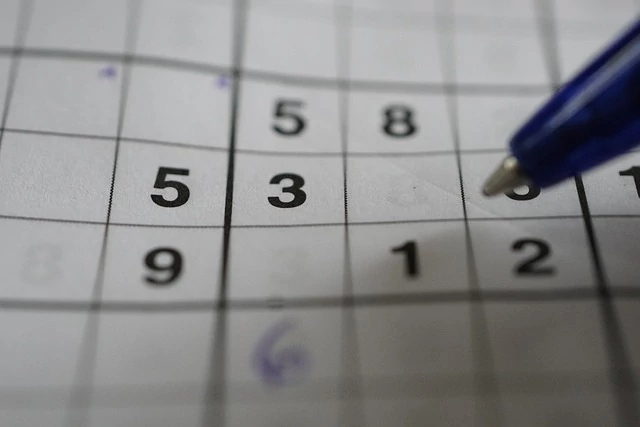
Picture this: Your child voluntarily puts down their tablet to work on a math problem. Not homework - something they actually want to solve. Sound impossible? It happens every day in homes where parents have discovered the secret weapon of mathematical engagement: puzzles and brain teasers.
While your child zones out during traditional math drills, their brain lights up when presented with an intriguing puzzle. The difference? Puzzles feel like games, not work. Yet they're building the exact same mathematical thinking skills your child needs for academic success.
As a parent, you have the power to transform your child's relationship with mathematics. These engaging challenges can turn "I hate math" into "Can we do another one?"
Why Your Child's Brain Craves Mathematical Challenges
Your child's developing brain is wired to seek patterns and solve problems. Math puzzles tap into this natural curiosity while building crucial skills:
- Confidence with numbers - Success with fun problems reduces math anxiety
- Logical reasoning - Step-by-step thinking that transfers to all subjects
- Persistence - Learning to work through frustration toward solutions
- Creative thinking - Finding multiple approaches to the same problem
When children solve puzzles, they experience mathematics as exploration rather than memorization. This positive association with mathematical thinking can last a lifetime.
Age-Appropriate Puzzles That Grow with Your Child
Elementary Years (Grades K-5): Building Number Sense Through Play
Pattern Games for Young Minds
Start with simple sequences your kindergartener can handle:
- Red, blue, red, blue, red, ?
- 2, 4, 6, 8, ?
- Circle, square, circle, square, ?
Kitchen Math Adventures
Turn cooking into puzzle time:
- "If we need 2 cups of flour for 12 cookies, how much for 6 cookies?"
- "Can you divide these 15 strawberries equally among our family of 3?"
- "How many different ways can we arrange 4 different toppings on pizza?"
The Missing Number Detective Game
Write numbers 1-20 on cards, remove one, and have your child identify the missing number. Advance to skip counting (2, 4, 6, ?, 10) as they improve.
Middle School (Grades 6-8): Developing Algebraic Thinking
Age Puzzles That Build Equation Skills
"I'm thinking of two numbers. Their sum is 20 and their difference is 6. What are my numbers?"
This introduces algebraic thinking without intimidating variables. Your child learns to set up problems systematically.
The Allowance Optimization Challenge
"You earn $5 weekly allowance plus $2 for each extra chore. How many extra chores do you need to buy a $25 video game in one month?"
Real-world applications make abstract concepts concrete and meaningful.
Logic Grid Puzzles
These visual puzzles teach systematic thinking:
- Three friends (Alex, Blake, Casey) have different pets (cat, dog, fish)
- Use clues to determine who owns which pet
- Builds deduction skills essential for geometry proofs
High School (Grades 9-12): Advanced Problem-Solving
Optimization Challenges
"You're designing a rectangular garden with 100 feet of fencing. What dimensions give the largest area?"
These problems introduce calculus concepts through intuitive reasoning.
Probability Puzzles That Surprise
"In your class of 25 students, what are the odds two people share the same birthday?"
Counter-intuitive results spark curiosity about mathematical reasoning.
Family Math Activities That Don't Feel Like Homework
Car Ride Brain Teasers
Long drives become learning opportunities:
License Plate Math
- Add all the numbers on passing license plates
- Find plates where digits multiply to equal 24
- Create equations using the letters and numbers
The 24 Game Use four numbers to create expressions that equal 24. For example, with 3, 3, 6, 8: (8÷8+3)×6 = 24
Mental Math Challenges
- "If we're driving 60 mph and have 90 miles left, when will we arrive?"
- "Gas costs $3.50 per gallon. How much to fill our 15-gallon tank?"
Board Game Alternatives That Teach Math
Game Type Skills Developed Recommended Ages
|
| Set |
Pattern recognition, logical thinking |
8+ |
| Prime Climb |
Number theory, strategic thinking |
10+ |
| Blokus |
Spatial reasoning, area concepts |
7+ |
| Yahtzee |
Probability, statistical thinking |
8+ |
Kitchen Laboratory Experiments
Recipe Scaling Adventures
- Double a recipe for more people
- Cut a recipe in half for fewer servings
- Convert between measurement units
Fraction Pizza Parties Use actual pizza to teach fractions. "If we eat 3 out of 8 slices, what fraction remains?"
How Puzzles Address Common School Math Struggles
Building Number Sense Naturally
Many children struggle with math because they lack strong number sense - an intuitive understanding of how numbers work. Puzzles develop this naturally:
Estimation Games
- "About how many jellybeans fill this jar?"
- "Which is more: 3×7 or 4×5?"
- "Is 49÷7 closer to 6, 7, or 8?"
Reducing Math Anxiety Through Play
When math feels like play, anxiety disappears. Children who freeze during tests often excel at the same concepts presented as puzzles.
Stress-Free Practice Strategies:
- No time pressure during puzzle time
- Celebrate clever attempts, not just correct answers
- Focus on the thinking process, not the final result
- Let children teach you their solution methods
Improving Test Performance
Puzzle-solving builds skills directly applicable to standardized tests:
- Reading comprehension - Understanding what problems ask
- Strategic thinking - Choosing efficient solution methods
- Error checking - Verifying answers make sense
- Time management - Recognizing when to move on
Nurturing Your Child's Unique Problem-Solving Style
Visual Learners and Geometry Puzzles
If your child loves drawing and building:
- Tangram challenges - Creating shapes from geometric pieces
- Origami math - Folding paper to explore angles and symmetry
- Graph paper art - Creating pictures using coordinate grids
Logical Thinkers and Sequence Challenges
For children who love order and patterns:
- Sudoku - Start with 4×4 grids, advance to 9×9
- Logic puzzles - "Who sits where?" type challenges
- Code breaking - Create simple ciphers to solve
Creative Minds and Open-Ended Problems
Some children thrive on problems with multiple solutions:
- "How many ways can you make 100 using any operations?"
- "Design the cheapest fence to enclose the largest area"
- "Create your own math puzzle for the family to solve"
Creating a Puzzle-Rich Home Environment
Establishing Daily Puzzle Time
The 15-Minute Math Adventure
- Choose a consistent time each day
- Keep a puzzle journal to track favorites
- Rotate between different puzzle types
- Make it screen-free family time
Celebrating Mistakes as Learning Gold
When your child gets stuck or makes errors:
- Ask "What did you try? What happened?"
- Explore the thinking behind incorrect answers
- Show how mistakes lead to better understanding
- Share your own problem-solving struggles
Knowing When to Help vs. When to Step Back
Provide hints, not answers:
- "What information do you know for sure?"
- "Have you seen a similar problem before?"
- "What would happen if you tried...?"
- "Can you draw a picture of this problem?"
Step in when frustration peaks:
- Take breaks when needed
- Simplify the problem temporarily
- Work through one example together
- Return to challenging problems later
Building Your Home Puzzle Collection
Free Resources for Every Budget
Online Puzzle Websites:
- Khan Academy's problem-solving courses
- Which Number puzzles and brain teasers
- Mathematical puzzle apps for tablets
Library Resources:
- Puzzle books for different age groups
- Mathematics magazines for children
- Educational board games for checkout
Investment-Worthy Puzzle Materials
Physical Manipulatives:
- Pattern blocks for geometry exploration
- Dice for probability experiments
- Playing cards for number games
- Graph paper for coordinate activities
Your Next Steps as a Math-Supporting Parent
Start small and build gradually. Choose one puzzle type that matches your child's interests and current math level. Spend just 10-15 minutes together exploring the challenge.
Watch for these signs of mathematical growth:
- Increased willingness to attempt challenging problems
- Better number sense in daily situations
- Improved confidence during math homework
- Spontaneous mathematical observations about the world
Remember that every child develops mathematical thinking at their own pace. Your role isn't to teach every concept, but to nurture curiosity and persistence. Celebrate small victories and maintain enthusiasm for the puzzle-solving journey.
The goal isn't raising a mathematician - it's raising a confident problem-solver who sees challenges as opportunities rather than obstacles. These thinking skills transfer to every area of life, from academic success to career challenges to daily decision-making.
Your child's mathematical confidence starts with a single puzzle. Pick one that sounds fun, gather around the kitchen table, and begin building a lifetime of positive associations with mathematical thinking.
The puzzles are waiting. Your child's "aha!" moments are just around the corner.
Looking for more ways to boost your child’s math skills? Schedule a free assessment or explore our website to learn how we can help.


 (615) 685-6284
 (615) 685-6284