
 (972) 231-6284
 (972) 231-6284











Mathnasium of Richardson West Awarded in Reader's Choice Contest for Best Tutoring and Best Early Education
Aug 11, 2026 | Richardson West

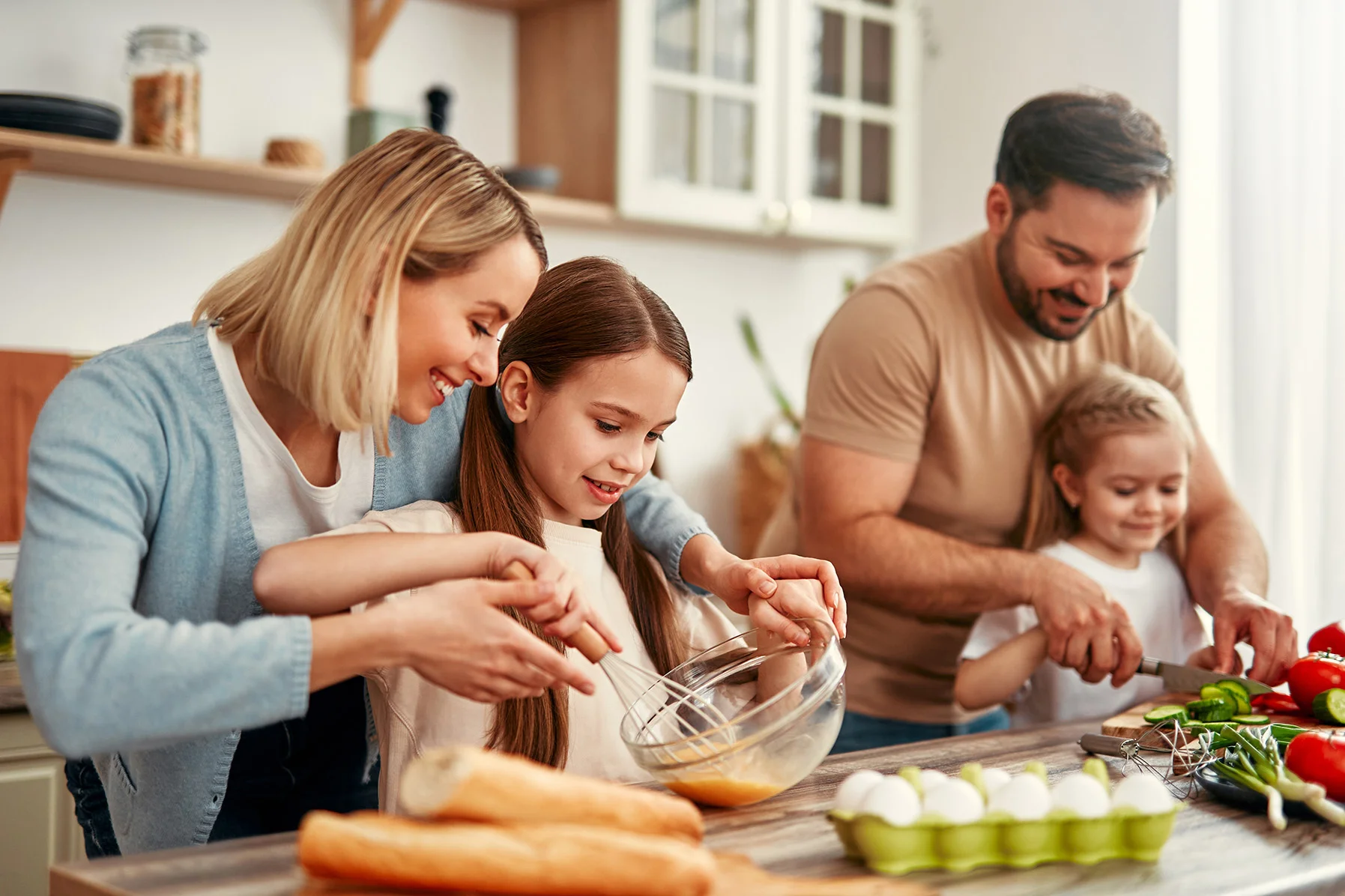
Between homework, after-school activities, and meal prep, finding time to help your child with math can feel impossible.
But what if helping your child with math didn’t have to be a separate task? After all, the best math lessons happen in everyday, real-life activities, such as cooking (trust us, we're seasoned math educators)!
Keep on reading to explore what cooking and math have in common and fun ways you can incorporate math in the kitchen.
The kitchen is one of the easiest and most enjoyable places to see math in action. Every time your child measures flour or sets the timer, they’re using math to make something real.
This works because when math is tied to hands-on experiences, children learn more deeply and remember it longer. In one study, preschoolers who practiced math through cooking activities showed stronger mathematical thinking and a better understanding of everyday number concepts.
In another study, the FoodMASTER Intermediate program for fourth graders produced measurable gains in math knowledge when students participated in cooking-based lessons. Through practical experiences, children developed stronger number sense, better problem-solving skills, and greater enthusiasm for learning.
Cooking also builds habits that naturally support math success, like sequencing and flexible thinking. Estimating how long cookies will bake or adjusting a recipe to serve more people uses the same reasoning skills students need for word problems and equations.
📕 You May Also Like: Family Math Nights: 6 Fun Ways to Learn Together
Let’s explore 5 ways math naturally shows up while you cook, along with hands-on ideas to help your child strengthen their math skills as you prepare food together.
Fractions are one of the first big hurdles in math because children often memorize rules about numerators and denominators without ever seeing what they truly mean. But when they divide a pizza into equal slices or measure half a cup of milk, fractions suddenly seem real.
Invite your child to take part in meal preparation that involves dividing or adjusting portions.
Have your child divide a pizza into halves, quarters, or eighths, and ask, “If we eat two slices, what fraction is left?” Fractions stop being an idea and become a part of everyday life, visible and even edible.
You can also try halving a recipe together. If a pancake recipe calls for 2 cups of flour and 3 eggs, how much do you need for half a batch? Seeing and measuring these changes connects fractions to real-world quantities and shows children how division works in action.
Encourage your child to record both the original and halved recipes side by side to reinforce understanding and build a sense of accomplishment.
Cooking is full of opportunities to work with measurements such as cups, tablespoons, ounces, and grams.
In school, these units are often introduced as symbols or formulas, which can make them confusing. In the kitchen, they have weight, volume, and purpose.
Ask your child to measure one cup of flour using only tablespoons. Then, have them compare their measurement with an actual measuring cup. This activity helps children visualize how smaller units combine to form larger ones, strengthening their understanding of multiplication and division.
You can also try a Kitchen Scale Detective activity. Weigh the same ingredient, like rice or an apple, in grams and ounces. Then compare the two and ask, “Which number is bigger? Why?”.
Comparing the two systems helps children see that numbers can represent the same quantity in different ways, which is a key step toward grasping proportional relationships and conversions.
For younger learners, you can create a small “measurement chart” and post it on the refrigerator for quick reference. It’s a simple visual that can make conversions less intimidating and more routine.
A great way to explore ratios is by making a simple salad dressing using a 1:3 ratio of vinegar to oil.
Ask your child, “If we want twice as much, how much of each will we need?” Then taste both versions and talk about the difference. This experiment links math directly to the senses and helps children understand how ratios scale proportionally.
You can also try a Party Punch Challenge. Mix juice and water in a 1:4 ratio for five guests, then figure out how to double the recipe for ten. Kids can record the quantities they used and compare the flavors, turning math into a creative experiment.
These activities build intuitive understanding of ratios and proportions, laying the foundation for algebra and advanced problem-solving later on.
As you can see, cooking is filled with quick math moments such as estimating, adding, multiplying, and adjusting. These everyday challenges help children strengthen mental math skills and develop number sense.
Try the Ingredient Guessing Game.
Ask your child to estimate how many cups of cereal or flour will fit into a container, then measure and compare the results. Instead of focusing on right or wrong, praise their reasoning. Estimation builds confidence and teaches children to make informed guesses rather than fear mistakes.
Another favorite is the Grocery Budget Run. Give your child a $20 limit and ask them to add up ingredient costs while shopping for a recipe. They’ll practice multiplication, addition, and estimation, all while learning valuable budgeting skills.
Timing is one of the most overlooked math skills, yet it’s crucial for problem-solving and organization. Cooking naturally teaches children how to think in steps, manage intervals, and coordinate tasks, which are the same skills used in multi-step math problems.
As you cook together, talk about time openly:
“If we start baking at 3:15 and it takes 25 minutes, when should we check it?”
“What can we do while the pasta boils for 10 minutes?”
Create a Recipe Timeline together by listing out each step and adding up the total time.
For older children, try the Dinner Coordination Game. Challenge them to plan when to start boiling pasta or baking bread so everything finishes together.
These exercises teach sequencing, logical reasoning, and flexible thinking, all while helping kids understand that time management is math in motion.
📕 You May Also Like: 10 Fun Math Games to Play at Home with Your Child
The kitchen is a hands-on lab for learning age-appropriate math through simple cooking tasks like measuring ingredients.
As you’ve seen, the kitchen is full of math moments, but those moments depend on your child’s age and math stage.
Math learning, like cooking, works best when it’s introduced step by step.
Here’s how to make math in the kitchen meaningful and safe for every learner.
Young children learn best through play and hands-on discovery.
Focus on counting, simple fractions, and basic measurement.
Let them count how many scoops of flour it takes to fill a cup.
Talk about halves and quarters when slicing fruit or sandwiches.
Compare which container holds “more” or “less.”
Keep things tactile, visual, and always supervise when using tools like knives or appliances.
At this age, kids start to connect what they see with what they calculate.
Explore equivalent fractions and unit conversions.
Ask, “If we double the recipe, how many eggs will we need?”.
Compare measurements in cups, tablespoons, and grams.
Encourage independence and let them take the lead while you ask guiding questions.
Tweens are ready for deeper reasoning and multi-step challenges.
This is the perfect time to introduce ratios, proportions, and multi-dish meal planning.
Have them scale recipes up or down for different servings.
Plan a dinner timeline to ensure everything finishes at once.
Connecting kitchen problem-solving to real-world math, like budgeting groceries or comparing prices, teaches algebraic thinking in action.
For teens, cooking becomes a chance to apply higher-level math thinking.
Incorporate algebraic reasoning, scaling, cost analysis, and nutritional math.
Challenge them to adjust a recipe for a specific calorie or cost target.
Discuss percentages and ratios when comparing ingredients or nutrition labels.
Let them lead entire meal projects from planning to budgeting.
Whatever your child’s age, the goal is the same: to make math meaningful and hands-on. With a little guidance and a lot of curiosity, your kitchen can become one of the most powerful classrooms they’ll ever have.
📕 You May Also Like: Math and Creativity: Encouraging Your Child to Think Outside the Box
At Mathnasium, we know that math becomes meaningful when students can connect it to real life. Just like cooking transforms numbers into something tangible, Mathnasium helps students see math as something they use in everyday life.
At the core of everything we do is The Mathnasium Method™, our proven approach that goes beyond homework help and creates a deep, lasting understanding of math.
The Mathnasium Method™ builds math mastery through:
Diagnostic Assessment: Each student begins their Mathnasium journey with an assessment that identifies what they already know, where the gaps are, and how they learn best.
Personalized Learning Plan: Based on assessment insights, we create a customized plan designed specifically for your child. No two plans are alike; each student progresses at the pace that works best for them.
Teaching for Understanding: Our specially trained math tutors explain math in ways that make sense, using simple language and real-world connections that help students “get it.”
Problem-Solving Skills: Instead of memorizing steps, students learn the why behind math. We use a combination of mental, visual, verbal, tactile, and written techniques to strengthen critical thinking and problem-solving skills important for success in school and in life.
The results speak for themselves:
94% of parents report improvement in their child’s math skills and understanding
93% of parents say their child’s attitude toward math has improved
90% of students see an improvement in their school grades
Mathnasium of Richardson West is a math-only learning center for K-12 students in Richardson, TX. Trusted by over a million parents, Mathnasium uses personalized learning plans and the proprietary Mathnasium Method™ to help students catch up, keep up, and get ahead on their math journey.
Our specially trained tutors deliver face-to-face instruction in a supportive and fun small-group environment, working with students both in center and online to develop a deep understanding of math, build confidence, and improve academic performance.
Schedule Free Assessment
