
 (929) 949-6284











Is your child using AI constructively?
Oct 23, 2026 | Riverdale Blog


According to an article in the New York Post, "Public school students in the Big Apple scored an average 473 on the math portion... It was a whopping 71 points below the average for the rest of New York, and 32 points below that of the rest of the country."

Using Math in sports has become more common over the years. For instance, take swimming, swimming has several different course and stroke variables. Results from a short course (25 yards) or a longer course (50 meters), can be converted by a coach to make projections for how a swimmer might perform in another race.
You might be familiar with the fact that there are 360 degrees in a full circle. By splitting a circle up into 360 equal slices we can measure any angle. But why do we use 360°? You might be surprised but there are actually a number of reasons for this specific number. Find out more in this blog.
Bees are impressive creatures, powering entire ecosystems via pollination and making sweet honey. But it turns out the little striped insects are also quite clever. A new study suggests that, despite having tiny brains, bees understand the mathematical concepts of addition and subtraction. Find out more about this wild topic in our blog.

With trigonometry finding out the heights of mountains or towers is possible, also in astronomy, it is used to find the distance between stars or planets and is widely used in physics, architecture, and GPS navigation systems. Let's find out more in this blog.
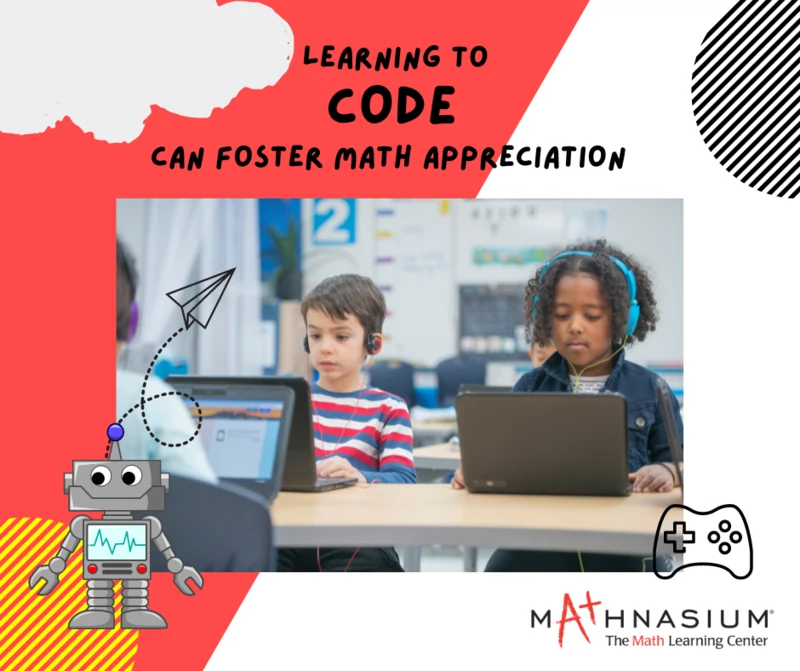
Do you know that learning to build cool applications and software can actually strengthen a child’s appreciation for math skills? Let’s find out more about coding and math in this blog.
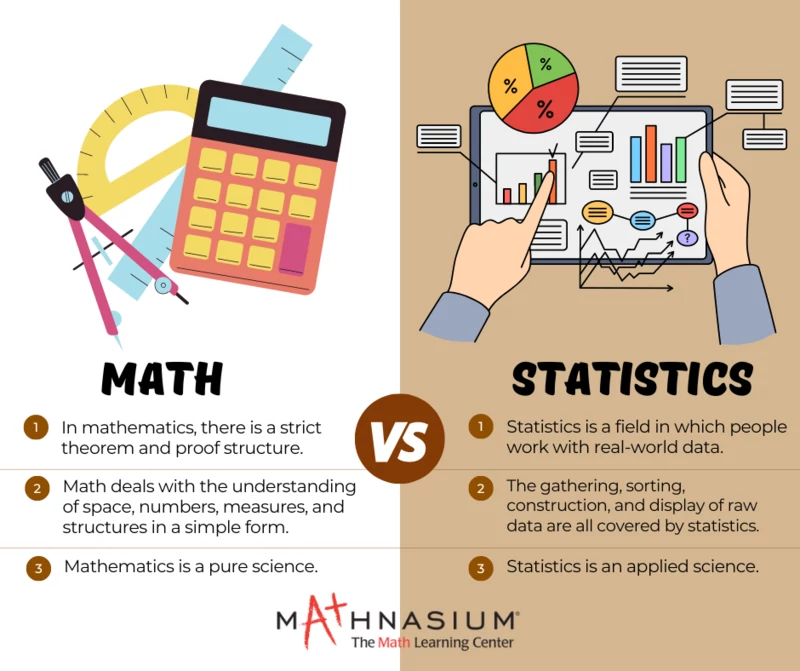
The main difference between math and statistics is that statistics is the study of the collection, description, analysis, interpretation, and representation of data, while math is the science of numbers, quantity, and space. Although both deal with numbers, there are considerable differences between the two fields. Let’s find out in this blog.

