
 (973) 577-8005











What Are Math Manipulatives — And Why Do They Help Children Learn Better?
May 20, 2026 | Kendall Park

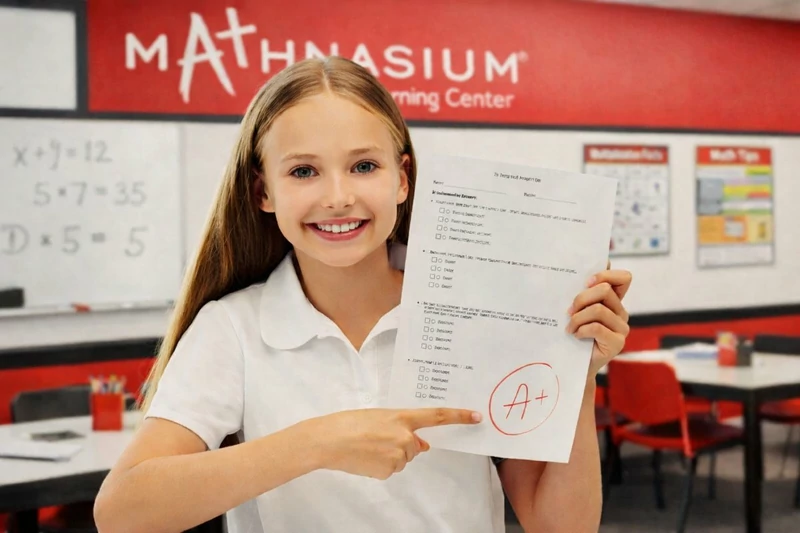
As parents, we want more for our children than good grades—we want them to grow into confident, resilient, and capable individuals. While math is often seen as just another school subject, the truth is that learning math plays a powerful role in shaping a child’s personality and character. The habits and mindsets children develop through math can influence how they approach challenges for the rest of their lives.
Confidence That Goes Beyond the Classroom
When children solve math problems on their own, they experience small but meaningful wins. These moments build confidence and help children trust their abilities. This confidence often carries into other areas—reading, sports, friendships, and decision-making.
As Albert Einstein once said:
“It’s not that I’m so smart, it’s just that I stay with problems longer.”
Math shows children that success comes from effort and persistence, not from being “naturally gifted.”
Teaching Children to Handle Challenges
Math naturally includes mistakes, confusion, and retries—and that’s a good thing. When children learn that struggle is part of the process, they become more resilient and less afraid of failure.
This idea echoes the words of Thomas Edison:
“I have not failed. I’ve just found 10,000 ways that won’t work.”
Through math, children learn to try again, adjust their thinking, and move forward—skills that are essential for life.
Strong Thinking and Problem-Solving Skills
Math helps children learn how to think, not just what to think. They practice breaking problems into steps, looking for patterns, and making logical decisions. These skills help children become thoughtful problem-solvers at home and at school.
As Galileo Galilei famously said:
“Mathematics is the language in which God has written the universe.”
Learning this language helps children understand the world with clarity and confidence.
Independence and Responsibility
When children work through math problems independently, they learn responsibility for their own learning. They check their work, recognize mistakes, and experience pride in solving problems themselves.
Educational psychologist Jean Piaget believed deeply in this kind of learning:
“The principal goal of education is to create men and women who are capable of doing new things.”
Math helps children become independent thinkers who trust their own reasoning.
Patience, Focus, and Self-Discipline
Math requires concentration and steady effort. Over time, children develop patience and focus—traits that parents know are valuable both in and out of school.
This aligns with the wisdom of Aristotle:
“We are what we repeatedly do. Excellence, then, is not an act, but a habit.”
Regular math practice helps children build habits that support long-term success.
A Growth Mindset for Life
Perhaps the greatest gift math gives children is a growth mindset—the understanding that ability grows with practice. Children learn that they don’t have to be perfect to improve.
Psychologist Carol Dweck summarizes this beautifully:
“Becoming is better than being.”
Math teaches children that progress matters more than perfection.
A Parent’s Takeaway
Math is not just about numbers—it’s about building character. Confidence, resilience, focus, independence, and a positive attitude toward challenges all grow through meaningful math experiences. When children are supported and encouraged in math, parents aren’t just helping with homework—they’re helping shape strong, capable individuals prepared for the future.

