Spring hits, calendars start filling, and suddenly summer is right around the corner. Plans get made—camps, vacations, pool days—but one thing often gets left out: how kids will stay connected to learning.
And here’s the truth—math doesn’t stick unless it’s used.
The good news? Around Metro Detroit, there are places where math shows up naturally. No worksheets. No battles. Just hands-on experiences where kids are thinking, building, measuring, and problem-solving without even realizing it.
Here are a few worth adding to the calendar this spring and summer.
Michigan Science Center
This is the obvious one—and for good reason.
Located in Midtown, the Michigan Science Center is built for hands-on learning. Kids aren’t just looking at exhibits—they’re testing, building, and figuring things out in real time. With over 220 interactive exhibits, everything from engineering to physics shows up in ways kids can actually understand.
There’s a planetarium, live science shows, and spaces designed specifically for younger kids, which makes it one of the easiest full-day outings for families.
Why it works for math:
Measurement, patterns, problem-solving, and logic are built into almost everything kids touch here.
Cranbrook Institute of Science
If the Science Center feels high-energy, this one feels a little more grounded—but just as impactful.
At the Cranbrook Institute of Science, kids can stand under a T. rex, touch a meteorite, and explore exhibits that connect math to the natural world.
There’s also a planetarium and outdoor space, which makes it easy to stretch this into a slower-paced day.
Why it works for math:
Patterns in nature, data, measurement, and scale all show up in ways that feel real—not abstract.
Ann Arbor Hands-On Museum
If you want a place where kids can move nonstop, this is it.
The Ann Arbor Hands-On Museum is packed with interactive exhibits—over 250 of them—covering everything from simple machines to water systems to light and motion.
Kids build, test, adjust, and try again. It’s loud, busy, and exactly what many kids need.
Why it works for math:
Cause and effect. Trial and error. Spatial reasoning. It’s all embedded in play.
University of Michigan Museum of Natural History
This one flies under the radar—but it shouldn’t.
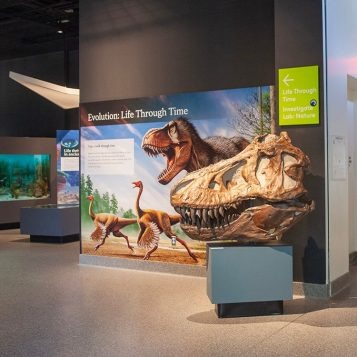
The University of Michigan Museum of Natural History blends science and math in a quieter, more observational way. Think fossils, ecosystems, and data-driven exhibits that help kids see how numbers tell stories.
It’s also an easy add-on if already in Ann Arbor.
Why it works for math:
Data interpretation, patterns, and real-world application—without the pressure.
Leslie Science & Nature Center
If kids need to get outside, this is a solid reset.
The Leslie Science & Nature Center combines trails, wildlife, and hands-on programming focused on the natural world.
It’s less structured—but that’s the point.
Why it works for math:
Measurement, observation, and estimation happen naturally outside—distance, time, patterns in nature.


 (248) 851-6284
 (248) 851-6284