What is an Exponent in Math?
Exponent is the power to which a base is raised. Power is the value of a number raised to some exponent.
An exponent is a small number written above and to the right of another number (the base).
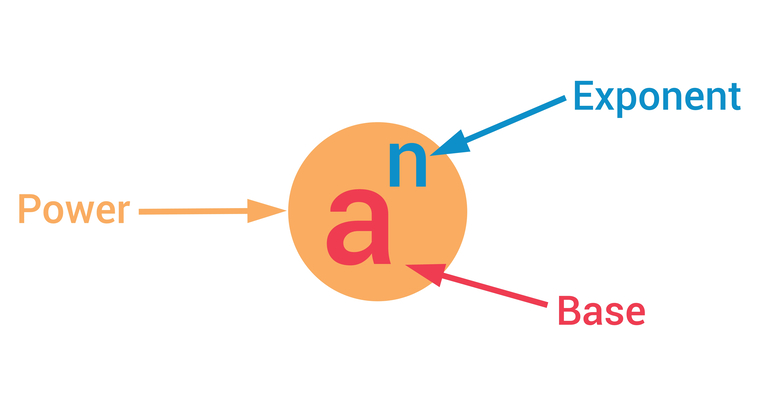
For example, in 2\(^{3}\), the base is 2 and the exponent is 3. We say “2 to the power of 3” or “2 raised to the 3rd power.”
The exponent tells us how many times to use the number in repeated multiplication. So, if we see 2\(^{3}\), this means that we are multiplying 2 by itself three times: 2 × 2 × 2 = 8.
Exponents are used to express repeated multiplication in a quick and clear way. They also show up in many real-life situations, such as:
- Calculating area or volume
- Measuring growth over time (like population or interest)
- Understanding scientific notation in math and science
When Do Students Learn About Exponents?
Students begin learning about exponents in upper elementary or early middle school, with deeper exploration continuing in algebra and beyond.
Grades 5–6 – Introduction to Exponents
Students start to understand what exponents mean and how they represent repeated multiplication.
Grades 7+ – Working with Powers and Exponential Expressions
Students apply exponent rules, work with powers of 10, and explore exponential growth and scientific notation.