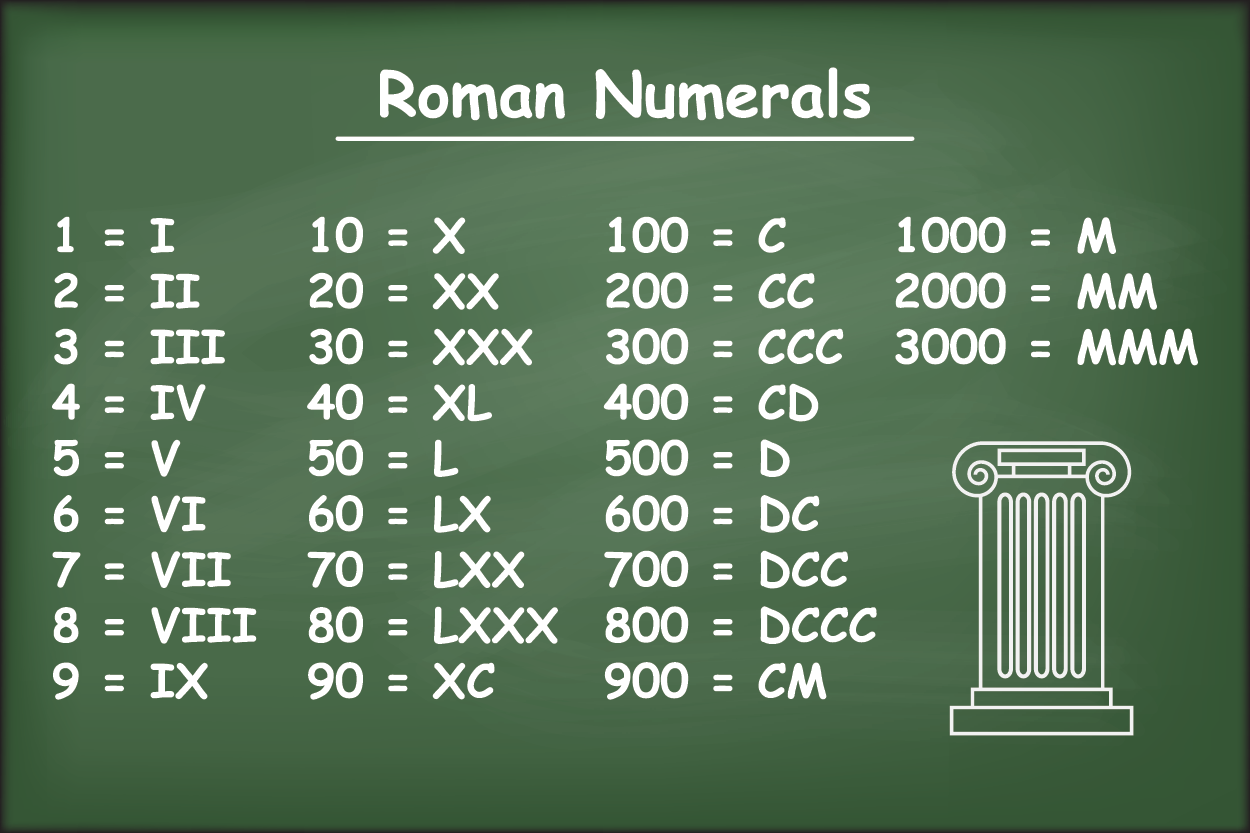






A symbol or mark used to represent a number.
A numeral is the written symbol we use to stand for a number. The number itself is the idea; it is the quantity or value. The numeral is how we write it down.
For example, the idea of "five" can be represented by numerals or words:
-
The numeral 5 (in the Hindu-Arabic system we use every day)
-
The numeral V (in Roman numerals)
-
The word "five"
All three refer to the same number, but each uses a different symbol to represent it. Those symbols are numerals.
This distinction matters because it helps students understand that numbers are abstract ideas, and numerals are just one way of expressing them. The quantity five exists whether we write 5, V, or use five fingers to show it.
In everyday math, the words "number" and "numeral" are often used interchangeably, and that is usually fine. But understanding the difference helps students think more clearly about what numbers actually are.
When Do Students Learn About Numerals?
Students encounter numerals from their very first math experiences, learning to connect written symbols to quantities.
Grades K–2 – Recognizing and Writing Numerals
Students learn to read and write numerals 0–9 and beyond, connecting each symbol to the quantity it represents through counting, drawing, and hands-on activities.
Grades 3–5 – Numerals in Different Systems
Students may encounter Roman numerals and other numeral systems, deepening their understanding that the same number can be represented in multiple ways.
Grades 6+ – Numerals in Algebra and Beyond
Students work with numerals alongside variables and symbols in algebraic expressions, continuing to build precise mathematical language.