A place or location.
In math, position refers to where something is located. We can describe a position using numbers, shapes, directions, or coordinates, depending on the context.
For example:
-
On a number line, the number 3 has a position to the right of 0.
-
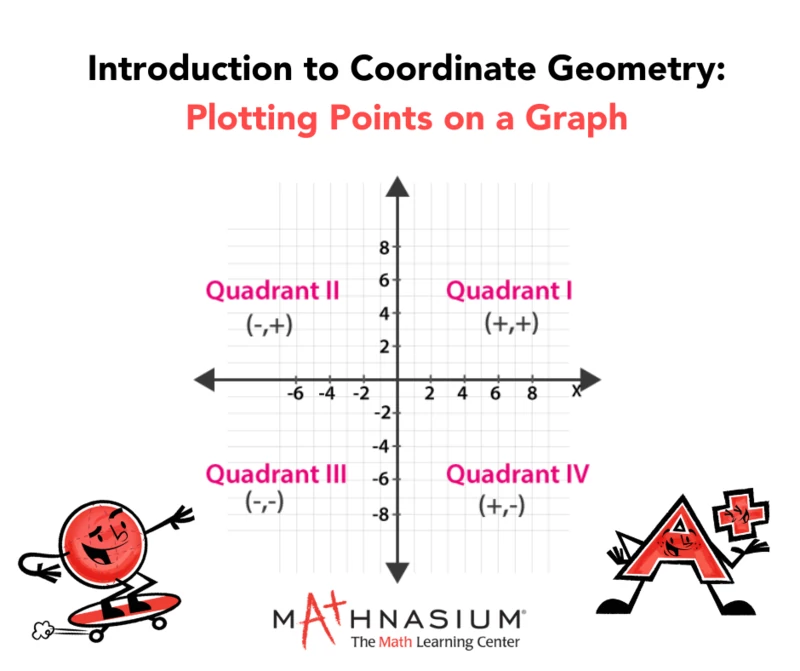
On a coordinate plane, the point (4, 2) tells us a location 4 units to the right and 2 units up from the origin.
-
In geometry, we can describe the position of shapes or points in space.
Position helps us talk about movement, order, distance, and location. It’s a key part of graphing, measurement, and data analysis.
When Do Students Learn About Position?
Students explore position early on through basic spatial awareness, then build on this in graphing and geometry.
Grades K–2 – Understanding Position
Students use simple words like “above,” “below,” “next to,” and “between” to describe positions and directions.
Grades 3–5 – Describing Position on Grids and Number Lines
Students use number lines, simple graphs, and maps to identify and describe positions.
Grades 6+ – Position in Coordinate Planes and Geometry
Students use ordered pairs to plot points, describe movement, and analyze shapes in geometry and algebra.