When we hear the word trigonometry, we often think of it as just another math topic, something for tests or homework problems. But in reality, its practical uses unfold in some of the most fascinating and unexpected ways.
In this guide, we’ll take a closer look at what trigonometry really is, how it works, and, most importantly, why it matters beyond the math classroom.
What Is Trigonometry?
The word trigonometry comes from the Greek words trigonon (meaning “triangle”) and metron (meaning “measure”). From its very name, we get a clear hint: trigonometry is the mathematics of measuring triangles.
More precisely, trigonometry is the branch of math that studies the relationships between the angles and side lengths of triangles. It’s especially focused on right-angled triangles, where one of the angles is exactly 90 degrees.
How Does Trigonometry Work? Trigonometric Ratios
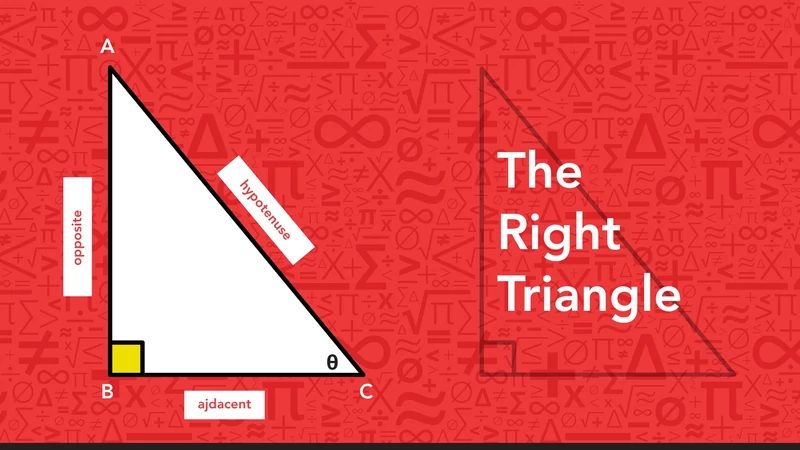
Trigonometry may sound complex, but at its heart, it’s built on just a few powerful ideas. It all begins with a right triangle, like the one you see here:
Let's walk through it as we look at Angle θ:
Angle B is the right angle (90°).
Angle θ is at point C—that’s the angle we’re working with.
AC is the hypotenuse, the longest side, opposite the right angle.
AB is the opposite side (also called perpendicular)—it’s across from angle θ.
BC is the adjacent side (also called base)—it lies next to angle θ.
Let’s ask ourselves: If we know angle θ and the length of one side, can we find the others?
Yes, and to do that, we use three main ratios that compare pairs of sides:
Opposite ÷ Hypotenuse
Adjacent ÷ Hypotenuse
Opposite ÷ Adjacent
These give us the three primary trigonometric functions:
sin(θ) = AB ÷ AC
cos(θ) = BC ÷ AC
tan(θ) = AB ÷ BC
Students often remember how to match these with SOH-CAH-TOA:
Sine = Opposite / Hypotenuse
Cosine = Adjacent / Hypotenuse
Tangent = Opposite / Adjacent
Now, sometimes we’re given the sides and want to find the angle. In those cases, we flip the ratio, like using hypotenuse ÷ opposite instead of opposite ÷ hypotenuse.
These flipped versions are called the reciprocal trigonometric functions:
csc(θ) = AC ÷ AB → reciprocal of sin(θ)
sec(θ) = AC ÷ BC → reciprocal of cos(θ)
cot(θ) = BC ÷ AB → reciprocal of tan(θ)
These are the core relationships that define trigonometry. And while they might seem like just one area of math, they actually support many others, from geometry and algebra to calculus and physics.
More importantly, they help us solve real-world problems that go far beyond the classroom. Let’s take a look at how.
See how Mathnasium’s proprietary teaching approach, the Mathnasium Method™, helps students learn and master any math topic, including trigonometry.
How Is Trigonometry Used in Real Life?
Trigonometry appears in many fields where angles, distances, or precise measurements are involved. From architecture to navigation and beyond, the following examples highlight where and how trigonometry is used.
1. Measuring Heights and Distances
Trigonometry allows us to measure the height of an object from a distance using just one angle and one known length on the ground.
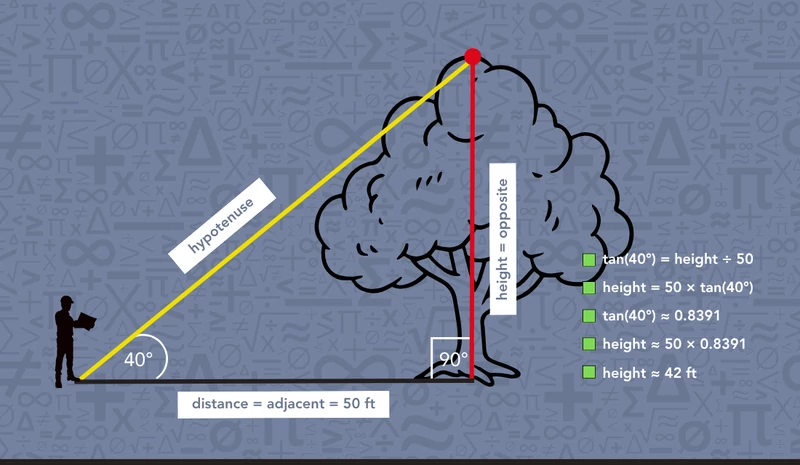
For instance, imagine you want to build a tree house, so you need to estimate the height of a tree near your house. You stand 50 feet away and use a simple tool like a protractor or a phone app to measure the angle from the ground to the top of the tree. The angle is 40°.
How can you use this information to figure out the height of the tree?
This is where the tangent function comes in. Tangent compares the height of the object (opposite side) to the distance from the object (adjacent side):
tan(40°) = height ÷ 50
To find the height, multiply both sides by 50:
height = 50 × tan(40°)
≈ 50 × 0.8391
≈ 41.96 feet
So, the tree is about 42 feet tall.
This method works for estimating the height of anything vertical, trees, buildings, towers, without having to leave the ground.
2. Engineering and Architecture
Trigonometry is used throughout engineering and architecture to design structures that are stable, accurate, and built to function as planned.
In engineering, ratios like sine and cosine help calculate angles and forces in bridges, buildings, and towers. For example, bridge designers use trigonometry to set the angles of triangular trusses so that weight is distributed evenly, reducing the risk of structural failure.
Architects rely on trigonometry to align features accurately, calculate angles for walls, and design elements like rooflines. They might use the tangent ratio to find a roof angle that drains rainwater efficiently without throwing off the building’s overall shape and balance.
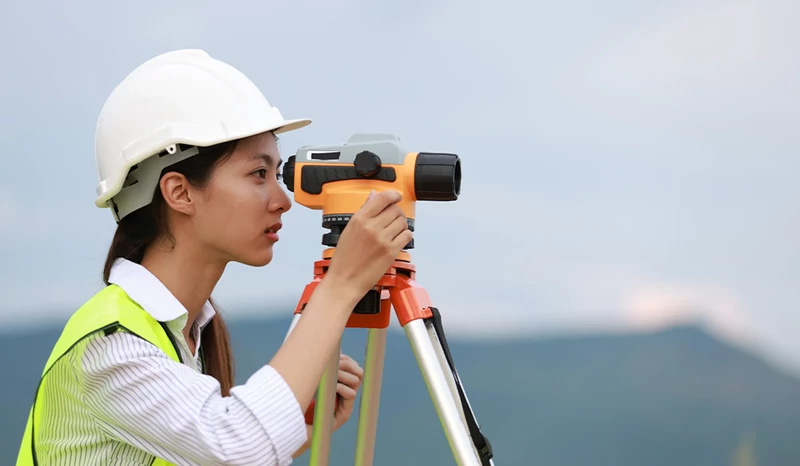
Trigonometry is also part of the planning stage of building a house. Surveyors apply it to measure land features and distances. Using the law of sines, they can estimate the width of a river by measuring angles from two points on one bank, which helps them decide where a bridge should be placed.
Trigonometry helps surveyors measure land with precision, supporting everything from site layout to large-scale construction planning.
3. Astronomy and Space Science
Long before modern satellites and space telescopes, astronomers used trigonometry to study the sky. By observing angles from two different points on Earth and applying trigonometric principles, they were able to estimate distances to nearby celestial bodies, a method known as parallax.
This approach allowed early astronomers to calculate the distance to the Moon and nearby planets using Earth-based measurements alone.
Today, trigonometry continues to support work in astronomy and space science. It’s used to determine the orbits of planets and satellites, analyze trajectories of spacecraft, and calculate distances between objects in space with precision.
4. GPS and Navigation
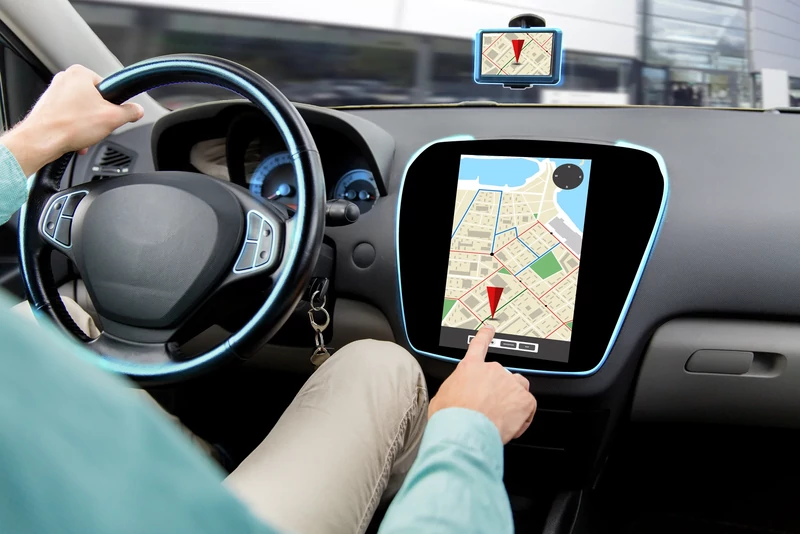
Modern navigation systems rely on trigonometry to calculate exact positions on Earth. GPS receivers, used in phones, cars, and airplanes, determine location based on the travel time of signals from multiple satellites.
Each satellite sends a signal with a precise timestamp. The receiver compares these times to figure out the distance to each satellite. Once the distances are known, it applies trigonometric principles to pinpoint its location.
This same approach supports aircraft flight planning, maritime navigation, and emergency response routing. Whether moving on land, in the air, or at sea, accurate navigation depends on trigonometry.
Trigonometry helps GPS systems calculate precise locations by measuring distances to satellites—a method used in everyday navigation.
5. Medical Imaging and Diagnosis
Trigonometry helps create clear images of the inside of the body using tools like ultrasound and CT scans. These machines work by sending waves, such as sound or X-rays, into the body and measuring how those waves bounce back or pass through different tissues.
To build the image, the system calculates angles and distances between the wave source, the tissues, and the sensors.
Trigonometric functions are part of this process, helping map out the shape and position of things like organs or bones. This allows doctors to see what’s happening inside the body and make decisions about care.
6. Video Game and Animation Design
Trigonometry is part of what makes video games feel real. Game designers use it to calculate how characters move, how objects rotate, and how things interact in both 2D and 3D environments.
For example, when a character turns, jumps, or aims at a target, the game engine uses angles and distances to figure out the exact position and direction. Trigonometric functions help control motion, camera angles, lighting effects, and collision detection, so everything on screen moves the way players expect.
Whether you're dodging obstacles or exploring virtual worlds, trigonometry is working behind the scenes to make the gameplay smooth and believable.
Trigonometry helps game designers animate movement, angles, and camera views that feel smooth and lifelike.
7. Physics and Robotics
Trigonometry helps explain how objects move through space. In physics, it’s used to calculate the path of a moving object, such as a basketball shot or a rocket launch. The angle and speed determine how far or how high the object will travel.
In robotics, trigonometry guides precise movements. A robotic arm, for example, adjusts its joints and angles to reach specific points and handle tasks accurately. These calculations depend on trigonometric functions.
From analyzing motion in science to programming machines to move reliably, trigonometry helps turn complex movement into something we can understand and control.
FAQs About Real-Life Applications of Trigonometry
Students often wonder how something like trigonometry connects to real life and what it actually means beyond the classroom. Below are some common questions we hear from learners who are curious, motivated, or simply trying to make sense of why this topic matters.
1. Do I really need to memorize trigonometric formulas, or is it more important to understand how to use them?
Understanding how and when to use the formulas is more important. Memorizing helps, but knowing what each ratio means and how to apply it in a problem is what really builds confidence and skill.
2. How is trigonometry different from geometry when solving everyday problems?
Geometry focuses more on shapes, areas, and properties of figures, while trigonometry deals with angles and side lengths, especially in triangles.
Trigonometry is often used when you need to measure or calculate something indirectly, like the height of a building or the angle of a ramp
3. Can understanding trigonometry make me better at other subjects like science or technology?
Yes. Trigonometry supports topics in physics, engineering, computer graphics, and even medical imaging. It helps students think more analytically and understand how math models real-world systems.
At Mathnasium, we encourage students to ask questions and connect math to real life, building a deep understanding across topics, including trigonometry.
Learn & Master Trigonometry with Top-Rated Mathnasium Tutors
Mathnasium is a math-only learning center that helps K-12 students of all skill levels excel in math.
Using a proprietary teaching approach called the Mathnasium Method™, our specially trained math instructors offer face-to-face instruction in a supportive group environment to help students master any math topic, including trigonometry, commonly taught in middle and high school math.
Students begin their Mathnasium journey with a diagnostic assessment that allows us to understand their unique strengths and knowledge gaps. Guided by assessment-based insights, we develop personalized learning plans that will put them on the best path towards math excellence.
Whether your student is looking to catch up, keep up, or get ahead in their math class, find a Mathnasium Learning Center near you, schedule an assessment, and enroll today!
PAW Patrol: The Dino Movie arrives exclusively in theaters on August 14. Celebrate the release of PAW Patrol: The Dino Movie with five dinosaur rescue missions that build strong math foundations.
Your complete guide to fractions on a number line, with step-by-step instructions, practice exercises, and answers to the most common questions on the topic.
Our tutors break down why and how to simplify square roots, with step-by-step examples, practice problems, and answers to the questions students ask most.


 (972) 231-6284
 (972) 231-6284