You might notice the word "decomposing" for the first time on a worksheet, in a number bond diagram, or when your teacher brings it up in class. At first, splitting a number apart can look like an unnecessary detour from a simple problem.
However, once you understand why it works, you'll see why we practice decomposing before jumping straight to the shortcut.
Today, the Mathnasium team will walk you through what it means to decompose a number, why we practice it before the shortcut, and some fun ways you can try it yourself.

What Does It Mean to Decompose a Number?
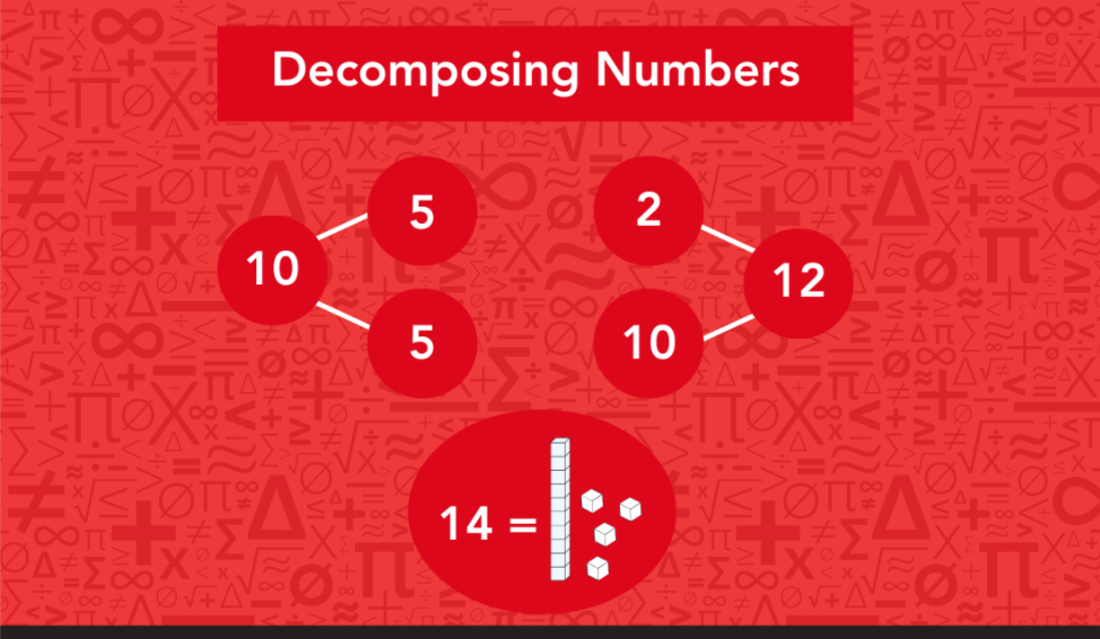
To decompose a number means breaking it into two or more smaller parts that are easier to add, subtract, or reason about than the whole number was.
You'll usually see two kinds of decomposition.
-
We split by place value, so 47 becomes 40 + 7, a group of four tens and seven ones.
-
We break a number apart into number bonds instead, so 8 becomes 5 + 3, or 6 + 2, depending on what we're aiming for.
Both work for the same reason. We can split our base-ten number system apart and put it back together without ever changing its value. 47 is still 47 whether we see it as 40 + 7 or as 30 + 17.
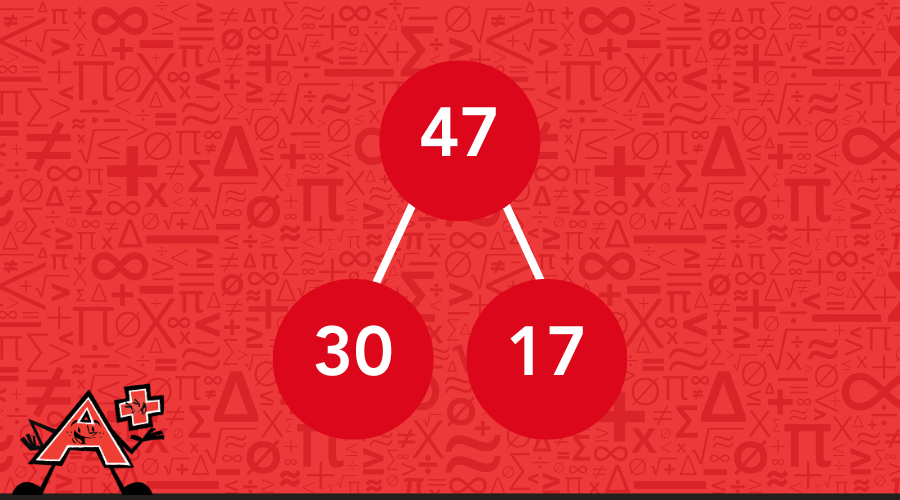
The same holds for number bonds. 8 is still 8 whether we split it into 5 + 3 or 6 + 2.
The number itself doesn't change, no matter how we split it apart. That's the flexibility we rely on every time we decompose.
📕 You May Also Like: What Are Number Bonds in Math? A Complete Overview
How Decomposing Numbers Works in Addition and Subtraction
Decomposing a number turns one hard problem into a few easier ones. We use this idea two ways when we add and subtract, and both keep the value of the original number exactly the same.
How to Decompose by Place Value
Decomposing by place value might look familiar when you see it, because it's the same reasoning behind the standard algorithm you learn in class. We split each number into tens and ones, add or subtract the like parts, then recombine them into the final answer.
Let's work through 47 + 25.
60 + 12 = 72.
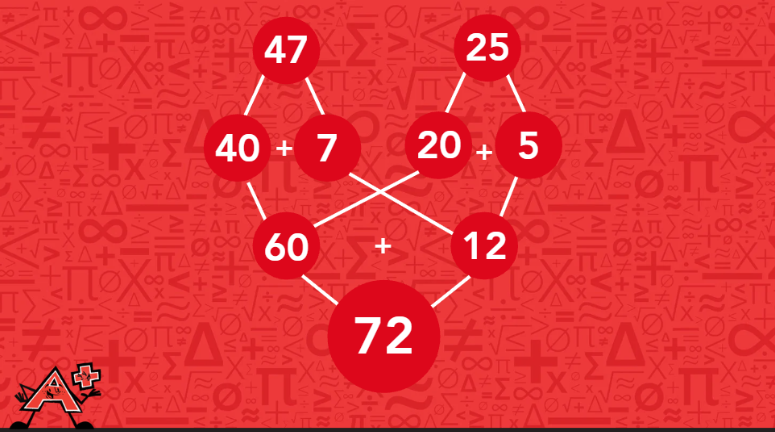
We solved two easier problems instead of one harder one, and the answer came out the same either way.
Subtraction works the same way, except we sometimes need to decompose the minuend first to make the subtraction possible.
Let's work through 52 − 27.
20 + 5 = 25.
You might hear this step called "regrouping" in class. It's the same idea at work. We decompose the minuend so the subtraction goes through cleanly.
📕 You May Also Like: What Is Regrouping in Math? A Step-by-Step Guide
How to Decompose to Bridge Through a Friendly Number
The other common use for decomposing is breaking one number apart to complete a friendlier number like ten.
We take just enough from one number to complete the other to ten, since ten is the easiest number for us to add onto. Then we add whatever is left over.
Let's work through 8 + 5.
10 + 3 = 13.
We reached 13 through a friendlier ten instead of counting up from 8.
📕 You May Also Like: Complete Guide to the Making Ten Addition Strategy
Why Decomposing Numbers Matters Beyond the Worksheet
We rely on the exact reasoning behind the standard algorithm every time we decompose 47 + 25, and that reasoning carries over to much bigger numbers. If you're in fourth or fifth grade, you'll split 470 + 250 the exact same way.
-
400 + 200 = 600
-
70 + 50 = 120
600 + 120 = 720.
The reasoning stays exactly the same as the numbers grow. We eventually rely on that same thinking to handle mental math with numbers far larger than these. This is why decomposing sticks long after the worksheet is gone.
If you understand why 47 splits into 40 + 7, you’ll easily figure out why the same reasoning already covers 470 + 250. It travels with you to every new problem, without needing to be relearned each time the numbers get bigger.
We only teach the standard shortcut once you can decompose and recombine numbers with confidence. A shortcut only means something when you understand what it's shortcutting.
Try figuring out why taking 2 from 5 and giving it to 8 doesn't change the answer. Nothing disappears. The 2 just moves from one side of the plus sign to the other, and the total stays exactly the same.
Practice Decomposing Numbers at Home
Decomposing gets easier with practice, and you don't need a worksheet to build that skill. A few household objects and a few minutes together are usually all it takes.
Hands-On Practice Activities
Decomposing doesn't require a worksheet to practice. Physical objects make the split visible, which helps it stick with you.
Try a few of these at home.
-
Split a small stack of coins or blocks into two piles, then name the split a different way each time. Six blocks might become 2 and 4, or 5 and 1.
-
Use two-color counters to show 8 as 5 and 3, or as 6 and 2. Flip a few counters over and count the new split together.
-
Pull apart a two-digit number with base-ten blocks or a hundred chart before adding. Show 34 as 3 tens and 4 ones before combining it with another number.
Decomposing Problems to Try Yourself
Let's put these strategies to work. Try each problem using the steps we practiced earlier, then check your answers at the end of this guide.
-
9 + 5
-
7 + 6
-
36 + 19
-
58 − 23
-
63 − 28
Frequently Asked Questions About Decomposing Numbers
Here are a few questions about decomposing numbers we typically hear at Mathnasium.
1. What grade do you learn to decompose numbers in?
You'll probably start decomposing numbers in kindergarten and first grade, then keep building on it all through elementary school. Place value decomposition becomes especially handy in second and third grade, once your addition and subtraction problems start using bigger numbers.
2. Is decomposing the same thing as regrouping?
No. Decomposing is the broader idea of breaking a number into parts. Regrouping is the specific version of that idea we use inside the standard subtraction algorithm, so every regrouping step is a decomposing step, but not every decomposing step is regrouping.
3. Do I need to master decomposing before moving on to bigger numbers?
Yes! Decomposing by place value is the same reasoning you'll use for hundreds, thousands, and eventually mental math, so the extra practice now saves you from relearning it later with bigger numbers.
4. Does decomposing help with everyday math, outside of schoolwork?
Absolutely. Breaking a number into tens and ones is exactly what we do when we count coins, make change, or add up a grocery total in our heads. When you become comfortable decomposing on paper, the same thinking starts showing up in everyday moments without you even trying.
 Mathnasium's specially trained instructors guide students through decomposing numbers with hands-on tools and personalized guidance.
How Mathnasium Helps Children Build Lasting Number Sense
Mathnasium is a math-only learning center that helps K-12 students of all skill levels excel in math.
Our instructors place a strong emphasis on developing reliable number sense, as this is a skill that will carry students through every stage of their math journey.
To build a solid foundation for number sense and any other skill, we employ the Mathnasium Method™, a proprietary teaching approach designed around each student's skill level and learning styles.
Here’s what our method includes:
-
Assessment and Personalized Learning Plans: Each student begins with a diagnostic assessment that identifies skill level, learning goals, and learning style, not a score. From those insights, we build a personalized learning plan suited to decomposing, number sense, or more advanced concepts.
-
Teaching for Understanding: Our specially trained instructors use clear language and mental, verbal, visual, tactile, and written techniques so each concept makes sense.
-
Problem-Solving and Critical Thinking: We give students time to work through problems independently, which builds trust in their own reasoning. When we step in, we explain the how and why behind each answer, building skills for math and beyond.
-
An Engaging and Fun Learning Environment: Sessions include games, earned rewards, and time for homework help once daily learning plan topics are done. Students build confidence alongside fluency and develop a more positive relationship with math over time.
The impact extends beyond the classroom.
-
94% of parents report an improvement in their child's math skills and understanding
-
93% of parents report their child's improved attitude toward math after attending Mathnasium
-
90% of students saw an improvement in their school grades
With over 1,100 learning centers across North America, there is likely a Mathnasium close to you.
Families across Alexandria City and nearby communities, including students at James K. Polk Elementary School, trust Mathnasium of Alexandria City to build lasting number sense. Decomposing is Virginia's own Standards of Learning language, covered further in Mathnasium of Tuckahoe's guide to Virginia SOL Math by Grade.
If decomposing numbers or any other early math concept is giving your child trouble, our team is ready to help.
📅 Schedule a Free Assessment at Mathnasium of Alexandria City
Not near Alexandria City?
📍 Find a Mathnasium Learning Center Near You
Psst! Check Your Answers Here
How did you do? Let's work through it together.
-
We start with 9 because it's closer to 10. Since 9 needs 1 more to make 10, we take 1 from 5, which leaves 4. So, the solution is 10 + 4 = 14.
-
We start with 7 because it's closer to 10. Since 7 needs 3 more to make 10, we take 3 from 6, which leaves 3. The solution is 10 + 3 = 13.
-
We decompose 36 into 30 + 6 and 19 into 10 + 9. Adding the tens gives 30 + 10 = 40, and adding the ones gives 6 + 9 = 15. Combining those, the solution is 40 + 15 = 55.
-
We decompose 58 into 50 + 8 and 23 into 20 + 3. Subtracting the tens gives 50 − 20 = 30, and subtracting the ones gives 8 − 3 = 5. So, the solution is 30 + 5 = 35.
-
We decompose 63 into 50 + 13, since one ten moves into the ones place to make the subtraction possible. Subtracting the tens gives 50 − 20 = 30, and subtracting the ones gives 13 − 8 = 5. So, the solution is 30 + 5 = 35.


 (703) 956-5150