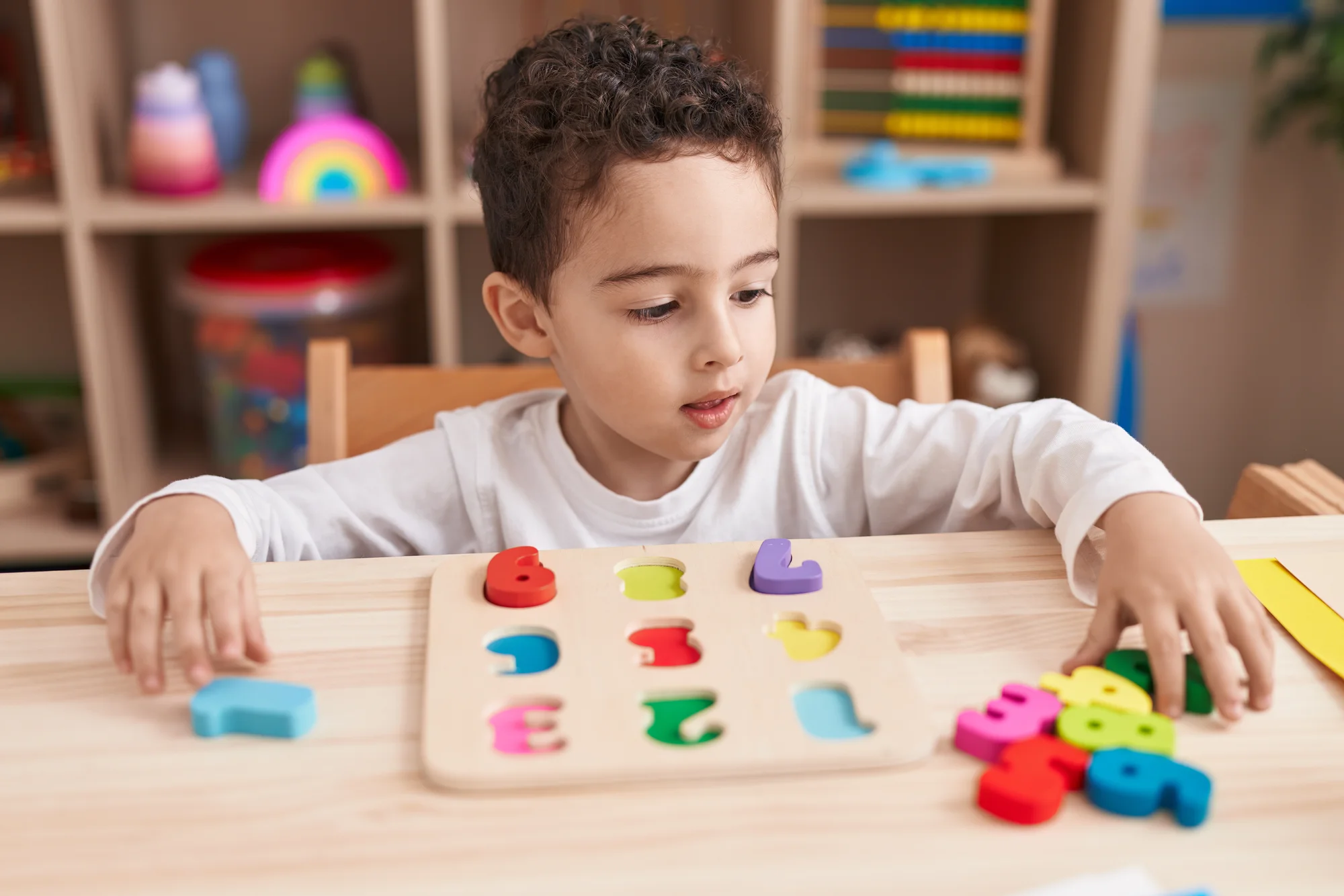
Children use numbers constantly, when estimating time, comparing sizes, noticing patterns, or making quick decisions. Yet many parents don’t realize that these small, everyday moments form the basis of a much bigger skill: number sense.
When number sense is strong, math feels logical and approachable. When it’s weak, even simple tasks can become confusing, and more advanced topics feel out of reach.
At Mathnasium, we’ve helped thousands of students strengthen this foundational skill, often after years of frustration. Many of the challenges families bring to us, difficulty with basic operations, slow fact recall, struggles with fractions or Prealgebra can be traced back to gaps in early number intuition. Once that foundation is repaired, students typically progress faster, participate more confidently, and regain enthusiasm for learning.
This guide draws on the instructional practices we use every day in our centers. It breaks down what number sense truly means and shares seven practical ways you can nurture it at home. Whether your child is just beginning their math journey or needs support filling in earlier gaps, these strategies provide a clear path toward stronger understanding and lasting confidence.

What Is Number Sense?
Number sense is like the foundation of a house; everything else in math relies on it being solid.
Another way to think of number sense is as a child’s intuitive feel for numbers and their relationships. It’s the ability to think flexibly about quantity, estimate reasonably, and recognize when an answer “makes sense.”
Children start building this foundation as soon as they begin to grasp numbers and how they behave, which means even before they begin to formally build their math skills in the classroom.
At Mathnasium, we work with K-12 students, sometimes even preschoolers, to develop, improve, and repair their number sense, and we’ve seen how dramatically it changes the way a child approaches math.
Students with well-developed number sense can manipulate numbers mentally, spot errors quickly, and approach unfamiliar problems with confidence, even when they haven’t seen the exact format before.
Children without this foundation often rely on memorized procedures without truly understanding when or why to use them. This leads to frustration, hesitation, and confusion, especially when the context or format shifts, something that happens frequently as math becomes more complex.
The ideal window for developing number sense is during the early elementary years, typically ages 5 to 9, but it can and should be honed or even repaired at any age.
In fact, many upper-grade students who come to Mathnasium for help with fractions or Prealgebra aren’t struggling with the new material at all. They’re missing the number sense that should have developed years earlier.
📕 You May Also Like: What Is Number Sense & Why It Matters in Early Math Education
Proven Tips to Build Number Sense at Home
Number sense develops through repeated experiences that help children connect quantities, patterns, and relationships.
With the right tools and strategies, parents can create small, everyday moments that strengthen this foundation and make math feel more intuitive. Here are a few simple ways to support that growth at home:
1. Use Number Lines and Visual Tools to Anchor Quantity
Number sense begins with an intuitive feel for quantity.
-
How big a number is
-
How far apart values are
-
How amounts compare
Number lines help children build this internal map. As kids place or estimate values on a number line, they learn spacing, magnitude, and natural benchmarks like halves and tens. This makes ideas such as estimation more accessible and meaningful.
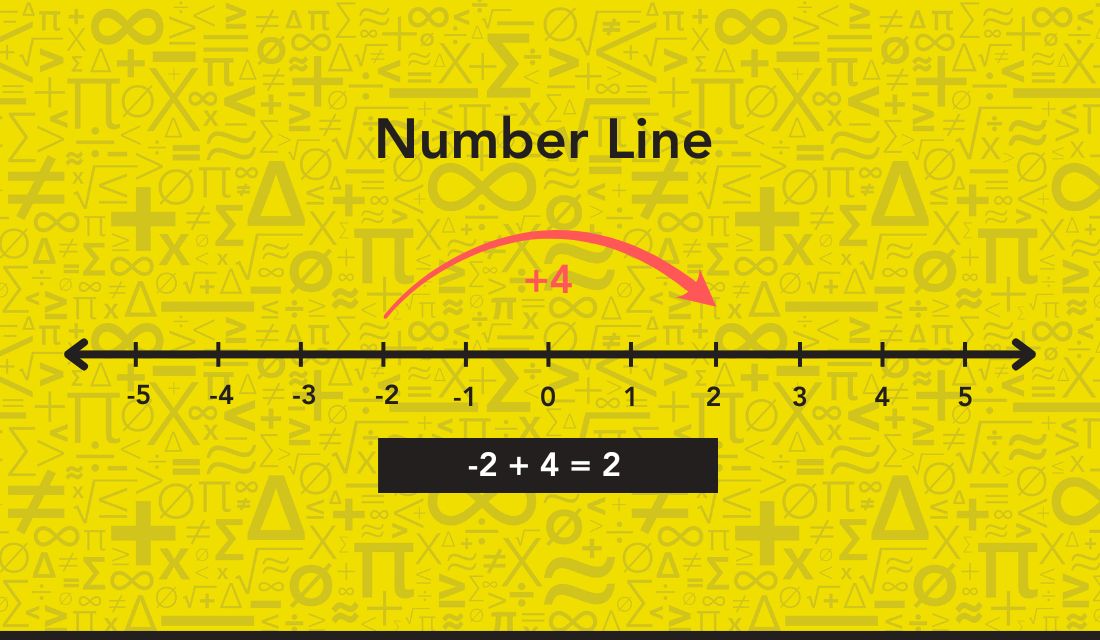
Other visual tools strengthen part–whole understanding. Dot arrays, ten frames, and bar models show children how numbers break apart and come together. These visuals reinforce quantity relationships that children can later rely on during operations and problem solving.
At Mathnasium, tutors use number lines and visual models daily to reinforce fluency and numerical reasoning. These tools give students something concrete to hold onto as they make sense of numbers.
📕 You May Also Like: How to Use Math Manipulatives Effectively at Home
2. Ask Your Child to Explain Their Thinking
Early Numbers, Big Ideas report highlights that young children deepen number sense when they verbalize comparisons, connect quantities to real situations, and justify their reasoning.
Discuss their process by asking:
-
“How did you figure that out?”
-
“What made you choose that strategy?”
-
“Can you show me another way to solve it?”
These open-ended questions gently prompt children to reflect and connect ideas, and as they verbalize their process, they build flexibility, confidence, and a better sense of number relationships.
📕 You May Also Like: How to Nurture Confident Math Thinkers, Not Just Answer-Getters
3. Break Numbers Apart and Put Them Back Together
Children with well-developed number sense understand that numbers are flexible, which means they can be composed and decomposed in ways that simplify thinking.
Practicing number bonds, “making 10,” and splitting values (such as seeing 14 as 10 and 4) gives students a foundation for mental math, place value, and regrouping.
This work also prepares students for operations.
- Addition and subtraction become easier when children can reorganize numbers naturally.
- Multiplication becomes more intuitive when students break factors into friendlier parts.
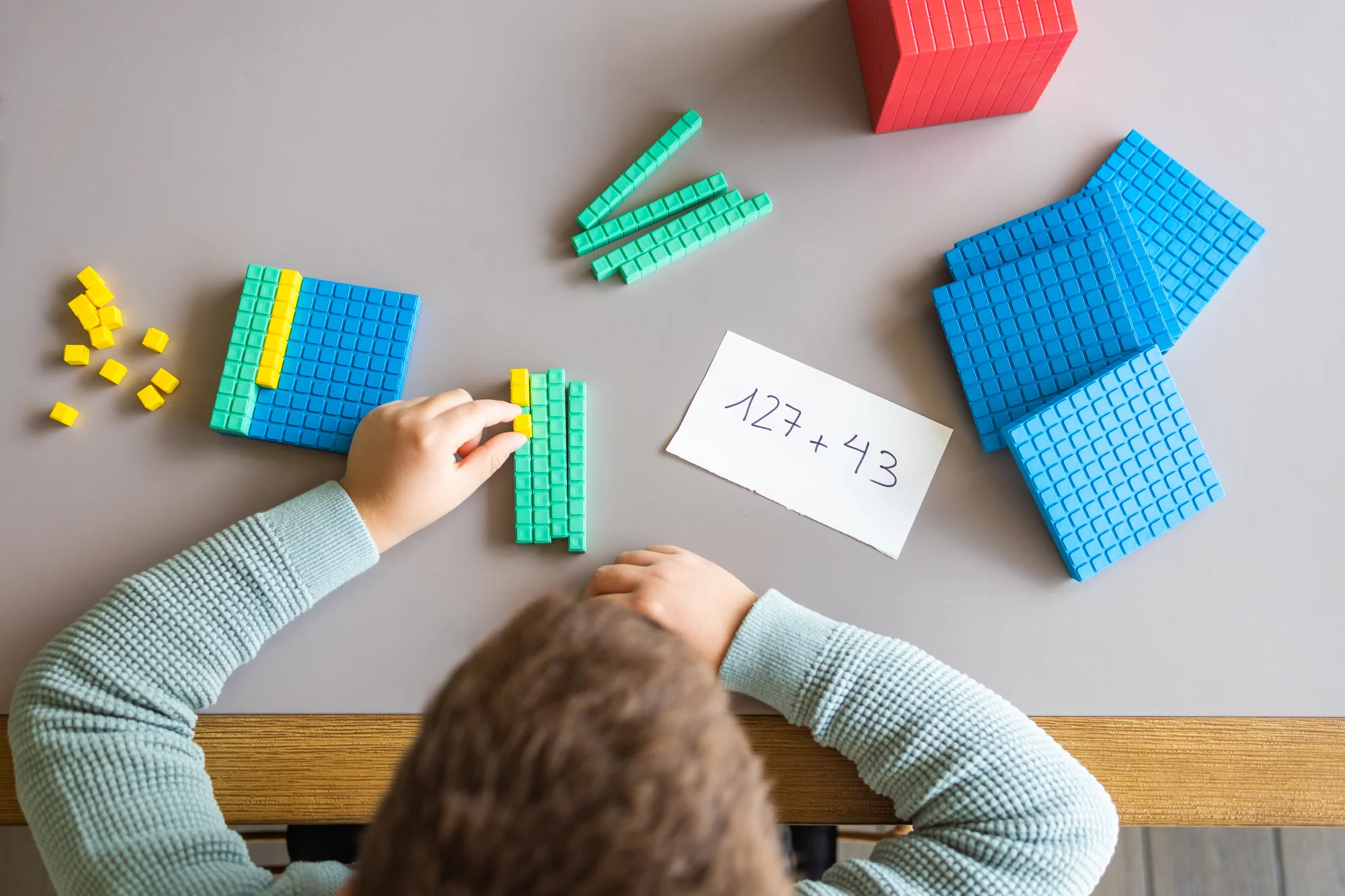
Hands-on tools like base-ten blocks make place value concrete and intuitive.
4. Estimate First, Then Solve
Estimation is an overlooked pillar of number sense. This is a simple “sense-check” of an answer before calculating.
Research consistently shows that estimation improves both efficiency and problem-solving confidence. Students who regularly estimate develop sharper reasoning because they learn to evaluate whether an answer is reasonable rather than relying solely on procedures.
Encouraging students to ballpark totals, like guessing a grocery bill or predicting a time interval, builds confidence and gives them a reference point for accuracy.
Use natural situations: “Do you think this will take more or less than 10 minutes?” or “Is the total closer to 20 or 30?”
These quick prompts strengthen approximation skills without making math feel like a chore.
5. Compare and Order Numbers Often
Children who frequently compare quantities develop better intuition for number magnitude, which later supports understanding of place value and operations.
Try asking questions like:
-
“Which is larger: 402 or 249? How do you know?”
-
“Is this closer to 30 or 40?”
-
“Which number is almost halfway to 1,000?”
Encourage your child to use more than just digit length or surface cues. Strategies involving landmark numbers, such as multiples of 10 and 100, midpoints like 500, or benchmarks like 0.5, help them evaluate magnitude more intuitively.

Explaining ideas out loud helps children develop clarity and confidence in their reasoning.
6. Play Strategy-Based Math Games (Not Speed Drills)
Games make math enjoyable, but choose wisely, as some can introduce more pressure than fun in the learning process.
Strategy-based activities, such as “Make Ten,” even/odd sorting, or simple mental-math puzzles, exercise kids’ pattern recognition and flexible thinking. These games reward reasoning rather than speed, which helps children feel capable rather than pressured.
Avoid games that focus only on rapid recall. While fact fluency is important, speed-based drills can create anxiety and discourage deeper number understanding.
Mathnasium’s own approach to fluency emphasizes strategy first and efficiency second. The goal is comfort with numbers, not racing a timer.
📕 You May Also Like: 10 Fun Math Games to Play at Home with Your Child
7. Bring Numbers into Real Life, Strategically
A recent study by Abaño et al. (2023) found that students showed better performance and engagement when teachers used real-life examples to explain mathematical ideas.
Activities like estimating grocery totals, adjusting recipes, or planning how to spend allowance money gave students a clearer sense of how math helps them solve problems in daily life.
At home, you can do the same:
-
Compare prices and quantities while shopping
-
Measure ingredients while cooking
-
Estimate time, distances, or change
-
Budget money for saving, spending, or giving

Mathnasium is a math-only learning center dedicated to transforming how students think and feel about math.
How Mathnasium Helps Build Number Sense and Math Mastery
Number sense is the starting point for every student who walks through our doors at Mathnasium.
Whether a child is in first grade or middle school, we begin with a diagnostic assessment that identifies how they understand numbers, where gaps have formed, and which strategies come naturally to them.
From that assessment, we create a personalized learning plan designed to strengthen foundation skills and deepen their understanding of how math works.
Our proprietary teaching approach, The Mathnasium Method™, combines personalized learning plans with mental, visual, verbal, tactile, and written instructional techniques to teach in a way that makes sense to each student, so they can make real progress at their own pace.
Our goal isn’t to train students to memorize procedures. It’s to help them understand why math works.
The impact is immediate and visible. Students begin estimating before calculating. They recognize patterns and question answers that “don’t look right.” They explain strategies clearly instead of guessing silently.
Families tell us they notice changes at home, too: more confidence, less hesitation, and a willingness to try new approaches without fear of being wrong.
The results speak for themselves:
-
94% of parents report improvement in their child’s math skills and understanding
-
93% report a more positive attitude toward math
-
90% of students see better grades in school
With over 1,000 learning centers nationwide, Mathnasium brings premium-value math tutoring near you.
Families in and near Midlothian, VA, can visit us at Mathnasium of Midlothian for a consultation or a free assessment. Instruction is available both in-center and online.
Ready to discover how your child learns best?
Schedule a free diagnostic assessment at Mathnasium of Midlothian today.


 (804) 378-2211