"Once upon a time, there was an old mother pig who had 3 little pigs…"
Wait, that doesn’t feel quite right.
Shouldn’t it be “three little pigs” instead?
Today we’re going to explore when to write numbers as words and when to use digits, and why one feels natural, and the other doesn't. Once you see the logic behind it, the choice becomes easy.
We’ll walk you through simple steps for converting between the two formats and give you a chance to practice so you always know what to do when this comes up.

The Basics: What Are Digits and What Are Numbers in Words?
Digits are the ten symbols we use to write every number: 0, 1, 2, 3, 4, 5, 6, 7, 8, and 9. By combining them and using place value — ones, tens, hundreds, and so on — we can represent any number we need.
Numbers in words, or word form, is simply writing those same numbers using letters instead of symbols. So 7 becomes seven, 15 becomes fifteen, and 100 becomes one hundred.
So we're essentially looking at the same values, just two different ways of expressing them.
📕 You May Also Like: Why Students Learn Standard, Word & Expanded Number Forms
When to Use Digits
Digits work best when we're doing math or working with numbers in a practical way:
-
In calculations and multi-step problems: 47 + 28 is cleaner and easier to work with than forty-seven plus twenty-eight
-
On number lines, charts, and graphs
-
When working with measurements like 5 kg, 3:30 PM, or 98 points on a test
-
When comparing or ordering numbers: for example, which is greater, 342 or 289?
-
When writing dates: October 10, 1991
-
With large numbers in data and statistics: a city with 285,000 residents
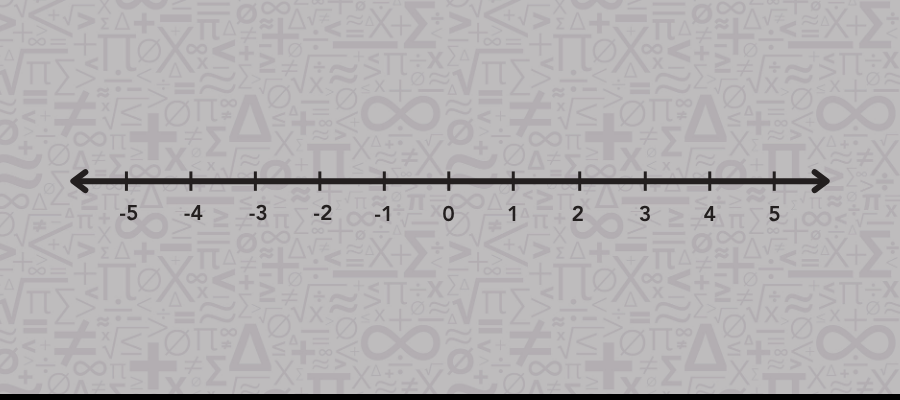 On a number line, digits are always the right call.
When to Use Numbers in Words
We write numbers in word form in documents and prose, so usually in situations that require precision (imagine adding an extra zero at the end of a check!), and leave room for the extra work this method requires.
Here is a quick overview of when we use numbers in word form:
-
When directions specifically say "write in word form" or "write this number in expanded and word form," spell it out.
-
When a word problem asks us to explain our answer or show our thinking, words make the reasoning visible, not just the result.
-
In everyday writing, stories, labels, and lists often read more naturally with words. "She had ten markers" flows better than "She had 10 markers."
-
On official forms, amounts are always written in word form to avoid confusion
-
When a number begins a sentence, it is always written in words: "Forty-two students attended the event."
-
In formal essays and literature, numbers from zero to one hundred are typically written in words

In written work like essays and letters, word form is the natural choice.
How to Turn a Number Into Words
When we want to turn a number into word form, we work from left to right, one group of digits at a time. Let's see that with 2,479.
Step 1: Group the digits by place value
2,479 has four groups: 2 thousands, 4 hundreds, 7 tens, and 9 ones.
Step 2: Read each group
-
2 thousands → two thousand
-
4 hundreds → four hundred
-
7 tens and 9 ones → seventy-nine (tens and ones always combine into a single expression)
Step 3: Put it all together
That’s two thousand, four hundred seventy-nine.
Now let's try the same process with a few more numbers:
-
308 → three hundred eight
-
4,572 → four thousand, five hundred seventy-two
-
63,419 → sixty-three thousand, four hundred nineteen
📕 You May Also Like: How to Read & Write Large Numbers: Millions, Billions, & Beyond
How to Turn Words Back to a Number
When we want to go the other way, from word form back to digits, we scan the words for the group names and work from left to right. Let's see that with "forty-five thousand, three hundred twelve."
Step 1: Identify the group names
We scan for words like hundred, thousand, and million because these tell us which group each part belongs to:
-
forty-five thousand
-
three hundred
-
twelve
Step 2: Turn each group into digits
We convert each group one at a time, working from left to right:
-
forty-five thousand → 45
-
three hundred → 3
-
twelve → 12
Step 3: Place each group in its correct position
We write the groups in order from largest to smallest:
45,312
Shall we try a few more examples?
-
two hundred sixty-three → 263
-
seven thousand, four hundred five → 7,405 (no tens, so we write a zero to hold that place)
-
ninety-one thousand, eight hundred fifty → 91,850
📕 You May Also Like: How to Spell Numbers from 1 to 100 (+ Mistakes to Avoid)
Common Mistakes When Writing Numbers in Words
We've noticed students often make the same errors when writing numbers in words. We've rounded them up here. Take a close look and make sure none of these catch you out.
1. Missing hyphens
Two-digit numbers from twenty-one to ninety-nine always need a hyphen. Here are some common examples:
-
"forty seven" (incorrect) →"forty-seven" (correct)
-
"thirty three" (incorrect) →"thirty-three" (correct)
-
"sixty two" (incorrect) → "sixty-two" (correct)
2. Using "and" in the wrong place
In most school settings, "and" is reserved for decimals.
"Three hundred and twelve" (incorrect) → "three hundred twelve" (correct) — unless your teacher specifically uses that convention.
3. Tricky spellings
These are the ones that catch students most often:
-
"fourty" (incorrect) → "forty" (correct)
-
"eightyy" (incorrect) → "eighty" (correct)
-
"ninty" (incorrect) → "ninety" (correct)
-
"tweleve" (incorrect) → "twelve" (correct)
📕 You May Also Like: 7 Common Mistakes Students Make in Math Word Problems
Practice Time: Try Writing Numbers in Words and Digits
Think you've got it? Work through each part below and check your answers at the bottom of the guide.
Part A: Digits to Words
Write each number in word form.
-
847
-
3,092
-
56,714
Part B: Words to Digits
Write each number in digit form.
-
four hundred nine
-
twelve thousand, sixty-three
-
eighty-five thousand, two hundred forty-seven
Part C: Which Should I Use?
For each situation, decide whether the digits or the word form is more appropriate, then write the number correctly.
-
You are starting a sentence in a formal essay with the number 7. How should you write it?
-
In a science report, you need to record a precise measurement of 0.005 grams. Which form do you use?
-
In a fiction story, you want to include the number 42. Which form is typically preferred?
-
You are writing the date of your birth. How do you write the day and year?
 At Mathnasium, we use personalized learning plans and interactive teaching techniques to help students master any math skill.
How Mathnasium Helps Students Master Any Math Skill
Mathnasium is a math-only learning center dedicated to helping K-12 students of all skill levels learn and master math.
Whether your student needs to (re)build foundational skills like place value and number sense or is ready for a challenge beyond the curriculum level, we offer a personalized path forward powered by our proprietary teaching approach, the Mathnasium Method™.
Our approach begins with a diagnostic assessment that gives a clear picture of their current skills and knowledge gaps. Using these insights, we design a personalized learning plan tailored to their needs and goals.
When the plan is ready, our instructors follow it closely, delivering face-to-face math instruction in a supportive and fun environment.
During sessions, we help students not only reach the final answers but also see both the how and the why behind it. In time, they gain valuable problem-solving skills and critical thinking tools to use in math and life.
Our sessions often don’t feel like lectures. Activities are often game-based and hands-on, keeping students engaged and truly enjoying the process. We celebrate every step of progress and use meaningful rewards, so confidence grows right alongside skill.
The results are measurable:
-
94% of parents report an improvement in their child's math skills and understanding
-
93% of parents report their child's improved attitude toward math after attending Mathnasium
-
90% of students saw an improvement in their school grades
Mathnasium operates over 1,100 learning centers, bringing our proven approach close to your community.
For families in and near Alexandria, VA, Mathnasium of Mount Vernon is the go-to local center serving students across the Mount Vernon area and surrounding communities in Fairfax County.
Whether your child is looking to catch up, keep up, or get ahead in math, we are happy to assist!
Ready to get started?
📅 Schedule a Free Diagnostic Assessment at Mathnasium of Mount Vernon
Not near Mount Vernon?
📍 Find Mathnasium Learning Centers Near You
Pssst! Check Your Answers Here
If you've worked through our practice problems, check your results below.
Part A: Digits to Words
-
847 → eight hundred forty-seven
-
3,092 → three thousand, ninety-two
-
56,714 → fifty-six thousand, seven hundred fourteen
Part B: Words to Digits
-
four hundred nine → 409
-
twelve thousand, sixty-three → 12,063
-
eighty-five thousand, two hundred forty-seven → 85,247
Part C: Which Should I Use?
-
Seven: when a number begins a sentence, it is always written in words.
-
0.005 grams: in scientific and technical writing, digits are preferred, especially for precise decimal measurements.
-
forty-two: in fiction and formal essays, numbers from zero to one hundred are typically written in words.
-
Digits: dates are always written in digit form: January 15, 2024.


 (571) 281-7202