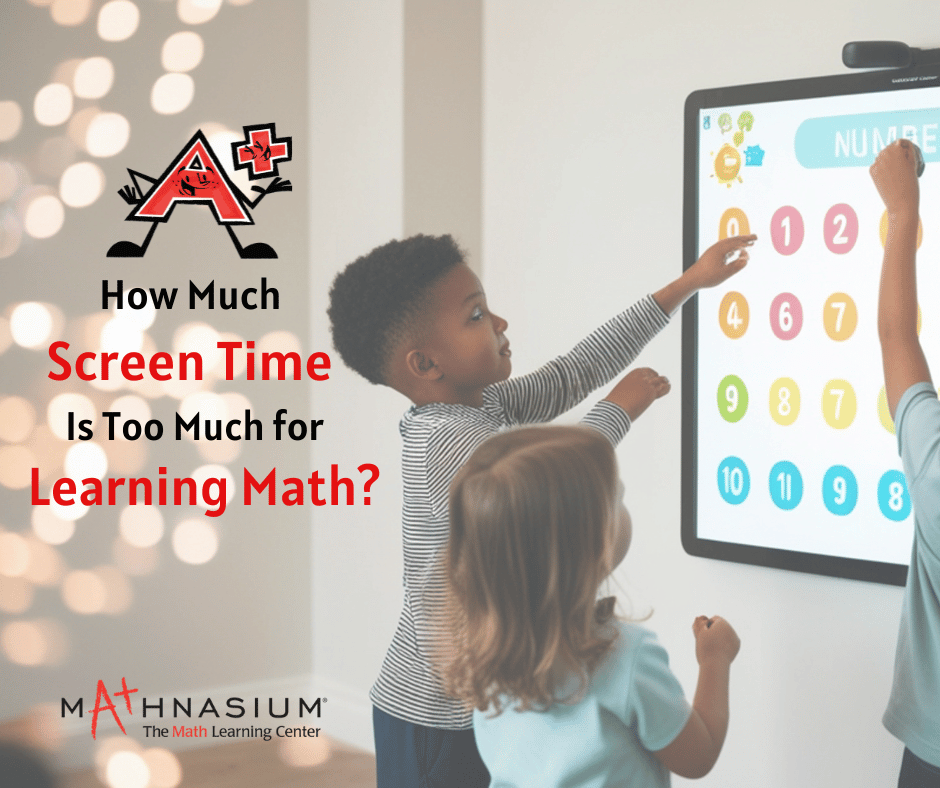
Screens are everywhere. From online classes and educational apps to YouTube tutorials and homework portals, technology has become a regular part of how kids learn math. But with so many hours spent in front of a screen, many parents are asking the same question: How much screen time is actually too much?
The answer isn't as simple as counting hours. What matters most is how children use their screen time not just how long they're on a device.
Not All Screen Time Is Created Equal
Imagine two students.
Emma spends 30 minutes watching short math videos but rarely solves problems herself. She enjoys the animations, but when it's time for a quiz, she struggles to remember what she watched.
Meanwhile, Noah spends 20 minutes using an interactive math program that asks him to solve problems step by step. Afterward, he works through a few practice questions with a tutor who explains his mistakes.
Both children spent time on a screen, but Noah's experience was active and engaging, while Emma's was mostly passive.
That's the difference that matters.
The Hidden Challenge of Too Much Screen Time
Many educational apps are designed to keep kids engaged, but learning math requires something different: concentration, practice, and critical thinking.
When children switch constantly between games, videos, notifications, and homework, it becomes harder to focus on solving complex problems. Over time, this can affect attention span and make math feel more frustrating than it needs to be.
Think of it like learning to ride a bike. Watching videos about cycling can help, but eventually, you have to get on the bike and pedal yourself. Math works the same way. Students build confidence by practicing not just watching.
A Real-Life Example
One parent noticed that her 10-year-old son spent nearly two hours every evening using a tablet. Some of that time was dedicated to math apps, while the rest was spent watching gaming videos.
Despite all that "learning time," his test scores weren't improving.
They made one simple change. Instead of relying only on apps, they limited recreational screen time, encouraged him to solve math problems with pencil and paper, and added one weekly tutoring session where he could ask questions in real time.
Within a couple of months, he became more confident in class because he wasn't just consuming information—he was actively learning.
Finding the Right Balance
Technology can absolutely support math learning when used wisely. Online practice tools, interactive games, and instructional videos are valuable resources, especially when they reinforce concepts students are already learning.
However, experts generally recommend balancing educational screen use with offline activities like:
-
Solving problems on paper
-
Playing board games that involve numbers
-
Measuring ingredients while cooking
-
Budgeting during grocery shopping
-
Practicing mental math during everyday conversations
These activities help children see that math isn't just something on a screen—it's part of everyday life.
Signs Your Child May Need a Screen-Time Reset
You might consider adjusting your child's routine if they:
-
Lose focus quickly during homework
-
Depend on calculators or apps for simple calculations
-
Watch math videos but avoid solving problems independently
-
Become frustrated without instant hints or answers
-
Spend significantly more time watching than practising
Small changes often make a big difference.
The Goal Isn't Less Technology; It's Better Learning
Technology isn't the enemy. In fact, it has opened exciting new ways for students to explore math.
The key is making sure screen time supports learning instead of replacing it.
The strongest math skills develop through guided instruction, consistent practice, meaningful feedback, and opportunities to think independently. When technology complements those experiences rather than dominates them, students become more confident problem-solvers.
If you're wondering whether your child's current math routine is helping them reach their full potential, personalized instruction can make all the difference.
Ready to help your child build stronger math skills and greater confidence? Visit Mathnasium to learn how personalized math learning plans can support your child's success.
👉 https://www.mathnasium.com/


 (301) 468-6284
 (301) 468-6284