
 (302) 509-2010











How We Help Delaware Homeschool Families Solve the Math Problem
Sep 2, 2026 | Pike Creek

Written by Katie Lewis, Assistant Center Director & Head of Curriculum at Mathnasium
In my role as Assistant Center Director, there are two frequent questions I get about curriculum: “what is my child working on?” and “what is my child going to work on next? I’m going to explain how we use Mathnasium assessments and curriculum to meet each student where they are at, and then from there, help them reach their math goals.
How Do You Know What a Student Needs to Work on?
When a student first comes into Mathnasium for a free Assessment, we have two goals: making them feel comfortable, and finding out how we can help them with math. I'm going to talk mostly about the latter goal, from the perspective of managing the curriculum, but building our students' confidence is built into every step.
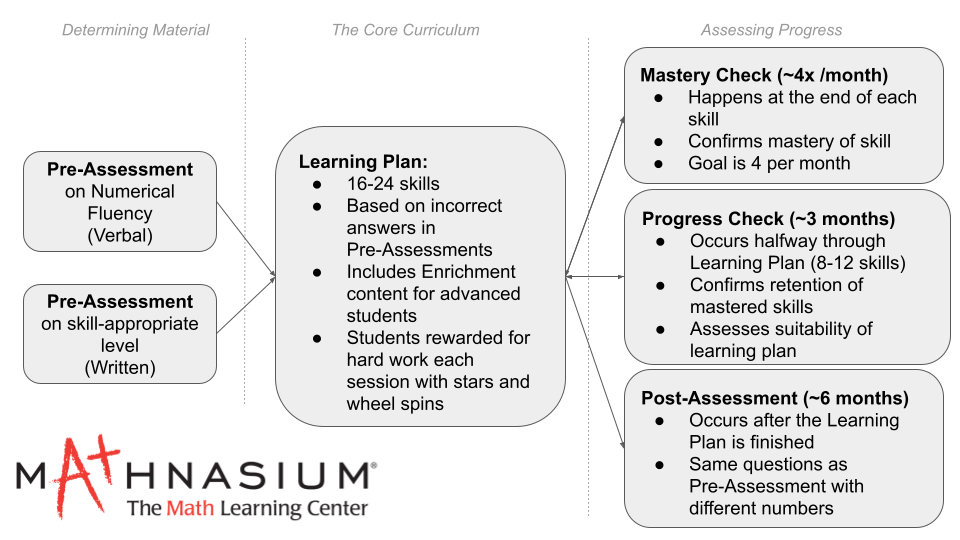
The first assessments we give are a set of verbal assessments we call Numerical Fluency. The first covers addition and subtraction, and the second covers multiplication and division, for students who are ready for those operations. Doing these assessments verbally allows the assessor to determine how the student approaches problems. For example, are they regrouping to make 10? Or are they counting on their fingers?
After the numerical fluency assessment(s), the student will take a "written" assessment on an iPad, while sitting at the instruction table with one of the instructors, and other students who are in for regular sessions. This allows the student to experience what Mathnasium is really like.
To choose which written assessment to administer, we look at a combination of the student's current grade, the parent's and the student's self-assessment of how math is going, and the results of the verbal numerical fluency assessments. The goal is to choose an assessment that the student will receive 40-70% on. This is because each incorrect answer translates to a skill, and 16-24 skills in the first Learning Plan is ideal.
If the student gets everything right on the assessment, we don't know what they still need to learn. On the other hand, if the assessment is too difficult, the student will have a poor experience, and we don’t know what prerequisites they still need. Since in school we all aim for 100%, we make sure to remind students taking pre-assessments that the goal is to find out what they don't know yet, and it's okay to get things wrong!
We call Kindergarten "Level 0" (which is very mathematical of us and then assessments 1-7 correspond to 1st grade through 7th grade. The levels correspond to where a student should be at the end of a grade, so at the end of third grade, a student should have mastered Level 3 content. After Level 7 is Algebra Readiness, which is intended to get our students ready for Algebra 1. Since we work towards students taking Algebra 1 in eighth grade, Algebra Readiness can be taken before Algebra 1, or concurrently, and it is helpful either way.
When a high school student comes in, we typically use more input from the student themselves to choose an assessment. We have assessments corresponding to the math courses offered at local high schools, as well as SAT math.
For students who are ahead of grade level, we have an Enrichment program. These students take the regular assessment at the level that challenges them, regardless of their grade in school. We also mix in supplemental content into their Learning Plan, to teach logic, problem solving skills, and real world applications of math.
To accommodate time constraints, students typically take an “A” assessment during their first visit. For example, if they're ready for third grade content, they will take assessment 3A, which covers half of third grade content. Their first Learning Plan will be based on the questions that they got wrong on the 3A assessment.

Since each wrong answer turns into a skill in the Learning Plan (which we also call a prescriptive or a "PK" in Mathnasium slang), each student works on exactly the material they need, and only that material. For example, a student takes the 3A Assessment and gets all the questions on place value and fractions correct, but gets questions on borrowing and long division incorrect. Even though third grade includes place value and fractions, those won't be in the student's Learning Plan. However, it will include borrowing and long division, which are what that student needs. Typically, the first Learning Plan will also include content from the verbal Numerical Fluency assessments.
How Do Students Make Progress?
Each session, the student will work with one of our incredible instructors to master the skills in their Learning Plan. Students also have the opportunity to work on homework or test prep in the second half of each session. We call their Mathnasium work their "pages", which is slightly anachronistic, since it's all on iPads!
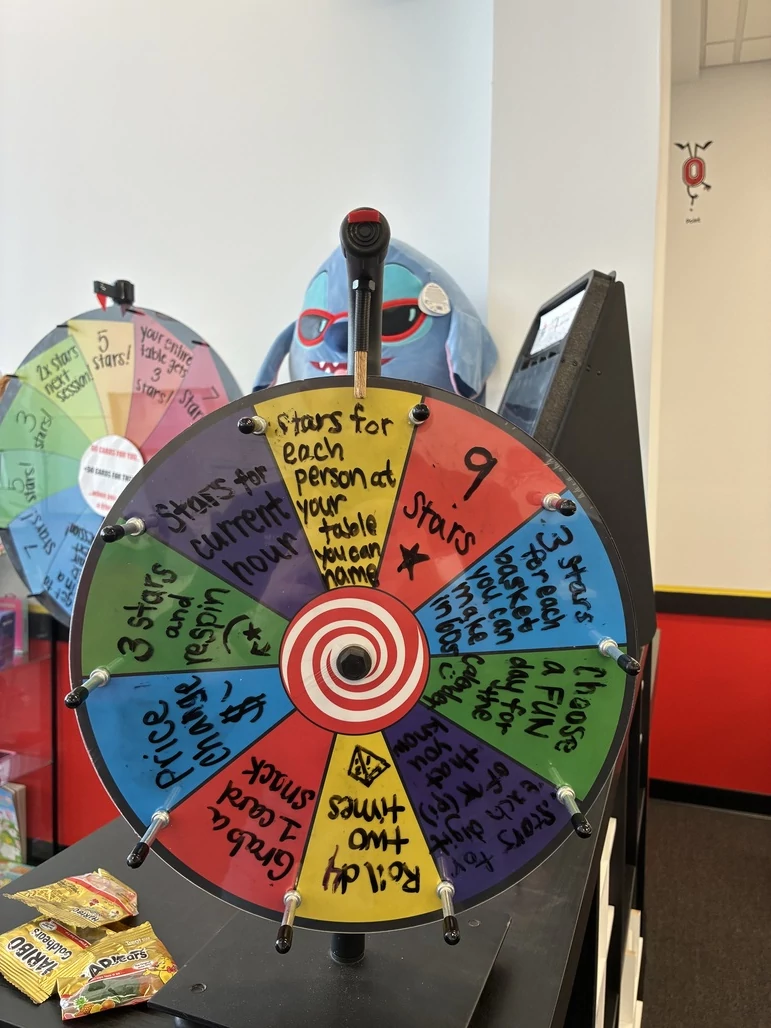
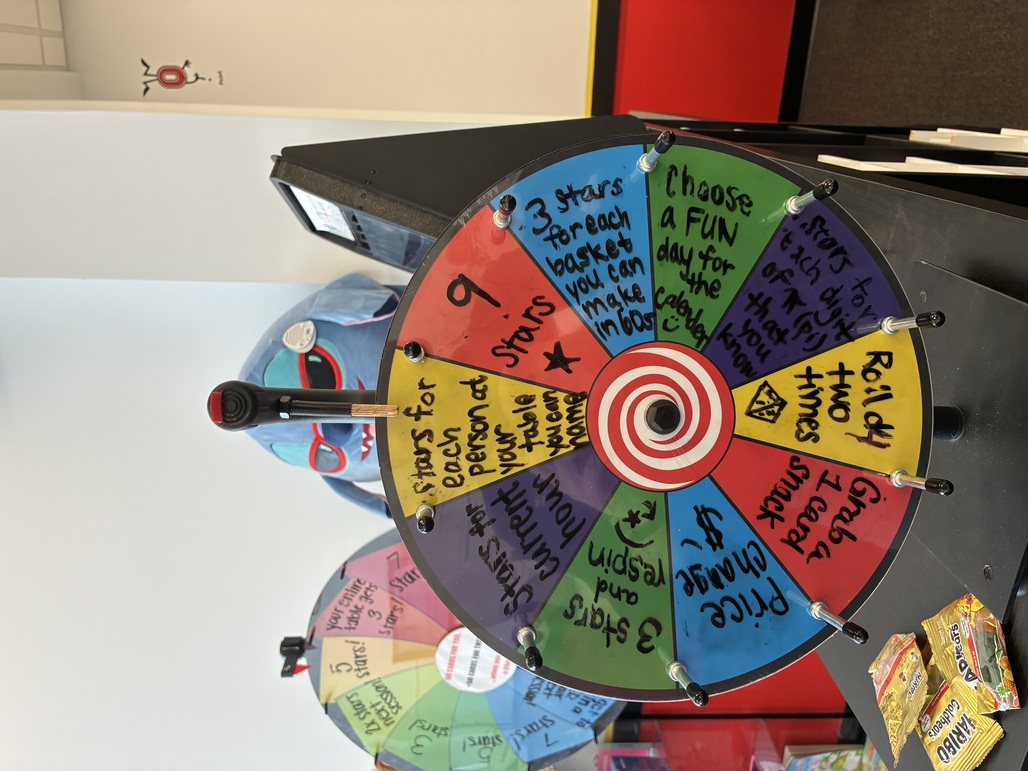
Students in second grade and below are expected to complete three pages per session, and students in third grade and above are expected to complete five pages per session. If they achieve this goal, they get to spin the big wheel at the end of the session. This is a fun way to reward hard work, and the element of chance keeps things exciting!
Each student works on three skills at a time, which provides variety to sessions, and reinforces retention of skills by working on different ones in between. Once the student has completed the 10-20 pages of instruction and practice for a skill, they take a Mastery Check. A Mastery Check is like a normal page, but the instructor can’t help. Most of the problems are the same difficulty as the preceding pages, but there are one or two challenge questions, which help a student expand the skill. When a student gets every question on a mastery check correct, including the challenge questions, they get to spin the mini wheel at the end of the session.
How Do You Assess Progress?
In order to be on track, we want a student to complete four mastery checks a month. Ideally, these would represent four mastered skills. However, occasionally a mastery check will reveal that a student needs more practice with a skill, or is missing prerequisite skills. This is a normal part of the learning process.
After the student has completed approximately half of their Learning Plan, which is roughly 8-12 skills, they take a Progress Check. The Progress Check isn't like other assessments: it's harder. The Progress Check is based only on the incorrect answers from the Pre-Assessment. The Progress Check helps us determine if the student is retaining material that was previously marked "mastered" from a Mastery Check. It also lets us know if the material in the Learning Plan is too hard, or too easy. Sometimes, a student makes so much progress in their first few months, the material becomes too easy! When that is the case, we move them along instead of having them work on unnecessary content.
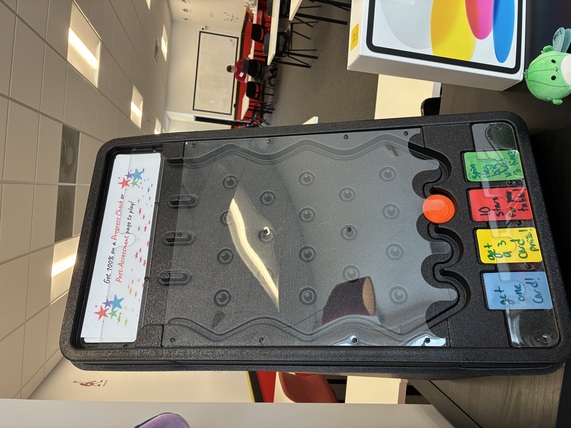
Since the Progress Check is based only on questions that were wrong, it's important to remember that any score above 0% shows improvement. To reward this progress, we have a special reward that's given only for Progress Checks and Post-Assessments. Each page of a Progress Check or Post-Assessment that is 100% correct means one turn on the Prize Drop (which we usually call "Plinko", though the kids don't get the reference).
So what’s a Post-Assessment? After the student has completed every skill in their Learning Plan, it's time to test retention, and see if they are truly ready to advance to the next grade. The Post-Assessment will contain the same number and types of questions as the Pre-Assessment, but with different numbers. This makes it possible to make a direct comparison, and see growth in each skill area.
We want to see a score of 85% or higher on the Post-Assessment to consider the level mastered, but students often score much higher! Then we move onto the next level while folding in unmastered skills into the next Learning Plan. If the student has just done Level 3A, this would be Level 3B. After the first two Learning Plans, we move on to assessing entire grade levels at a time, so after 3B would come 4, 5, 6... Since these assessments can be lengthy, we usually encourage a break to work on the Problem of the Week rather than completing a Post-Assessment and Pre-Assessment within the next session.
Once the new Pre-Assessment is complete, the incorrect questions are used to determine what skills need to go into the new Learning Plan. Then your student starts the next session with fresh pages. This iterative process continues until all of your math goals are met!
How Do I Know My Child’s Progress?
We pride ourselves on being communicative, transparent, and collaborative with all of our families. We are always happy to show parents their child’s work or discuss progress, but we also regularly communicate progress proactively. Since the first month at Mathnasium sets the tone for continued success, we communicate regularly during this first month.
After the first month, we send out a monthly Progress Report. This Progress Report shows attendance, skills mastered, and skills remaining in the current Learning Plan. This also includes qualitative information about progress, attitude, and any challenges.
We also have a monthly care call, so you can tell us how math is going, instead of us always telling you! Additionally, we are always available for these conversations any time during the month.
Finally, whenever your child completes an Assessment or a Progress Check, we send you the results, and help you interpret what they mean.
Everything we do is designed to help your child grow stronger and more confident in math. We are proud to say we are making a difference in our students’ lives.
Mathnasium of Pike Creek is a math-only learning center for K-12 students in Wilmington, DE. Trusted by over a million parents, Mathnasium uses personalized learning plans and the proprietary Mathnasium Method™ to help students catch up, keep up, and get ahead on their math journey.
Our specially trained tutors deliver face-to-face instruction in a supportive and fun small-group environment, working with students to develop a deep understanding of math, build confidence, and improve academic performance.
Schedule Free Assessment
