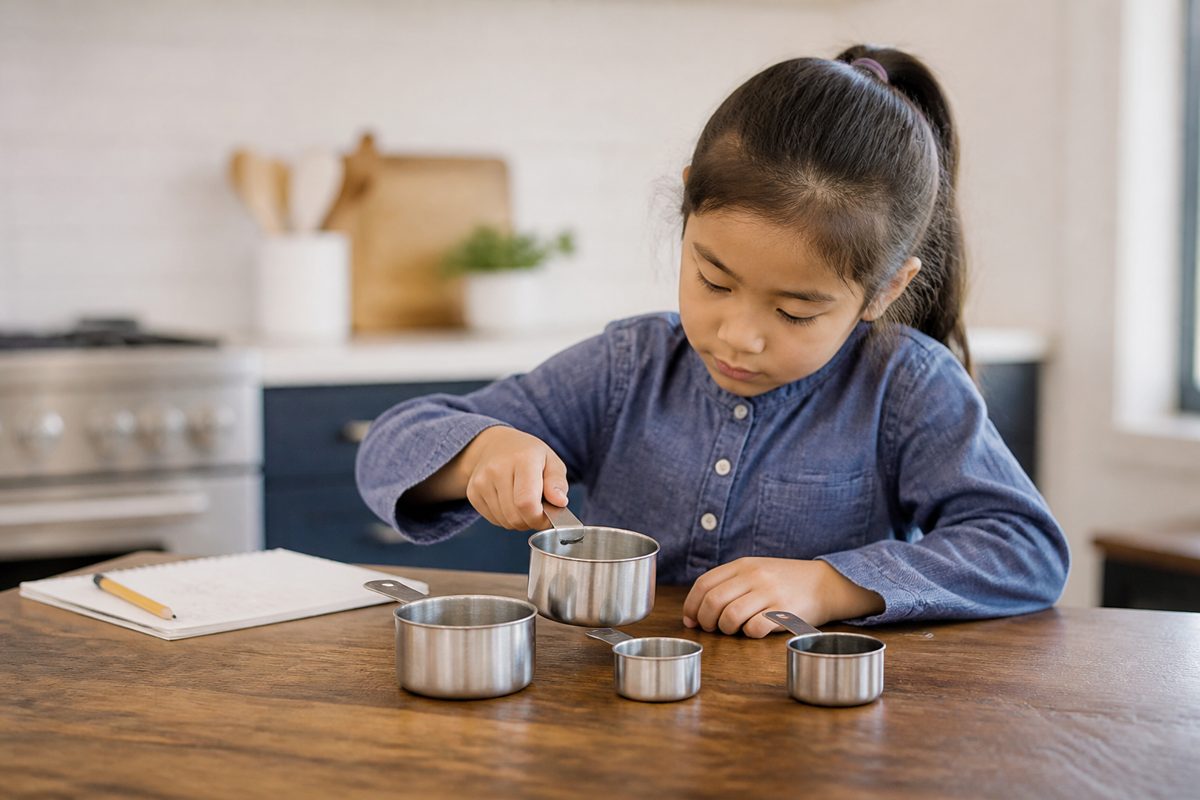
For parents in Quail Hollow, South Charlotte, Thanksgiving break can include rest, family time, and a few minutes to revisit familiar math. Try one ten-minute activity each day using things already at home. The goal is a relaxed opportunity to practice, not a test or a promise to prevent backsliding. Choose skills your child has already encountered and pause if an activity becomes frustrating.
Key Insights
Keep it brief - Set aside up to ten minutes, and stop earlier if your child needs a break.
Everyday household tools spark engagement - Real objects like measuring spoons, recipe cards, and board games demonstrate how numbers work in daily living.
Choose a comfortable starting point - Use the grade-band ideas as options, not requirements; adapt to familiar skills.
Invite open-ended conversation - Asking reflective questions encourages children to share their reasoning rather than rush for single answers.
Why Short Math Moments Work for Holiday Breaks
For Quail Hollow parents, Thanksgiving break math practice can be as simple as a conversation about a recipe or a handful of counters. No special program or lengthy worksheet is required.
Additionally, keeping activities under ten minutes fits easily between cooking, visiting local parks, and traveling across town. For many South Charlotte families, balancing family gatherings with academics feels challenging. Pick a quiet moment and let your child choose between two familiar activities.
Age-Appropriate 10-Minute Daily Math Activities
You do not need special workbooks or software to explore numbers during Thanksgiving. In fact, common household materials like dried beans, silverware, measuring cups, and grocery flyers offer fantastic learning tools. Below are straightforward activities grouped by grade level.
Kindergarten to 1st Grade: Counting and Comparing
Offer younger learners objects they can see and move. For example, invite your child to sort dried beans or cranberries during dinner preparation. Ask them to build groups of five or ten, then compare which pile has more items. You can also ask them to count dinner napkins and match them one-to-one with place settings at the table.
Parent prompt: "Can you count out eight forks for our guests? How many more do we need if two more family members arrive?"
2nd Grade to 3rd Grade: Active Arithmetic
Try quick mental math games involving addition and subtraction. While unpacking groceries from the Quail Corners shopping center, pick two canned goods and have your child estimate the sum of their weight in ounces. Alternatively, deal playing cards face up and have your student take turns adding the numbers together to reach twenty.
Parent prompt: "This pumpkin can weighs fifteen ounces and the broth weighs fourteen ounces. What is our combined total weight?"
4th Grade to 5th Grade: Kitchen Fractions
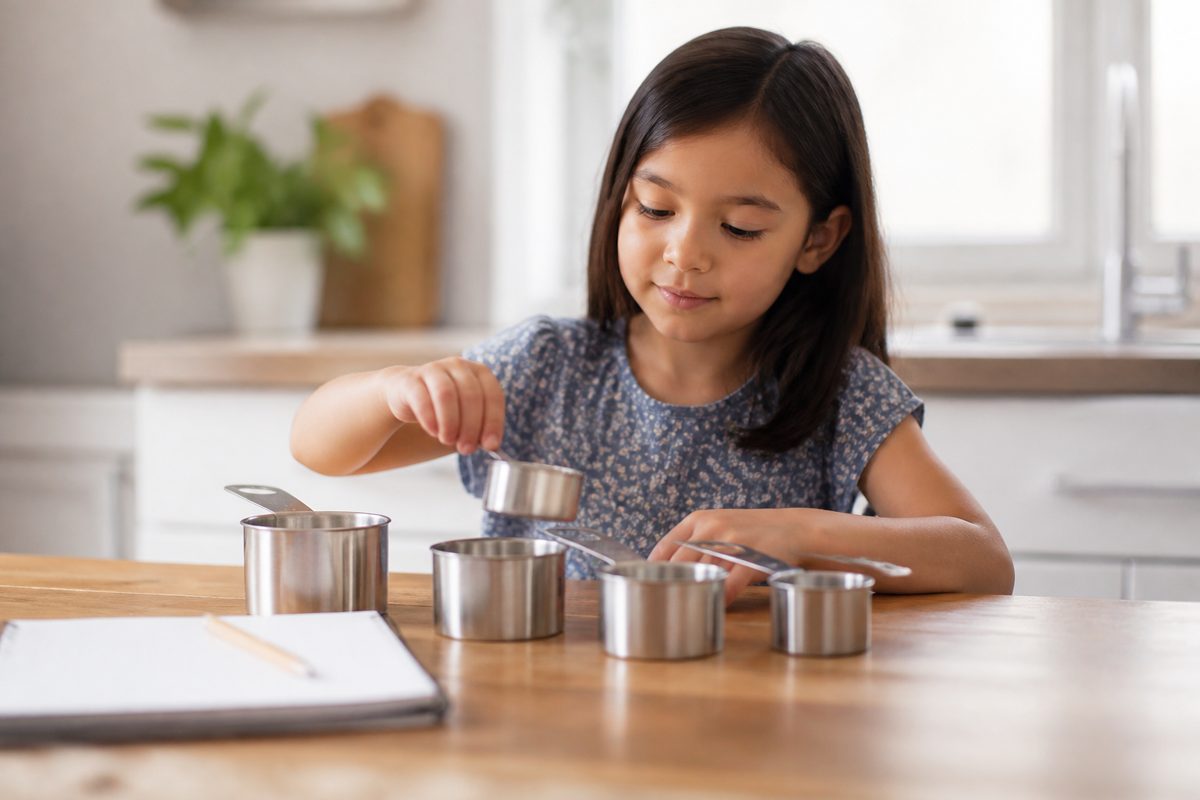
Cooking and baking provide natural opportunities to explore fraction concepts without formal worksheets. Hand your student measuring cups and spoons while mixing pumpkin pie filling or cranberry sauce. Next, challenge them to show how many quarter cups make a whole cup, or ask how to double half a cup of milk.
Parent prompt: "The stuffing recipe asks for three-fourths of a cup of celery. If we double the batch for the family, how many total cups do we measure out?"
Middle School: Proportions and Unit Rates
Older children can apply middle school math skills to shopping flyers, travel routes, and cooking schedules. For instance, show them local grocery store mailers and ask them to determine the best price per pound on whole turkeys. Furthermore, you can calculate the travel time and fuel costs for driving along I-485 to visit regional relatives.
Parent prompt: "A twelve-pound turkey costs eighteen dollars, but a sixteen-pound turkey costs twenty dollars. Which bird gives us the better price per pound?"

A Simple 10-Minute Routine
Spend two minutes choosing a familiar task and looking at the materials, six minutes exploring one example together, and two minutes asking, “How did you work that out?” For the fraction prompt, three-fourths doubled is one and one-half cups. For the turkey example, compare $1.50 per pound with $1.25 per pound; these are hypothetical practice prices, not local offers.
Sample 5-Day Thanksgiving Break Schedule
Use this optional routine as a starting point, adjusting it to your family plans. Here is a simple, flexible daily math routine that Quail Hollow families can follow from Wednesday through Sunday.
Wednesday: The Grocery Receipt Scan. Take ten minutes after your shopping trip to review prices. Have younger kids hunt for two-digit numbers, while older students calculate the total sales tax or find the average cost of produce.
Thursday: Table Setup and Recipe Calculations. Use morning meal prep for measurement challenges. Let your child handle measuring spoons, verify cooking times on the oven clock, or arrange the place cards symmetrically.
Friday: Board Game Strategy Session. Spend ten minutes playing a card or dice game before afternoon activities. Games using two dice give children quick practice with rapid sum recognition and probability.
Saturday: Neighborhood Distance Walk. Go for a brisk morning walk through local South Charlotte neighborhoods. Count the mailboxes along your block, track your step count, or calculate your average walking pace per mile.
Sunday: Calendar and Schedule Mapping. Close the weekend by reviewing the upcoming school week. Have your student calculate the hours remaining before Monday morning, schedule homework slots, and map out upcoming December events.
Encouraging Dialogue Over Memorization
When you practice math at home, focus on how your child thinks through a problem rather than just finding a fast solution. Invite children to explain their thought process out loud, without requiring a fast answer. If they struggle with an answer, ask gentle guiding questions such as, "What strategy could we try first?" or "Does that estimate seem reasonable?"
Keep the conversation exploratory rather than treating it as a high-stakes test. Check your own school calendar for the return date.
Partner with Mathnasium of Quail Hollow
Quail Hollow parents who would like to discuss next steps can contact Mathnasium of Quail Hollow, located at 7510 Pineville Matthews Road, #12A, Charlotte NC. Ask the team about an assessment and any questions you have about your child’s current math practice.
Schedule an assessment at Mathnasium of Quail Hollow. Contact the center to confirm availability and assessment details.
Frequently Asked Questions
How can I keep holiday math practice from feeling like homework?
Keep your sessions brief and connect every activity to normal daily routines. Using kitchen ingredients, store flyers, and travel plans makes math feel natural and engaging rather than stressful.
What should I do if my child resists practicing over the break?
Pick moments when your child is well-rested, and focus on collaborative games rather than solo problem sets. Offer a choice of shared cooking or a simple game, and skip the activity if your child needs rest.
Are ten minutes a day truly enough to help?
Ten minutes is a manageable practice window to try, not a guaranteed way to maintain skills or prevent learning loss. Choose familiar tasks and adjust the time to your child.
How does a comprehensive assessment help my student?
An assessment offers a starting point for discussing your child’s current math skills. Ask Mathnasium of Quail Hollow what the assessment covers and how the team uses the information.


 (980) 237-2152
 (980) 237-2152