
 (516) 484-6284
 (516) 484-6284










Everyday Math: Where Kids Use Math Without Realizing It
Jun 2, 2026 | Roslyn
Everyday Math: Where Kids Use Math Without Realizing It

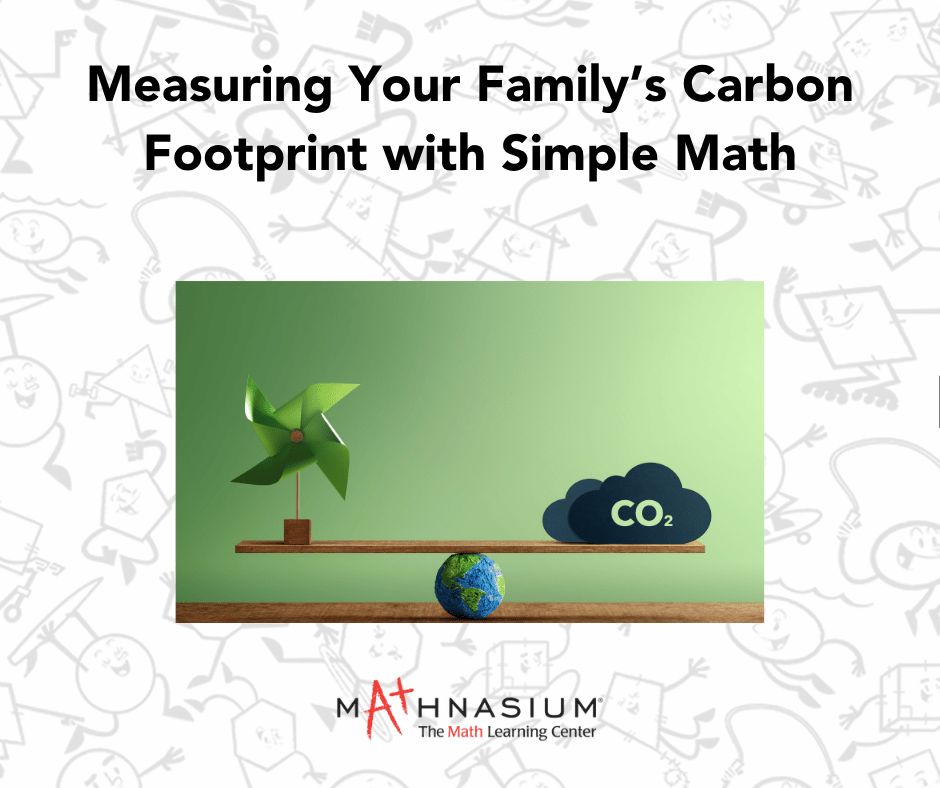
Every day, families use electricity, water, transportation, and other resources without thinking much about the environmental impact. The total amount of greenhouse gases created by these activities is called a carbon footprint. While the term may sound complicated, the basic idea is simple. The more energy and fuel we use, the larger our carbon footprint becomes.
The good news is that math can help families understand their energy use and even find ways to reduce it. By using simple calculations, kids and parents can turn everyday habits into a fun learning opportunity.
Step 1: Start with Electricity Use
One of the easiest ways to estimate your family’s carbon footprint is by looking at electricity usage. Most homes receive a monthly electricity bill that shows how many kilowatt hours (kWh) were used.
For example, imagine a family that uses 900 kWh of electricity in one month. In many places, producing 1 kWh of electricity creates roughly 0.4 kilograms of carbon dioxide.
Now we use simple multiplication.
900 × 0.4 = 360
This means the home produced about 360 kilograms of carbon dioxide from electricity in that month.
Kids can turn this into a math activity by comparing different months. Was electricity use higher in summer when the air conditioner runs more? Or higher in winter with heaters?
Step 2: Calculate Transportation Impact
Transportation is another big part of a family’s carbon footprint. Let’s look at a simple example.
Suppose a parent drives 12 miles to work and 12 miles back each day, for a total of 24 miles daily. If the car produces about 0.4 kilograms of carbon dioxide per mile, we can estimate the weekly impact.
24 miles × 5 days = 120 miles per week
120 × 0.4 = 48
That means about 48 kilograms of carbon dioxide are produced each week from commuting alone.
Kids can extend this math by estimating the monthly impact or comparing different travel options. What happens if the family carpools two days a week? What if one trip is replaced by biking or walking?
Step 3: Look at Everyday Habits
Small daily choices also add up over time. Math helps show how tiny changes can make a difference.
Consider water usage. If a shower uses about 2 gallons of water per minute, and someone takes a 10 minute shower, that equals 20 gallons of water.
Now imagine shortening the shower by just 2 minutes.
8 minutes × 2 gallons = 16 gallons
That simple change saves 4 gallons of water each day. Over a month, that becomes more than 120 gallons saved.
Kids often enjoy discovering how small numbers grow into big results.
Step 4: Add It All Together
Families can create a simple weekly math challenge by estimating energy use from electricity, transportation, and water. The goal is not to be perfectly accurate, but to understand how everyday actions connect to the environment.
You might track numbers for one week and then try to reduce them the next week. Turning off lights, unplugging devices, shortening showers, and combining errands into one trip can all lower energy use.
This kind of activity helps children see math in the real world. Instead of numbers in a textbook, math becomes a tool for solving meaningful problems.
Why Math Matters
Understanding carbon footprints shows how math helps us analyze data, measure change, and make smarter decisions. These are the same problem solving skills students use in school and later in careers involving science, engineering, technology, and environmental studies.
When kids learn to apply math to real situations, the subject becomes more interesting and useful.
At Mathnasium, students build strong math skills through personalized learning that connects numbers to real life situations. If you want your child to gain confidence and see how math works beyond the classroom, visit mathnasium.com to learn more about programs designed to help every student succeed.

