
 (516) 484-6284
 (516) 484-6284











Sudoku and Math: What Does Solving Puzzles Have to Do With Learning Math?
Sep 8, 2026 | Roslyn
Sudoku and Math: What Does Solving Puzzles Have to Do With Learning Math?

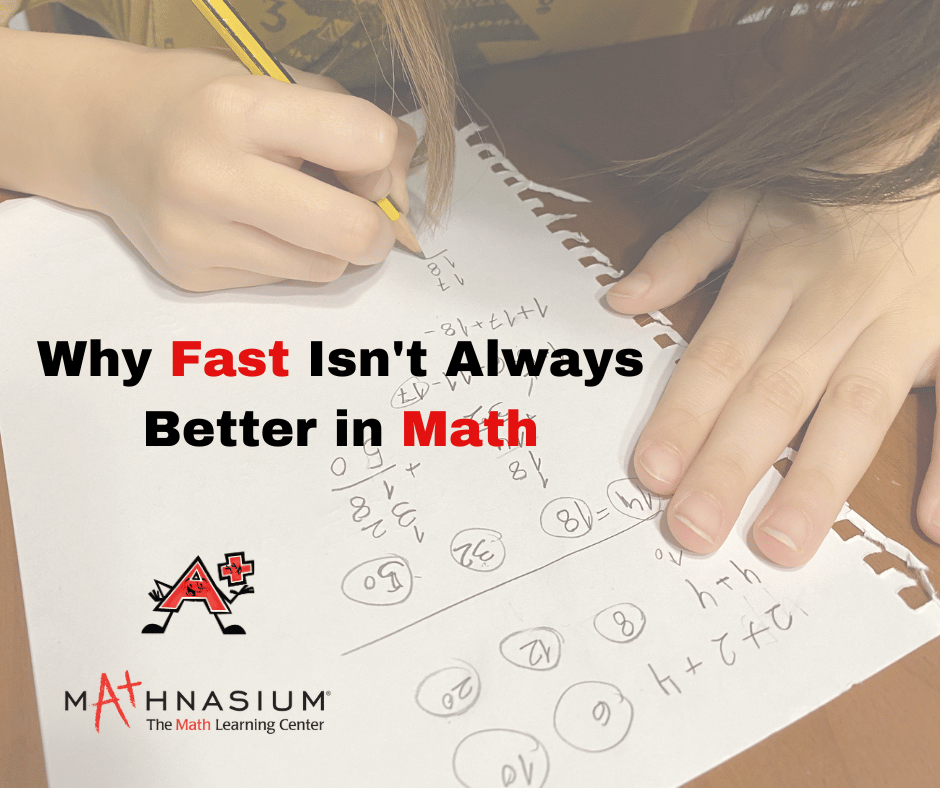
Many people think that being good at math means solving problems as quickly as possible. If a child finishes a worksheet first or answers questions faster than everyone else, they are often seen as the "math kid."
But here's the truth: speed is not the same as understanding.
In fact, taking a little extra time to think can help children become stronger, more confident math learners. At Mathnasium, the goal isn't to race through problems; it's to build a solid understanding that lasts.
Understanding Matters More Than Speed
Imagine you're building a house. Would you rather finish it in one day with weak walls, or take a little more time to make sure the foundation is strong?
Math works the same way.
When children rush through problems, they may miss important steps, make simple mistakes, or rely on guessing instead of understanding. On the other hand, when they slow down and think through each step, they learn why the answer works not just what the answer is.
That kind of understanding helps them solve new and more challenging problems in the future.
A Simple Example
Let's say a child is solving this problem:
36 × 25
One student quickly writes 850 because they rushed.
Another student pauses and thinks:
25 is one-fourth of 100.
36 × 100 = 3,600.
One-fourth of 3,600 is 900.
The second student took a little longer but found the correct answer using a smart strategy. More importantly, they understood the relationship between the numbers instead of simply memorizing a method.
Everyone Learns at a Different Pace
Every child learns differently.
Some students need a little more time to understand a new idea, while others may answer quickly. Neither approach is better on its own.
Think about learning to ride a bicycle. Some children learn in one afternoon, while others need several days of practice. What matters is that they eventually ride with confidence.
Math is no different. Giving children time to learn at their own pace helps reduce frustration and builds lasting confidence.
Slow Thinking Builds Better Problem Solvers
Many real-life situations don't have a timer.
When planning a family budget, measuring ingredients for a recipe, or figuring out the best deal while shopping, people take time to think carefully.
Children who learn to pause, analyze, and check their work develop valuable problem-solving skills they can use both inside and outside the classroom.
These skills become even more important as math gets harder in middle school and high school.
Mistakes Are Part of Learning
When children rush, mistakes often feel like failures.
But when they take their time, mistakes become learning opportunities.
For example, if a student solves a fraction problem incorrectly, slowing down helps them discover where they went wrong. They learn how to fix the mistake instead of repeating it the next time.
This process builds resilience and encourages a positive attitude toward learning.
Building Confidence, One Step at a Time
Children who constantly compare their speed with classmates may begin to think they aren't "good at math."
The reality is that confidence comes from understanding not from finishing first.
When students know how to solve problems and can explain their thinking, they become more comfortable tackling new challenges.
That confidence often leads to better performance over time because they trust their own abilities instead of worrying about how fast they are working.
How Parents Can Help
Parents can encourage healthy math habits at home by:
Praising effort instead of speed.
Asking, "How did you figure that out?" instead of "How fast did you finish?"
Giving children time to think before offering help.
Celebrating progress, even when it comes one small step at a time.
These simple changes help children see math as a subject they can understand not a race they have to win.
Learning That Lasts
Strong math skills are built through understanding, practice, and confidence. While speed may improve naturally with experience, it should never come at the cost of learning.
At Mathnasium, students receive personalized instruction that meets them where they are. Lessons are designed to help children truly understand math concepts, develop critical thinking skills, and gain confidence at their own pace. The result is not just faster math—but better math.
Ready to Help Your Child Build Real Math Confidence?
If you want your child to develop strong math skills through understanding rather than memorization, Mathnasium can help. With personalized learning plans and caring instructors, students gain the confidence they need to succeed in school and beyond.
Visit https://www.mathnasium.com to learn more or find a Mathnasium Learning Center near you and discover how a personalized approach can make all the difference.

