Long division is where many kids get stuck, even the ones who've done well with everything before it. Multiplication and basic division made sense. Then, long division shows up, and math starts to feel unfamiliar again.
We see this pattern often. Students can understand the big picture of division perfectly, but the moment they are handed the traditional long division bracket, they get lost in the number of steps involved.
That "divide, multiply, subtract, bring down" recipe can temporarily bury the reasoning behind the numbers, even when kids have learned the concepts well in school.
Today, Mathnasium tutors break down how to do long division, explain why the long division steps kids learn in school can feel so overwhelming, and show how the traditional method connects back to the math concepts kids already know.

What Is Long Division?
Long division is a way to solve division problems that involve bigger numbers by breaking them into smaller, repeatable steps. Instead of dividing everything at once, we divide one part at a time, working from the largest place value down to the smallest.
Each step in long division connects to place value. If we divide the hundreds first, then the tens, then the ones, we're splitting the number into equal groups the same way we would with blocks or counters, just written out with digits instead.
This makes long division different from simple division facts kids memorize early on, like 12 ÷ 3. The moment numbers get bigger, we need a process that keeps track of every part of the number, and that process is long division.
📕 You May Also Like: Common Place Value Misconceptions in Elementary Math
How to Do Long Division: The Procedural View
Long division follows the same four moves every time:
-
Divide
-
Multiply
-
Subtract
-
Bring down
We repeat these four moves as many times as the numbers call for. Let's walk through 936 ÷ 4:
Step 1: Divide
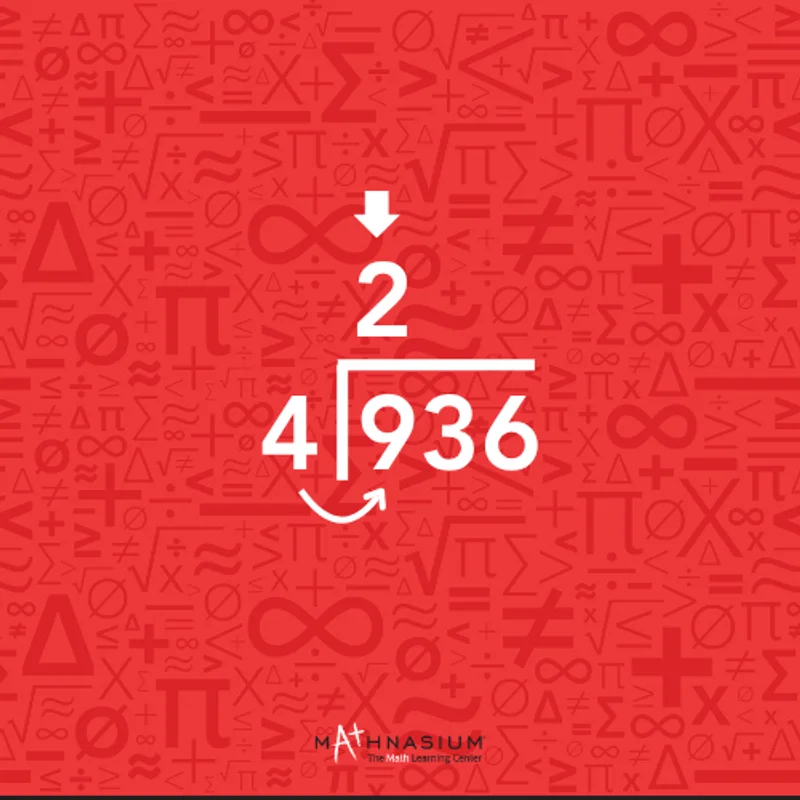
We look at the first digit of 936, which is 9. Then, we ask ourselves how many times 4 fits into 9. It fits twice, so write 2 above the 9. We are basically dividing 9 by 4.
Step 2: Multiply
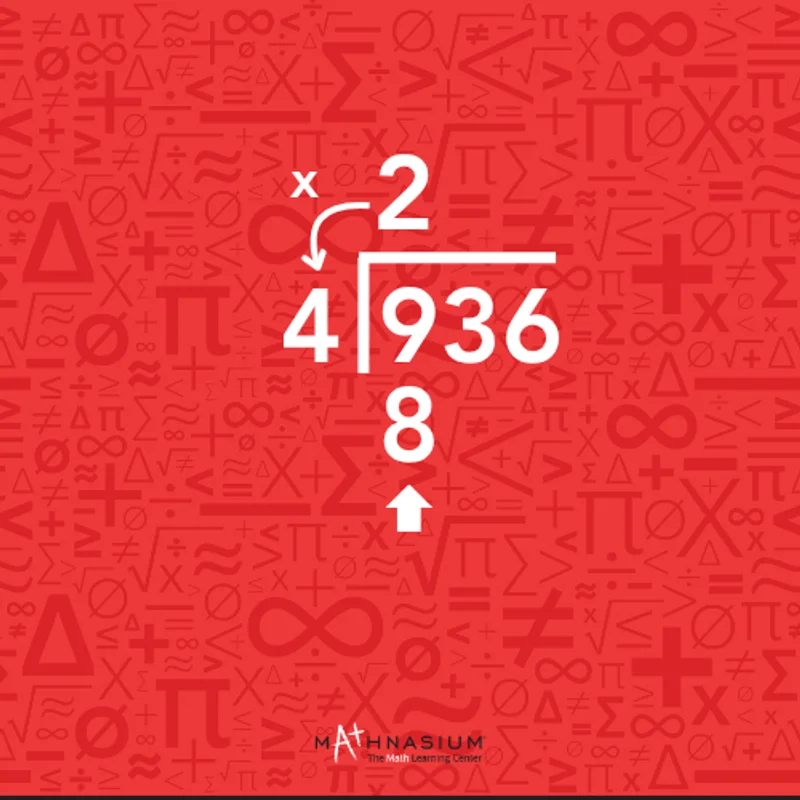
Then, we multiply 2 by 4 to get 8 and write 8 underneath the 9.
Step 3: Subtract
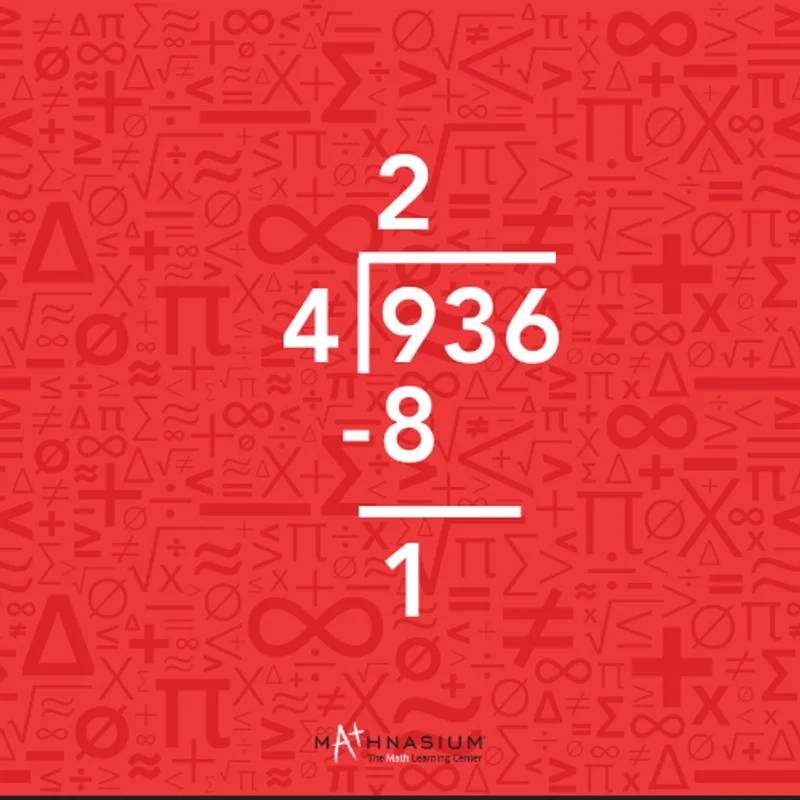
Now, we subtract 8 from 9, and that leaves 1.
Step 4: Bring Down
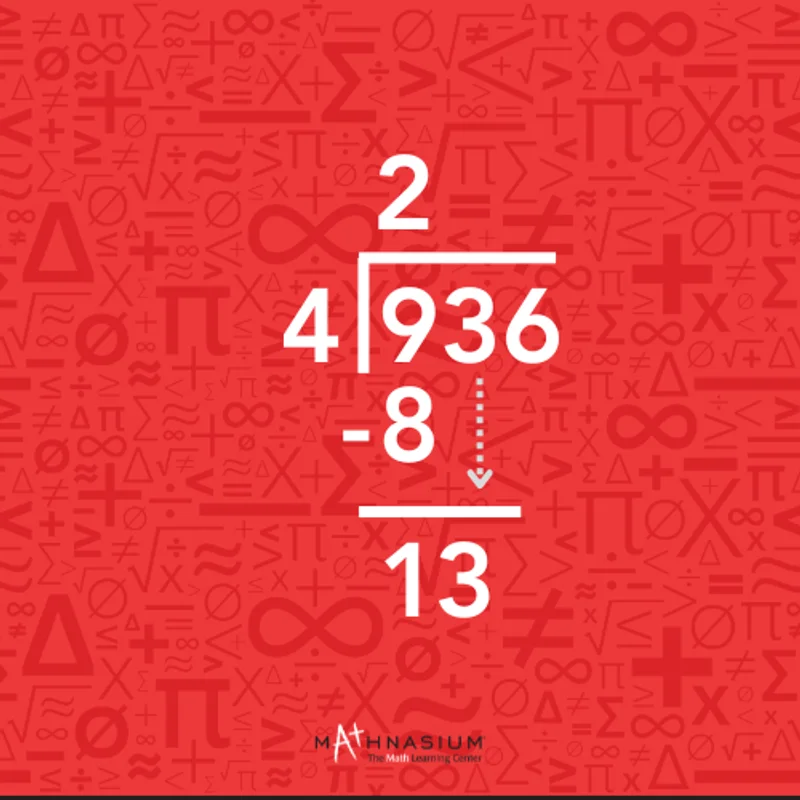
Next, we bring down the next digit from 936, which is 3, and place it next to the 1. That gives us 13.
Now, the whole 4-step pattern repeats until there are no more digits left to bring down in the dividend.
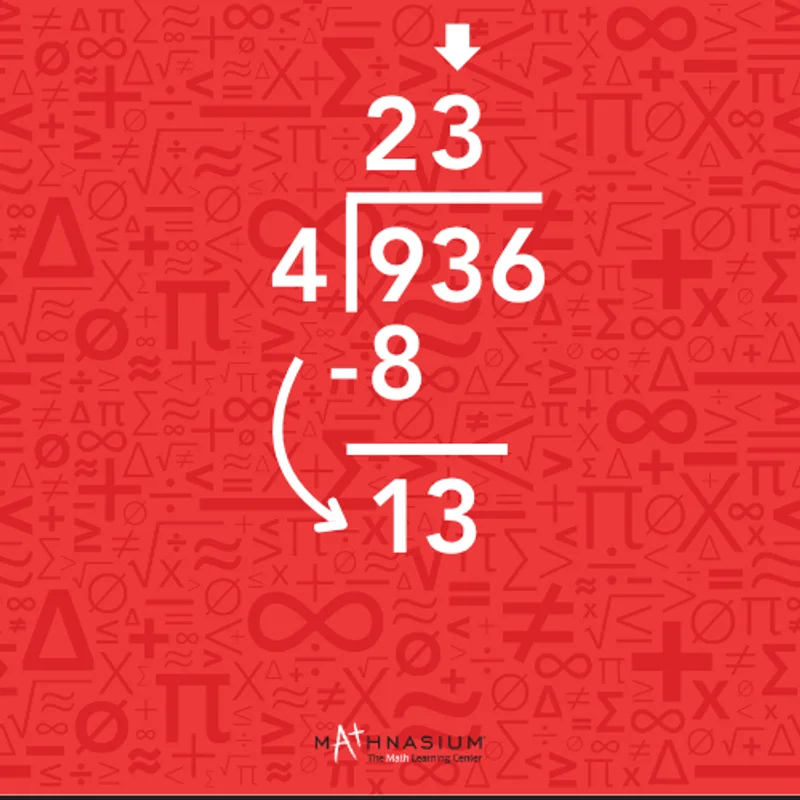
Step 5: Divide Again
We divide 4 into 13, which fits 3 times. So, we write 3 next to 2 above.
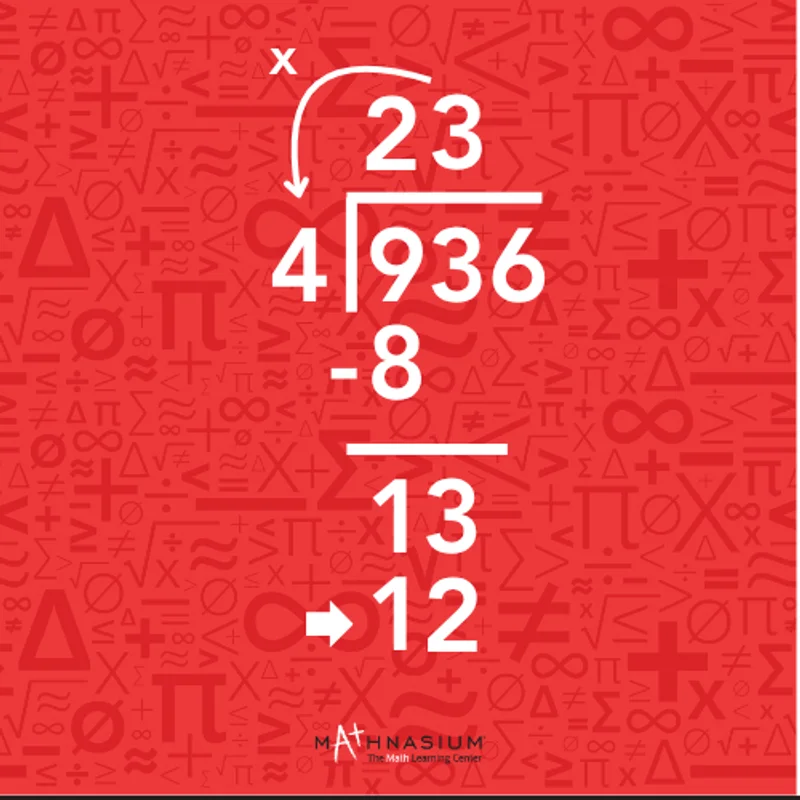
Step 6: Multiply Again
Next, we multiply 3 by 4 to get 12.
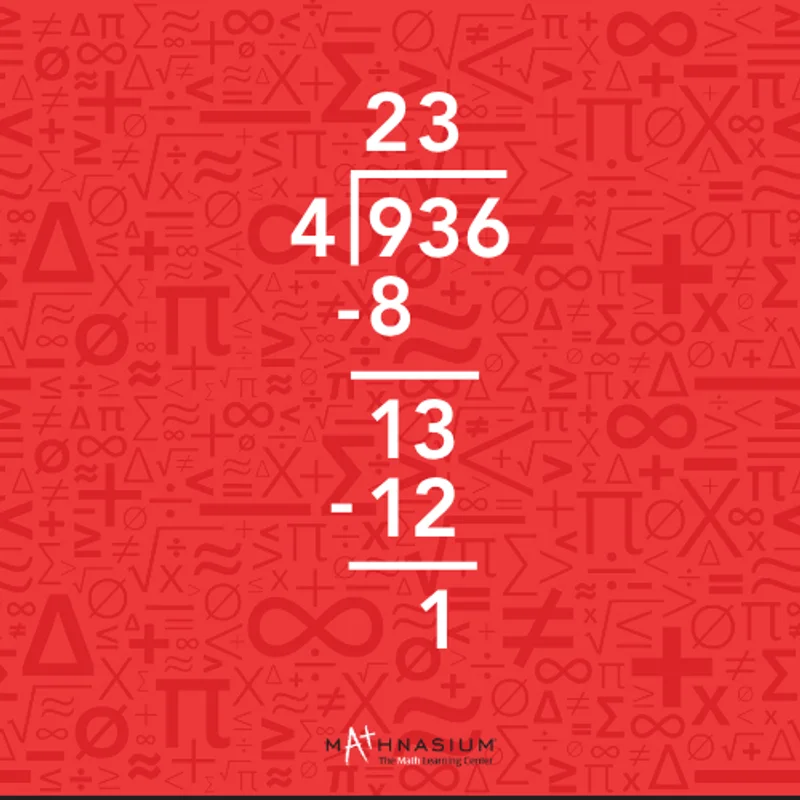
Step 7: Subtract Again
Then, we need to subtract 12 from 13 to get 1.
Step 8: Bring Down Again
Then, we bring down the next digit from 936, which is 6, next to the number 1, and make 16.
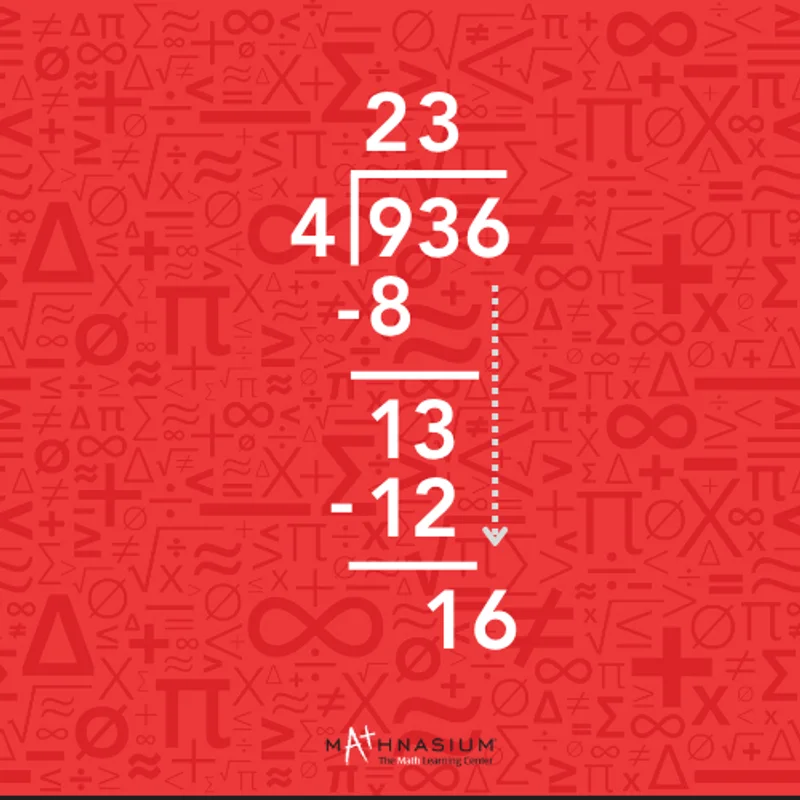
We have still not reached 0, so we repeat the steps.
Step 9: Divide One More Time
How many times do we have 4 in 16? To find that, we divide 16 by 4, and see that it fits exactly 4 times. We write 4 next to number 3 on top.
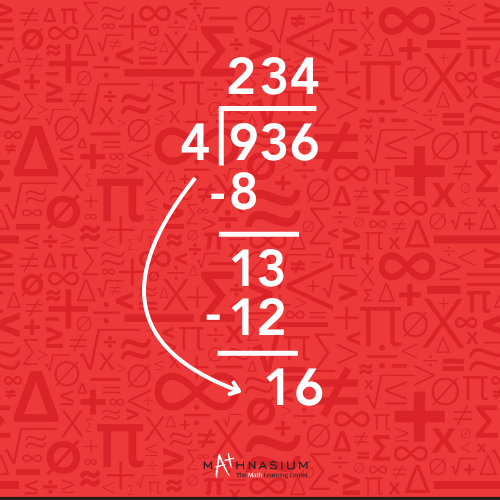
Step 10: Multiply One More Time
We now multiply 4 by 4 to get 16.
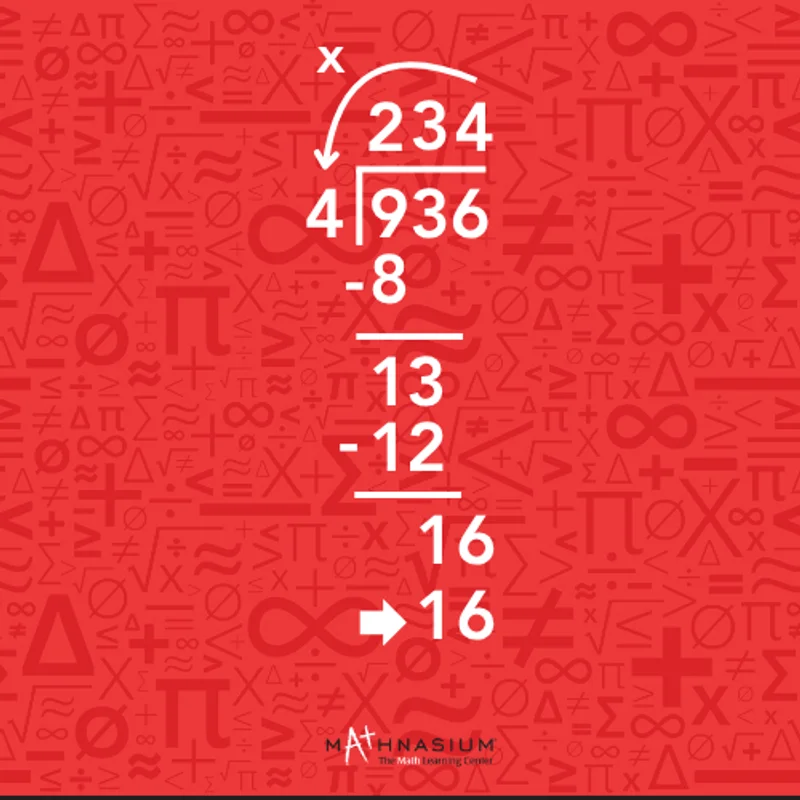
Step 11: Subtract One More Time
We subtract 16 from 16, and the result is 0. Since we have no more digits to bring down from the dividend, we are finished. No remainder, no leftovers.
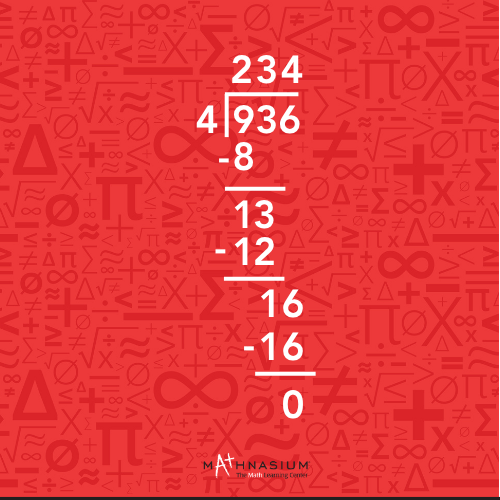
Since the steps end here, we read the numbers on top. Our final answer is 234.
If we follow correctly, these four steps work every time, on every problem. But it's entirely possible to execute a process perfectly without actually understanding how it works.
That's why students can complete a worksheet full of long division problems and still feel unsure about it. They've learned the sequence, but the steps alone don't explain themselves.
The disconnect between following the steps and understanding them is exactly where kids get stuck and what we'll unpack next.
📕 You May Also Like: How to Do Long Division? Explained for 4th Graders
Why Long Division Trips Students Up
Long division trips students up because it asks them to hold too many steps in their head at once, right at the moment they're also expected to apply everything they already learned about splitting numbers into groups.
Before kids ever see the written long division process, they build a sense of division through blocks, drawings, and sharing things out evenly.
Then, the standard algorithm arrives, and it asks for something different (divide, multiply, subtract, bring down) in the exact order, every time.
Kids have to hold four steps in mind, track which digit comes next, and figure out what to do with the leftover amount, all at the same time. That takes up a lot of working memory.
Under that load, learners can temporarily lose touch with the reasoning they already had and fall back on repeating steps without connecting them to anything.
Weak multiplication fact fluency makes this worse. Every step in long division depends on quick recall, so if 7s or 8s are still shaky, kids spend their attention hunting for facts instead of following the logic of the problem. The process stalls, and it starts to feel a lot harder than it needs to be.
📕 You May Also Like: 9 Tips to Help Your Child Master Multiplication Facts
What Each Long Division Step Actually Means
Each written step in long division stands for something we already understand, and that is splitting a number into equal groups and figuring out what's left over at every stage. That connection rarely gets made explicit in the classroom.
Let's revisit that same 936 ÷ 4 problem from the procedural walkthrough, and this time pay attention to what each step means along the way.
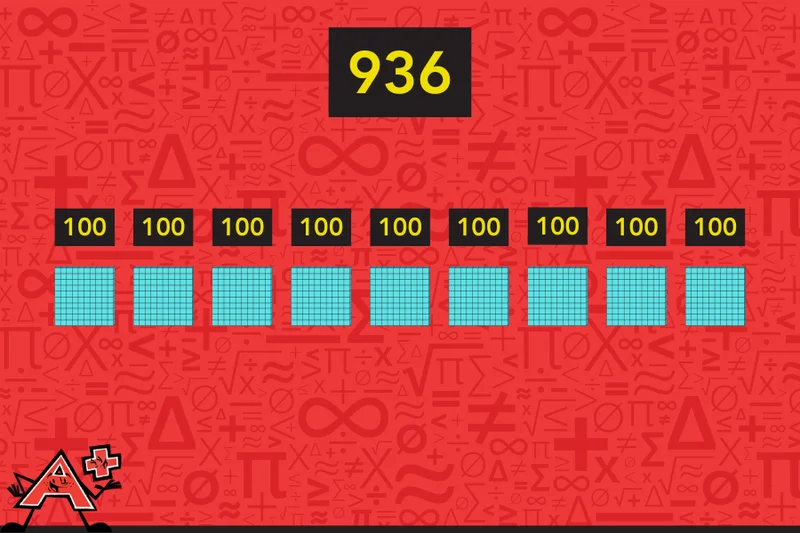
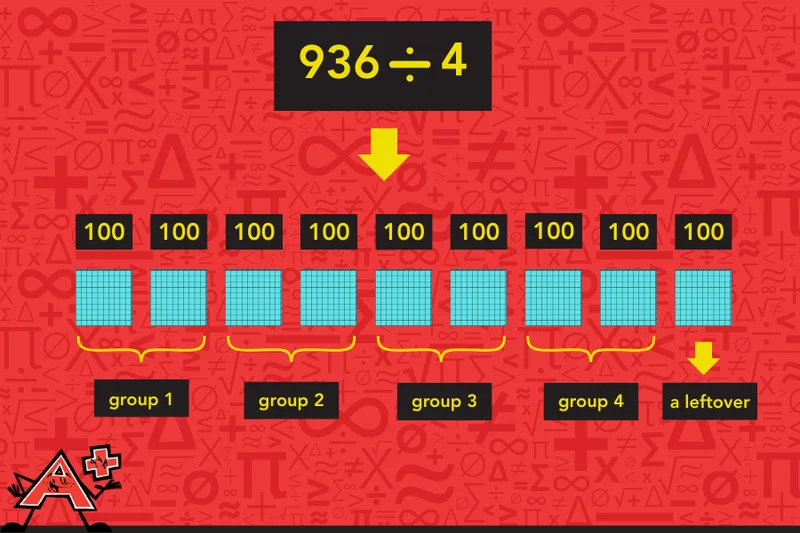
Before we do any math, let's look at what 936 actually represents:
We start division with the largest place value, the hundreds. We aren't just dividing a simple 9, but dividing 9 hundreds.
Step 1: Divide
Then, we ask how many times 4 fits into 9, which really asks how many full hundreds each of the 4 groups can get out of 9 hundreds. We divided 9 by 4, and the answer is 2 hundreds each, with 1 hundred left over.
Step 2: Multiply
We multiply 2 by 4 to see how many hundreds we've placed so far. We have 8, with 1 hundred still unaccounted for.
Step 3: Subtract
Then, we just subtract 8 from 9 to confirm the leftover hundred.
Step 4: Bring Down
That leftover hundred doesn't disappear. We trade it in for 10 tens. Next, we bring down the next digit from 936, which is 3. In this case, 3 equals 3 tens, and combined with 10 tens makes 13.
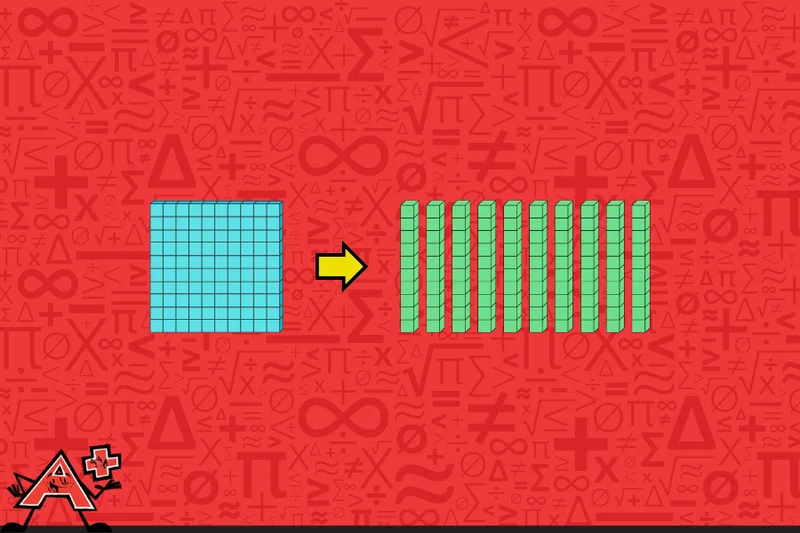
Worksheets call this step "bring down," as if a digit simply moves across the page. What's really happening is regrouping, trading a leftover amount for a smaller unit so we can keep dividing.
Step 5: Divide Again
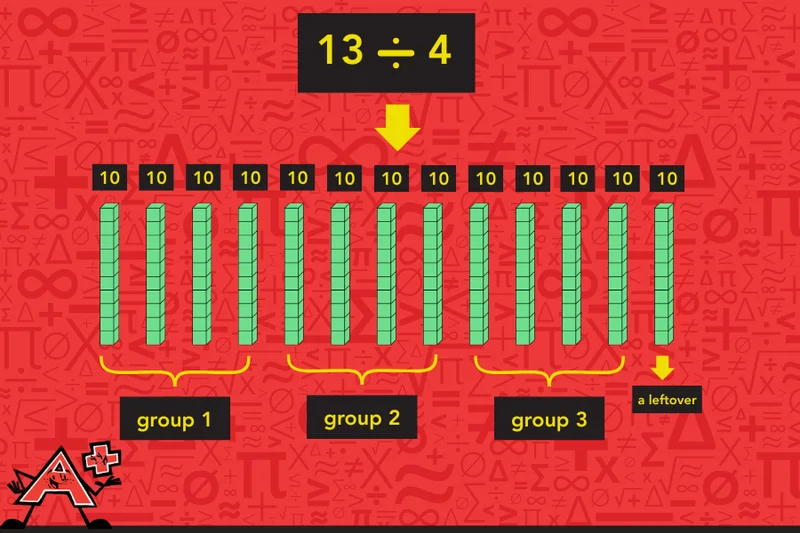
Our next number in line is 13, and we divide it by 4 next, asking how many groups of 4 fit into 13 tens. The answer is 3 tens for each group, with 1 ten left over.
Step 6: Multiply Again
We multiply 3 by 4 to place 12 tens.
Step 7: Subtract Again
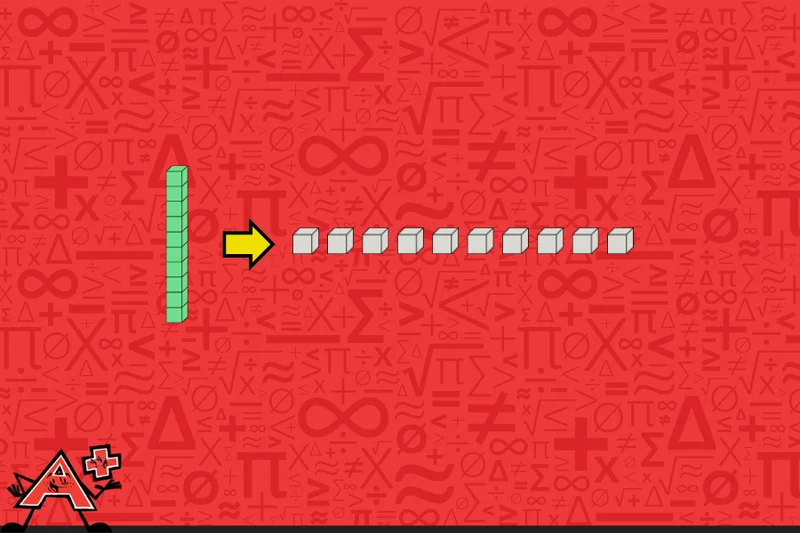
Next, we subtract to confirm the leftover ten. We trade it in for 10 ones.
Step 8: Bring Down Again
The last digit in 936 is 6 (or 6 ones), and we bring it down next to ten ones to make 16.
Step 9: Divide One More Time
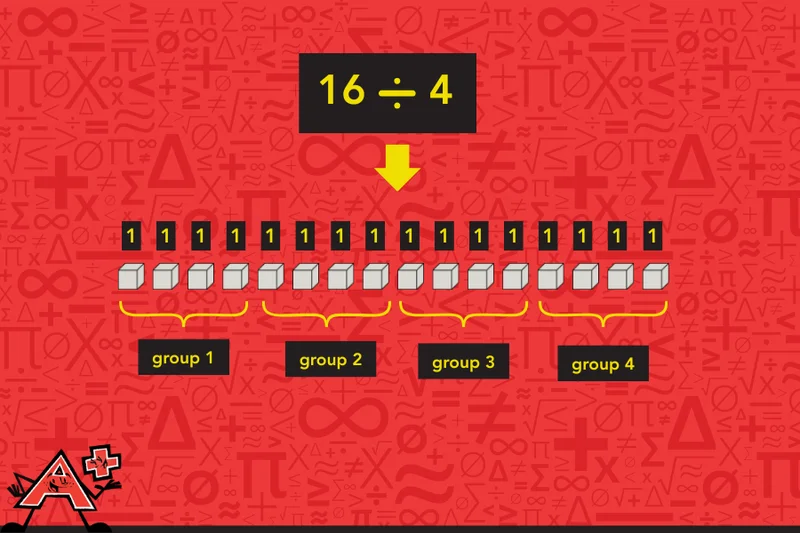
Now, we divide 16 by 4 and see that each of the 4 groups gets exactly 4 ones, with nothing left over.
Step 10: Multiply One More Time
We multiply 4 by 4 to account for all 16 ones, and then we subtract 16 from 16 to get 0, which confirms there's nothing left to trade or bring down. We’ve split every part of 936 evenly, and each group ends up with 234.
The moment we see division this way, a remainder is just the amount left over when a number doesn't split evenly. Nothing mysterious about it.
Long division stops being a sequence of moves to memorize and becomes a running record of how much gets split up, how much is left, and what that leftover turns into next.
📕 You May Also Like: How to Do Long Division with Remainders - A Kid-Friendly Guide

Mathnasium's specially trained tutors help students work through long division in a caring and fun group environment.
Master Long Division (or Any Other Math Concept) at Mathnasium
Mathnasium is a math-only learning center that helps K-12 students catch up, keep up, and get ahead in math.
We teach concepts like long division not through rote memorization but through a proprietary teaching approach called the Mathnasium Method™, designed around each student's individual needs and learning style.
Each student starts their Mathnasium journey with a diagnostic assessment that helps us spot current skills and knowledge gaps, then builds toward a personalized learning plan with a session frequency that fits their pace.
We phrase math in plain, everyday language instead of heavy jargon, blending verbal, visual, mental, tactile, and written techniques so each concept truly lands.
Our tutors are trained in both math and the emotional side of teaching, so they know how to support a student who feels overwhelmed and how to challenge one who's ready to move ahead.
We also give students room for productive struggle before stepping back in to check their reasoning, teaching both the how and the why behind the math so they build critical-thinking skills that carry into future courses.
Sessions often don't look like lectures. Games, earned rewards, and steady celebration of progress keep learning enjoyable and help students grow in confidence with every visit.
Our method brings measurable results:
-
94% of parents report an improvement in their child's math skills and understanding
-
93% of parents report their child's improved attitude toward math after attending Mathnasium
-
90% of students saw an improvement in their school grades
With over 1,100 centers, Mathnasium brings top-rated instruction close to your home.
For families in Westminster, Mathnasium of South Westminster is a trusted center with years of experience transforming how children think and feel about math.
Here is what one parent had to say about their child's experience at Mathnasium:

Ready to get started?
📅 Schedule a Free Diagnostic Assessment at Mathnasium of South Westminster
Not near South Westminster?
📍 Find Mathnasium Learning Centers Near You


 (720) 524-4533
 (720) 524-4533