Most parents were taught multiplication the old-fashioned way: flashcards, timed drills, and repeating facts until they knew them by heart.
However, memorization alone doesn’t lead to confident, capable problem-solvers. It builds recall without reasoning, and the moment that recall slips, students are left guessing.
At Mathnasium, we approach multiplication differently. Instead of rushing students through the times table, we help them understand how multiplication works. We teach them to recognize patterns, apply strategies, and build fluency in ways that actually make sense.
With that in mind, our instructors are sharing what true multiplication fact fluency looks like, along with 9 practical tips to help your child master it.
What Is Multiplication Fact Fluency?
At a glance, fluency might seem like memorizing multiplication facts until your child can rattle off 8 × 7 = 56 without blinking. But that kind of recall is only part of the picture and not always the most reliable part.
True multiplication fact fluency means more than memorization. It means knowing the facts and being able to construct, deconstruct, and apply them confidently, even when the numbers change.
What would that look like in action?
Here are a few examples:
-
A student who knows 6 × 7 = 42 but forgets 7 × 8 can reason: “I know 7 × 7 is 49, so 7 × 8 must be 49 plus 7—that’s 56.”
-
A student asked to solve 12 × 13, having learned 12 × 12 = 144, can build: “That’s just one more group of 12, so 156.”
That ability to build from known facts, rather than recall every product cold, is the difference between static knowledge and dynamic fluency. One relies on memory. The other supports flexible thinking, strategic reasoning, and future learning.
📕 You May Also Like: 5 Ways to Help Your Child Build Flexible Thinking in Math
Mathansium Tips to Help Your Child Master Multiplication Facts
So how do students develop that kind of fluency where multiplication isn’t just remembered but understood and applied?
It starts with how we teach the facts from the very beginning.
Let’s look at 8 tips our instructors use to help students build lasting multiplication skills step by step.
1. Start With Skip Counting
Before students multiply, they need to feel comfortable thinking in groups, and that begins with skip counting.
Counting by 2s, 5s, and 10s helps students recognize number patterns and develop early number sense. These sequences are often their first experience with multiplication, even if they don't realize it yet.
So, what does that mean for you at home?
We recommend building skip counting into everyday routines:
-
Clap and count together: Start with 2s and build up to 10s. Keep it rhythmic and fun.
-
Step it out: Count by 5s while walking across the room or up the stairs.
-
Call and respond: You say the number, they say the next.
-
Start from odd numbers: “Count by 5s starting at 3” keeps it fresh and adds a challenge.

Skip counting builds the rhythm and grouping skills that help students make sense of multiplication.
2. Make the Jump From Addition to Multiplication
Multiplication often makes more sense when it’s introduced through something familiar: addition. After all, multiplication is repeated addition.
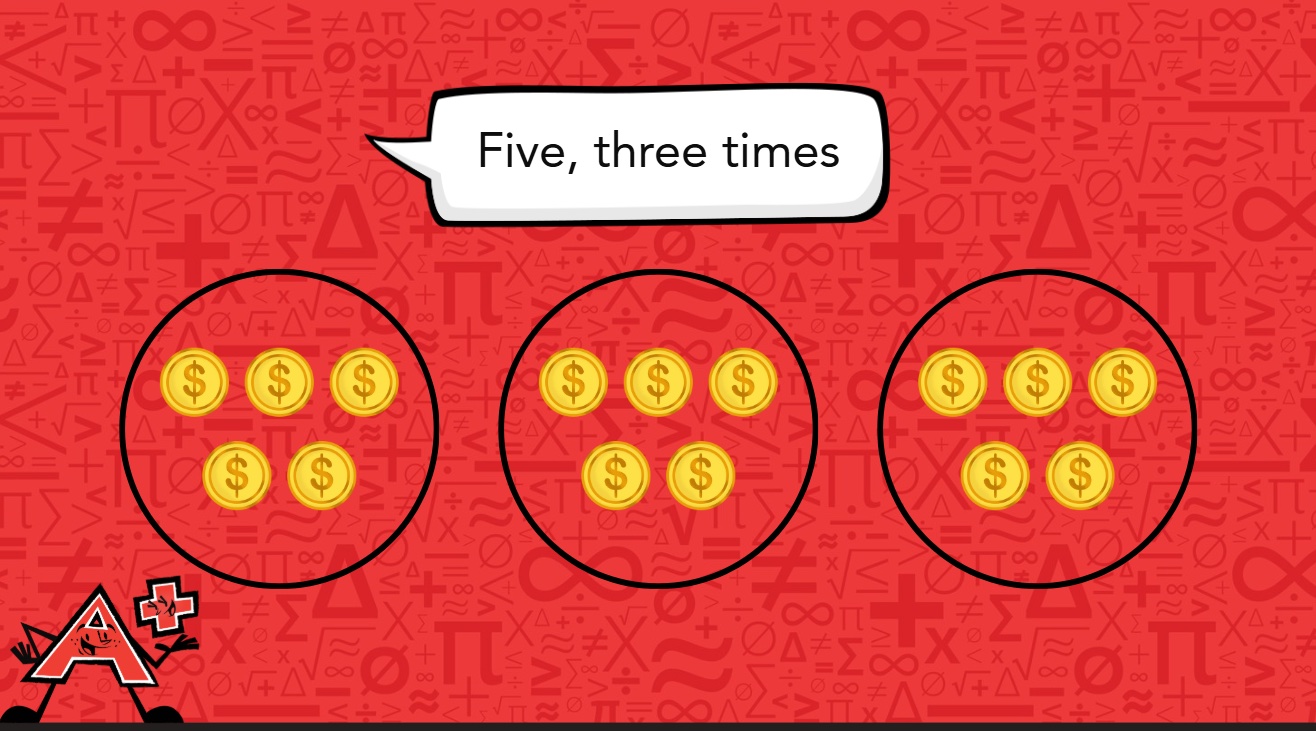
Instead of jumping straight to “what is 3 × 4,” try phrasing it as “what is three 4s” or “four, three times.” Though they may seem like small tweaks, at Mathnasium, they help students picture equal groups, not just memorize symbols.
At this stage, it also helps to model problems with real or drawn objects to connect the operation to something tangible.
Try using items like coins, blocks, or paper clips to build equal groups. Drawing quick circles with dots inside works just as well and encourages students to organize and count the groups themselves.
3. Group Facts Strategically, Not Sequentially
When students are handed a multiplication chart, their first instinct, or instruction, is usually to start at 1 × 1 and work their way across the table. But learning multiplication in strict order doesn't reflect how students actually build understanding.
Instead, at Mathnasium, we group facts in a way that sets students up for early success and minimizes cognitive overload.
We begin with what we call confidence-building facts: 0s, 1s, 2s, 5s, 10s, and 11s.
Why?
These facts follow consistent, easy-to-spot patterns that students can pick up quickly, often by skip-counting or using place value.
Here’s what that might look like:
-
0s and 1s follow predictable logic; any number times 0 is 0; any number times 1 is itself.
-
2s can be taught as doubles: 2 × 4 is just double 4.
-
5s end in 0 or 5 and follow a rhythm that students often enjoy counting aloud.
-
10s are place-value friendly: just add a zero to the number.
-
11s, at least up to 9 × 11, are often visual and intuitive: 3 × 11 = 33, 6 × 11 = 66, and so on.
Once students master these sets, they’ve already covered a large portion of the multiplication chart.
Next, we highlight turnaround facts (also called the commutative property).
For example, once a student knows that 3 × 4 = 12, they also know 4 × 3 = 12. Recognizing these reversals cuts the number of unique facts almost in half.
From there, students are in a strong position to begin tackling the remaining facts using logic and pattern-based strategies.
📕 You May Also Like: How to Nurture Confident Math Thinkers, Not Just Answer-Getters
4. Teach Patterns, Not Products
Learning multiplication facts by heart can make students miss something important: multiplication is full of structure and shortcuts that make facts easier to understand and easier to remember.
Rather than treating each fact as something new to memorize, help your student look for relationships between numbers.
Here are a few examples we often use with students:
-
×4 is double ×2. If 2 × 6 = 12, then 4 × 6 is just double that—24.
-
×6 is ×5 plus one group. If 5 × 7 = 35, then 6 × 7 = 35 + 7 = 42.
-
×9 is ×10 minus one group. If 10 × 8 = 80, then 9 × 8 = 80 − 8 = 72.
-
×12 is ×10 plus ×2. If 10 × 4 = 40 and 2 × 4 = 8, then 12 × 4 = 40 + 8 = 48.
When students are taught to use structure like this, they stop guessing and start reasoning. Fluency grows from recognizing how facts are connected, not from repeating them faster.
5. Use Mental Benchmarks to Build Facts
Once students are confident with basic patterns and number relationships, they can begin building new facts from the ones they already know.
This is where mental benchmarks come in.
If a student knows that 8 × 5 = 40, then they can reason through 8 × 6 as one more group of 8:
40 + 8 = 48
Or if they know that 10 × 7 = 70, they can solve 9 × 7 by subtracting a group of 7:
70 − 7 = 63
This approach turns facts into stepping stones. Rather than getting stuck when they forget an answer, students learn to navigate through the math they do know, and fluency begins to grow from the inside out.
6. Make Facts Visible with Visual Models
When facts feel abstract or disconnected, students need more than explanations; they need to see what’s happening.
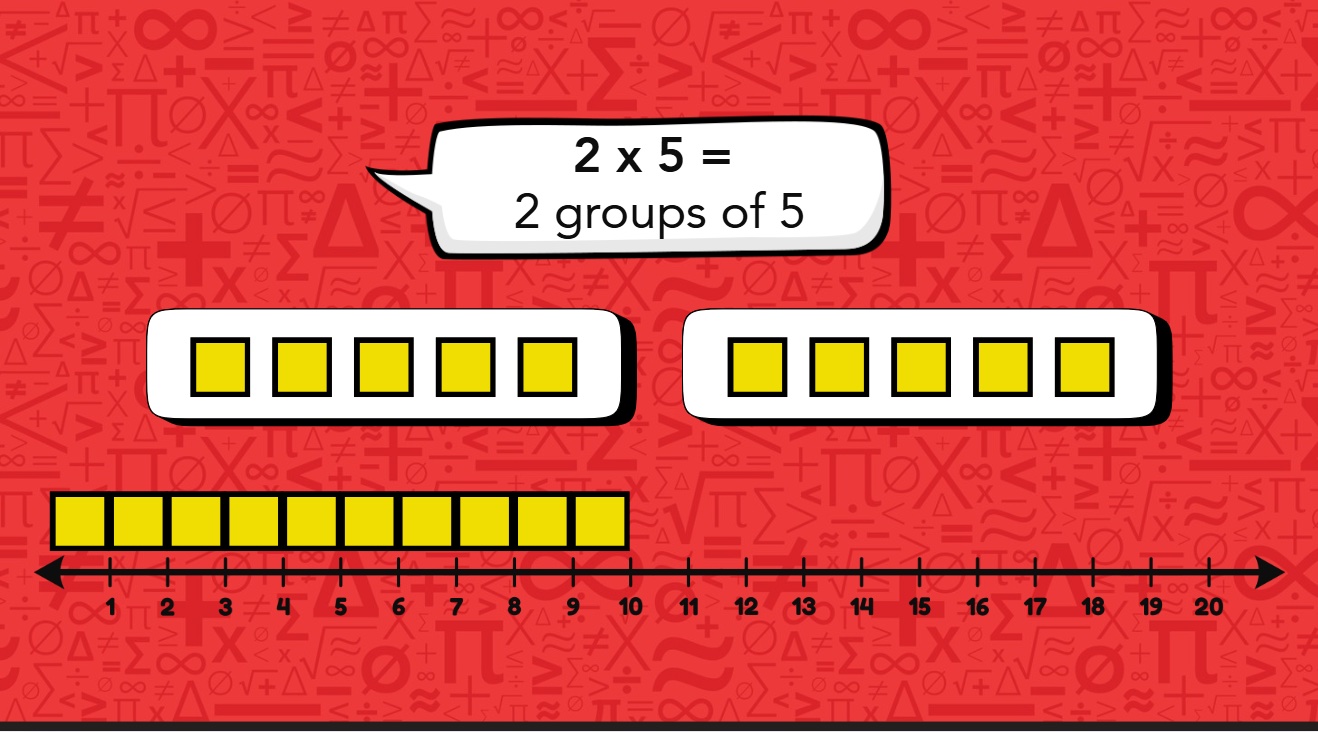
Visual tools like arrays, bar models, and number lines show what multiplication means: equal groups, repeated steps, or parts of a whole.
Drawing five rows of four stars helps a student understand 5 × 4 much better than memorizing “20.”
Using a number line to take three jumps of six reinforces that 3 × 6 isn’t just a symbol, but movement, structure, and grouping.
Even simple sketches can make a big difference. The goal is to give students a visual framework that connects the operation to real quantities so that meaning comes before memorization.
7. Reinforce Through Strategy-Based Practice
Speed-focused drills can push students to guess or rely on shaky memory. What actually builds fluency is practice that strengthens patterns, encourages reasoning, and gives students time to think through their approach.
Here are a few ways to practice with strategy in mind:
-
Fact ladders: Let students build new facts off a known one (e.g., start with 5 × 6, then go up or down by one).
-
Strategic flashcards: Use them, but always follow with “How did you get that?” to keep thinking front and center.
-
Board games and apps: Choose ones that reward accuracy and logic, not just speed.
Practice should feel empowering, not pressuring. When students feel successful and in control, they’re far more likely to stick with it and the fluency follows.

Multiplication flashcards work best when paired with reasoning, not just recall.
8. Build Toward Automaticity But Don’t Rush It
Fluency has less to do with speed and more to do with confidence.
Students become automatic when they understand the structure behind the facts, not from racing through drills. Look for the real signs: clear reasoning, self-correction, and calm problem-solving, even when they forget a fact.
That’s when you know it’s sticking.
📕 You May Also Like: 5 Strategies to Improve Math Fluency at Home
9. Keep the Big Picture in View
Multiplication facts are connected to nearly every major math concept students will encounter beyond elementary school.
Students rely on them when working with:
Multiplication fluency sets the stage for higher-level thinking and helps students move forward with confidence.

At Mathnasium, we teach for true understanding, breaking down concepts, guiding students step by step, and building lasting confidence in math.
How Mathnasium Helps Students Master Any Math Concept
At Mathnasium, we’ve worked with thousands of students across all skill levels. Some need help rebuilding foundational skills. Others are ready for more challenge. Many fall somewhere in between.
Whatever the goal, we offer a personalized path forward and teach for true mastery.
What does that mean?
Mastery is about more than just getting the right answer. It’s about understanding how and why the math works, so students can apply it confidently and flexibly.
That’s the purpose of the Mathnasium Method™, our proprietary teaching approach designed to help students unlock their math potential and change how they think and feel about learning math.
It all starts with a diagnostic assessment. This helps us pinpoint what your child already understands, where they could improve, and how they learn best.
From there, we create a personalized learning plan, whether your child needs to master multiplication, tackle fractions, or prepare for algebra.
Once the plan is in place, our instructors deliver face-to-face instruction in a supportive, engaging environment. Each session is guided by the student’s plan and paced to build understanding step by step.
We go beyond rote memorization and teach for lasting comprehension. That means using natural language to explain concepts clearly, and incorporating a blend of verbal, visual, mental, tactile, and written strategies to make the math stick.
When a student hits a roadblock, we break the concept into manageable parts and guide them through both the how and the why. This builds true fluency along with the problem-solving and critical thinking skills they’ll need throughout their education.
Parents often tell us our sessions don’t feel like traditional lessons. We incorporate hands-on activities, strategy games, and motivational rewards to help students stay focused, engaged, and excited to learn.
The Mathnasium Method™ brings measurable results:
-
94% of parents report an improvement in their child's math skills and understanding
-
93% of parents report an improved attitude towards math after attending Mathnasium
-
90% of students saw an improvement in their school grades
Mathnasium operates over 1,100 centers across the U.S., bringing our proven method and top-rated instructors to communities nationwide.
For families in or near Irvine, Mathnasium of Woodbridge is a trusted local center with years of experience helping students build deep understanding and lasting confidence in math.
Whether your child is looking to catch up, keep up, or get ahead in math, our learning center can help!
📅 Schedule a Free Diagnostic Assessment at Mathnasium of Woodbridge to get started!
Not near Irvine, CA?
📍 Find Mathnasium Learning Centers Near You


 (949) 559-6284