Woodbridge Blog

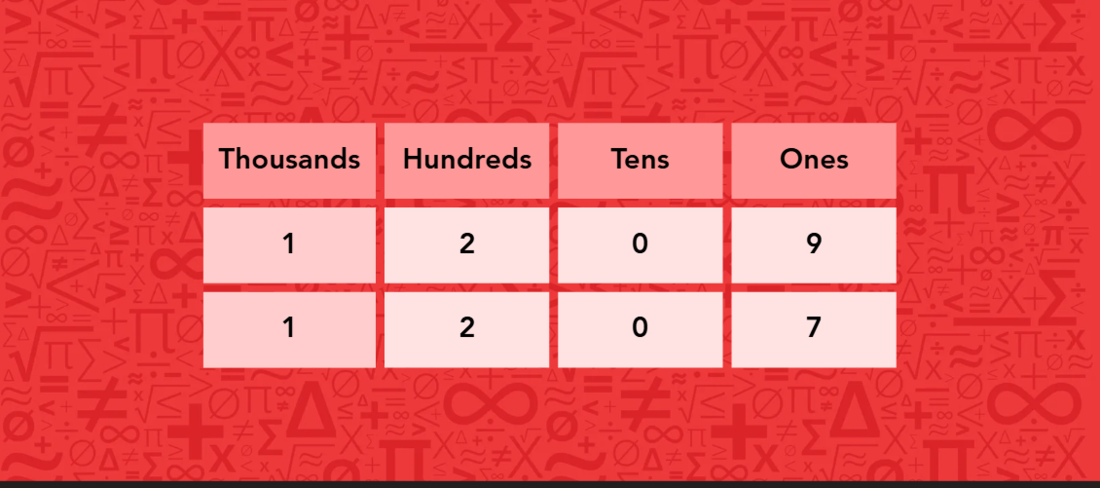
A table displaying various numbers organized by their place values for educational purposes.

What Is Place Value and Why Does It Matter Beyond 2nd Grade?

Sep 7, 2026 | Woodbridge Blog

Mathnasium tutors explain place value, why it matters past 2nd grade, and how early place value gaps show up in later grades.

Math Word Problem Strategies: A Guide for K-8 Grades

Jul 29, 2026 | Woodbridge Blog

Mathnasium tutors explain which word problem strategies work at each grade level, from concrete modeling in Grades K to 2 to variable mapping in middle school.

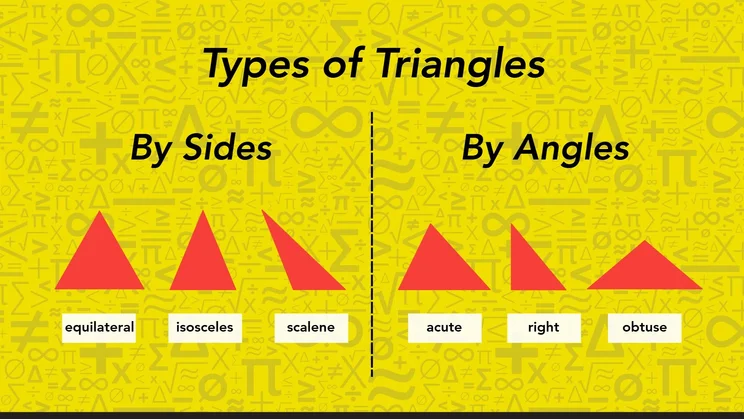
Types of Triangles: How to Classify by Sides and Angles (Grades 4–8)

Jul 1, 2026 | Woodbridge Blog

Mathnasium tutors cover all six types of triangles by sides and angles, with diagrams, real-world examples, and classification practice for Grades 4–8.

The Not Equal Sign: What ≠ Means in Math

May 27, 2026 | Woodbridge Blog

Learn what the not equal sign means, how to write it correctly, and where we use it in math. At the end, check your understanding with our practice exercises.

How to Build an Effective 15-Minute Daily Math Routine

Apr 22, 2026 | Woodbridge Blog

Build a 15-minute daily math routine that lasts. Seasoned Mathnasium tutors share a habit-science approach to consistent math practice at home.

Engaged mother helps daughter with counting.

How Counting On Supports Your Child’s Mental Math Skills

Mar 27, 2026 | Woodbridge Blog

Mathnasium tutors explain what counting on is, why it matters, and how this early addition strategy builds the mental math skills your child needs.

Students eagerly raise their hands in a classroom.

How Math Concepts Reappear in New Forms Each Year (A Parent’s Guide to Spiral Learning)

Mar 4, 2026 | Woodbridge Blog

Learn why math concepts return in new forms each year and how spiral learning helps students connect ideas as math builds across different grades.

What Repeated Math Errors Reveal About Your Student’s Thinking (+ How to Address Them)

Feb 3, 2026 | Woodbridge Blog

Mathnasium tutors explain what repeated math errors reveal about student thinking and how to use those insights as action plans for math growth.

Schedule Your Mathnasium Assessment Today

Loading