Types of Triangles: How to Classify by Sides and Angles (Grades 4–8)
Jul 1, 2026
| Woodbridge
Did you know that triangles are one of the strongest shapes in geometry?
Because its three sides naturally lock together to distribute weight evenly, engineers use networks of triangles to stop giant bridges from sagging, skyscrapers from shaking, and cranes from tipping over!
Today, we’ll walk through all six triangle types, introduce a simple three-step method for classifying any triangle, and answer common questions students ask along the way.
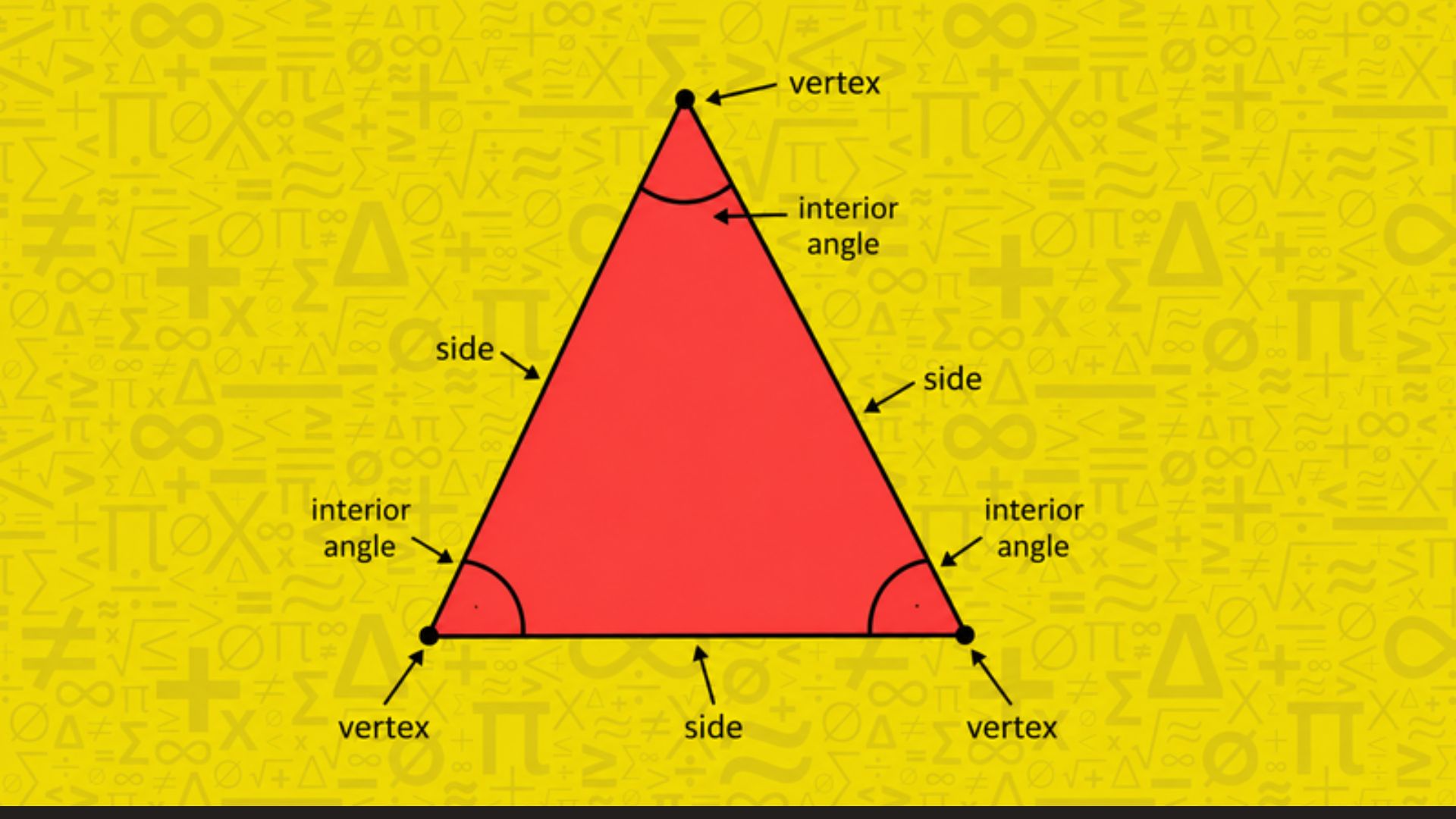
Vertices: The three corner points where the sides meet
Sides: The three straight line segments connecting the vertices
Interior angles: The three angles formed inside the triangle at each vertex
The Triangle Angle Sum Theorem states that the interior angles of every triangle always sum to exactly 180°. This rule helps us determine which triangle classifications are possible and which are not.
Triangle classification is commonly introduced and expanded throughout Grades 4–8 as we learn to compare side lengths, measure angles, and describe shapes more precisely.
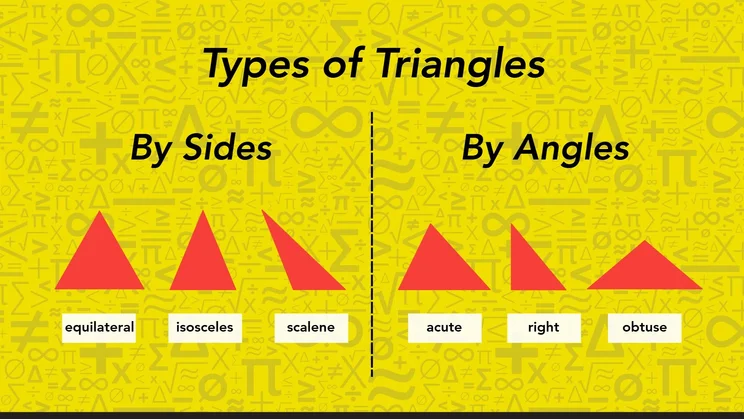
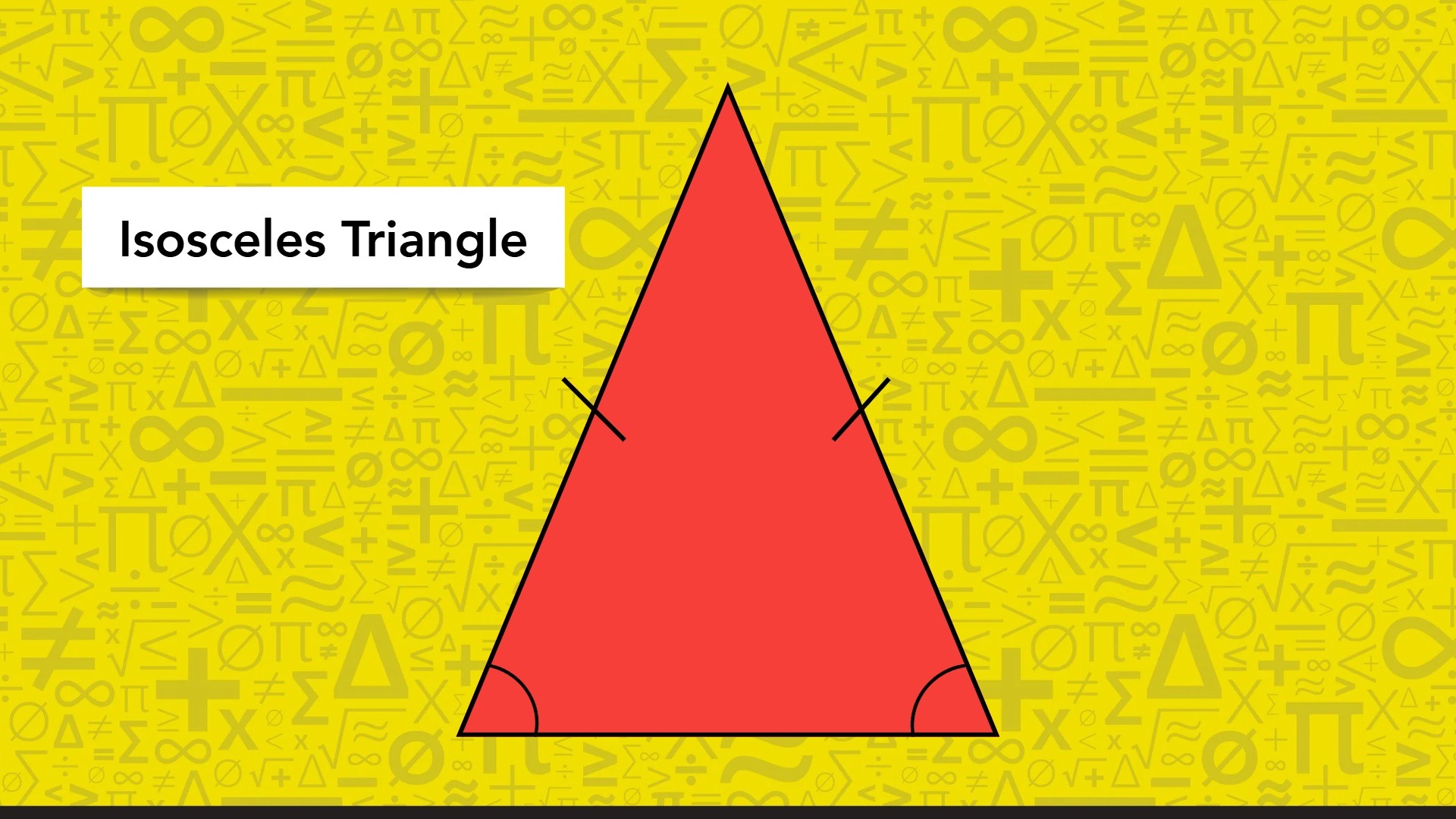
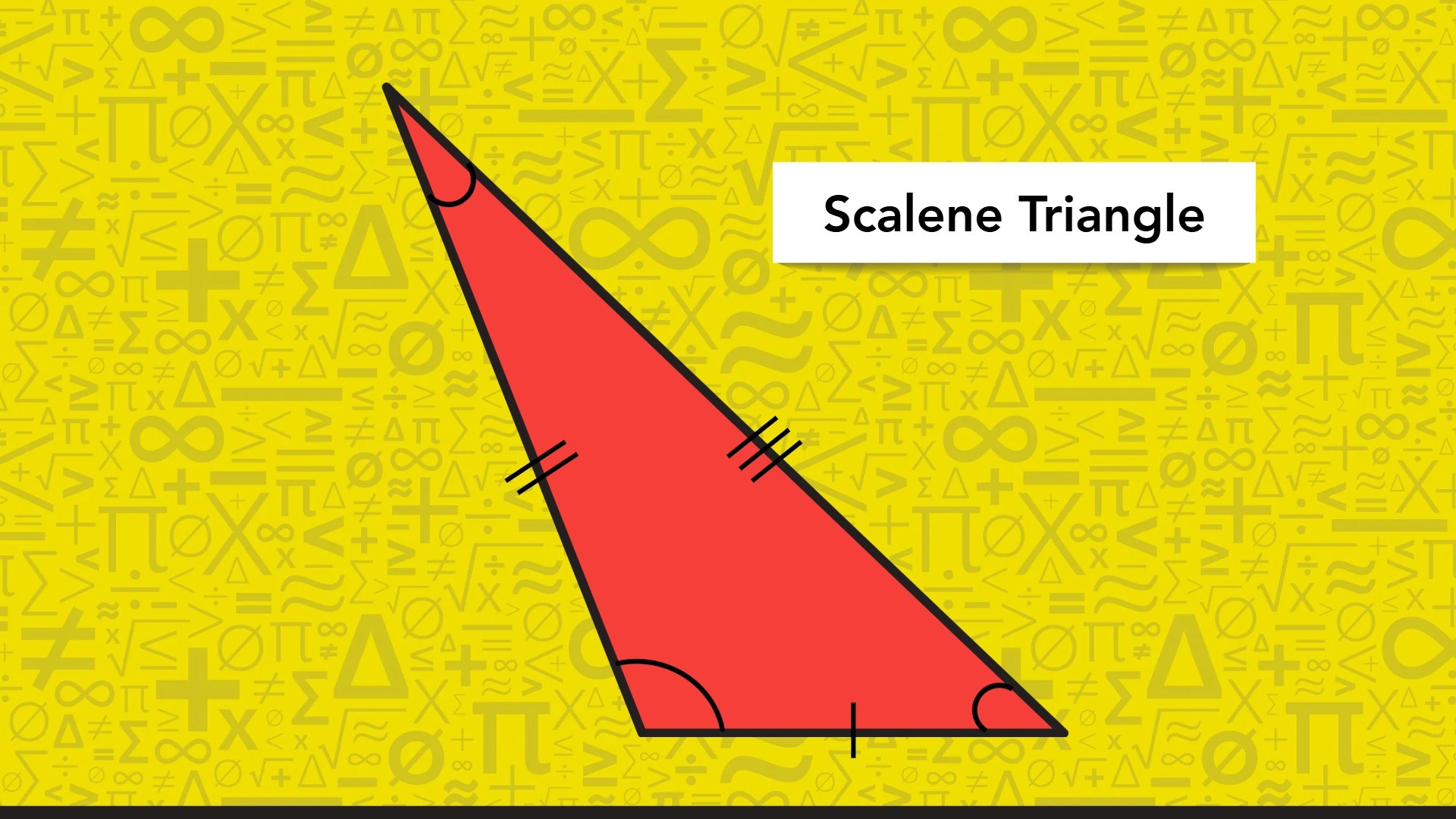
One way we can classify triangles is by looking at their side lengths. We can identify the triangle type by counting how many sides are equal.
1. Equilateral Triangle
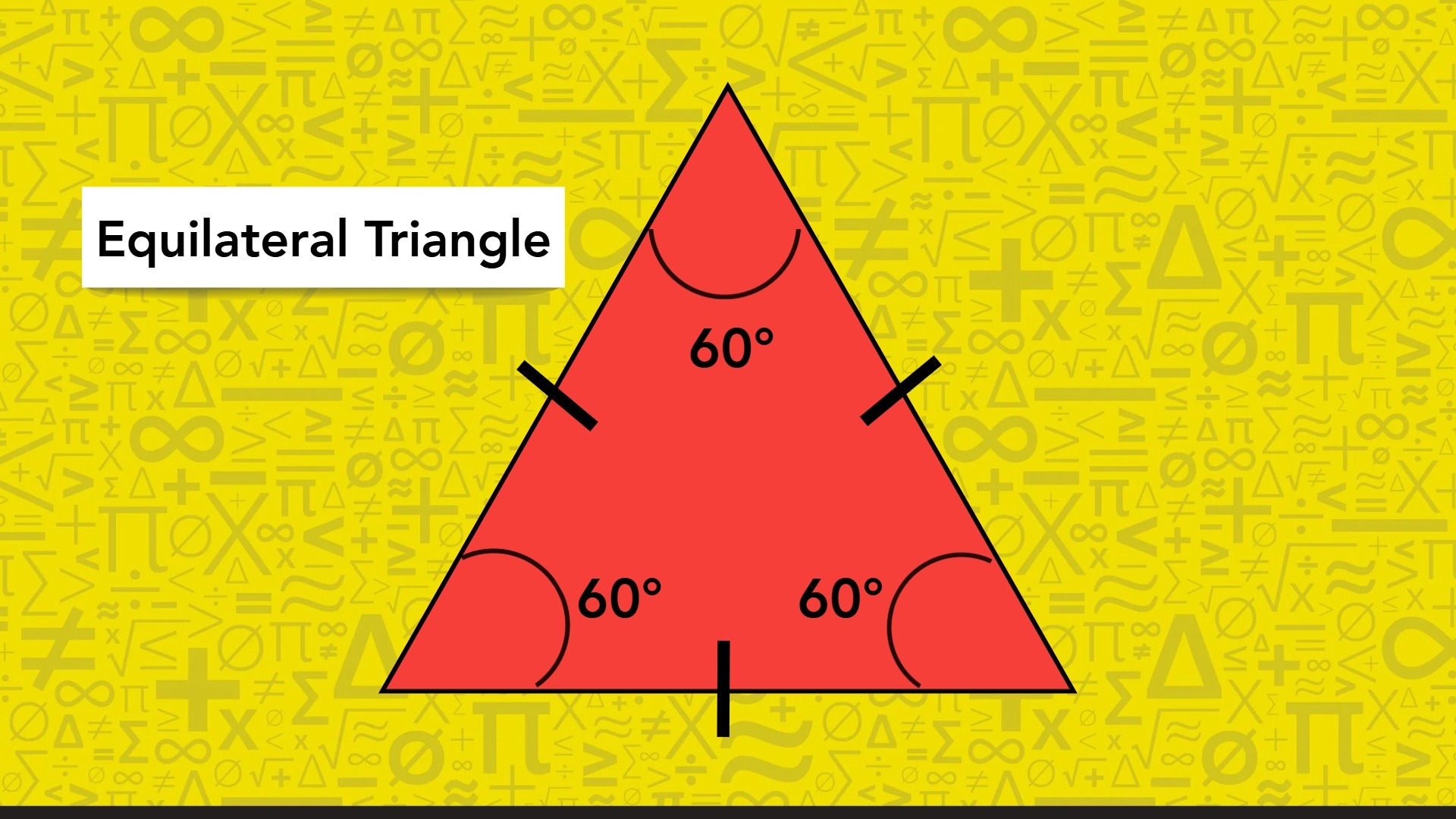
An equilateral triangle has three sides of equal length and three interior angles that each measure exactly 60°. Because all three angles measure 60°, every equilateral triangle is also an acute triangle.
We'll see why that is important when we classify triangles by both sides and angles.
We can also classify triangles by looking at their interior angles. Every triangle belongs to one of three types based on the size of its largest angle.
The Triangle Angle Sum Theorem tells us why a triangle can never have more than one right angle or more than one obtuse angle. If one angle reaches 90° or more, the remaining two angles must fit within the rest of the 180-degree total.
1. Acute Triangle
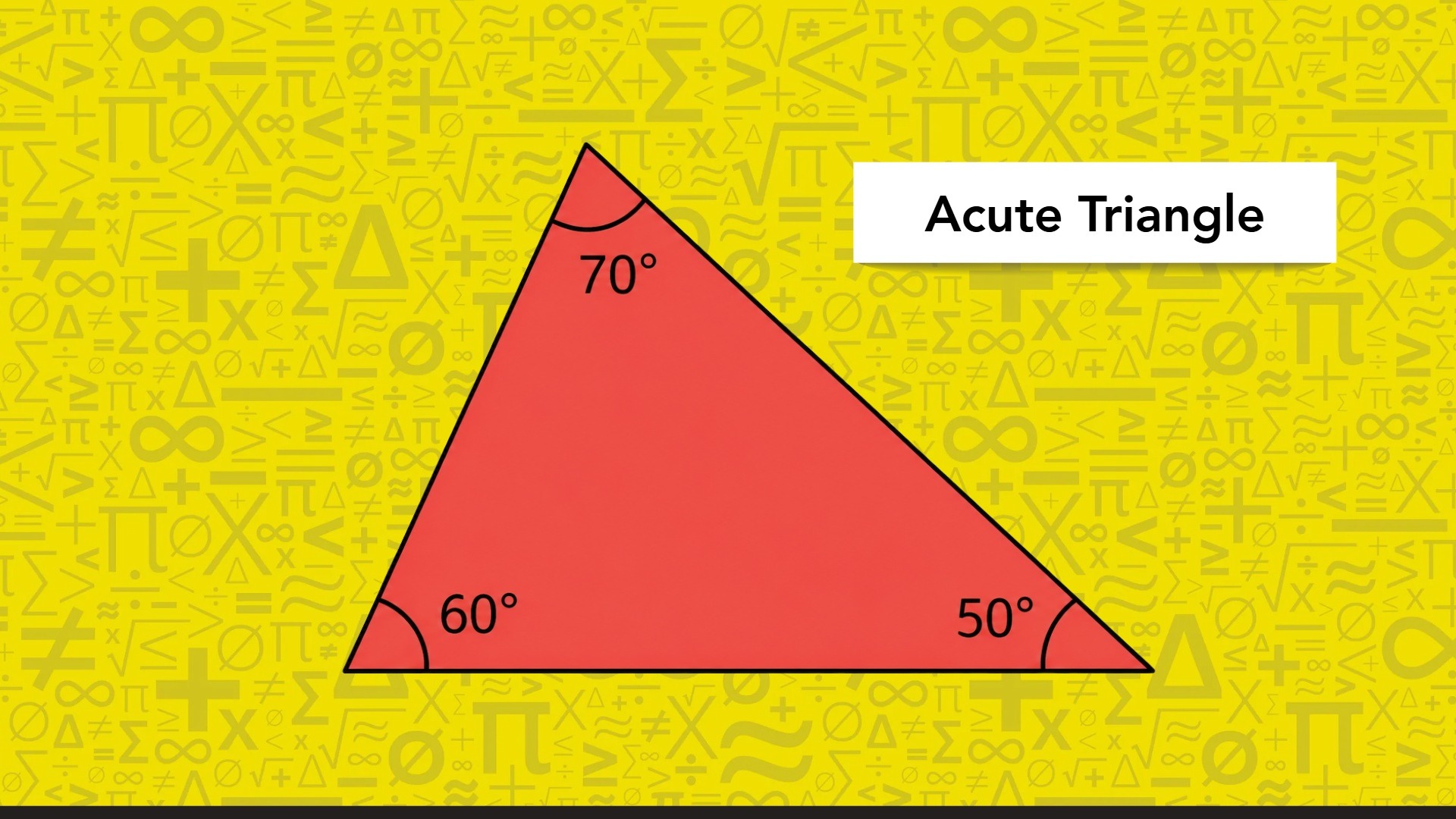
An acute triangle has all three angles measuring less than 90°.
Remember equilateral triangles, the ones with equal sides and 60° angles?
If each angle is 60°, then all three angles are less than 90°, so we can classify every equilateral triangle as acute.
2. Right Triangle
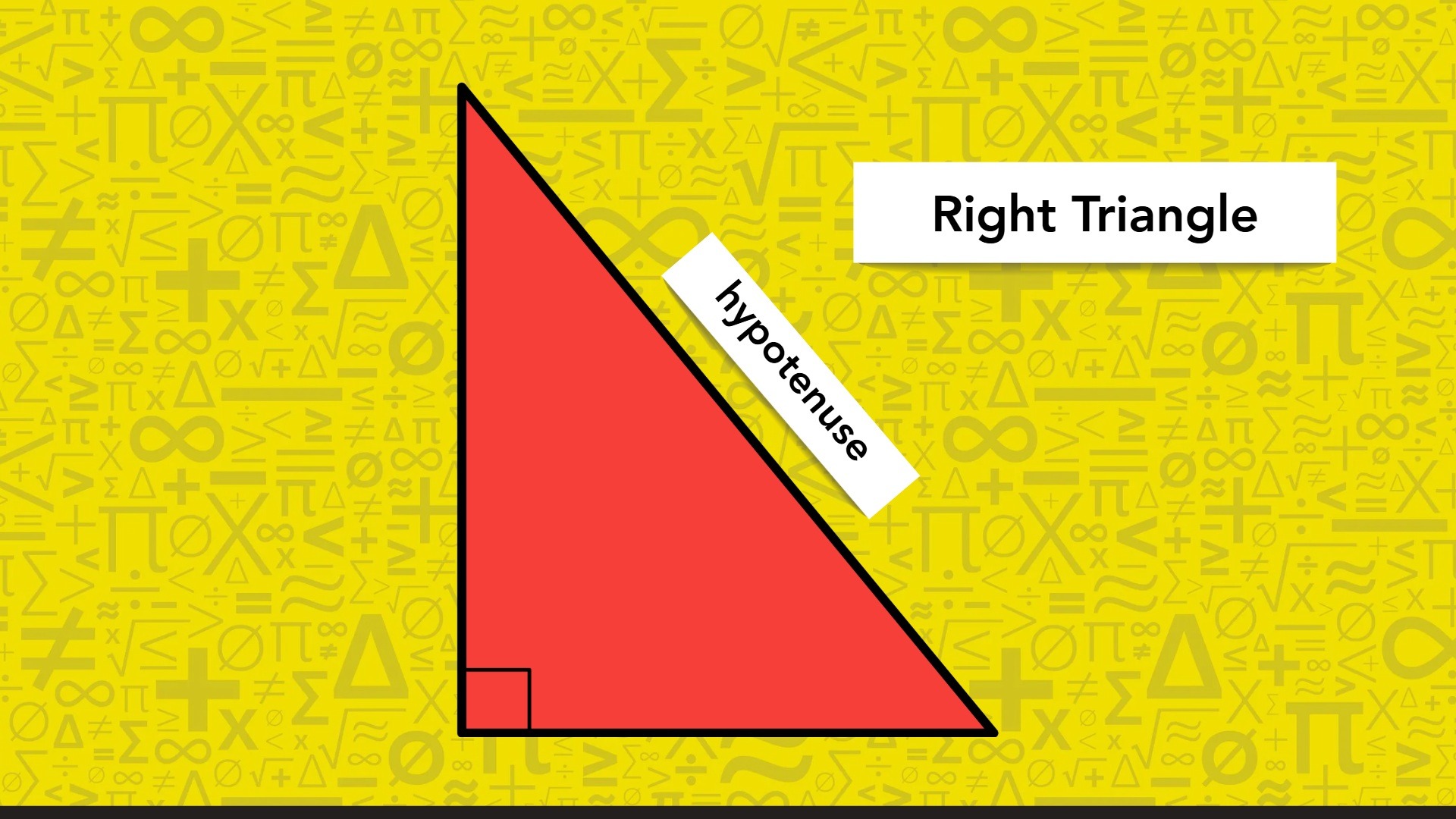
A right triangle contains one angle measuring 90°.
The side opposite the right angle is always the longest, called the hypotenuse.
Triangles are everywhere around us, from road signs and rooftops to bridges and bicycle frames. Let's look at a few examples of how different triangle types appear in everyday life.
Triangle Type
Real-World Example
Why That Shape
Equilateral
Bicycle frames and bridge trusses
Distributes force evenly across three equal sides
Isosceles
A-frame roofs and step ladders
Provides balanced symmetrical support
Scalene
Canvas wind sails and skatepark ramps
Allows for varied slope and directional flexibility
Before we finish, let's answer a few common questions our tutors hear about classifying triangles.
1. Is an equilateral triangle also an isosceles triangle?
Yes. An isosceles triangle has at least two equal sides. Since an equilateral triangle has three equal sides, it also qualifies as an isosceles triangle.
2. Can a triangle have two obtuse angles?
No. Two obtuse angles would each exceed 90°, and their sum alone would exceed 180°, which violates the Triangle Angle Sum Theorem. Every triangle can have at most one obtuse angle.
3. What is the difference between a right triangle and an obtuse triangle?
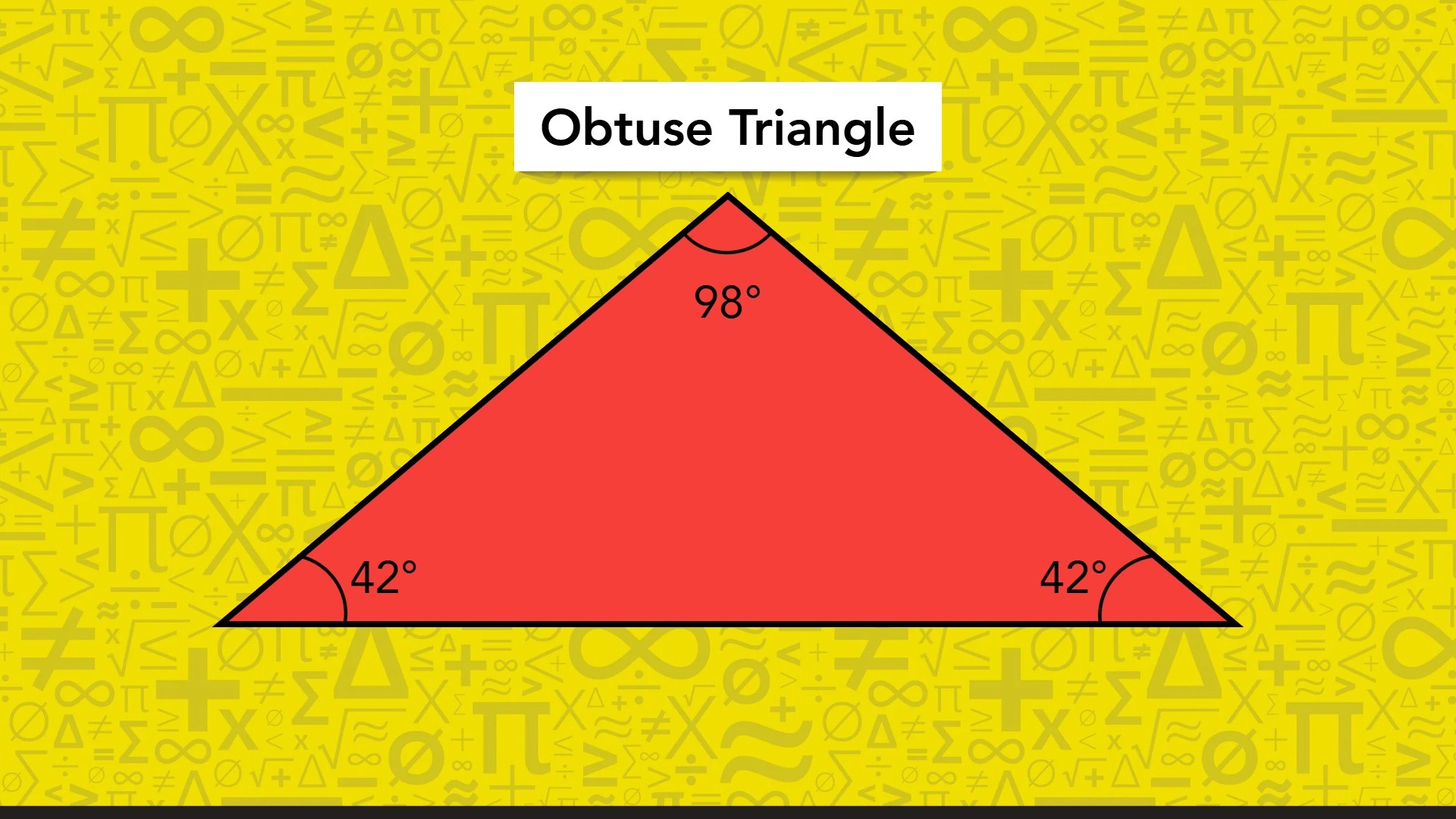
A right triangle contains one 90-degree angle. An obtuse triangle contains one angle greater than 90°. Both types can have only one such angle because the interior angles of a triangle must always add up to 180°.
4. Why can an equilateral triangle never be a right triangle?
An equilateral triangle has three angles measuring 60°. A right triangle must contain one 90-degree angle. Because those conditions cannot be true at the same time, an equilateral triangle can never be a right triangle. The same reasoning explains why an equilateral triangle can never be obtuse.
At Mathnasium, we help students build a deeper understanding of geometry through visual learning and guided problem-solving.
How Mathnasium Helps Students Build Geometry and Analytical Skills
Mathnasium is a math-only learning center dedicated to helping K–12 students of all skill levels excel in math.
Whether students are working to understand triangle classification for the first time, strengthen their geometry foundations, or build the analytical reasoning that geometry develops across Grades 4–8, we can support them.
Our proprietary teaching approach, the Mathnasium Method™, is designed around each student's needs and learning style.
To help students build a deep understanding of triangle types, geometry concepts, and analytical thinking, our approach includes:
Assessment and Personalized Learning Plans: Each student starts with a diagnostic assessment that identifies current skills, strengths, and gaps. From those findings, we build a personalized learning plan tailored to their goals, whether that means strengthening foundational geometry skills, mastering triangle classification, or preparing for more advanced analytical reasoning.
Teaching for Understanding: Our specially trained tutors use natural language and a mix of verbal, visual, mental, tactile, and written techniques so each concept lands before we move forward.
Problem-Solving and Critical Thinking: We allow time for students to work through problems on their own. That productive struggle helps them learn to trust their own reasoning. When we do step in, we explain both the how and the why behind each answer, so students build problem-solving and critical thinking skills they can use in math and beyond.
An Engaging and Fun Learning Environment: Sessions include games, earned rewards, and consistent celebration of progress. Students build confidence alongside fluency, and many develop a more positive relationship with math over time.
Families who work with us see real results in their children's math performance:
94% of parents report improvement in their child's math skills and understanding
93% of parents report an improved attitude toward math after attending Mathnasium
90% of students saw improvement in their school grades
With over 1,100 learning centers across North America, there is likely a Mathnasium close to you.
Families across Woodbridge and nearby areas, including Westpark, Deerfield, University Park, Oak Creek, El Camino Real, Central Irvine, and Stonegate, trust Mathnasium of Woodbridge to help their children build real math confidence at every level.
If triangle classification or any other math concept is giving your child trouble, our team is ready to help.
Mathnasium of Woodbridge is a math-only learning center for K-12 students in Irvine,
CA. Trusted by over a million parents, Mathnasium uses personalized learning plans
and the proprietary Mathnasium Method™ to help students catch up, keep up, and get ahead on their math journey.
Our specially trained tutors deliver face-to-face instruction in a supportive and fun small-group environment,
working with students both in center and online to develop a deep understanding of math, build confidence,
and improve academic performance.
Mathnasium tutors explain which word problem strategies work at each grade level, from concrete modeling in Grades K to 2 to variable mapping in middle school.


 (949) 559-6284