What is the Pythagorean Theorem?
The statement that “the sum of the squares of the legs of a right triangle equals the square of the hypotenuse.” a² + b² = c², where a and b are legs of a right triangle and c is the hypotenuse.
The Pythagorean Theorem, or Pythagoras' Theorem, is a rule in geometry that helps us find the lengths of sides in a right triangle. It says that if you square the two shorter sides (called the legs) and add them together, you get the square of the longest side (called the hypotenuse).
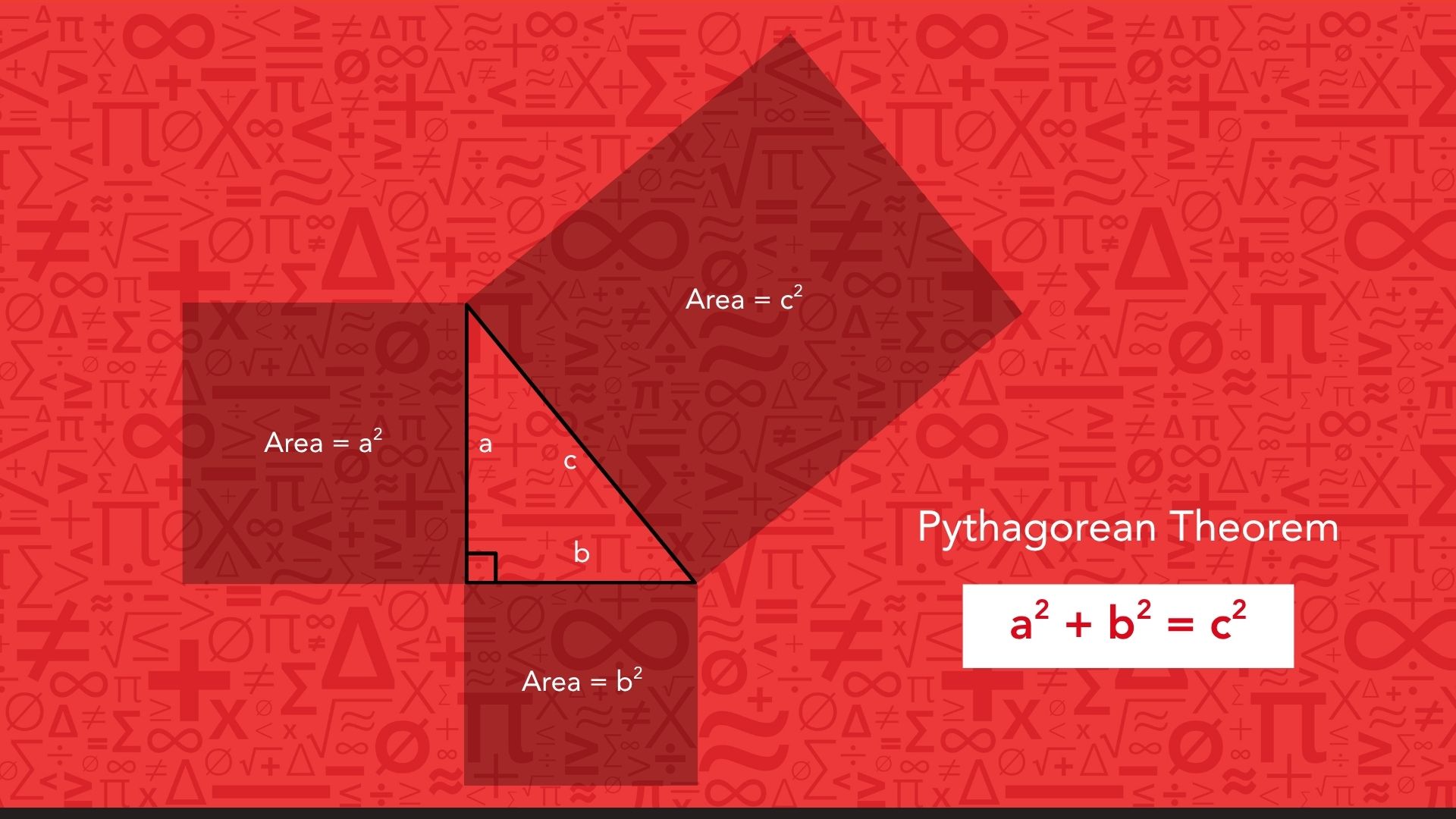
The formula is:
a² + b² = c²
- a and b are the legs (the two shorter sides)
- c is the hypotenuse (the side across from the right angle)
For example, if one leg (a) is 3 units and the other (b) is 4 units:
c² = a² + b²
c² = 3² + 4²
c² = 9 + 16
c² = 25
To find the hypotenuse, we need the square root of 25, so:
c = √25 = 5
This theorem is useful for:
- Finding missing side lengths in right triangles
- Solving real-world problems like building ramps or ladders
- Understanding relationships in coordinate geometry and distance
When Do Students Learn About the Pythagorean Theorem?
Students are introduced to the Pythagorean Theorem in middle school and continue using it in geometry and algebra through high school.
Grades 7–8 – Introduction to the Pythagorean Theorem
Students learn the formula, use it to solve problems, and apply it to find distances in real-life and coordinate grids.
Grades 9+ – Applying the Theorem in Geometry and Algebra
Students use the theorem with radicals, coordinate geometry, trigonometry, and word problems involving 3D shapes and unknown measurements.