Lines first appear in early elementary school math and never really leave. Grade after grade, they keep showing up, each time adding a new layer and building the foundations of geometry.
Inspired by that progression, we put together this comprehensive guide to different types of lines we will encounter in math. Whether you are just starting to explore lines in math or in need of a refresher for a geometry unit, everything you need is right here.

Types of Lines in Math
There are several types of lines we will encounter in math. Let's begin with the core ones officially introduced in elementary school and build from there.
1. Vertical Lines
A vertical line runs straight up and down. Think of it as a standing line.
On a graph, the y-axis is a vertical line because it runs straight up and down.
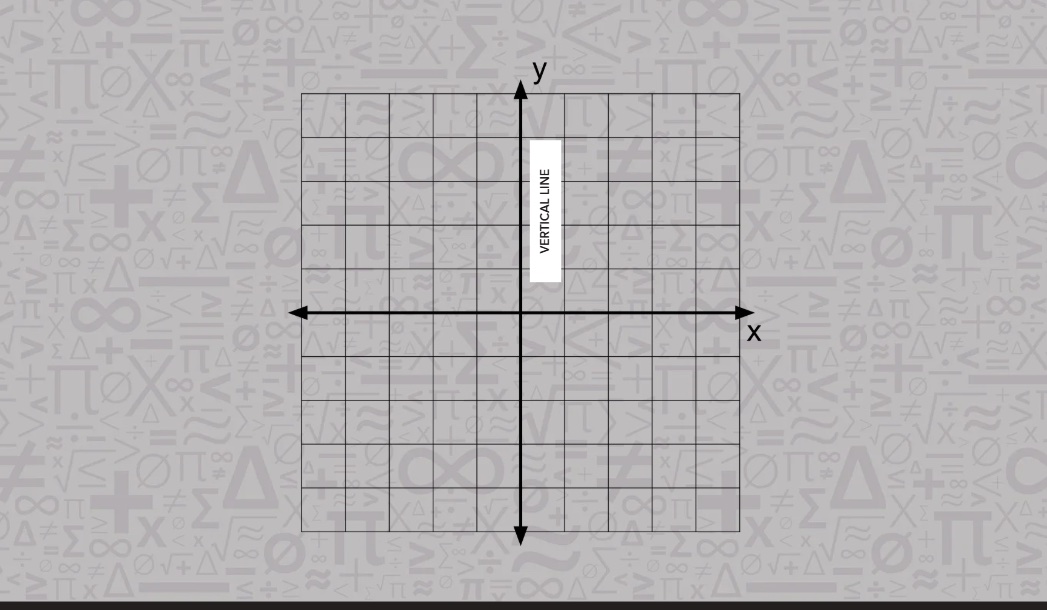
In geometry, we use vertical lines to help make right angles and describe shapes like rectangles.
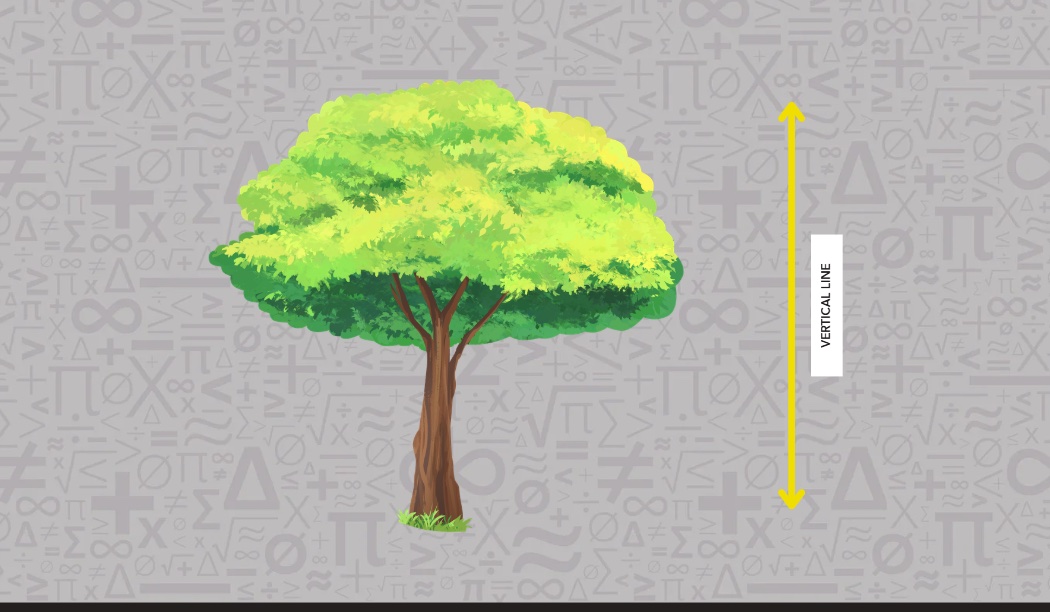
Vertical lines are probably the easiest to spot in everyday life. A tree in the park, a lamppost, a table leg, and even you standing upright are a vertical line in action.
2. Horizontal Lines
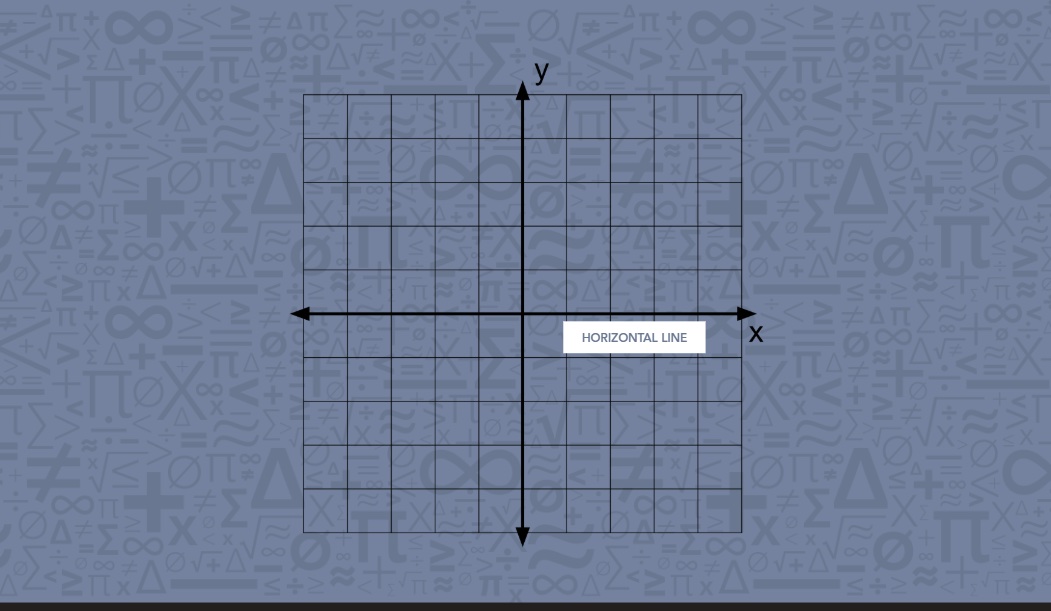
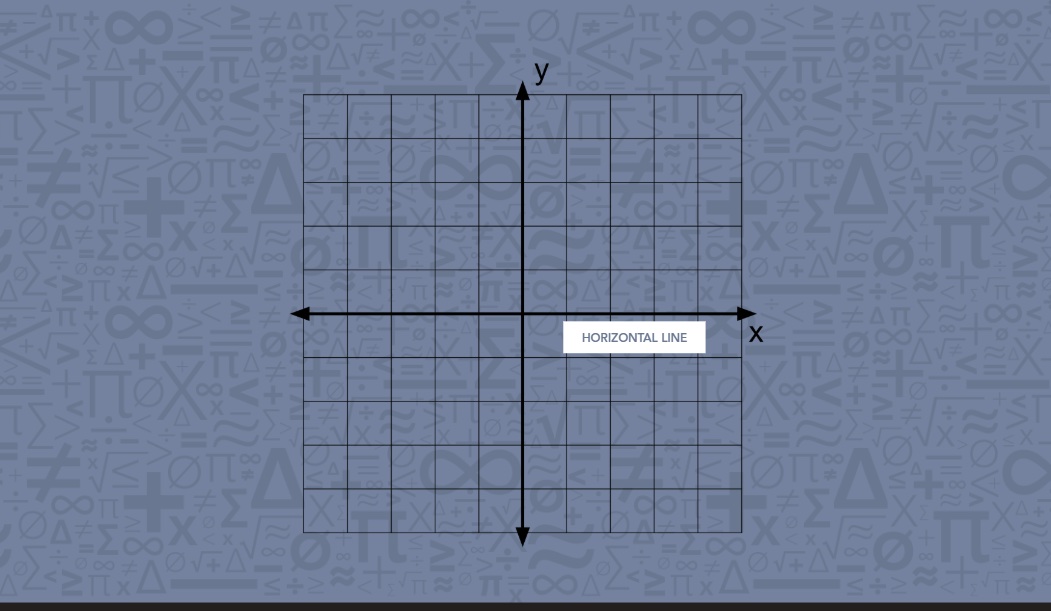
A horizontal line runs flat from left to right. Think of it as a sleeping line.
What does that make it? Yes, the opposite of the vertical line.
On a graph, the x-axis is a horizontal line. It runs straight left to right.
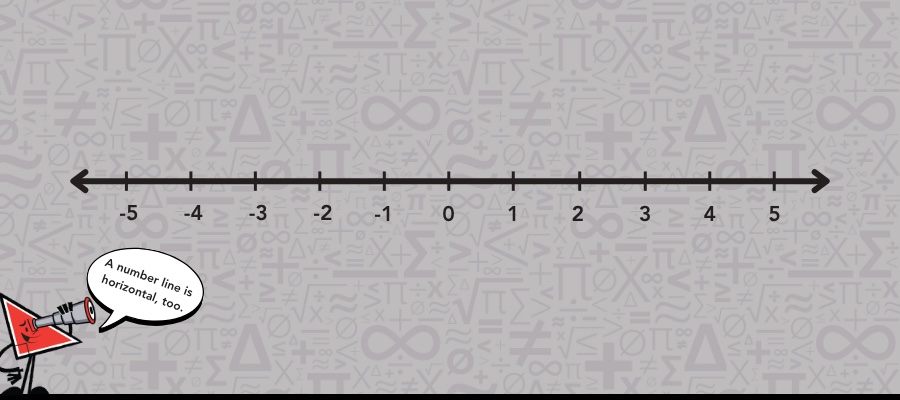
A number line works the same way.
Just like vertical lines, horizontal ones are all around us. A bed, the floor, the top of a desk, or you lying down are all perfect examples.

3. Parallel Lines
Two lines are parallel when they run in the same direction and always stay the same distance apart. No matter how far they extend, parallel lines never meet.
Their symbol is: ||.
Parallel lines show up everywhere, both in math class and in the world around us:
-
The opposite sides of a rectangle or square are parallel; it is built into the shape.
-
Train tracks are the classic example.
-
The rungs of a ladder and the lines on your notebook paper are parallel, too.

4. Perpendicular Lines
Perpendicular lines are two lines that intersect (cross) at a perfect 90-degree angle, also called a right angle. That square corner is what makes them perpendicular; not just any crossing will do.
The symbol for these lines is: ⊥
We can find perpendicular lines in everyday things, such as:
-
Street intersections where two roads cross at a right angle
-
The edges of a square or rectangle; every corner is a perfect 90 degrees
-
The corner of a book, a piece of paper, or a door frame; if it forms a 90-degree angle, it's perpendicular.
📕 You May Also Like: What Does Perpendicular Mean? A Complete Overview
5. Intersecting Lines
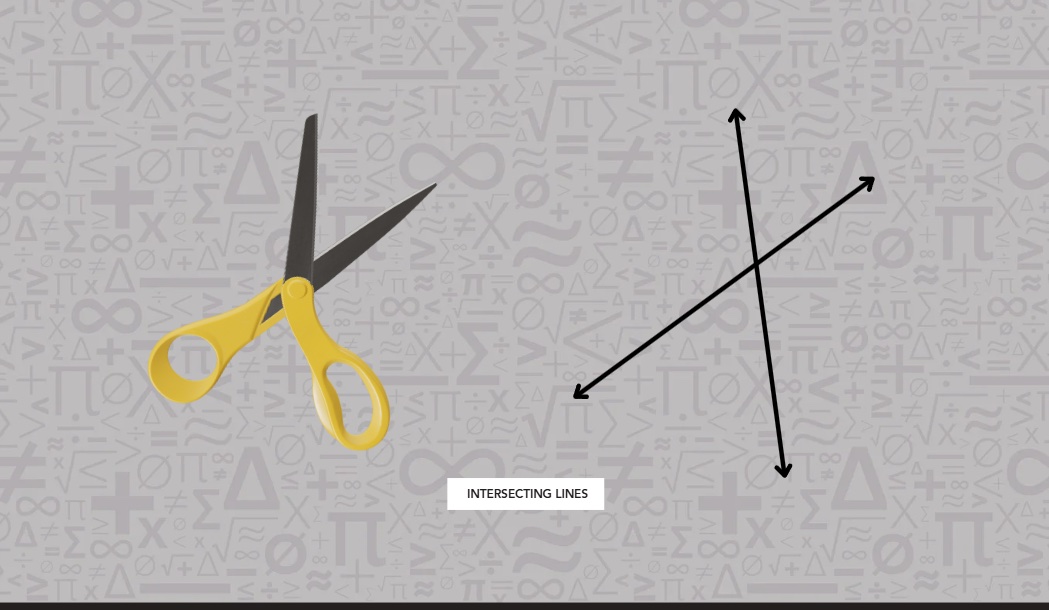
Intersecting lines are any two lines that cross at a single point. Perpendicular lines are actually a special type of intersecting lines, but intersecting lines can meet at any angle, not just 90 degrees.
A road crossing or simply the letter "X" are easy examples we can spot in daily life.
Lines, Line Segments, and Rays
These three terms are very easy to mix up. We’ll give you a clear breakdown of each one.

A line extends forever in both directions and has no endpoints. We can never measure its full length. Think of a straight road disappearing into the distance on both sides, with no visible beginning and no end in sight.
A line segment has two defined endpoints, which means it has a fixed length we can measure. The sides of a triangle are line segments. A great example is the edge of a ruler: it starts at zero, stops at the last measurement, and every point in between can be counted.
A ray has one endpoint and extends forever in one direction, like a beam of light shining out from a source. Imagine standing in a dark room and switching on a flashlight: the beam starts right at the bulb and keeps traveling outward without stopping.

Lines in Middle School
As we move into middle school geometry, we will come across a few more line types.
Here is a quick look at what those are.
Skew lines are lines that never intersect and are not parallel but exist in different planes.
A simple way to picture it: Think of the top edge of a door and the floor beneath it. They never cross, and they are not running side by side either.

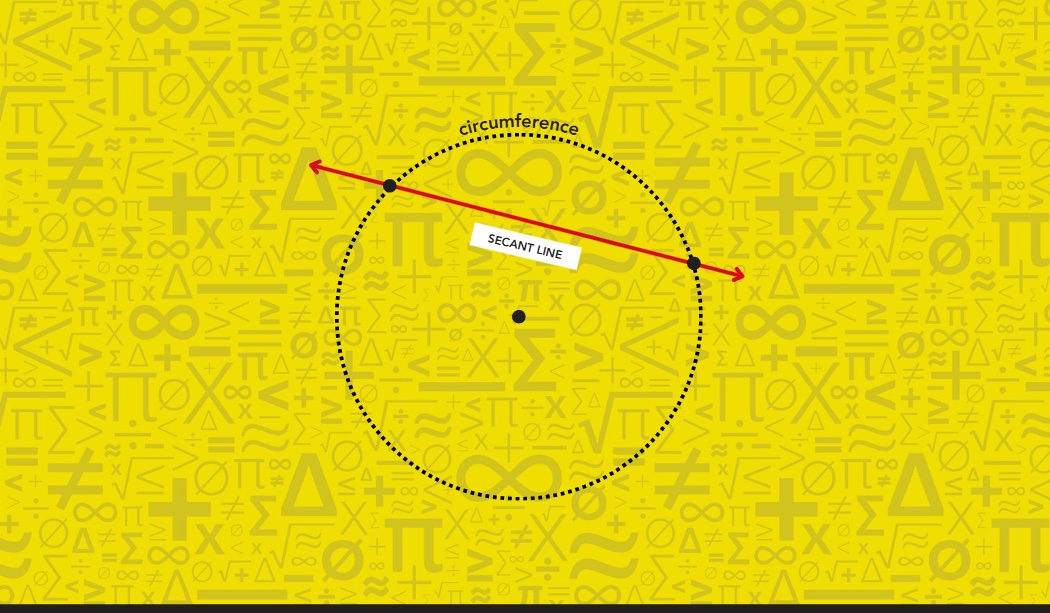
Secant lines are lines that cross a curve at two points. You will most often see these when you begin working with circles.
Tangent lines are lines that touch a curve at exactly one point without crossing through it. Picture a ball sitting on a flat floor: the floor only touches the ball at one point.

📕 You May Also Like: Is Your Student Ready for Their Geometry Class? [+Quiz]
Quiz Time: How Well Do You Know Your Lines?
Let's see how well you know your lines. Try our snap quiz and choose the right answers. Once you're done, check your answers at the bottom of the guide.
Question 1: Which type of line runs straight up and down?
-
Horizontal
-
Parallel
-
Vertical
Question 2: Two lines that never meet and always stay the same distance apart are called what?
-
Intersecting lines
-
Parallel lines
-
Perpendicular lines
Question 3: What is the main difference between a line and a line segment?
-
A line segment goes on forever; a line does not
-
A line goes on forever in both directions, and a line segment has two endpoints
-
They are exactly the same thing
Question 4: Perpendicular lines always form what kind of angle when they meet?
-
A 45-degree angle
-
A 180-degree angle
-
A 90-degree angle
Question 5: Which type of line touches a curve at exactly one point without crossing through it?
-
Secant line
-
Tangent line
-
Skew line
Real-World Scavenger Hunt
Now, it is time to find them in the wild! Grab a pencil and a piece of paper and see how many you can spot around your home, school, or neighborhood.
-
Find a vertical line in your home. Hint: look at doorframes, furniture legs, or window edges.
-
Find a horizontal line outside. Hint: look at fences, steps, or the horizon.
-
Spot a pair of parallel lines. Hint: train tracks, road markings, and stair railings all work.
-
Find a pair of perpendicular lines. Hint: look for a corner where two surfaces meet at a right angle.
-
Find an example of intersecting lines that are not perpendicular. Hint: a diagonal path crossing a straight road, or the letter X.
-
Challenge: Can you find an example of a tangent line in real life? Hint: Think about where a round object meets a flat surface.
Sketch what you find and label each line type. You might be surprised how much geometry is hiding in plain sight.
Frequently Asked Questions About Lines in Math
Still have questions about lines in math? Here are answers to the ones we hear most often at our centers.
1. What is the easiest way to remember vertical vs. horizontal lines?
Two simple tricks that tend to stick:
For vertical lines, point to the letter V. It points upward, just like a vertical line does.
For horizontal lines, use the word horizon. The horizon is the line where the sky meets the ground, and it runs from one side to another, just like a horizontal line.
2. Why are intersecting and perpendicular lines often mixed up?
It’s because perpendicular lines are actually a type of intersecting lines. All perpendicular lines intersect, but not all intersecting lines are perpendicular.
The key distinction is the angle. Perpendicular lines always meet at exactly 90 degrees, forming that recognizable square corner. Intersecting lines can cross at any angle. When you understand that perpendicular is a specific, stricter version of intersecting, the confusion usually clears up.
A helpful exercise to try at home: draw a plus sign (+) together and call it perpendicular, then tilt one of the lines slightly. The moment it tilts, it is no longer perpendicular, but the lines are still intersecting.
3. How does learning lines help with the rest of geometry?
Lines are the starting point. Once you are confident with line types, the next steps build naturally on top of them.
In elementary school, lines will move into angles, which are formed where two lines or rays meet, and then into 2D shapes like triangles, rectangles, and polygons, all of which are made up of line segments.
In middle school, lines connect to the coordinate plane, where you will learn to plot and analyze them using slope and equations. From there, geometry expands into area, volume, transformations, and eventually formal proofs in high school.
Getting lines right early makes every one of those steps easier.
📕 You May Also Like: Geometry Prep: 10 Skills to Know Before 10th Grade

At Mathnasium, students explore geometry concepts in a caring and fun group environment that builds both skills and confidence.
How Mathnasium Helps Students Master Geometry
Mathnasium is a math-only learning center dedicated to helping K-12 students of all skill levels excel in math.
Whether your student is just getting started with lines and shapes or working through more advanced geometry, our specially trained tutors are here to help.
Each student begins with a diagnostic assessment that reveals exactly where they are on their math journey and where the knowledge gaps are. From there, we build a personalized learning plan tailored to their needs, pace, and goals.
Our teaching is guided by the Mathnasium Method™, a proprietary teaching approach that uses real-world examples, visual tools, and hands-on techniques to make math make sense.
Students work in a caring and fun group environment where they feel comfortable asking questions, making mistakes, and building confidence.
The results speak for themselves:
-
94% of parents report an improvement in their child's math skills and understanding
-
93% of parents report their child's improved attitude toward math after attending Mathnasium
-
90% of students saw an improvement in their school grades
We operate over 1,100 learning centers, bringing our top-rated teaching method close to your community.
For families in and around West Chester, OH, Mathnasium of West Chester is a trusted local resource. Our commitment to student growth has earned meaningful recognition in the community, including:
-
100+ glowing Google Reviews
-
Cincy Magazine’s 2025 Family’s Choice Award for “Tutoring/Learning Center”
-
City Beat’s 2025 Best of Cincinnati award for “Best Tutoring Center”
We’re proud to support so many local students and honored to be part of their success stories.
Ready to get started?
📅 Schedule a Free Assessment at Mathnasium of West Chester
Not near West Chester?
📍 Find a Mathnasium Learning Center Near You
Psst! Check Your Quiz Answers
If you’ve given our quiz a go, check your results below:
How did you do?


 (513) 296-2000
 (513) 296-2000