What is a Cylinder?
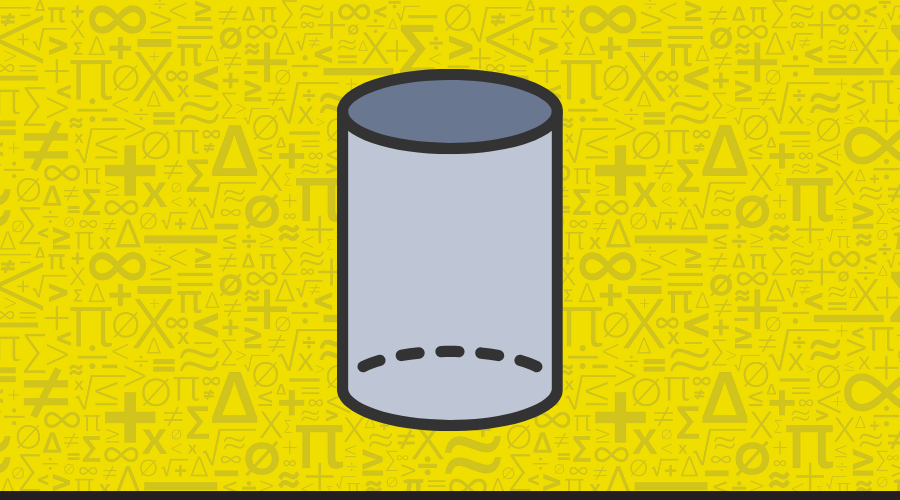
A “soup can”; a 3-D solid with a round and parallel top and bottom
A cylinder is a three-dimensional (3-D) solid shape with two identical, flat, circular bases that are parallel and connected by a curved surface. It looks like a can or a tube.
We know if a shape is a cylinder if it has:
- two circular bases that are the same size and parallel
- one curved surface connecting the bases
- no straight edges or vertices (corners)
You might be holding a cylinder shape right now! Some examples of cylinders in real life are:
- A drinking glass
- A can
- A water pipe
When Do Students Learn About Cylinders?
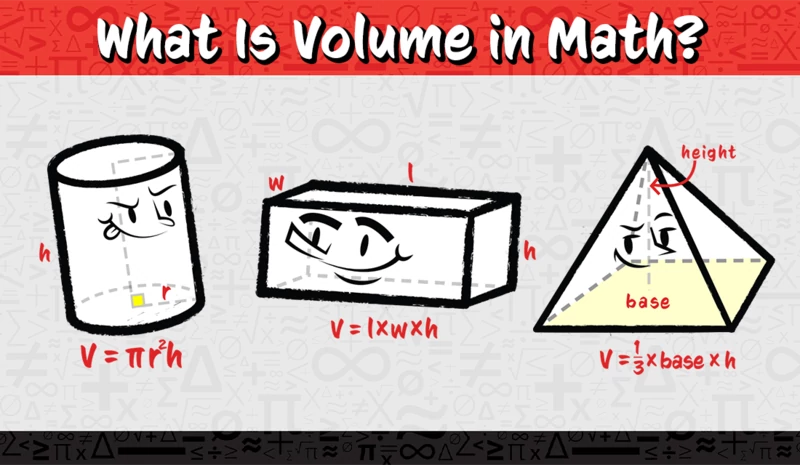
Students are introduced to cylinders in elementary school when learning about 3-D shapes, and they explore formulas for volume and surface area in middle school.
Grades 3–5 – Recognizing Cylinders
Students learn to identify cylinders and compare them with other 3-D shapes.
Grades 6+ – Measuring Cylinders
Students calculate volume and surface area of cylinders and use these concepts in geometry and real-world problems.