In finite math, a value in a series derived by applying a formula to the previous value.
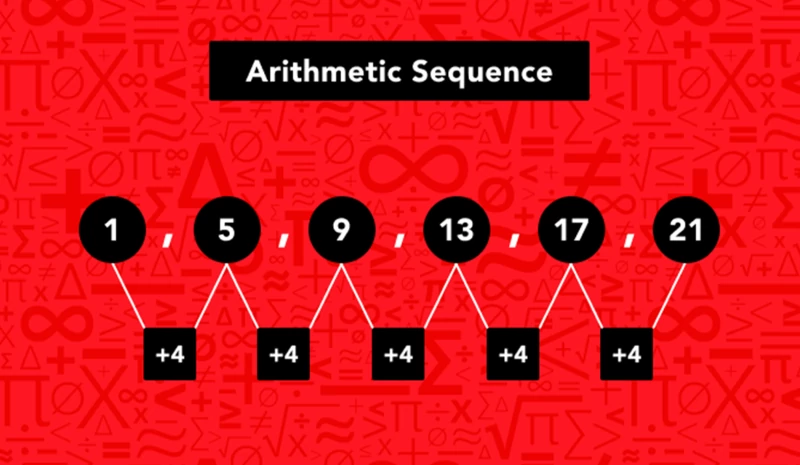
A recurrence relation is the rule or formula that defines how each term in a sequence is calculated from the term before it. Where a recursive sequence is the full list of numbers, the recurrence relation is the instruction that generates it.
For example, consider this recurrence relation:
aₙ = aₙ₋₁ + 5, with a₁ = 2
This tells us: start at 2, and add 5 each time. The resulting sequence is 2, 7, 12, 17, 22...
The recurrence relation is the rule, and the recursive sequence is what you get when you apply it repeatedly.
Another well-known example is the Fibonacci sequence, which is defined by the recurrence relation:
aₙ = aₙ₋₁ + aₙ₋₂
Each term equals the sum of the two terms before it. The relation is simple, but the sequence it produces appears throughout mathematics, nature, and art.
Recurrence relations are closely connected to recursive sequences and iteration. When we understand all three together, we can have a complete picture of how repeating processes generate structured patterns.
When Do Students Learn About Recurrence Relations?
Students develop the thinking behind recurrence relations through pattern work and sequences before encountering the formal term.
Grades 3–5 – Rules That Generate Patterns
Students describe number patterns using rules, working informally with the idea that each term follows from the one before it.
Grades 6–8 – Sequences and Recursive Rules
Students write and apply rules for arithmetic and geometric sequences, connecting the rule to the sequence it produces.
Grades 9+ – Recurrence Relations in Advanced Math
Students encounter recurrence relations formally in precalculus and finite math, writing and solving them in the context of sequences, series, and real-world applications.