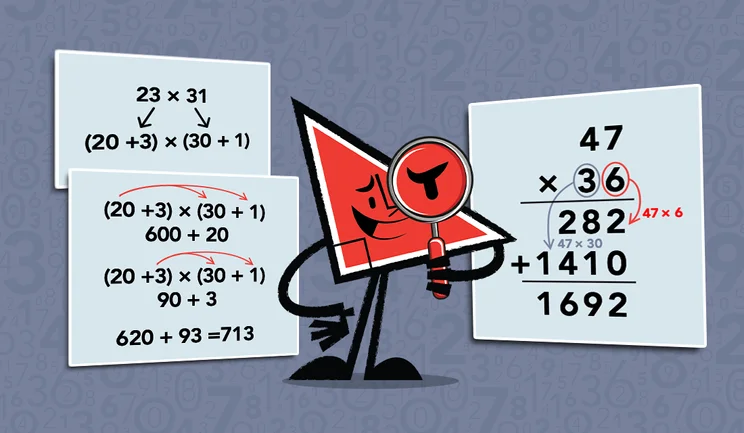
What's 6 × 7? Most would recall that fact by heart or work it out with a bit of mental math and land on 42 without much trouble.
But what about 47 × 63?
If that made you pause, that's completely fine. Multiplying large numbers isn't something most of us can do in our heads.
That's why we have long multiplication methods that break big numbers down into something manageable, step by step.
Today, our tutors walk you through what those methods are, how they work, give you a chance to try them yourself, and answer the questions students most commonly have about them.

Let's Remind Ourselves: What Is Multiplication?
Before we learn the new stuff, let's take a quick step back and make sure the foundation is solid.
At Mathnasium, we describe multiplication as the process of combining equal groups to find a total. Instead of adding the same number over and over, multiplication lets us do it in one step. That's why it's often described as repeated addition.
Take 30 × 5, for example. That's the same as saying 30 five times over, like so:
30 + 30 + 30 + 30 + 30 = 150
Or simply: 30 × 5 = 150
Pretty simple, right?
📕 You May Also Like: 7 Strategies to Help Your Child Move Beyond Memorization in Multiplication
"Short" vs. "Long" Multiplication — What's the Difference?
Not every multiplication problem needs the same amount of work.
Quick problems like 6 × 7, 9 × 3, or 5 × 8 are facts most students know or can work out in their heads in seconds. That's short multiplication: fast, mental, no paper needed.
When the numbers get bigger, though, mental math stops being practical. For problems like 84 × 56 or 128 × 45, we put the problem on paper and break it down into smaller, more manageable steps until we reach the answer. That's long multiplication.
📕 You May Also Like: How to Do Long Division? Explained for 4th Graders
How to Do Long Multiplication
To tackle complex multiplication, we can rely on two methods: the horizontal method and the column method. We'll walk through each one separately.
1. Horizontal Method
The horizontal method breaks both factors (the numbers we multiply) into their place values, like hundreds, tens, and ones, to make the calculation easier.
From there, we apply the distributive property: multiply each part of the first number by each part of the second, then add all the partial products together to get the final answer.
And why "horizontal"?
Because the calculation spreads across the page, left to right, just like the lines you're reading now.
Let's see it with real numbers, and it'll all make sense.
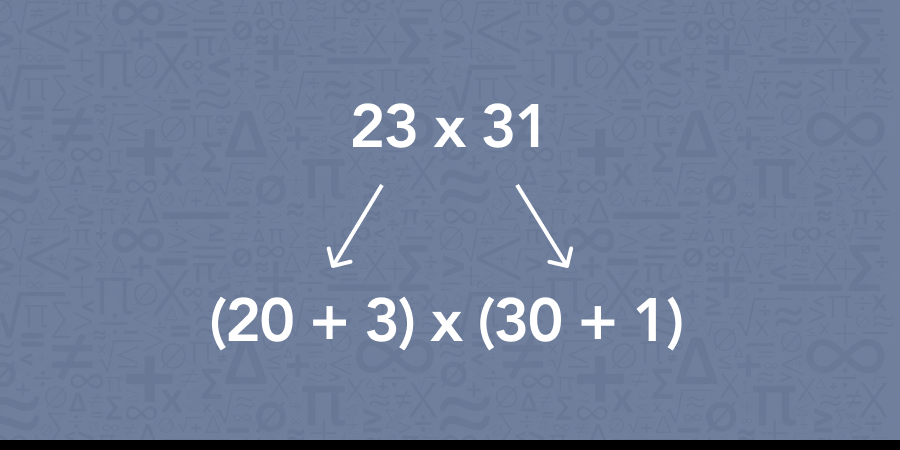
23 × 31
First, we split both numbers into their place values:
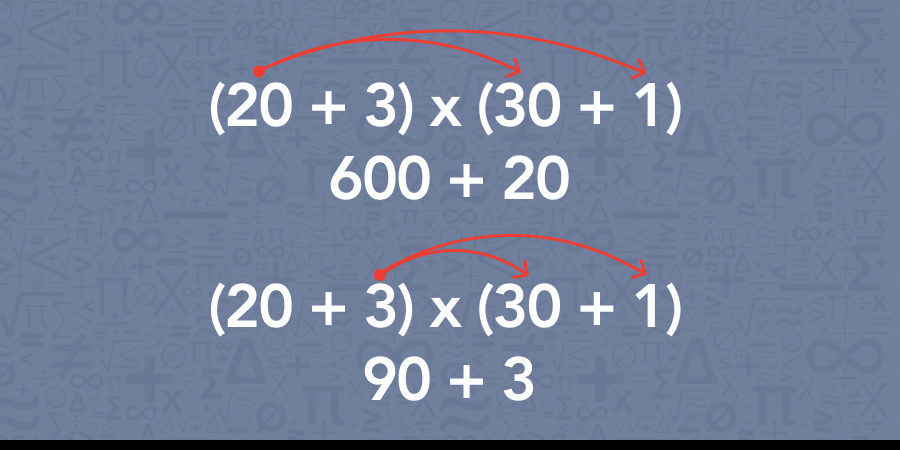
Then we multiply each part across:
Finally, we add all the partial products together:
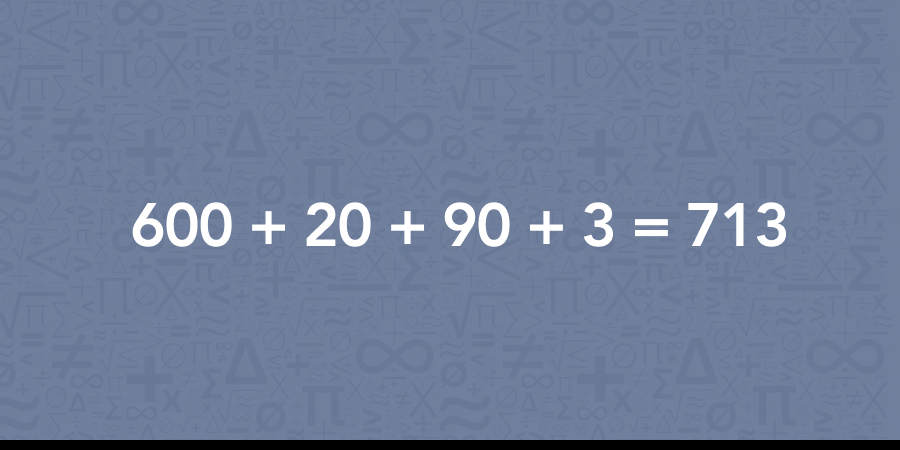
So, 23 × 31 = 713.
The horizontal method works best for two-digit numbers where the partial products are easy to track.
As the numbers grow larger, keeping count of all the parts becomes harder, and that's where our next method has the advantage.
📕 You May Also Like: How to Teach Math to Visual Learners with Pictures & Manipulatives
2. Column Method
The column, or the vertical method, stacks both numbers on top of each other, lining up digits by place value: ones under ones, tens under tens.
From there, we take each digit of the bottom number one at a time, starting from the ones, and multiply it across the top number from right to left. Then we add all the results together to get the final answer.
And why "column"?
Because lining the numbers up in columns by place value is what keeps everything organized and in the right position.
Shall we test this method out together?
Example 1: Two-Digit by One-Digit — No Carrying
To help you see the principle, we'll start with a simple problem and build from there.
Before anything, we stack the numbers by place value like so:

Step 1: Multiply the bottom number (4) by the ones digit of the top number (1). Write the answer under the equal bar:

Step 2: Multiply the bottom number (4) by the tens digit of the top number (7). Write the answer, 280, or 28 tens, under the equal bar, to the left of the ones:

So, 71 × 4 = 284.
Example 2: Three-Digit by One-Digit — With Carrying
To help you see how carrying works, let's try a slightly bigger problem.
136 × 4
First, we stack the numbers by place value:

Step 1: Multiply the bottom number (4) by the ones digit of the top number (6):
4 × 6 = 24. We write down 4 and carry the 2

Step 2: Multiply the bottom number (4) by the tens digit of the top number (3).
4 × 3 = 12, plus the carried 2 = 14. Write 4 in the tens place and carry the 1 above the hundreds digit.

Step 3: Multiply the bottom number (4) by the hundreds digit of the top number (1).
4 × 1 = 4, plus the carried 1 = 5. Write 5 in the hundreds place.

So, 136 × 4 = 544.
Example 3: Two-Digit by Two-Digit — With Carrying
For the grand finale, let's try a two-digit by two-digit problem.
47 × 36
As always, we stack the numbers by place value:

Step 1: Multiply the ones digit of the bottom number (6) by the ones digit of the top number (7):
6 × 7 = 42. We write 2 in the ones place and carry the 4.

Step 2: Multiply the ones digit of the bottom number (6) by the tens digit of the top number (4).
6 × 4 = 24, plus the carried 4 = 28. Write 28 to the left of the 2.

Step 3: Move to the tens digit of the bottom number (3). Since we're now working with tens, write a 0 as a placeholder in the ones place:

Step 4: Multiply the tens digit of the bottom number (3) by the ones digit of the top number (7):
3 × 7 = 21. Write 1 to the left of the 0 and carry the 2.

Step 5: Multiply the tens digit of the bottom number (3) by the tens digit of the top number (4).
3 × 4 = 12, plus the carried 2 = 14. Write 14 to the left.

Step 6: Finally, add the two rows together:
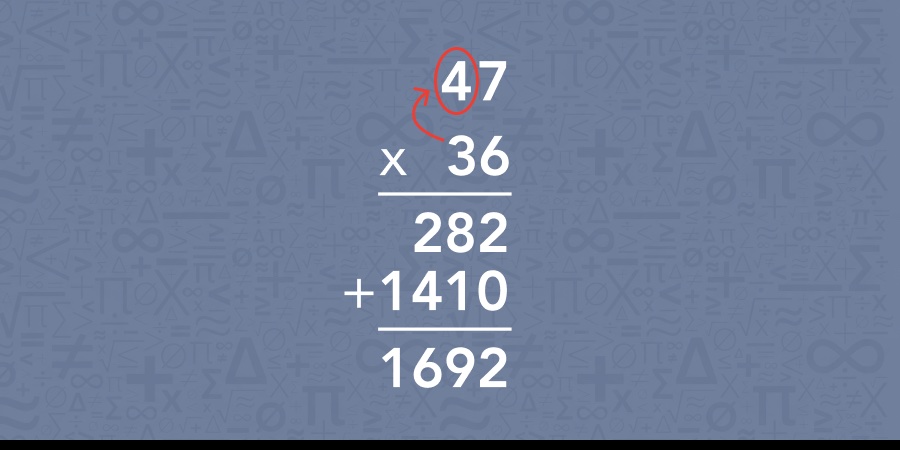
So, 47 × 36 = 1,692.
📕 You May Also Like: How to Do Long Division with Remainders - A Kid-Friendly Guide
Your Turn: Work Out These Long Multiplications
Great job following along so far. Now that you have both methods under your belt, it's time to put them to work.
Try these challenges, and when you're done, check your answers at the bottom of the guide.
Challenge 1
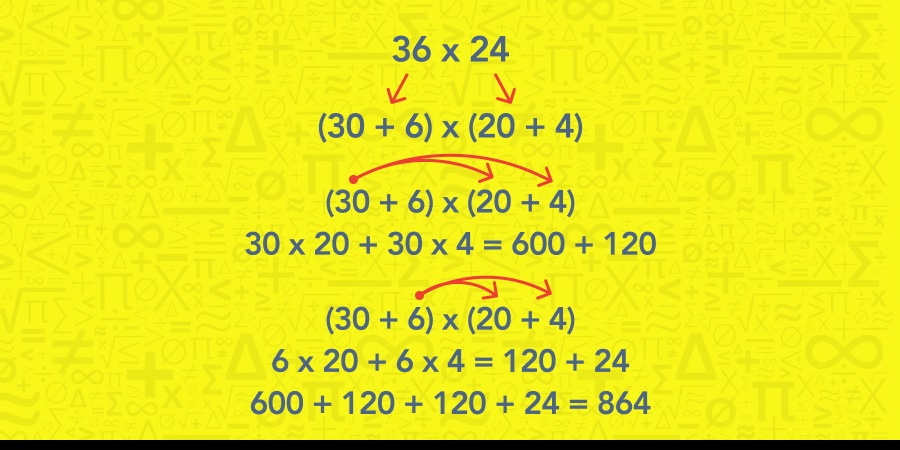
Using the horizontal method, work out 36 × 24.
Challenge 2
Using the column method, work out 89 × 7.
Challenge 3
Using the column method, work out 247 × 6.
Challenge 4
Using the column method, work out 78 × 59.
FAQs About Long Multiplication
Learning long multiplication tends to raise a question or two along the way. Here are some we hear most often at our centers, with straight answers to clear things up.
1. When do students first learn long multiplication?
Most students are introduced to long multiplication in 4th grade, when they begin working with multi-digit numbers that go beyond what mental math can handle.
By this stage, students are expected to know their multiplication facts and understand place value, both of which are essential for the method to make sense.
Long multiplication continues to appear through 5th and 6th grade as numbers grow larger and the concept connects to other areas like area, scaling, and multi-step word problems.
2. Can you use long multiplication with decimals?
Yes, long multiplication works with decimals too. The process is the same as with whole numbers: ignore the decimal point while multiplying, then count the total number of decimal places in both numbers and place the decimal point in the answer accordingly.
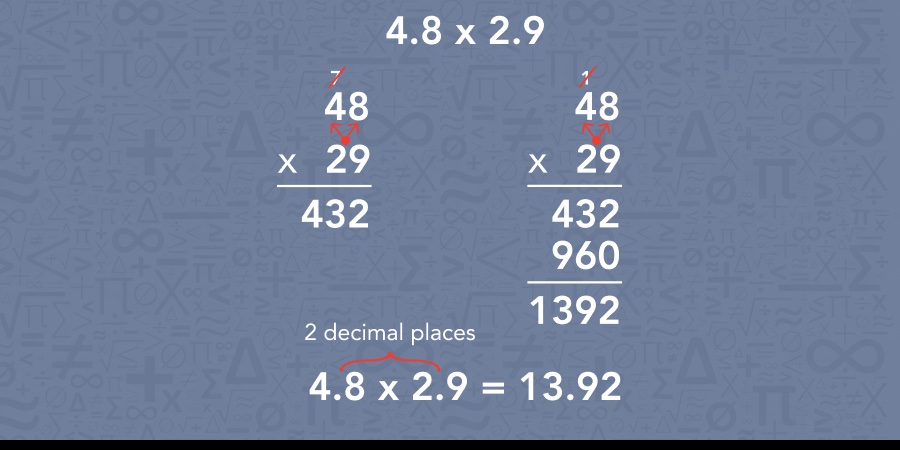
Decimal multiplication is typically introduced in the 5th grade, once students are confident with whole number multiplication. For now, mastering the methods with whole numbers is the best foundation for when decimals come along.
3. Is long multiplication the same as the standard algorithm?
The column method is. The standard algorithm is the formal name for the step-by-step process used to multiply multi-digit numbers on paper, and the column method is exactly that. "Long multiplication" is the informal, everyday term for the same thing. You're more likely to hear "standard algorithm" in school curricula, but they describe the same process.
4. Do I need to know my times tables to do long multiplication?
It helps a lot. Long multiplication breaks big problems down into smaller multiplications, and if those smaller facts take a while to work out, the whole process slows down. The more confident you are with your times tables, the smoother each step feels.
That said, not knowing every fact perfectly isn't a reason to hold back. Working through long multiplication is actually great practice. The facts start to stick naturally the more you use them.
How Mathnasium Helps Students Master Any Math Skill
Mathnasium is a math-only learning center dedicated to helping K-12 students of all skill levels learn and master math.
Multiplication is a broad skill that runs across grades and is a common reason students turn to us for support. Multi-digit multiplication, in particular, is where many students find themselves stuck.
When that happens, we don't just patch the gap. We build a personalized path forward that helps each student work through their challenges at their own pace, rebuild their foundation, and develop the kind of confidence that lasts.
At the core of how we teach is the Mathnasium Method™, a proven and proprietary teaching approach that helps students truly understand math, long multiplication included.
It begins with a diagnostic assessment, which helps us determine what a student already knows and areas for growth. Using these insights, we design a learning plan customized to their needs.
With the plan in place, our specially trained tutors follow it closely, providing face-to-face instruction in a caring and fun environment.
During sessions, we use a thoughtful balance of Socratic questioning and direct teaching, along with visual, verbal, mental, tactile, and written techniques, so students can see the math from different angles and truly make sense of what they're learning.
Whenever students feel stuck, we break concepts into manageable steps and explain both the how and the why behind each solution, building the problem-solving skills and critical thinking they can use across all areas of math.
And fun is a big part of the process. Our activities are often game-based and hands-on, and we celebrate every step of progress students make, growing their confidence with every session.
And the results?
-
94% of parents report an improvement in their child's math skills and understanding
-
93% of parents report an improved attitude towards math after attending Mathnasium
-
90% of students saw an improvement in their school grades
Whether your student is looking to catch up, keep up, or get ahead in math, your local Mathnasium center can help. Start by scheduling a diagnostic assessment, and together we'll create a personalized plan for math mastery.

Pssst! Check Your Answers Here
Done with the challenges? Check your results below.
Challenge 1
Challenge 2

Challenge 3

Challenge 4