We use place value every time we read, write, compare, or calculate with numbers. However, keeping track of each digit becomes trickier as numbers expand or venture past the decimal point.
That’s where place value charts come in.
Today, we’ll learn how place value charts work and use them to read and compare numbers, write expanded form, and work with decimals.

Quick Review: What Is Place Value?
Place value is the value of a digit based on its position in a number. In our base-10 number system, where a digit sits determines how much it is worth.
For example, think about the digit 5:
-
Standing alone, it just means 5 ones.
-
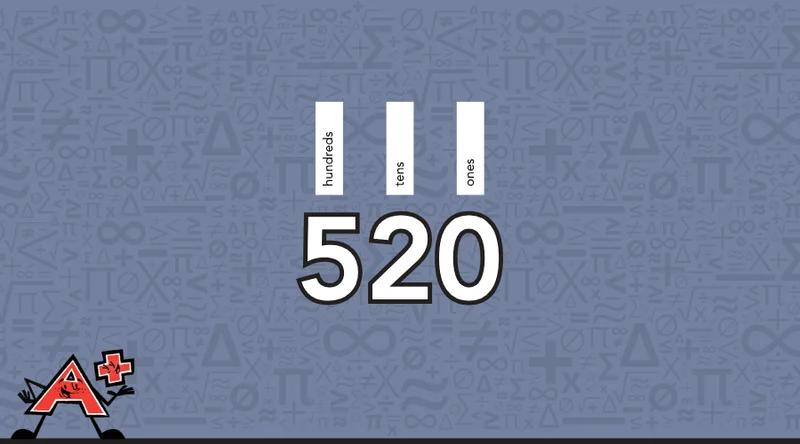
In 52, that same 5 sits in the tens position and is worth 50.
-
In 520, it moves to the hundreds position, so it becomes worth 500.
How Place Value Works (From Whole Numbers to Decimals)
Our number system runs on a base-10 pattern. Every time a digit moves one spot to the left, its value gets 10 times bigger (1 → 10 → 100 → 1,000).
When we move to the right, values get 10 times smaller.
And what happens when we keep moving right past the ones place?
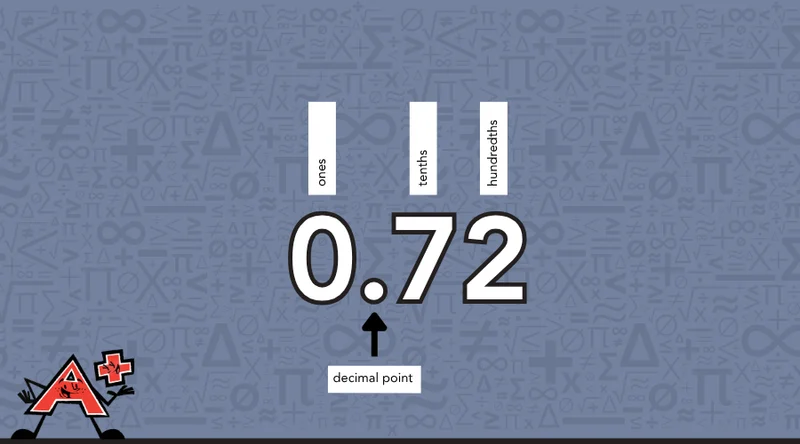
That's where the decimal point comes in. Think of the decimal point as a stop sign between whole things and pieces of a thing. It doesn't have a value of its own. It just tells us, "Everything to the left is a whole number, and everything to the right is a fraction of one whole."
After we step past that decimal point to the right, the same "10 times smaller" rule keeps going:
-
Dividing 1 by 10 gives us tenths (0.1).
-
Dividing a tenth by 10 gives you hundredths (0.01).
-
Dividing a hundredth by 10 gives you thousandths (0.001).
So in a number like 0.72, the 7 is worth 7 tenths (0.7$), and the 2 is worth 2 hundredths (0.02).
Now, with numbers like 520 or 0.72, tracking place value was pretty easy, right?
However, as numbers grow into the millions or stretch far past the decimal point, keeping track of every single digit in our head gets tricky, especially when zeros start acting as placeholders.
That’s where a place value chart comes in.
What Is a Place Value Chart?
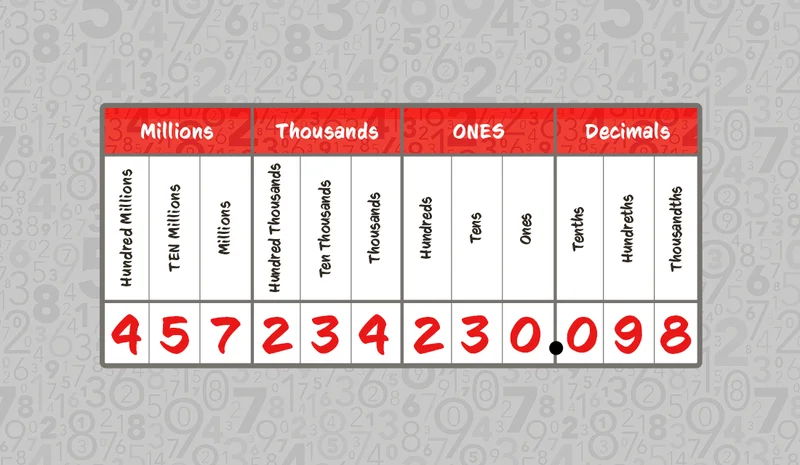
A place value chart is a visual grid that helps us organize the digits of a number into labeled columns based on their position.
We use it to map out where each digit belongs, from large whole numbers all the way down to small decimals, so we can read, compare, and calculate numbers accurately.
Our chart groups whole numbers into color-coded sets of three—called periods—and sets a clear border for the decimal point:
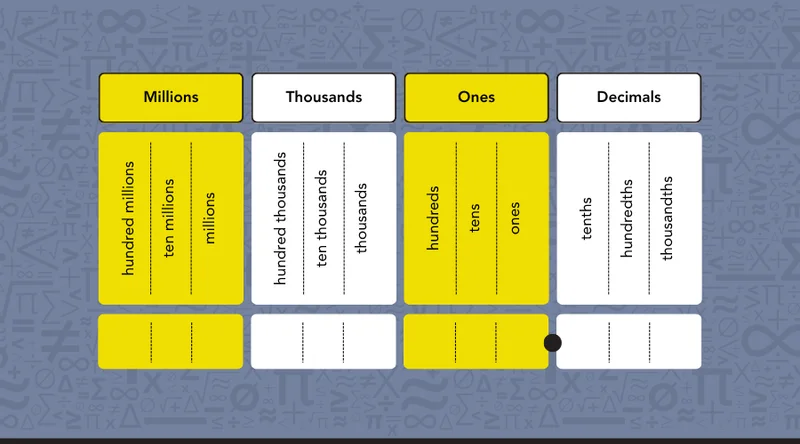
Each column holds a single digit. By matching a digit to its column name, we instantly know how much that digit is worth, no matter how large or small the number gets.
📕 You May Also Like: How to Teach Place Value Using Base-10 Blocks: A Parent’s Guide for Ages 7–8
How to Read Whole Numbers Using a Place Value Chart
We read whole numbers by moving from the largest place to the ones place. As we move left from the ones place, we find tens, hundreds, thousands, and larger places.
Let’s use 6,842 as an example:
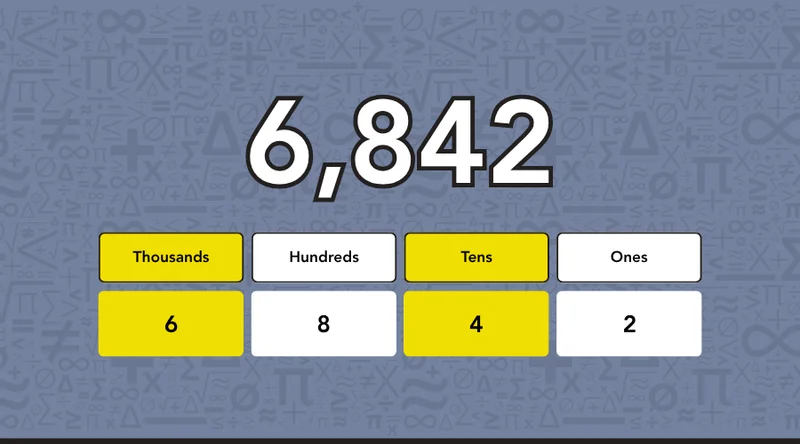
We can now read the chart by connecting each digit to the place above it.
-
6 in the thousands place represents 6,000.
-
8 in the hundreds place represents 800.
-
4 in the tens place represents 40.
-
2 in the ones place represents 2.
Together, we read 6,842 as “six thousand eight hundred forty-two.” We can also show the value contributed by each digit in expanded form:
6,000 + 800 + 40 + 2 = 6,842
The chart is also useful when we need to keep track of positions where a number has a zero. In 4,005, the hundreds and tens places both contain 0:
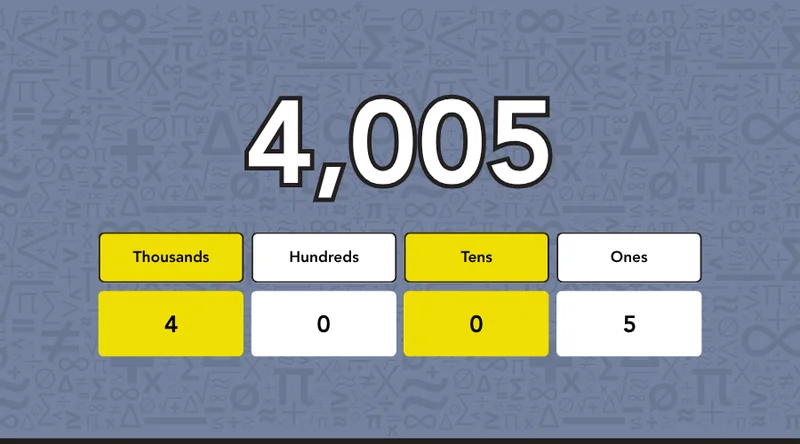
4 in the thousands place represents 4,000; there are 0 hundreds and 0 tens, and 5 in the ones place represents 5. So:
4,000 + 0 + 0 + 5 = 4,005
We read the number as “four thousand five.” The zeros keep the digits in their correct places, which helps us avoid reading or writing 4,005 as 45. In 45, the 4 is in the tens place and represents 40, not 4,000.
📕 You May Also Like: A Parent's 6-Step Guide to Teaching Place Value at Home
How to Read Decimals Using a Place Value Chart
Decimals extend the chart in the other direction, to the right of the decimal point. We move through tenths, hundredths, thousandths, and smaller decimal places, with each place representing a smaller part of one whole.
We can see this clearly with 0.491. We usually write a zero before the decimal point when a number is less than 1.
-
The 0 shows that there are no whole ones.
-
4 in the tenths place represents 0.4.
-
9 in the hundredths place represents 0.09.
-
1 in the thousandths place represents 0.001.
In expanded form, we write:
0.4 + 0.09 + 0.001 = 0.491
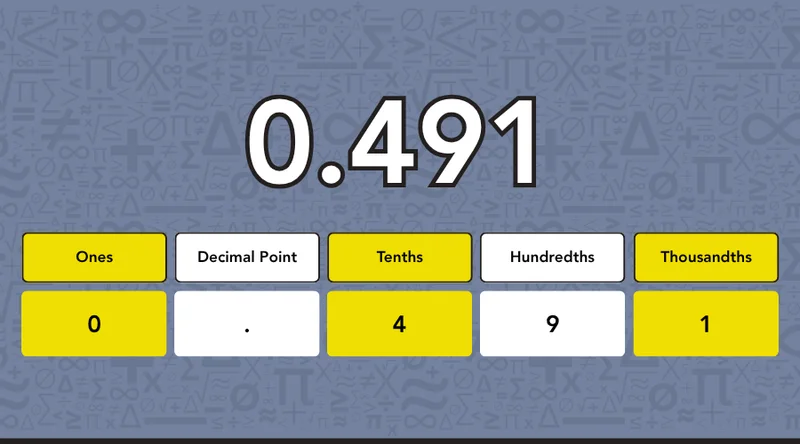
The last digit is in the thousandths place, so we read 0.491 as “four hundred ninety-one thousandths.”
📕 You May Also Like: Decimal Place Value Made Easy: A Fun, Kid-Friendly Guide
How to Compare Numbers Using a Place Value Chart
We compare numbers on a place value chart by lining up their corresponding places and checking the digits from left to right.
We stop at the first place where the digits differ because that place tells us which number is greater.
1. Whole-Number Comparison
The digits in the largest places have the greatest effect on a whole number’s value. Let’s compare 4,302 and 4,230:
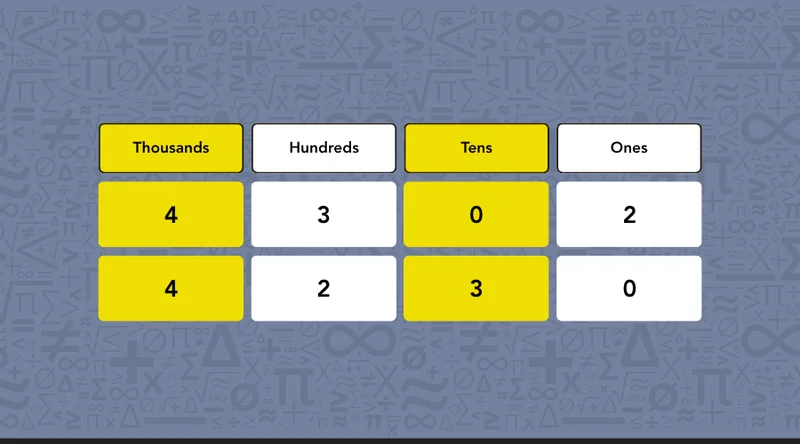
Both numbers have 4 in the thousands place, so we move to the hundreds place. Here, 3 hundreds = 300 and 2 hundreds = 200.
Since 300 > 200, we already know that 4,302 > 4,230.
We do not need to compare the tens and ones after finding the first place where the digits differ.
2. Decimal Comparison
We follow the same place-by-place method with decimals, but we line up the decimal points so the corresponding decimal places match.
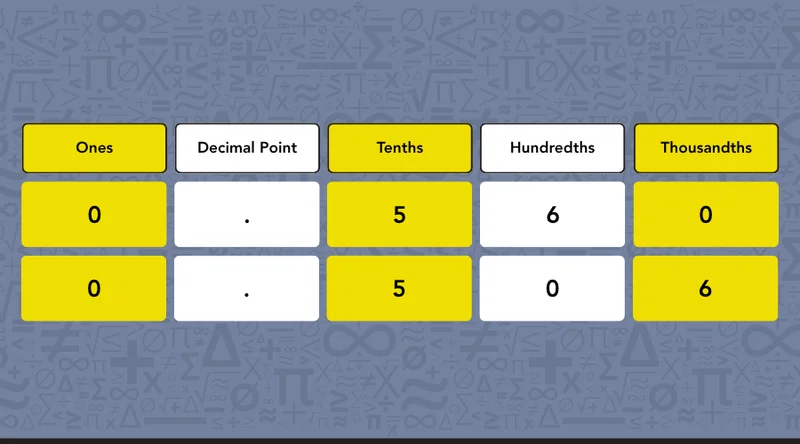
We can see how this works with 0.49 and 0.094:
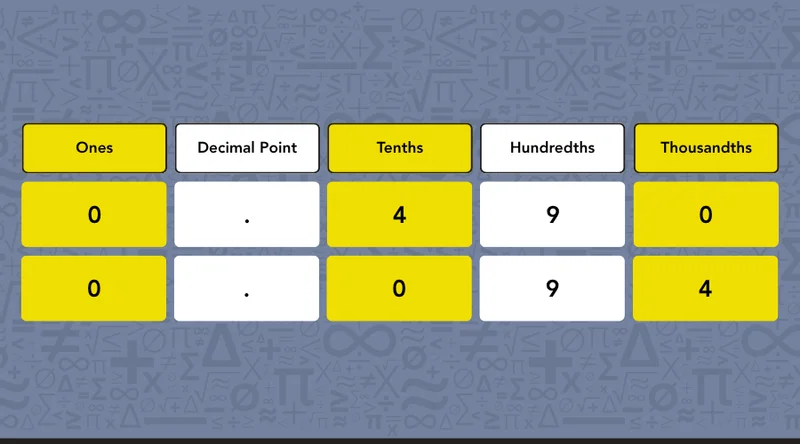
Both numbers have 0 in the ones place, so we move to the tenths place. 0.49 has 4 tenths, while 0.094 has 0 tenths. Since 4 tenths > 0 tenths, we can already write that 0.49 > 0.094.
📕 You May Also Like: How to Order Decimals from Least to Greatest: A Step-by-Step Method
Over to You! Put the Place Value Chart to Use
We’ve worked through whole numbers, decimals, and comparisons, so now it’s your turn to put what you’ve learned into practice. Try each challenge using a place value chart if you need one.
-
In 7,305, what place is the digit 3 in, and what value does it represent?
-
Write 5,082 in expanded form.
-
In 0.627, what place is the digit 2 in, and what value does it represent?
-
Which number is greater: 6,421 or 6,412?
-
Which decimal is greater: 0.56 or 0.506?
Once you’re done, check your answers at the end of the article.
Bonus: FAQ About Place Value Charts
You may still have a few questions about place value charts and how our place value system works. Let’s answer some of the most useful ones.
1. Why is there no “oneths” place?
You might expect an “oneths” place because we have ones on the whole-number side and tenths, hundredths, and thousandths on the decimal side.
However, ones already represent one whole, so we do not need a separate “oneths” place. The place immediately to the right of the decimal point is tenths, where each unit represents one-tenth of a whole.
2. What are periods in a place value chart?
Periods group whole-number places into sets of three to make larger numbers easier to read. Each period contains a hundreds place, tens place, and ones place for that group.
|
Period
|
Hundreds place
|
Tens place
|
Ones place
|
|
Millions
|
Hundred Millions
|
Ten Millions
|
Millions
|
|
Thousands
|
Hundred Thousands
|
Ten Thousands
|
Thousands
|
|
Ones
|
Hundreds
|
Tens
|
Ones
|
In 123,456,789, for example, the digits form three periods: 123 million, 456 thousand, and 789. Each group of three digits belongs to a different period.
3. What are standard, word, and expanded forms?
We can write the same number in standard form, word form, or expanded form. Each form represents the same value differently.
Let’s take 724 as our example:
We can use the place value chart to move between these forms by matching each digit to its place and value.
4. What is the difference between place value and face value?
Face value is the digit itself. For example, the face value of 5 in 458 is simply 5. Place value depends on the digit’s position, so the place value of 5 in 458 is 50 because it is in the tens place.
📕 You May Also Like: Common Place Value Misconceptions in Elementary Math

At Mathnasium, we go far beyond traditional tutoring to help kids understand and develop a love for math.
How Mathnasium Helps Students Master Number Sense and Beyond
Mathnasium is a math-only learning center dedicated to helping K–12 students of all skill levels excel in math.
Place value is closely connected to number sense, or our understanding of what numbers mean and how they work together. At Mathnasium, we build number sense as part of the foundation students use as they move into more advanced math.
Whether students are working on place value, decimals, or another math concept, we start with what they already know and develop their understanding from there.
At the heart of that support is the Mathnasium Method™, our proprietary teaching approach, designed around each student's needs and learning style to help them learn and master math.
Our approach includes:
-
Assessment and Personalized Learning Plans: Each student begins their Mathnasium journey with a diagnostic assessment that identifies current skills, strengths, and knowledge gaps. From those findings, we build a personalized learning plan tailored to their goals.
-
Teaching for Understanding: Our specially trained tutors use natural language and a mix of verbal, visual, mental, tactile, and written techniques so each concept lands before we move forward. Different ways of presenting a concept give students more than one path to understanding, whether they benefit from visual tools, hands-on activities, or verbal explanations.
-
Problem-Solving and Critical Thinking: We give students time to work through problems independently. That productive struggle helps them learn to trust their own reasoning. When we do step in, we explain both the how and the why behind each answer, so students build problem-solving and critical thinking skills they can use in math and beyond. That balance between independence and guidance helps students stay engaged without feeling overwhelmed.
-
An Engaging and Fun Learning Environment: We use games and earned rewards to encourage students to participate actively and engage with math instead of simply listening to a lesson. They build confidence alongside fluency, and many develop a more positive relationship with math as they progress.
The impact extends beyond the classroom:
-
94% of parents report an improvement in their child's math skills and understanding
-
93% of parents report their child's improved attitude toward math after attending Mathnasium
-
90% of students saw an improvement in their school grades
With over 1,100 learning centers across North America, there is likely a Mathnasium close to you.
Whether your student is looking to catch up, keep up, or get ahead in math, your local Mathnasium center can help.
Start by booking a diagnostic assessment, and together we'll build a personalized plan for math mastery.

Pssst! Check Your Answers Here
If you've given our challenges a try, see how you did below.
1. 7,305: The 3 is in the hundreds place and represents 300.
2. 5,082: 5,000 + 0 + 80 + 2 = 5,082
3. 0.627: The 2 is in the hundredths place and represents 0.02.
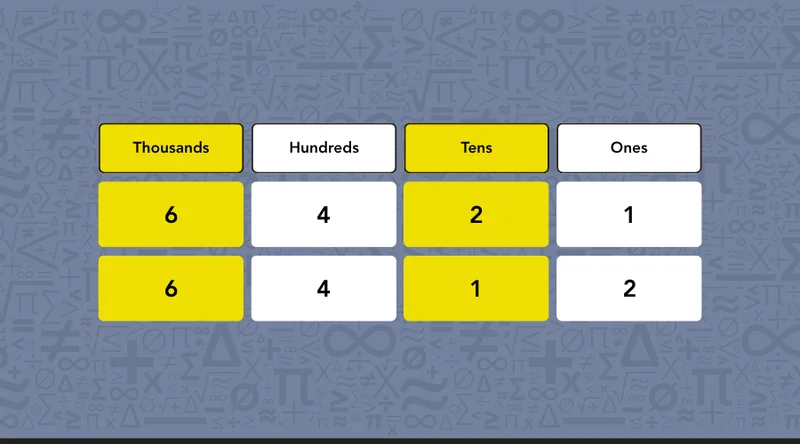
4. 6,421 > 6,412: Both numbers have the same thousands and hundreds digits. In the tens place, 2 tens > 1 ten, so 6,421 is greater.
5. 0.56 > 0.506: Both numbers have 5 tenths. In the hundredths place, 0.56 has 6 hundredths, while 0.506 has 0 hundredths, so 0.56 is greater.