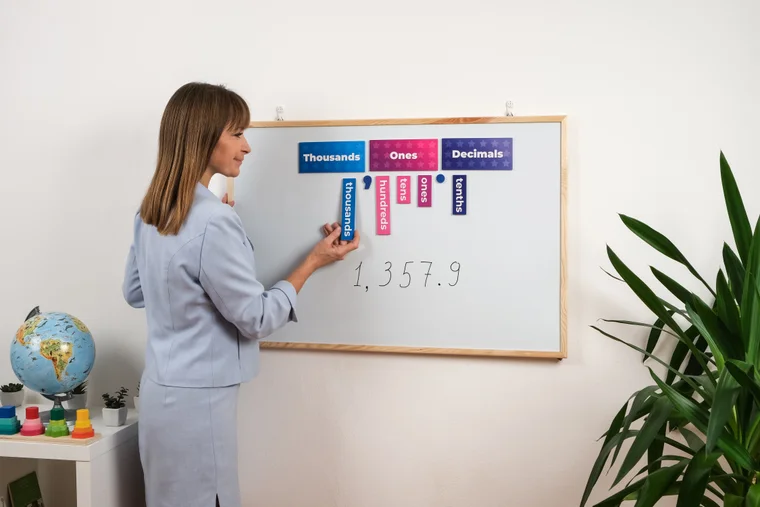
Decimals can challenge the way children compare numbers because, by the time they encounter them, longer has become associated with bigger. However, as they would quickly learn, it is place value that tells us which number is actually greater.
We are math educators, and we work with topics like these every day, so we put together this guide to make decimal ordering easier to follow.
Today, we’ll walk through the difference between comparing and ordering decimals, a four-step method for arranging decimals from least to greatest, and three worked examples using the same process.

Comparing Decimals vs. Ordering Decimals: What Is the Difference?
Decimal comparison and decimal ordering use the same place value thinking, but they answer different questions. One asks us to compare two numbers, while the other asks us to arrange a group of numbers in order.
Let’s separate the two ideas first:
-
Comparing means looking at two decimal numbers and deciding their relationship using the symbols less than (<), greater than (>), or equal to (=). For example, 0.6 > 0.47. Both numbers have 0 ones. In the tenths place, 0.6 has a 6, while 0.47 has a 4. Since 6 tenths is greater than 4 tenths, 0.6 is greater than 0.47.
-
Ordering means arranging three or more decimals in sequence after comparing each one against the others. For example, if we order 0.7, 0.2, and 0.45 from least to greatest, we write 0.2, 0.45, 0.7.
This difference is important because decimals can look misleading when we focus only on the digits. We may assume 0.457 is larger than 0.5 because 457 is greater than 5. But we should look at the tenths digit first.
The tenths digit of 0.5 is 5, while the tenths digit of 0.457 is only 4, so 0.5 is the larger value.
📕 You May Also Like: Decimal Place Value Made Easy: A Fun, Kid-Friendly Guide
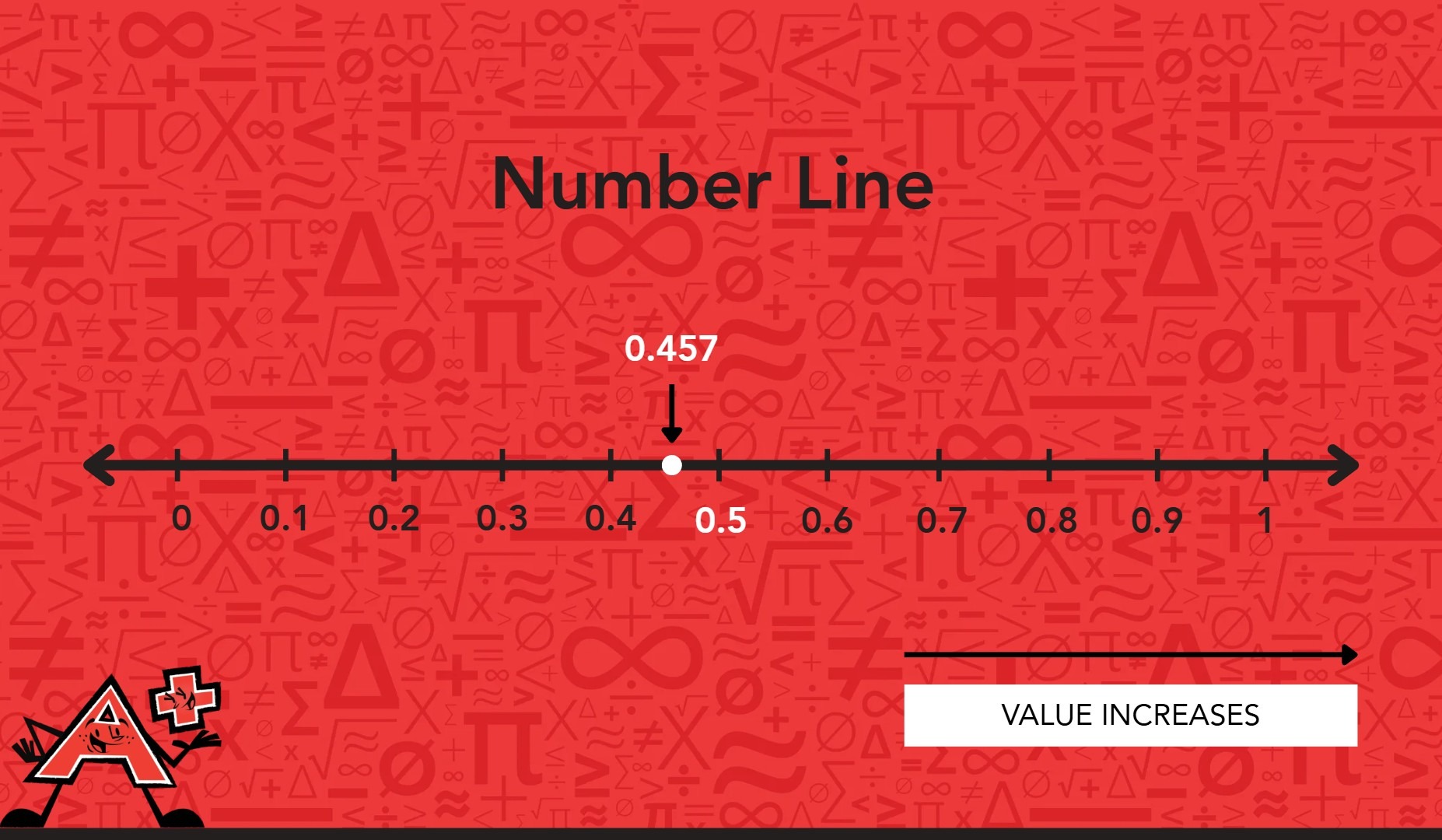 Value increases as the points move right, regardless of how many digits appear after the decimal point.
The Four-Step Method for Ordering Decimals
At Mathnasium, we like to make abstract math topics easier by turning them into clear steps. When ordering decimals, we can use the same four-step method every time.
-
Step 1: Line up the decimal points vertically. Stack all the numbers so their decimal points sit in a straight vertical column. This aligns each digit with its correct place value.
-
Step 2: Add placeholder zeros where needed. Fill in missing decimal places with zeros so every number has the same length. When we add zeros after the last decimal digit, it does not change the value. 0.5 and 0.500 are identical, but equal lengths make the comparison in Step 3 straightforward.
-
Step 3: Compare digits from left to right. Start with the whole number column. If whole numbers differ, the comparison is complete. If they are equal, move right one column at a time: tenths, then hundredths, then thousandths, until a difference appears.
-
Step 4: Write the final order using the original numbers. Record the sequence from least to greatest using the original numbers without placeholder zeros.
Now we are ready to see how this method works with actual numbers.
📕 You May Also Like: How to Build Decimal Sense Using Money: 4 Tactics to Try at Home
Examples: Let's Put the Decimal Ordering Method to Work
We’ll begin with easier decimal sets and work toward more challenging comparisons that reach the thousandths place.
1. Decimals With Different Whole Numbers
We order decimals with different whole numbers by comparing the whole number part first, before looking at any decimal digits.
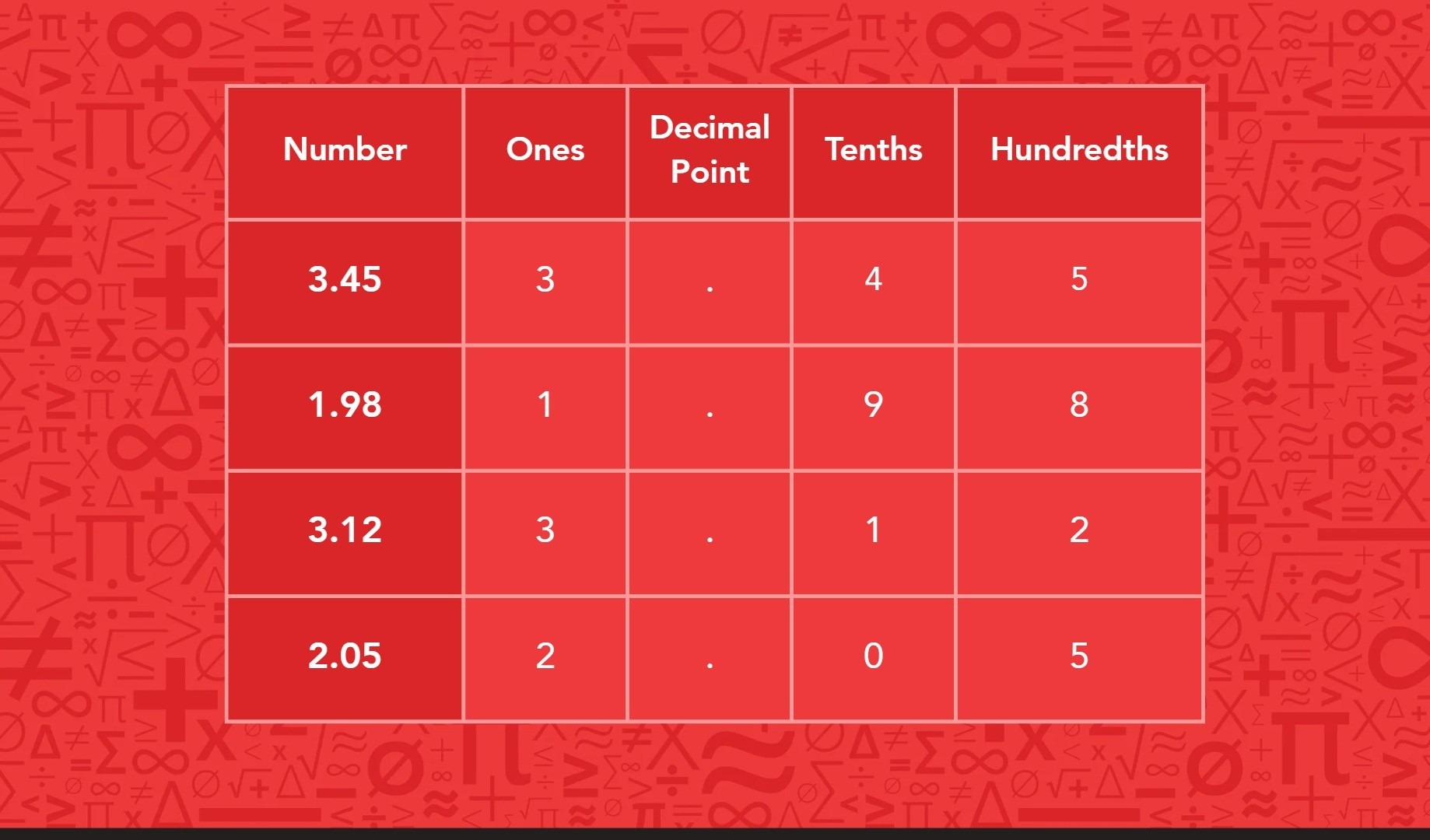
Let’s order 3.45, 1.98, 3.12, and 2.05 from least to greatest.
Step 1: Line up the decimal points.
Step 2: Add placeholder zeros.
All numbers already have two decimal places. No zeros needed.
Step 3: Compare left to right.
In the ones column, the numbers have digits 3, 1, 3, and 2. The smallest ones digit is 1, so 1.98 comes first. The next smallest ones digit is 2, so 2.05 comes next.
Two numbers have 3 in the ones place: 3.45 and 3.12. Since their ones digits match, we move to the tenths place. 3.12 has 1 tenth, and 3.45 has 4 tenths, so 3.12 comes before 3.45.
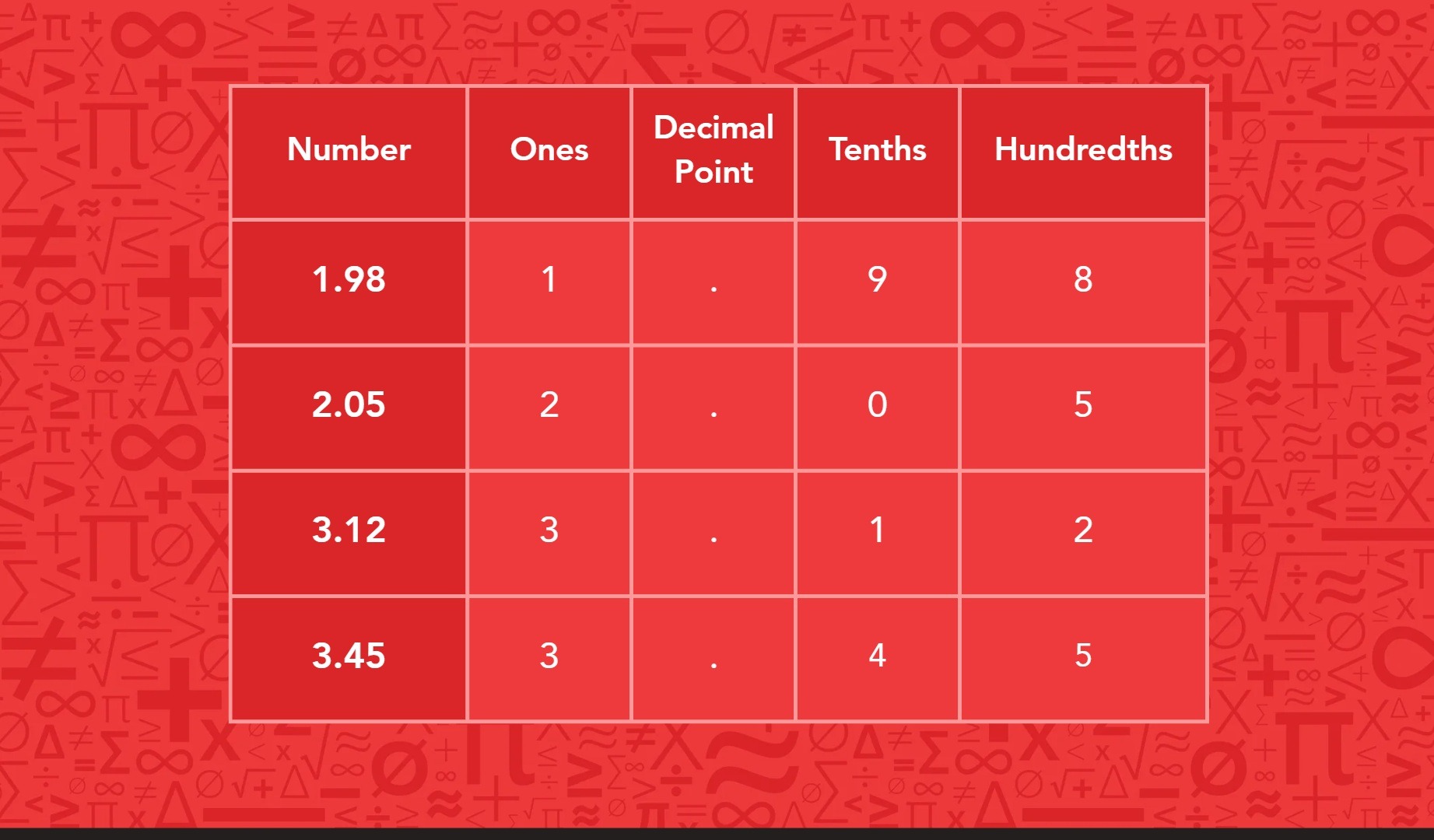
Step 4: Write the final order.
1.98, 2.05, 3.12, 3.45
2. Decimals With Different Lengths
Decimals with different lengths require placeholder zeros before any comparison can work accurately.
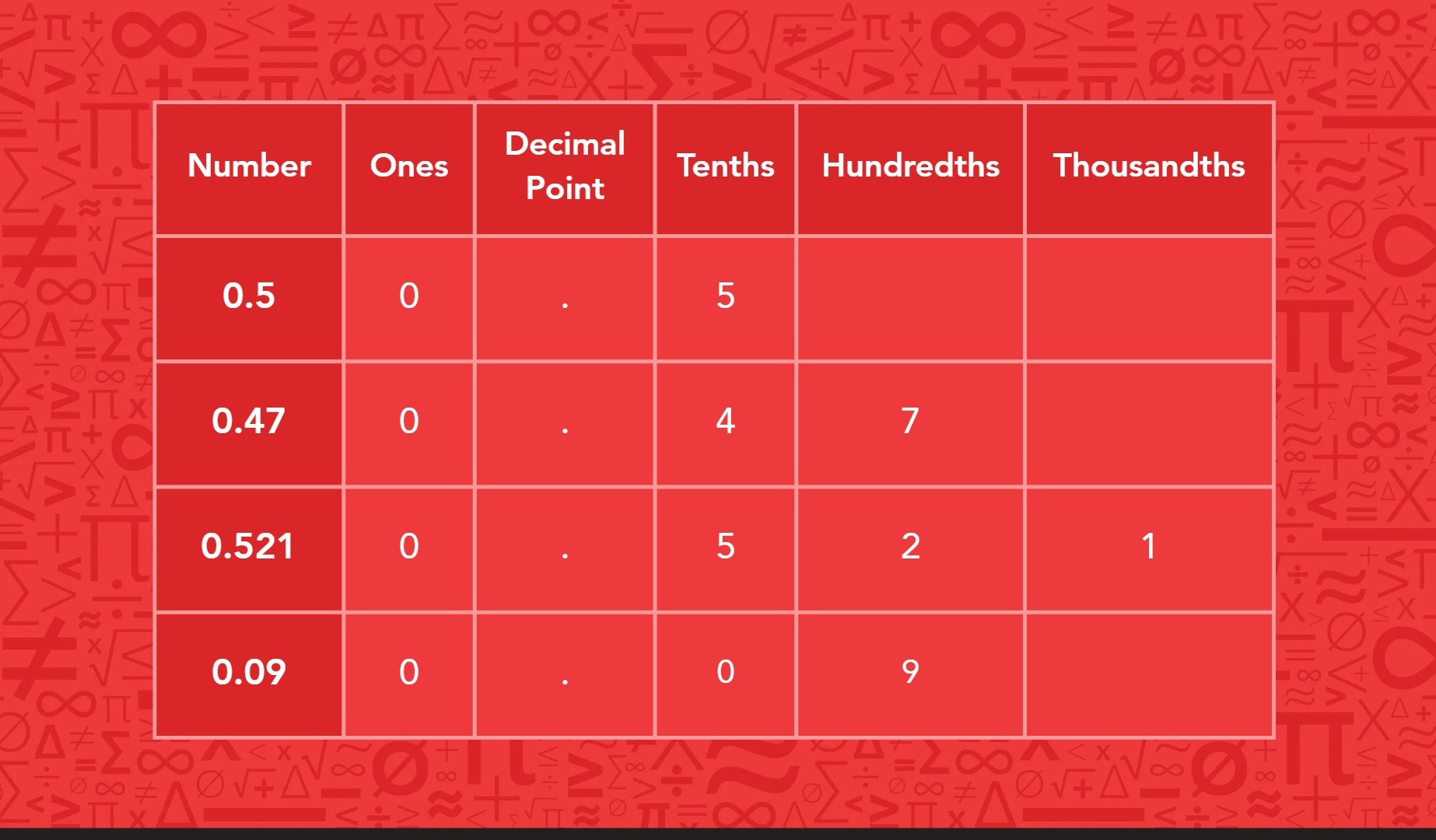
Let’s order a set where the decimal places do not all match: 0.5, 0.47, 0.521, and 0.09.
Step 1: Line up the decimal points.
Step 2: Add placeholder zeros.
0.5 is missing the hundredths and thousandths places, so we write it as 0.500. 0.47 and 0.09 are missing the thousandths place, so we write them as 0.470 and 0.090.
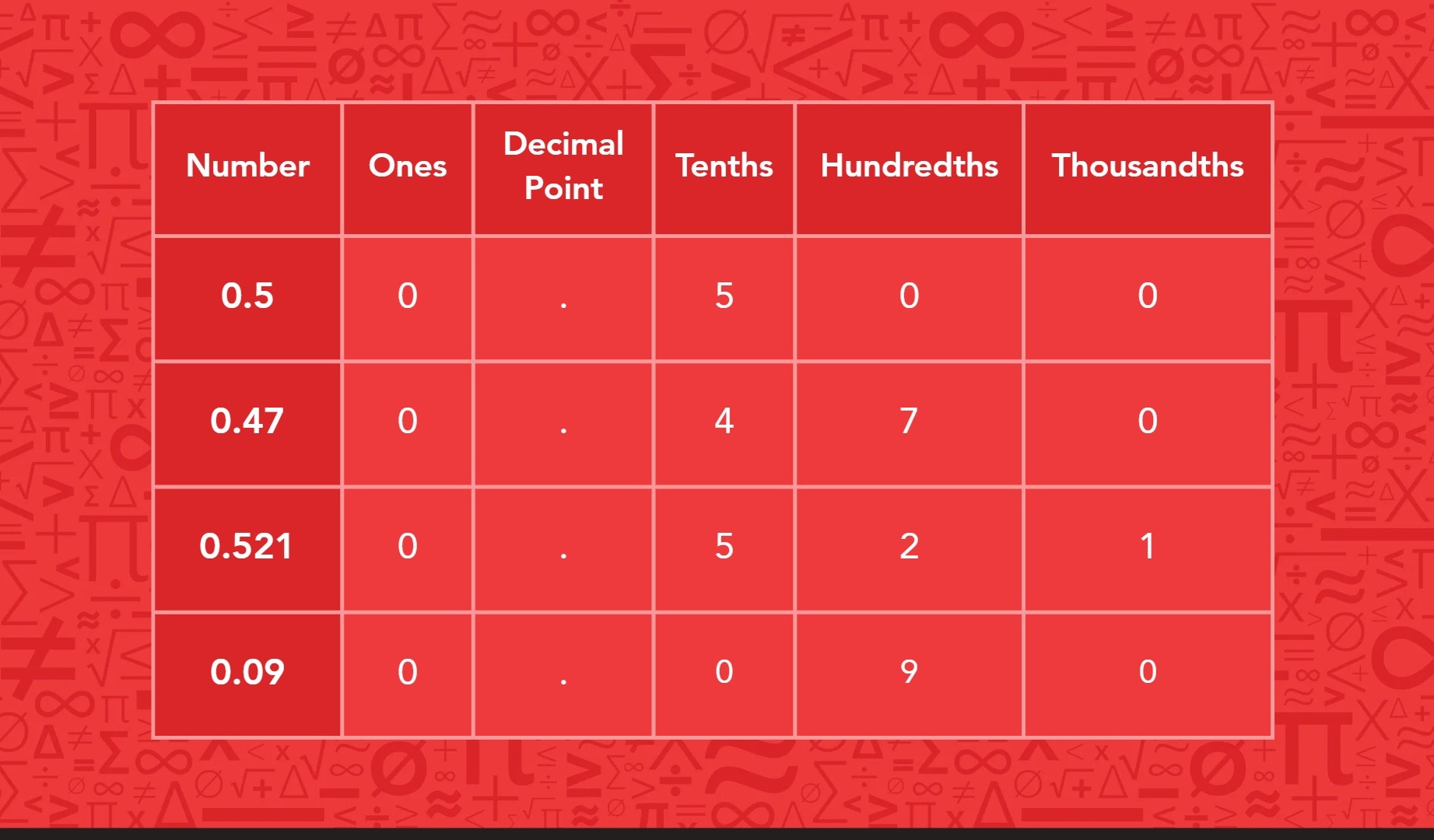
Step 3: Compare left to right.
In the ones column, all four numbers have 0, so we move to the tenths place. The tenths digits are 5, 4, 5, and 0. The smallest tenths digit is 0, so 0.090 comes first. The next smallest tenths digit is 4, so 0.470 comes next.
Two numbers have 5 in the tenths place: 0.500 and 0.521. Since their tenths digits match, we move to the hundredths place. 0.500 has 0 hundredths, and 0.521 has 2 hundredths, so 0.500 comes before 0.521.
Step 4: Write the final order.
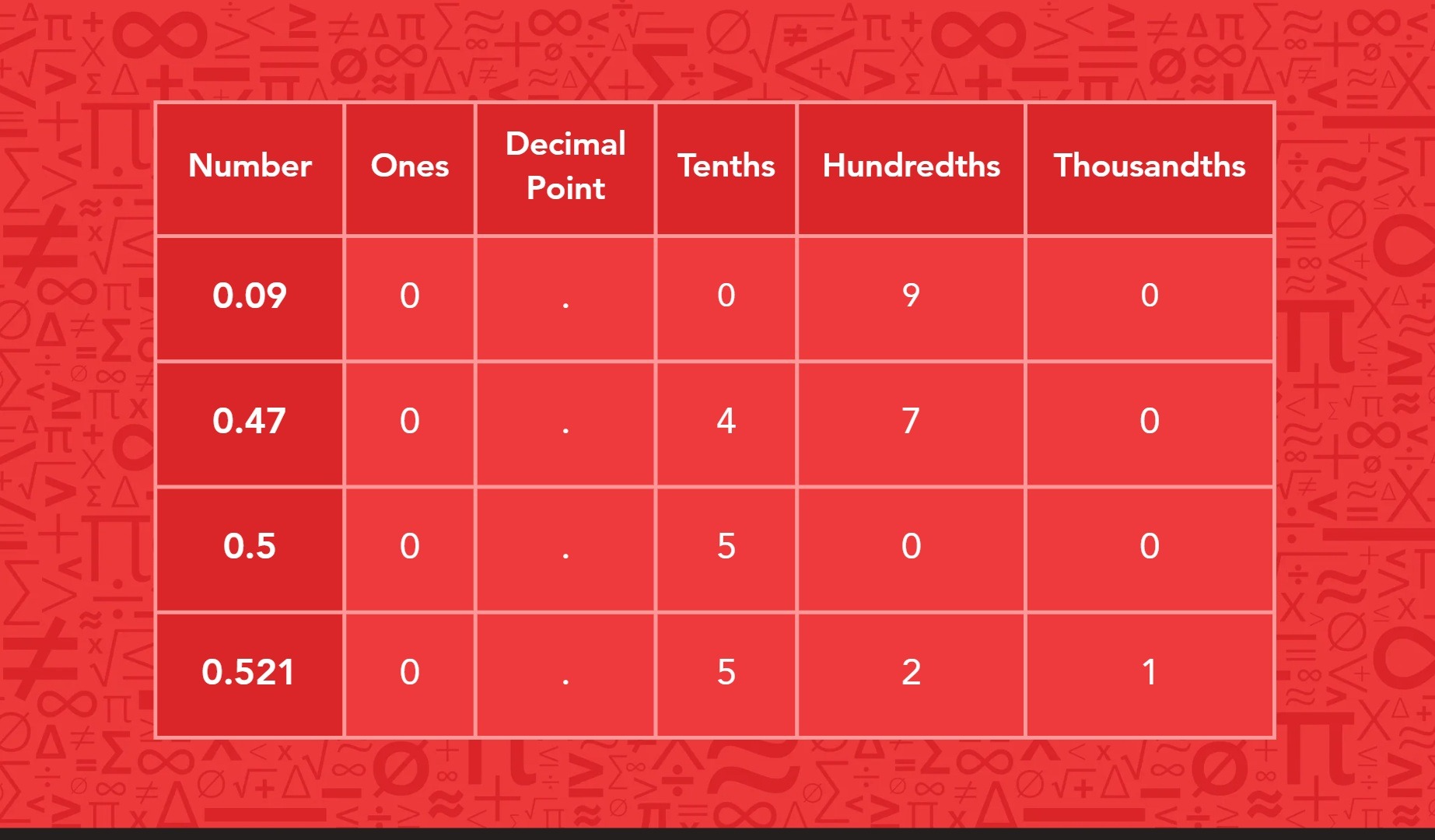
0.09, 0.47, 0.5, 0.521
3. Decimals That Are Close in Value
Decimals that share the same whole number and the same tenths digit require a closer look at the next place values.
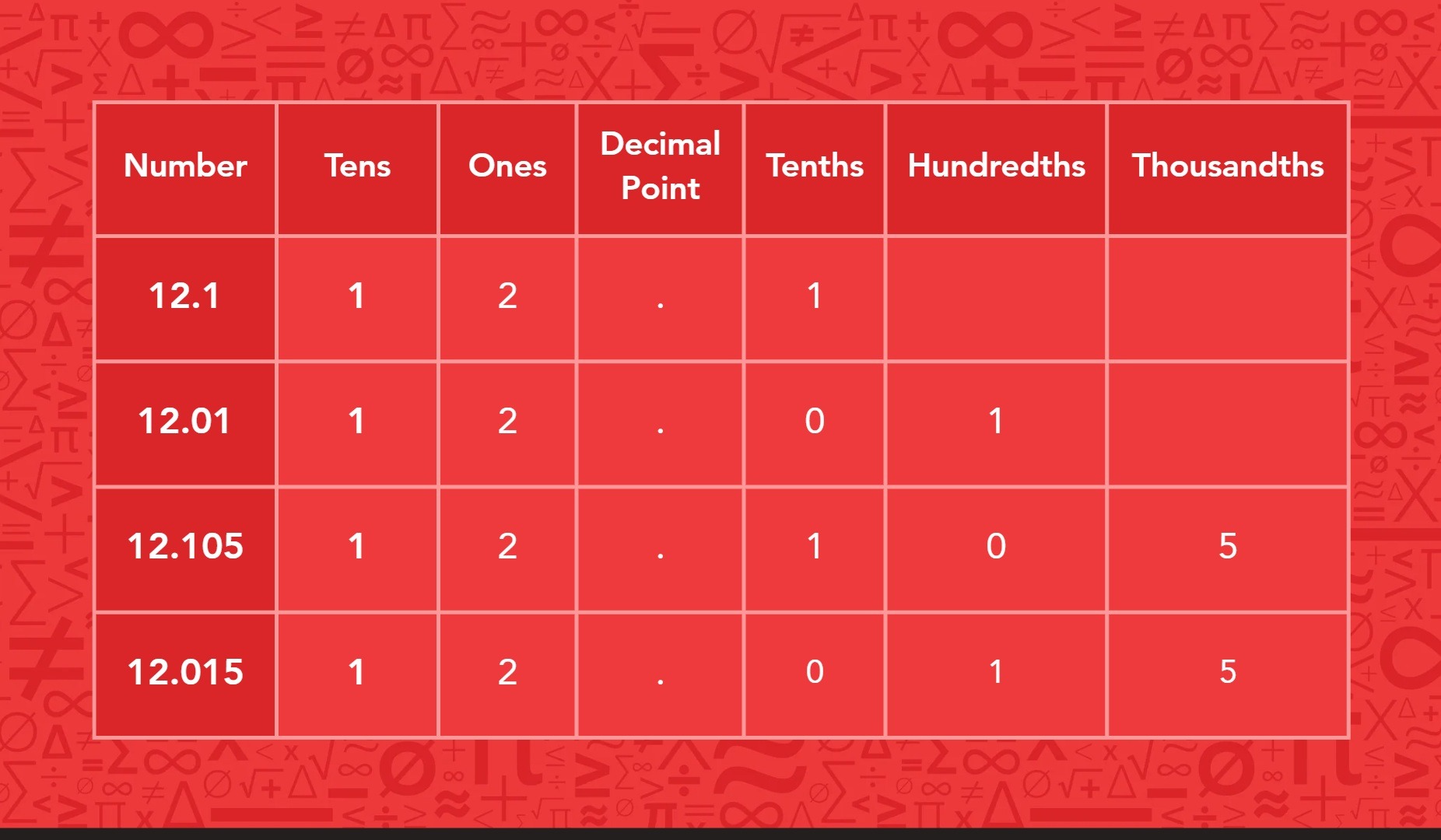
For our final example, we’ll order 12.1, 12.01, 12.105, and 12.015 from least to greatest.
Step 1: Line up the decimal points.
Step 2: Add placeholder zeros.
12.1 is missing the hundredths and thousandths places, so we write it as 12.100. 12.01 is missing the thousandths place, so we write it as 12.010. The other two numbers already reach the thousandths place.
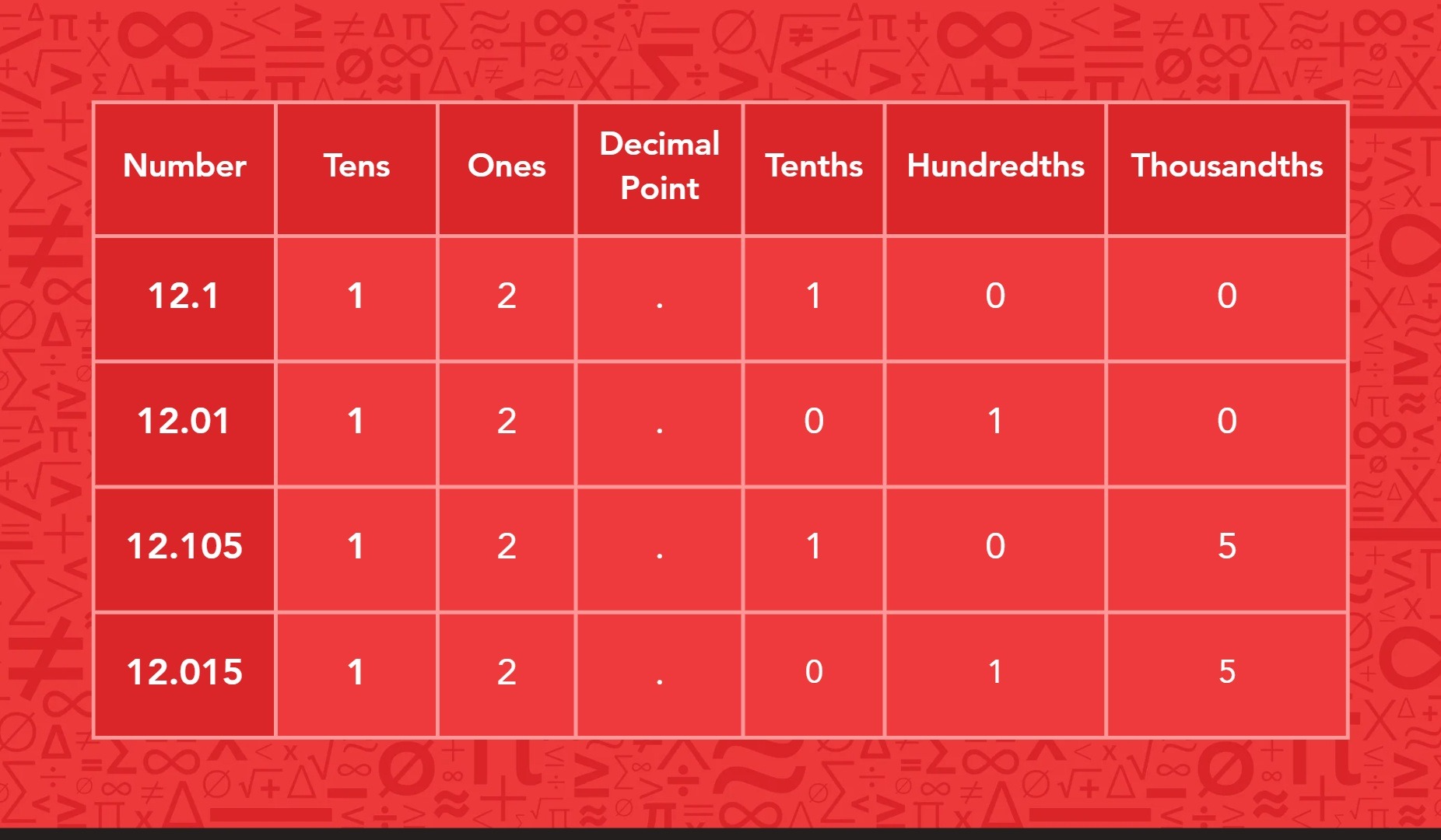
Step 3: Compare left to right.
In the tens and ones columns, all four numbers have 12, so we move to the tenths place. The tenths digits are 1, 0, 1, and 0. The two numbers with 0 in the tenths place are smaller, so we compare those first: 12.010 and 12.015.
Their hundredths digits both show 1, so we move to the thousandths place. 12.010 has 0 thousandths, and 12.015 has 5 thousandths, so 12.010 comes before 12.015.
Now we compare the two numbers with 1 in the tenths place: 12.100 and 12.105. Their hundredths digits both show 0, so we move to the thousandths place. 12.100 has 0 thousandths, and 12.105 has 5 thousandths, so 12.100 comes before 12.105.
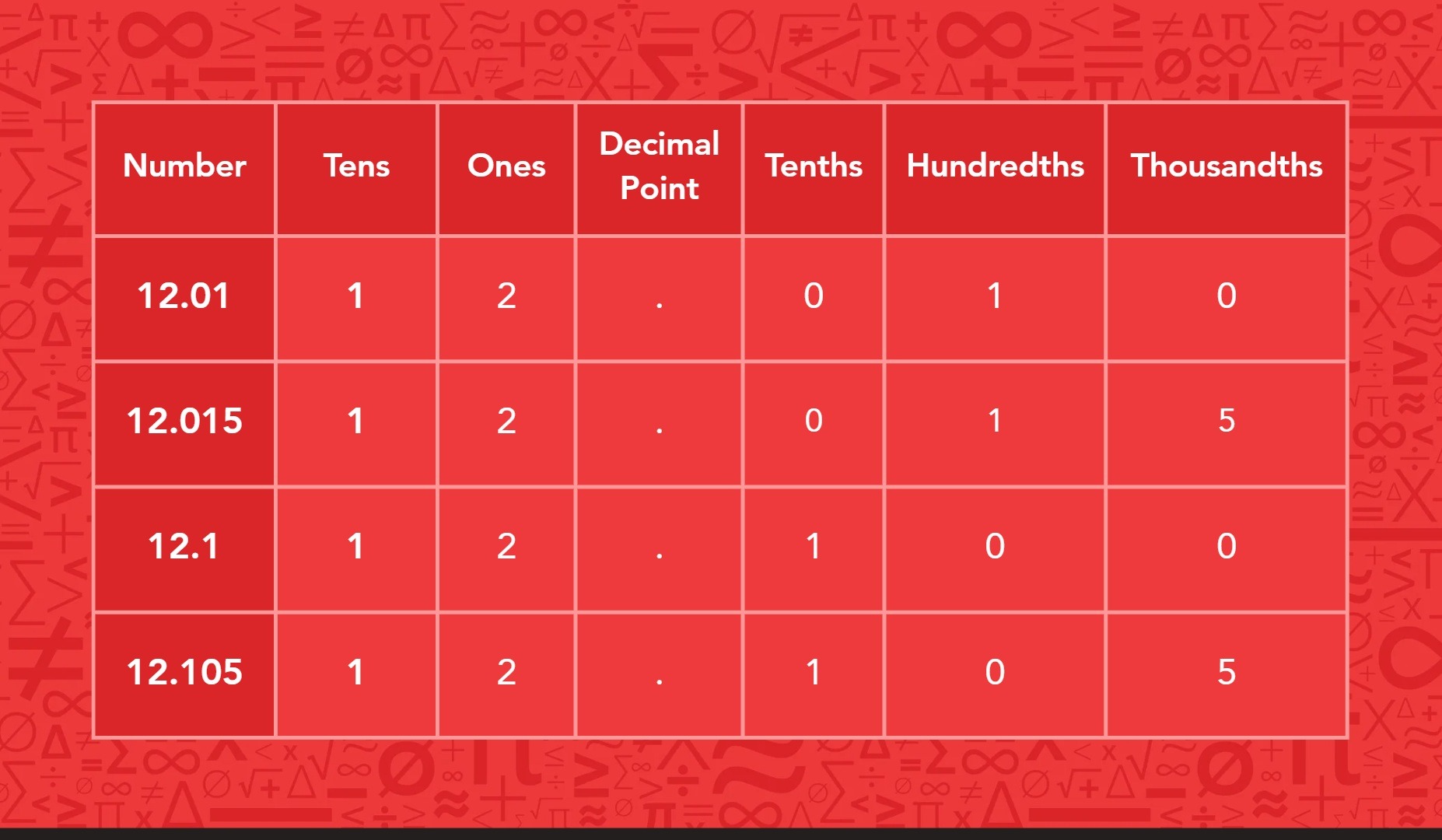
Step 4: Write the final order.
12.01, 12.015, 12.1, 12.105
📕 You May Also Like: 8 Common Mistakes Kids Make with Decimals & How to Fix Them
How Mathnasium Helps Students Master Decimals and Number Sense
Mathnasium is a math-only learning center dedicated to helping K–12 students of all skill levels excel in math.
Whether students need help with decimal ordering, place value, or broader number sense, we can support them. Our proprietary teaching approach, the Mathnasium Method™, is designed around each student's needs and learning style.
 At Mathnasium, we help students build number sense by connecting math steps to the reasoning behind them.
We support their learning through:
-
Assessment and Personalized Learning Plans: Each student begins with a diagnostic assessment to identify current skills, strengths, and gaps. From those findings, we build a personalized learning plan tailored to their goals, whether that means mastering decimal place value, strengthening number sense foundations, or preparing for more advanced math work.
-
Teaching for Understanding: Our specially trained tutors use natural language and a mix of verbal, visual, mental, tactile, and written techniques so each concept lands before we move forward.
-
Problem-Solving and Critical Thinking: We give students time to work through problems independently. That productive struggle helps them learn to trust their own reasoning. When we do step in, we explain both the how and the why behind each answer, so students build problem-solving and critical thinking skills they can use in math and beyond.
-
An Engaging and Fun Learning Environment: Sessions include games, earned rewards, and consistent celebration of progress. Students build confidence alongside fluency, and many develop a more positive relationship with math over time.
Numbers from our own parent and student surveys tell a consistent story:
-
94% of parents report improvement in their child's math skills and understanding
-
93% of parents report an improved attitude toward math after attending Mathnasium
-
90% of students saw improvement in their school grades
With over 1,100 learning centers across North America, there is likely a Mathnasium close to you.
Families across Surprise and nearby areas, including El Mirage and Marley Park, trust Mathnasium of Surprise to help their children build lasting math confidence at every level.
If decimal ordering or any other math concept is giving your child trouble, our team is ready to help.
📅 Schedule a Free Assessment at Mathnasium of Surprise
Not near Surprise?
📍 Find a Mathnasium Learning Center Near You


 (623) 533-4503