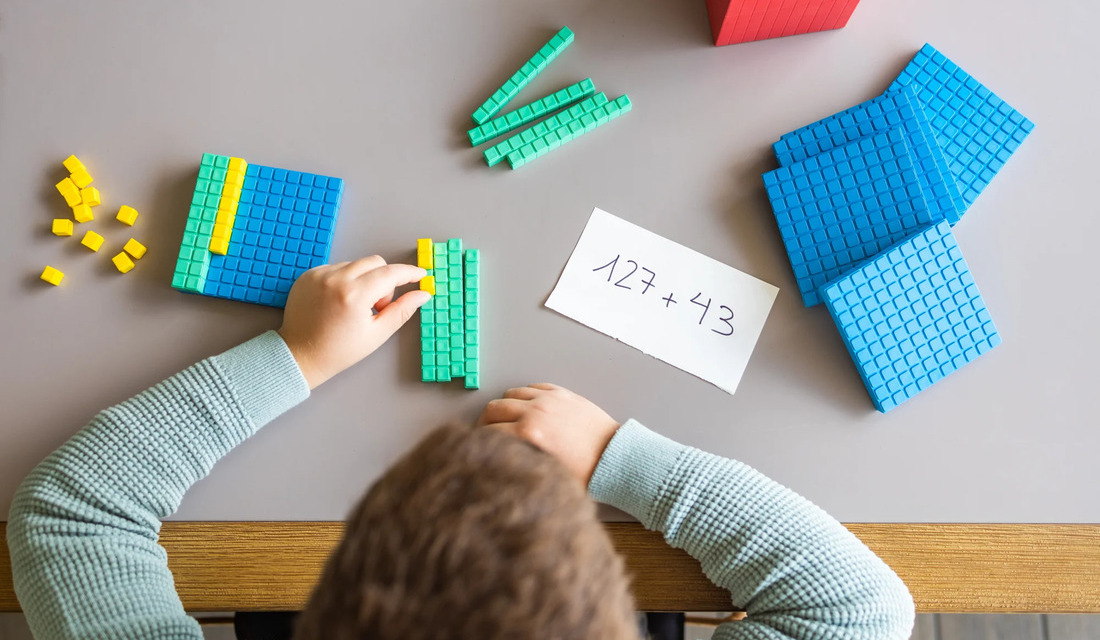
We all need a break from school or work from time to time to rest, recharge, and come back with fresh energy. Summer break gives students a chance to set schoolwork aside for a while and enjoy some time outdoors.
Math, however, is one subject that stays much easier when we keep using it, even in small ways that fit naturally into summer routines rather than feeling like extra schoolwork.
Today, we'll show why math benefits from a little attention over the summer break and share four simple ways to keep it active through moments families already enjoy together.
What Should Families Know About the Summer Math Slide?
We know our usual routines tend to go on break right along with us. For skills like math, that change can have a few unintended consequences.
Here are three important things to know about the summer math slide:
-
Math is procedural and use-it-or-lose-it. Math computation depends heavily on factual and procedural skills, which become more difficult to recall without regular practice. Conceptual understanding tends to hold up better over the summer than computational fluency, which students are expected to recall automatically.
-
Math momentum can slow over the summer. Recent evidence from several modern assessment systems shows that math scores typically flatten or decline during summer break. Although researchers continue to debate the size of the decline, the overall pattern remains consistent across multiple assessments.
-
Summer math loss can carry into the new school year. Classrooms often begin the school year by reviewing skills from the previous year before moving on to new material. Students who stay even lightly engaged with math during the summer break usually return ready to build on what they already know rather than catch up.
Fortunately, many everyday summer activities already give us opportunities to practice math together.
📕 You May Also Like: How Much Math Kids Lose Over Summer + What to Do About It
How to Keep Math Active During Summer Break
Our tutors at Mathnasium recommend keeping things light and using everyday screen-free activities to practice math in ways the whole family can enjoy.
Here are four fun ways to make that happen.
1. Board Games
Board games are one of the most math-rich activities we already want to do over summer break. Every round of play builds math skills, from probability and multiplication to money management and mental arithmetic.
Here are a few that work especially well:
-
Yahtzee builds addition, multiplication of dice groups, and probability reasoning. Before rolling, ask your child which combination is most likely to lead to a full house and why.
-
Monopoly covers money management, making change, budgeting, and percentage calculations through rent, taxes, and property purchases.
-
Card games like Uno, War, and Go Fish strengthen number comparison, greater-than and less-than reasoning, and quick mental addition through scorekeeping.
You can make any of these games a little more math-rich by asking your child to estimate a score, explain a strategy, or solve simple calculations before checking the answer together.
📕 You May Also Like: 10 Fun Math Games to Play at Home with Your Child
2. Building Blocks
We can use building blocks to practice ratio thinking, spatial reasoning, symmetry, and measurement. Math problems arise naturally during the building process, and we can solve them without it feeling like a math lesson.
Here are a few ways to bring the math forward:
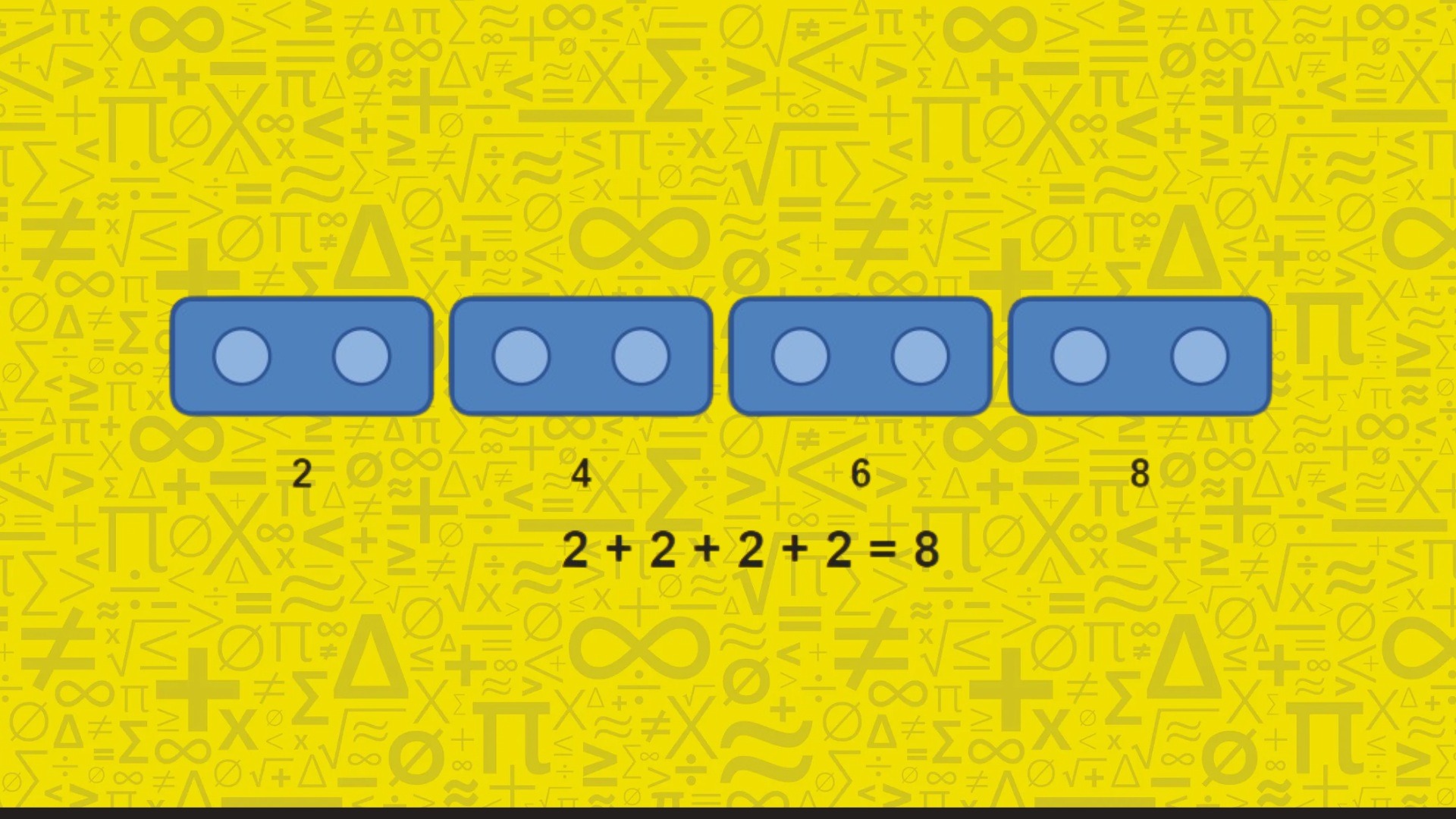
• Unit reasoning: Build a row that is 8 studs long using bricks that are 2 studs wide. Since each brick covers 2 studs, we can count by twos: 2, 4, 6, 8. So, we need 4 bricks to cover the row.
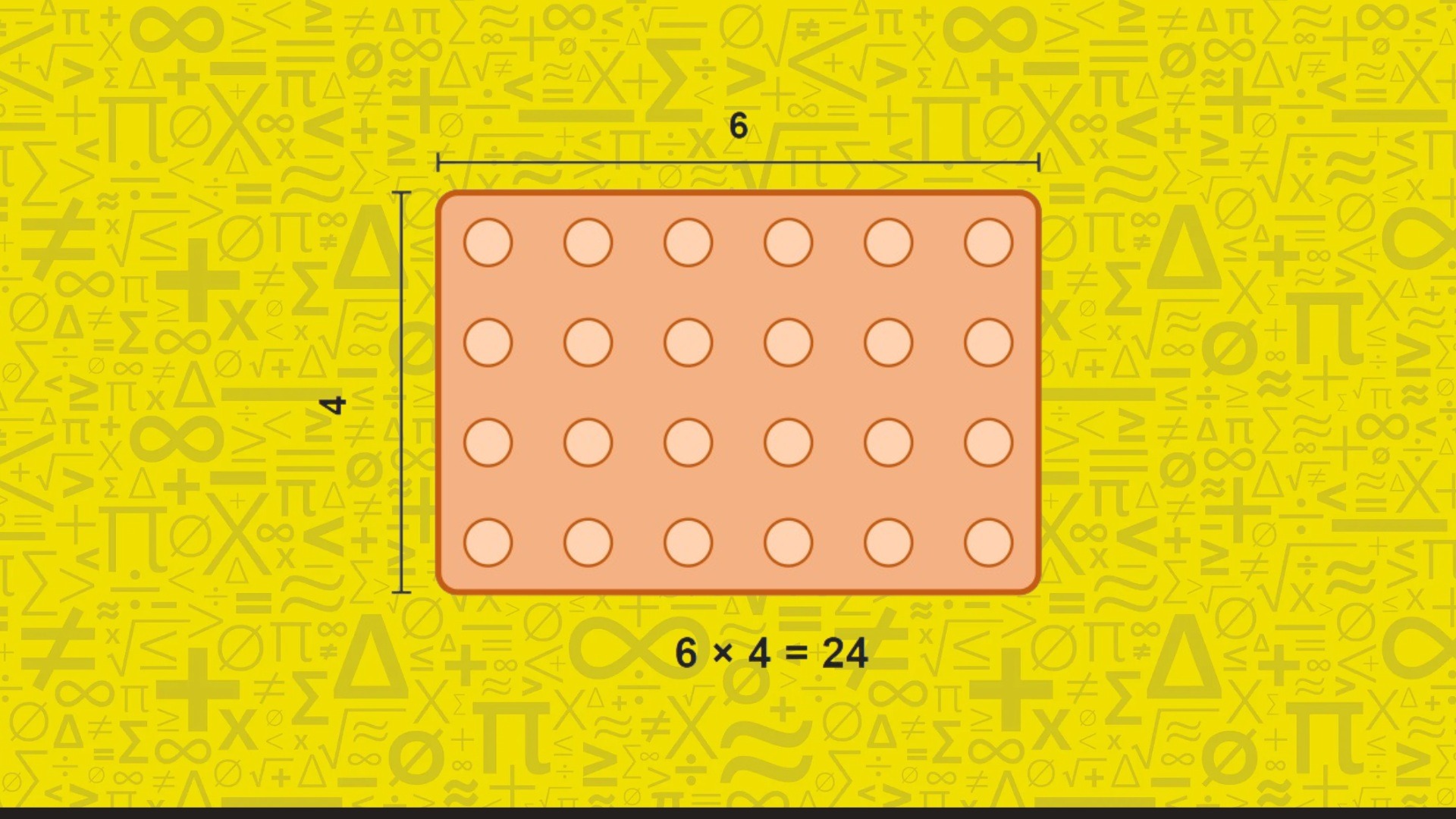
• Area and measurement: Start with a rectangle that is 6 studs long and 4 studs wide. Area tells us how many square units cover a flat space, so we multiply the length by the width. Since 6 × 4 = 24, the rectangle covers 24 studs.
• Fractions: Make a wall that is 30 studs long and turn one-third of it a different color. One-third means we split the whole wall into 3 equal parts, so we divide30 by 3. Since 30 ÷ 3 = 10, one-third of the wall is 10 studs.
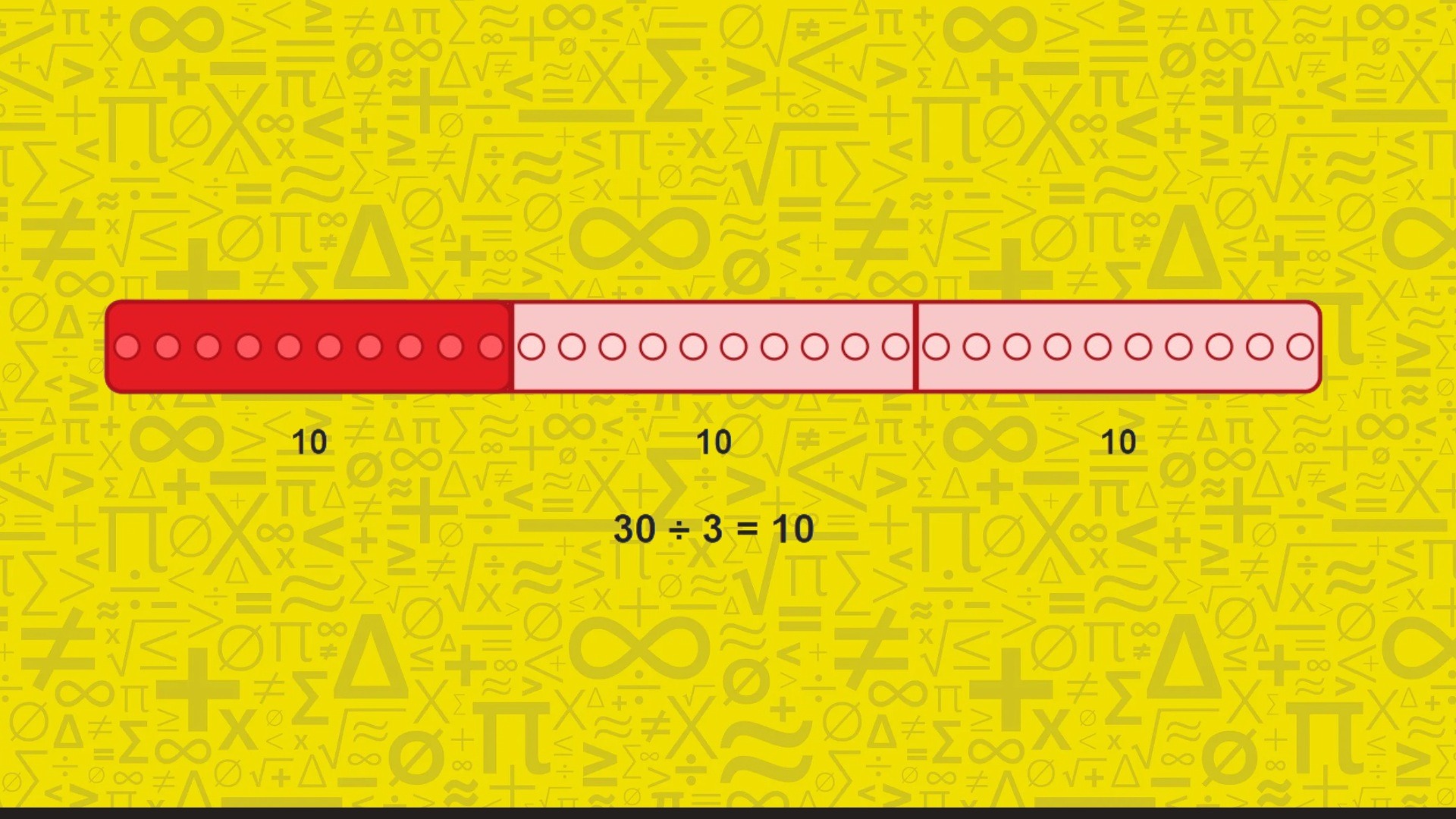
Every build gives us a chance to count, compare, measure, and check our thinking with the pieces right in front of us.
📕 You May Also Like: How to Use Math Manipulatives Effectively at Home
3. Travel Math
Car rides give us easy ways to practice proportional thinking, time, distance, and estimation. Whether you're exploring Surprise or heading out on a longer Arizona road trip during summer break, you can talk through the math out loud without paper or pencil.
Here are a few ways to use travel time:
-
Distance and time: Let's say we're driving 60 miles per hour for 2 hours. You can ask your child how far we'll travel. Since we cover 60 miles per hour, we just multiply 60 × 2, so the answer is 120 miles.
-
Fuel cost: Imagine you're stopping for gas and the price is $4 per gallon. If the car needs 10 gallons, ask your child to work out the total cost. Each gallon costs $4, so 10 × 4 = 40. The fuel will cost $40.
-
GPS estimation: Before the trip begins, look at the GPS together. If it's 2:00 p.m. and the arrival time is 1 hour and 20 minutes away, ask your child what time you'll get there. The trip takes 1 hour and 20 minutes, so 2:00 p.m. + 1 hour = 3:00 p.m., and 3:00 p.m. + 20 minutes = 3:20 p.m.
Before any trip, we can pick one number from the drive, such as distance, time, gas, or arrival time, and turn it into a quick mental math discussion.
4. Open-Ended Math Conversations
Ten minutes of open-ended math conversation keeps number sense flexible without any pressure or performance stakes.
Here are a few questions to try:
-
Number sense: Pick a number like 24 and see how many ways you can make it together. For example, 20 + 4, 12 + 12, 6 × 4, and 3 × 8 all equal 24.
-
Money math: Let's say your dinner bill comes to $30. You can ask your child what a 20% tip would be. The answer comes from multiplying 30 × 0.20, which equals $6. Or imagine buying something that costs $47 and paying with $60. The change comes from subtracting 47 from 60, which gives $13.
-
Pattern puzzles: Start a sequence such as 2, 4, 8, and ask what could come next. One answer is 16 if the pattern is doubling each time. But another logical answer is 14 if the rule is adding the next even number (+2, +4, +6). This beautifully shows kids that some mathematical puzzles can have more than one right answer, as long as you can explain your logic.
The objective isn't to quiz your child every day. A few fun questions here and there are often enough to keep math part of the conversation throughout the summer break.
📕 You May Also Like: 5 Ways Mental Math Supports Long-Term Math Success
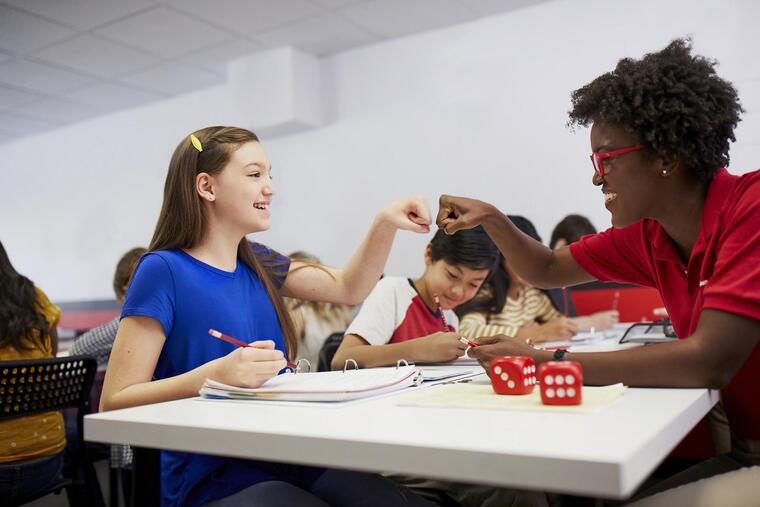 At Mathnasium, we believe students learn best when math connects to something they already enjoy and care about.
How Mathnasium Helps Students Stay Sharp Over Summer Break and Beyond
Mathnasium is a math-only learning center dedicated to helping K–12 students of all skill levels excel in math.
Many families continue attending regular Mathnasium sessions throughout the summer, while participating centers also offer dedicated summer math programs and camps that combine math learning with hands-on activities and STEM challenges.
No matter which option families choose, every student learns through our proprietary teaching approach, the Mathnasium Method™, which is designed around each student's needs and learning style to help them learn and master math. Our approach includes:
-
Assessment and Personalized Learning Plans: Each student begins their Mathnasium journey with a diagnostic assessment that identifies current skills, strengths, and gaps. From those findings, we build a personalized learning plan tailored to their goals.
-
Teaching for Understanding: Our specially trained tutors use natural language and a mix of verbal, visual, mental, tactile, and written techniques so each concept lands before we move forward.
-
Problem-Solving and Critical Thinking: We give students time to work through problems independently. That productive struggle helps them learn to trust their own reasoning. When we do step in, we explain both the how and the why behind each answer, so students build problem-solving and critical thinking skills they can use in math and beyond.
-
An Engaging and Fun Learning Environment: Sessions include games, earned rewards, and consistent celebration of progress. Many centers also incorporate puzzles and enrichment-style activities that keep our learners engaged while stretching their mathematical thinking. Students build confidence alongside fluency, and many develop a more positive relationship with math over time.
We hear from parents every semester that the progress shows up exactly where it matters most:
-
94% of parents report improvement in their child's math skills and understanding
-
93% of parents report an improved attitude toward math after attending Mathnasium
-
90% of students saw improvement in their school grades
With over 1,100 learning centers across North America, there is likely a Mathnasium close to you.
Families across Surprise and nearby areas, including El Mirage and Marley Park, trust Mathnasium of Surprise to help their children build lasting math confidence.
If math momentum or any other math concept is giving your child trouble over the break, our team is ready to help.
📅 Schedule a Free Assessment at Mathnasium of Surprise
Not near Surprise?
📍 Find a Mathnasium Learning Center Near You


 (623) 533-4503