Ask a child what makes 13, and you might get five different answers, like 5 and 8, 6 and 7, 9 and 4, even 2 and 11, with room to spare. And yes, all are correct.
Kids who understand number bonds in math learn to see numbers this way too, and that flexibility can carry them through addition, subtraction, multiplication, and division
With that in mind, the Mathnasium team explains what number bonds are, how they show up across addition, subtraction, multiplication, and division, why they matter so much for early learners, and share a quick quiz you can try with your child at home.
What Are Number Bonds?
Number bonds (we also call them complements) are pairs of numbers that add up to a given total. For example, 3 and 4 are number bonds to 7 because 3 + 4 = 7.
When we combine these pairs with their related subtraction facts, we get a fact family.
A fact family is a set of equations that show how addition and subtraction are connected. Here’s a simple example:
-
3 + 4 = 7
-
4 + 3 = 7
-
7 - 3 = 4
-
7 - 4 = 3
That gives us all four facts in this family.
Using Number Bonds for Addition and Subtraction
Take 10. Break it into 4 and 6, and a whole fact family opens up:
-
4 + 6 = 10
-
6 + 4 = 10
-
10 - 4 = 6
-
10 - 6 = 4
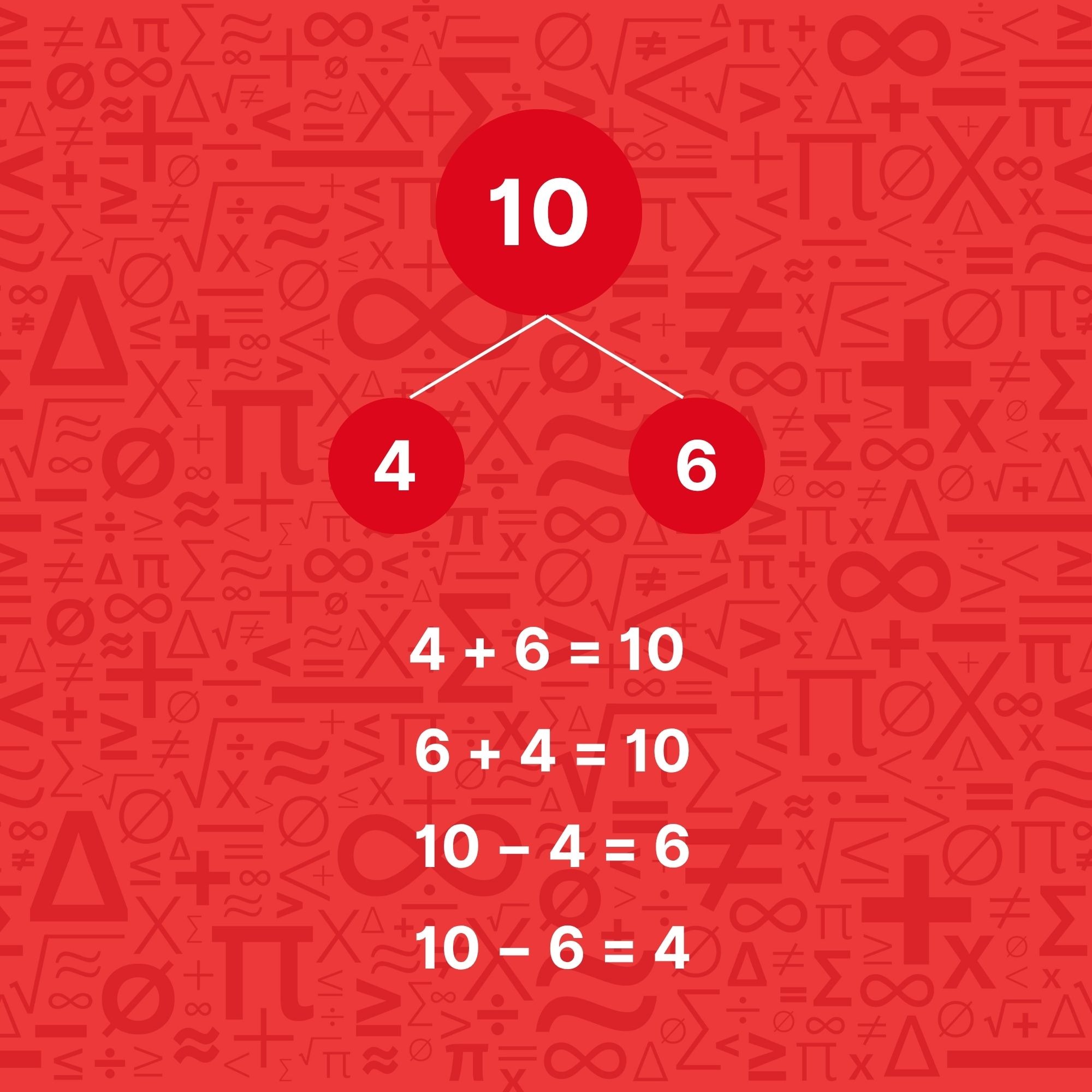
We see that one equation gives a child the key to all four. They simply see how the numbers fit together.
This is where addition and subtraction start to look like partners instead of separate subjects.
Addition asks what two parts make when they're joined.
Subtraction asks what's left when one part is taken away.
Both questions point back to the same relationship, just like we saw with 3, 4, and 7, only viewed from opposite directions.
📕 You May Also Like: How Math Concepts Reappear in New Forms Each Year
Using Number Bonds for Multiplication and Division
Number bonds don't stop with addition and subtraction. They also show how numbers group and split, which is exactly what multiplication and division are built on.
Take 12. Think of it as 4 groups of 3, and the relationship works the exact same way:
-
4 x 3 = 12
-
3 x 4 = 12
-
12 ÷ 4 = 3
-
12 ÷ 3 = 4
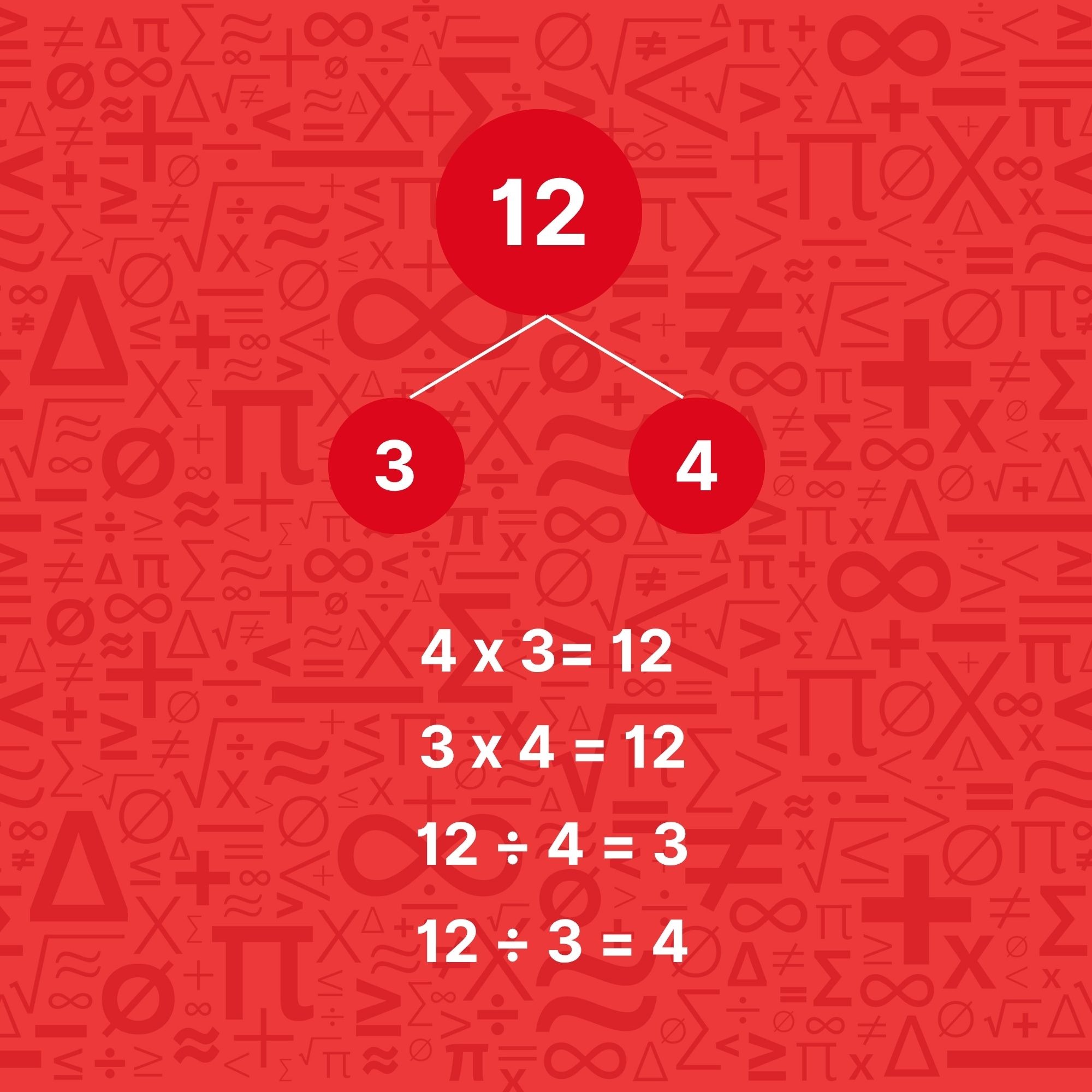
So, just like we saw for addition and subtraction, number bonds show us that multiplication and division are really just two sides of the same coin.
Multiplication brings equal groups together to find the total. Division starts with that same total and splits it into equal groups. The questions change, but the relationship between the parts and the whole stays identical.
📕 You May Also Like: How to Break Down Any Math Problem Into Steps
Why Number Bonds Matter for Young Math Learners
At Mathnasium, we think of number bonds as an important tool for fact fluency. Our experience, as well as research, points to clear benefits for every student's number sense.
-
Faster mental math: Breaking smaller numbers into familiar parts allows children to calculate in their heads instead of relying on finger-counting.
-
Clearer grasp of inverse operations: Seeing addition and subtraction as two sides of one relationship helps both operations click faster.
-
A smoother path to two-digit math: The habit of breaking apart 8 and 5 applies directly when numbers grow, making a problem like 38 + 25 simple to solve mentally.
-
Less dependence on rote memorization: Understanding why 7 and 3 make 10 gives students a way to reconstruct the answer if memory slips, preventing the panic of freezing up.
-
A predictor researchers take seriously: A number sense screening measure has been shown to strongly predict math performance by the end of first and third grade, with early comfort in addition and subtraction combinations standing out as the strongest predictor of all.
-
Lasting skill improvements: A kindergarten intervention study found that structured practice with number combinations improved number sense, arithmetic fluency, and math achievement.
📕 You May Also Like: Everyday Maths: Fun Activities to Reinforce Math Skills at Home
Test Your Number Bond Knowledge
Ready to put number bonds to the test? Try these tasks with your child, out loud or on paper.
Task 1: Complete the Number Bonds
Fill in the missing number in each addition bond.
-
7 and ___ make 15
-
___ and 5 make 13
-
9 and ___ make 9
-
___ and 8 make 17
-
6 and ___ make 11
-
___ and 4 make 20
Task 2: Build a Fact Family
Pick two numbers that add up to 18. Then write the four related facts in the fact family, using both addition and subtraction.
Task 3: Find All the Fact Families for 12
Using addition and subtraction, list every fact family that adds up to 12. How many did you find?
Task 4: Fact Families with Multiplication and Division
Pick two factors that multiply to 24. Write the four related facts in the fact family, using both multiplication and division.
📕 You May Also Like: 7 Multiplication Games to Help Kids Master Times Tables
 Mathnasium provides personalized math instruction that helps students build strong foundational skills, strengthen problem-solving abilities, and gain confidence in math.
How Mathnasium Helps Students Excel in Math
Mathnasium is a math-only learning center that helps K-12 students of all skill levels excel in math.
Our instructors place a strong emphasis on developing reliable number sense, as this is a skill that will carry students through every stage of their math journey.
To build a solid foundation for number sense and any other skill, we employ the Mathnasium Method™, a proprietary teaching approach designed around each student's skill level and learning styles.
Here’s what our method includes:
-
Assessment and Personalized Learning Plans: Each student begins with a diagnostic assessment that identifies skill level, learning goals, and learning style. From those insights, we build a personalized learning plan tailored to their needs.
-
Teaching for Understanding: Our specially trained instructors use clear language and mental, verbal, visual, tactile, and written techniques so each concept makes sense.
-
Problem-Solving and Critical Thinking: We give students time to work through problems independently, which builds trust in their own reasoning. When we step in, we explain the how and why behind each answer, building problem-solving skills and critical thinking tools for math and beyond.
-
An Engaging and Fun Learning Environment: Sessions include games, earned rewards, and time for homework help once daily learning plan topics are done. Students build confidence alongside fluency and develop a more positive relationship with math over time.
The impact extends beyond the classroom.
-
94% of parents report an improvement in their child's math skills and understanding
-
93% of parents report their child's improved attitude toward math after attending Mathnasium
-
90% of students saw an improvement in their school grades
With over 1,100 learning centers across North America, there is likely a Mathnasium close to you.
Families across Alexandria City and nearby communities can find us at Mathnasium of Alexandria City, a trusted local center with a proven record of building confident math thinkers.
Whether your child is looking to catch up, keep up, or get ahead in math, our team is happy to help.
Ready to get started?
📅 Schedule a Free Assessment at Mathnasium of Alexandria City
Not near Alexandria City?
📍 Find a Mathnasium Learning Center Near You
Psst! Check Your Answers Here
How did you do? Let's work through it together.
Task 1
-
7 and 8 make 15
-
8 and 5 equal 13
-
9 and 0 make 9
-
9 and 8 add up to 17
-
6 and 5 make 11
-
16 and 4 equal 20
Task 2
Answers will vary depending on which two numbers you picked.
Example using 8 and 10:
-
8 + 10 = 18
-
10 + 8 = 18
-
18 - 8 = 10
-
18 - 10 = 8
Task 3
Like this, and with each pair in reversed order:
-
0 + 12
-
1 + 11
-
2 + 10
-
3 + 9
-
4 + 8
-
5 + 7
-
6 + 6
Each pair also gives two subtraction facts, so 0 + 12 = 12 means 12 - 12 = 0 and 12 - 0 = 12, and so on for every pair.
Task 4
Answers will vary depending on which two factors you picked.
Example using 4 and 6:
-
4 × 6 = 24
-
6 × 4 = 24
-
24 ÷ 4 = 6
-
24 ÷ 6 = 4


 (703) 956-5150