Regular vs. Irregular Polygons: What's the Difference?
Jun 2, 2026
| Calabasas
Polygons appear early in a student’s math journey, from classifying shapes in Grade 3 to calculating perimeter and interior angles in middle school.
As students work through them, our tutors notice that one of the most common stumbling blocks is telling regular polygons apart from irregular ones.
With that in mind, today we break down what makes a polygon regular, why some familiar shapes fall short, and how students can identify regular and irregular polygons more confidently.
What Is a Polygon?
A polygon is a closed flat shape made entirely of straight sides that connect end to end with no gaps.
Two clarifications can help us sharpen the definition:
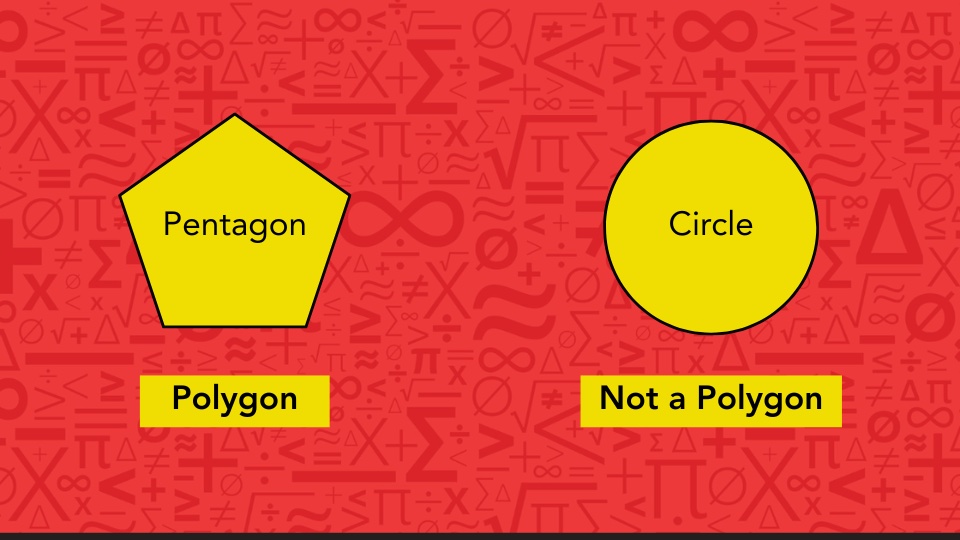
A pentagon with five connected straight sides is a polygon
A circle is not a polygon because it has no straight sides and no corners
Polygons require at least three straight sides to connect to form a closed shape. The number of sides a polygon has determined its name, from triangles with three sides to hexagons with six and beyond.
Angle relationships inside polygons, including how interior angles behave across different shapes, are the focus of this two-part Mathnasium Schoolhouse lesson.
We classify polygons as regular or irregular based on two measurable properties: side length and angle measure.
What Is a Regular Polygon?
A regular polygon is a closed shape where every side has the same length and every angle has the same measure. Both conditions must hold at the same time.
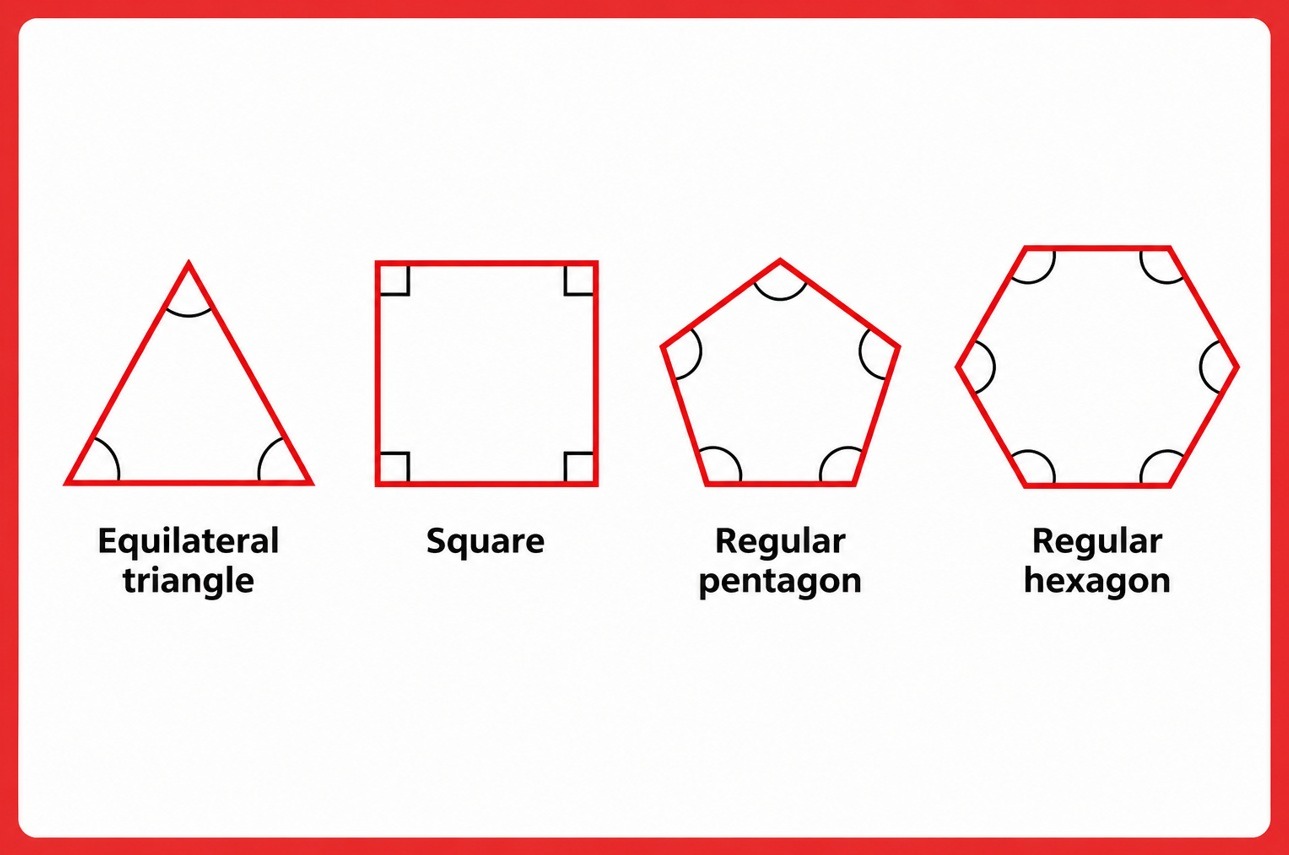
The four regular polygons students encounter most often are:
Equilateral triangle: 3 equal sides, each angle measuring 60 degrees
Square: 4 equal sides, each angle measuring 90 degrees
Regular pentagon: 5 equal sides, each angle measuring 108 degrees
Regular hexagon: 6 equal sides, each angle measuring 120 degrees
In a regular polygon, once you know the number of sides, you can determine the angle measures.
What Is an Irregular Polygon?
An irregular polygon is a closed shape made of straight sides where at least one condition for a regular polygon is missing: the sides are unequal, the angles are unequal, or both.
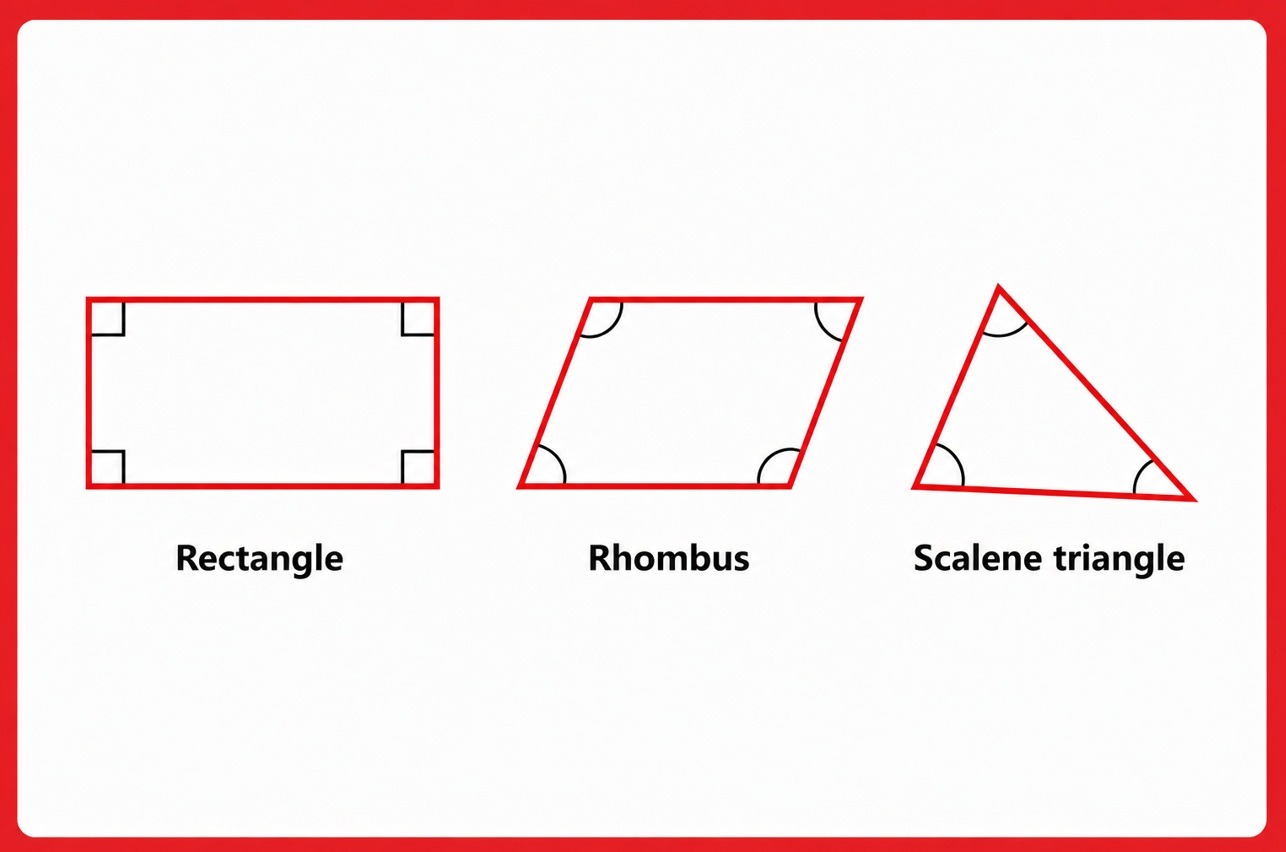
Three examples students may already know show how this works:
Rectangle: all four angles measure 90 degrees, but the sides come in two different lengths, so the side condition fails
Rhombus: all four sides are equal, but the angles are not all equal, so the angle condition fails
Scalene triangle: all three sides are different lengths, and all three angles are different measures, so both conditions fail
Irregular polygons appear far more often in everyday life than regular ones, which is why it’s important to recognize the distinction.
The Difference Between Regular and Irregular Polygons
A regular polygon meets two conditions: all sides are equal, and all angles are equal. An irregular polygon fails at least one of them.
Two comparisons make the difference between regular and irregular polygons clearer, as both use shapes we already introduced.
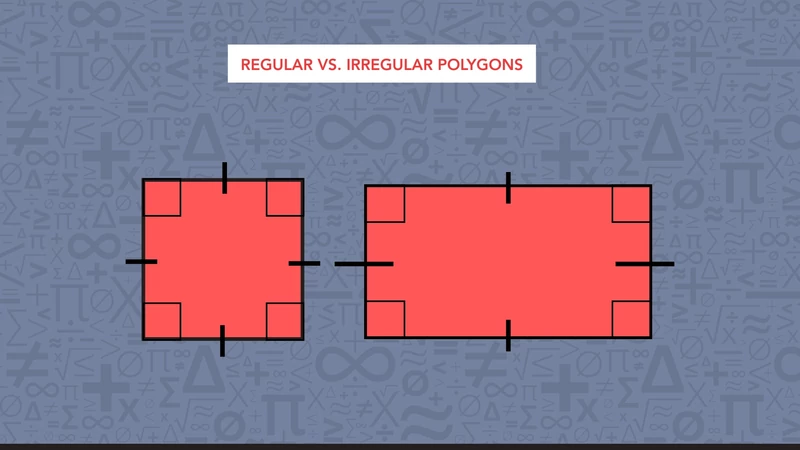
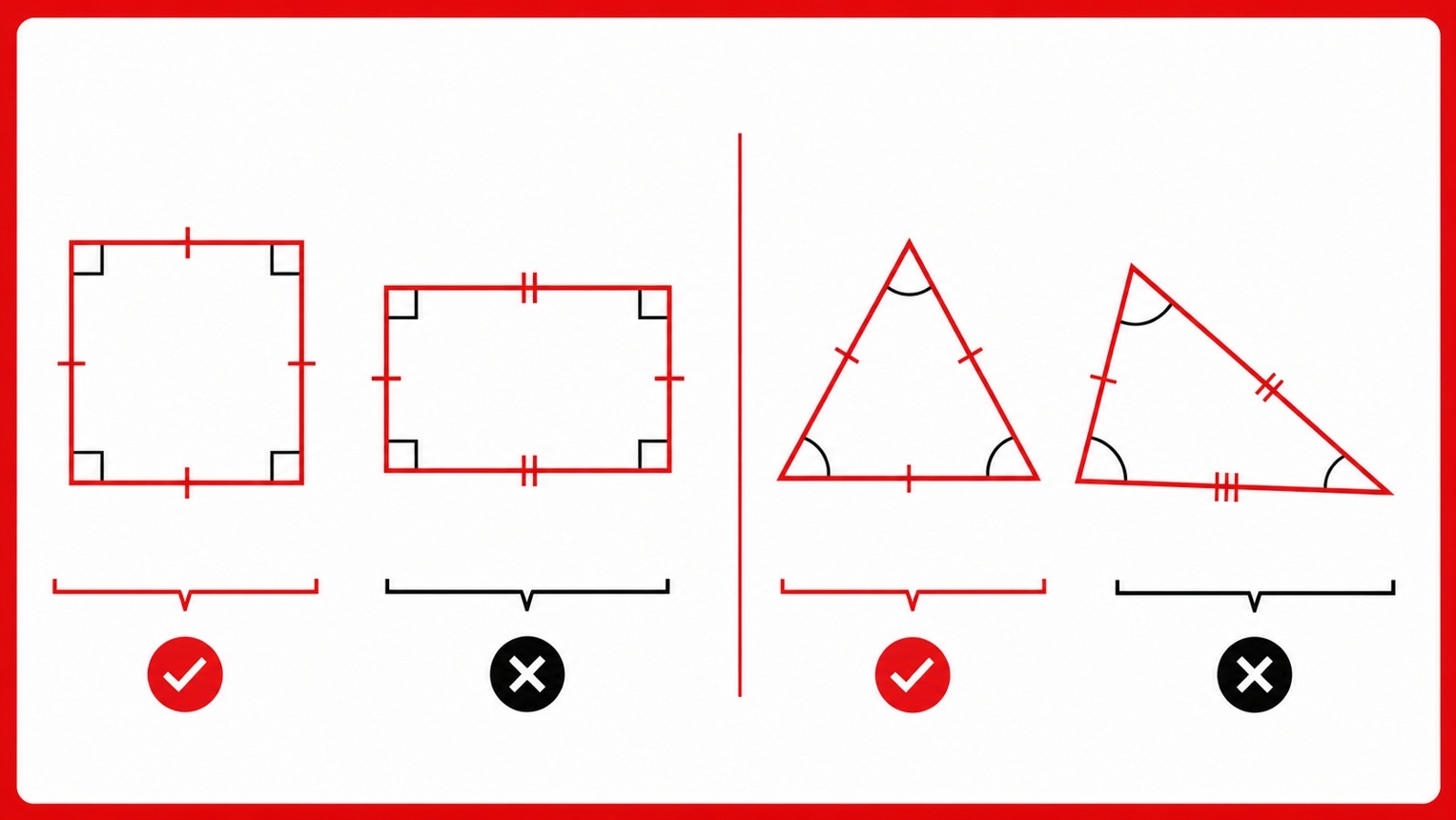
Square versus rectangle: Both shapes have four right angles measuring 90 degrees each, so both meet the angle condition. The square has four equal sides, so it meets the side condition too. The rectangle has two pairs of equal sides, so the side condition fails, and it becomes irregular.
Equilateral triangle versus scalene triangle: The equilateral triangle has three equal sides and three equal angles of 60 degrees each, so both conditions are met. The scalene triangle has three different side lengths and three different angle measures, so both conditions fail.
We find the perimeter of a regular polygon by multiplying one side length by the number of sides. An irregular polygon requires adding each side individually, which is a practical difference students encounter from Grade 3 onward.
Let’s try to identify whether a polygon is regular or irregular by checking whether all sides and angles are equal. Both problems include measurements.
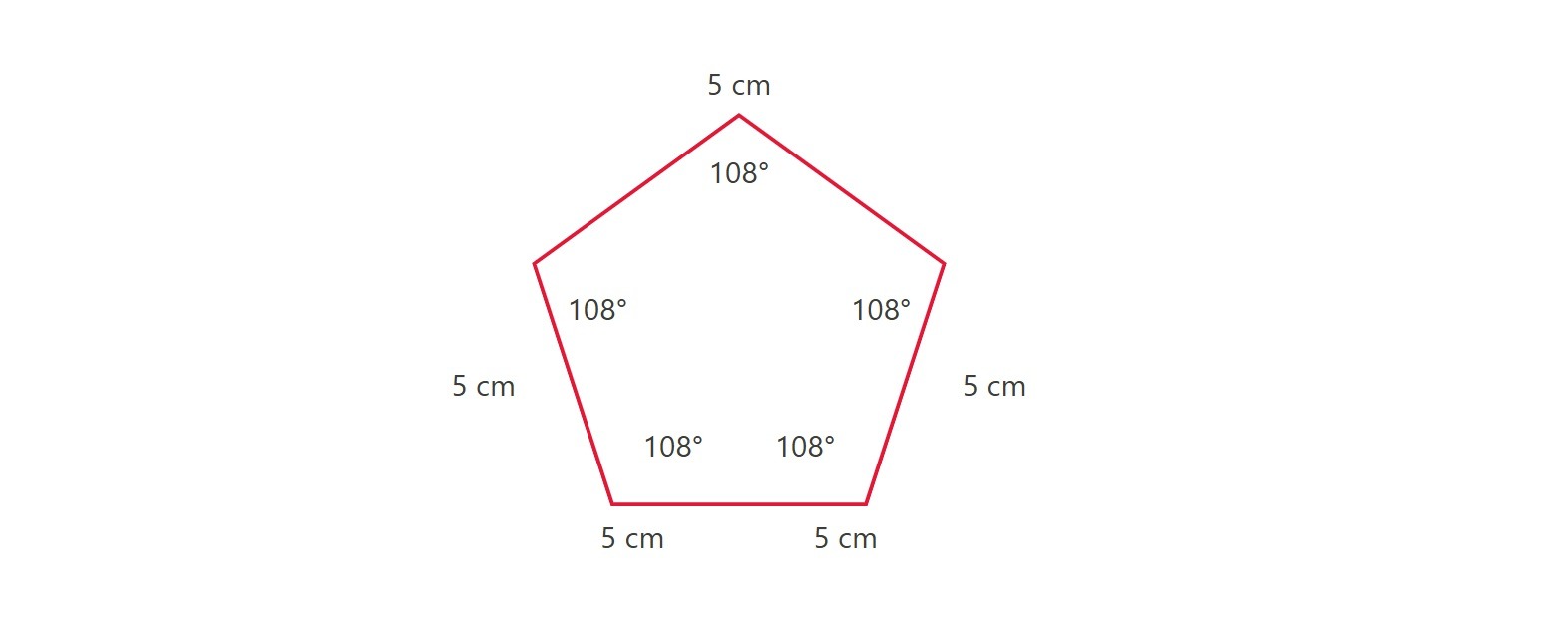
Challenge 1
A shape has five sides, each measuring 5 cm, and five angles, each measuring 108 degrees.
Is it regular or irregular?
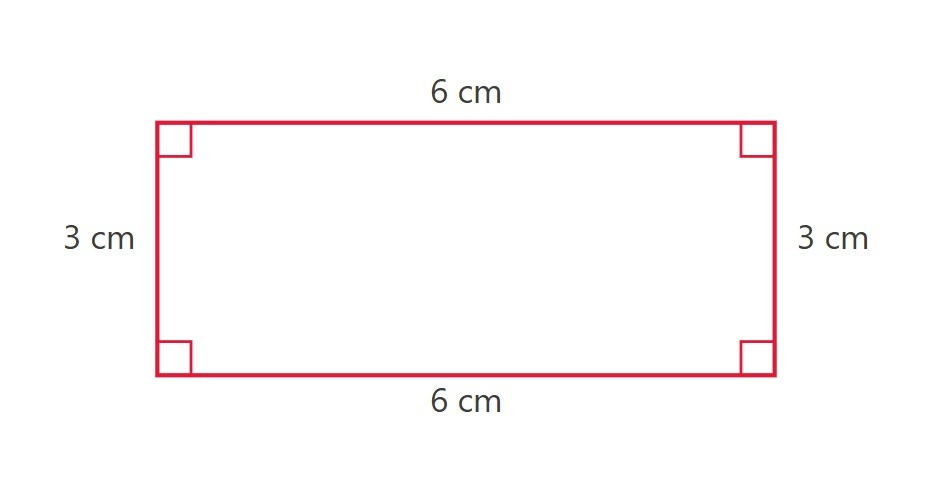
Challenge 2
A shape has four sides measuring 6 cm, 6 cm, 3 cm, and 3 cm, and four angles each measuring 90 degrees.
Is it regular or irregular?
Take a shot at both challenges, then scroll to the end of the article to check your work.
Our tutors at Mathnasium identified six questions students ask most often once polygon classification begins in geometry.
1. Can a polygon have more than six sides and still be regular?
Any polygon with equal sides and equal angles qualifies as regular, regardless of how many sides it has. A regular octagon has eight equal sides and eight equal angles, and stop signs are a familiar everyday example.
2. Is every equilateral shape also equiangular?
No. A rhombus that is not a square has four equal sides but angles that are not all equal, which means equilateral does not automatically mean equiangular. The two properties are independent of each other. Triangles are a special case, since equilateral triangles are also equiangular.
3. Does a regular polygon always have more sides than an irregular one?
The number of sides has nothing to do with whether a polygon is regular or irregular. A triangle can be equilateral and regular, or scalene and irregular, depending entirely on its measurements.
4. Can an irregular polygon be symmetrical?
A rectangle has two lines of symmetry, but still counts as irregular because its sides come in two different lengths. Symmetry and regularity measure different things.
5. What is the most common regular polygon in everyday life?
The square is the most familiar regular polygon in everyday life. Floor tiles, windows, and checkerboards all use it. The regular hexagon appears in nature in honeycomb structures.
6. When do students first learn about regular and irregular polygons?
Students first encounter regular and irregular polygons in Grades 3 and 4 when classifying shapes by their properties. The distinction becomes more important in Grades 5 and 6 when students calculate perimeter and begin working with interior angles.
At Mathnasium, geometry concepts like polygon classification build toward the angle relationships and perimeter calculations students need from Grade 3 through middle school.
How Mathnasium Helps Students Master Geometry
Mathnasium is a math-only learning center dedicated to helping K-12 students of all skill levels excel in math, including geometry.
Students come to us at different stages in their understanding of polygon classification, geometry, and shape measurement concepts. The path forward is built around exactly where each student is.
We support students' growth through our proprietary teaching approach, the Mathnasium Method™. Here is how it works in practice:
Assessment and Personalized Learning Plans. Each student begins with a diagnostic assessment that pinpoints which skills are solid and which need attention. Every learning plan builds from that exact starting point.
Teaching for Understanding. Our specially trained tutors use natural language and a mix of verbal, visual, mental, and written techniques so concepts land in a way that makes sense to your child.
Problem-Solving and Critical Thinking. Our tutors know when to offer support and when to let your child push through on their own. That balance is what builds lasting independence.
An Engaging and Fun Learning Environment. Sessions are designed to keep your child motivated and enjoying the process. We celebrate every bit of progress, and that consistent recognition builds confidence with each session.
The results speak for themselves:
94% of parents report improvement in their child's math skills and understanding
93% of parents report an improved attitude toward math after attending Mathnasium
90% of students saw improvement in their school grades
With over 1,100 learning centers across North America, there is likely a Mathnasium close to you.
Families across Calabasas trust Mathnasium of Calabasas to help their children build real confidence in geometry and every math concept that follows.
If polygons or any other geometry concept is giving your child trouble, our team is ready to help.
If you've given our challenges a go, check your results here.
Solution to Challenge 1: Regular. All five sides measure 5 cm, and all five angles measure 108 degrees, so both conditions are met.
Solution to Challenge 2: Irregular. All four angles measure 90 degrees, so the angle condition is met. The sides are not all equal; two measure 6 cm and two measure 3 cm, so the side condition fails. One condition failing is enough to make a polygon irregular.
Visit Us at Mathnasium of Calabasas
Mathnasium of Calabasas is a math-only learning center for K-12 students in Calabasas,
CA. Trusted by over a million parents, Mathnasium uses personalized learning plans
and the proprietary Mathnasium Method™ to help students catch up, keep up, and get ahead on their math journey.
Our specially trained tutors deliver face-to-face instruction in a supportive and fun small-group environment,
working with students both in center and online to develop a deep understanding of math, build confidence,
and improve academic performance.
Mathnasium education specialists share a practical back-to-school math prep framework to help Calabasas students build confidence and reduce summer learning loss.
Mathnasium tutors explain what percent means, show percent to fraction conversion steps with worked examples, and share the mistakes students make most often.


 (818) 741-2880