
 (336) 855-5558
 (336) 855-5558










Mathnasium of Greensboro: Back-to-School Success Starts Here!!
Aug 15, 2026 | Greensboro

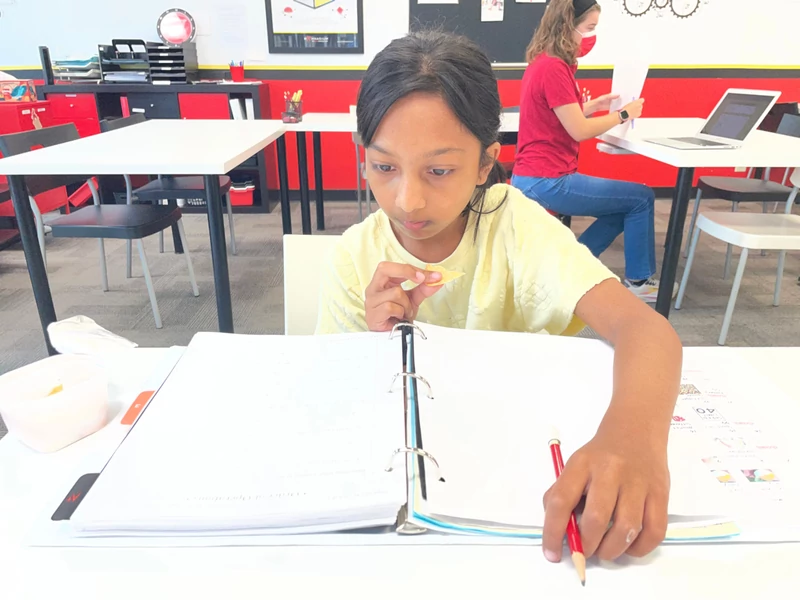
Q1: How can students stay academically active during summer while still enjoying their break?
A1: Turn Everyday Outings into Learning Opportunities: A trip to the grocery store or a summer movie can easily become a math lesson. Have kids calculate discounts, estimate total costs, or look at the probability and statistics behind sports games.
Take baseball, for instance. Baseball is widely considered the most statistically analyzed sport in the world. Teams use advanced statistics to evaluate players beyond traditional metrics like batting average. Metrics like OPS (On-base Plus Slugging) or WAR (Wins Above Replacement) use complex formulas to measure a player's total statistical value to their team. By analyzing data on where a specific batter historically hits the ball, teams shift their fielders to precise geometric angles and locations on the diamond to maximize the probability of making an out. Even the trajectory of a baseball involves calculus and physics. Pitchers manipulate the spin rate, axis, and velocity of the ball to change how air flows around it (the Magnus effect), determining exactly how much a slider will break or a fastball will "rise."
Also, you can use educational apps, logic puzzles, or board games that feel like play rather than traditional problem solving.
Q2: What are some ways math connects to sports like soccer or the Football World Cup?
A2: The World Cup (Soccer's Olympics) is practically a giant, live-action math puzzle! From the shape of the ball to the tactics on the field, math is woven into every second of the game.
Here are some of the coolest ways math connects to soccer and the World Cup:
Angles dictate everything a player does on the pitch. When a striker is running toward the goal, they are constantly calculating the best angle to shoot to beat the goalkeeper. Goalkeepers, on the other hand, use geometry to "narrow the angle," coming off their line to reduce the amount of open net the shooter can see. Even passing relies on creating geometric triangles between players to maintain possession and move the ball down the field.
The structure of the World Cup tournament itself is a masterclass in probability and statistics. During the Group Stage, teams earn 3 points for a win, 1 for a tie, and 0 for a loss. Analysts, fans, and coaches constantly calculate combinations of potential outcomes—looking at goal differentials, head-to-head records, and statistical probabilities—to figure out exactly what a team needs to advance to the knockout rounds.
Even the soccer ball itself is a mathematical marvel. A traditional soccer ball is a truncated icosahedron—a 3D geometric shape made of 20 regular hexagons and 12 regular pentagons. Over the years, World Cup ball designs have evolved using advanced physics and geometry to reduce panels, smooth out seams, and make the ball more perfectly aerodynamic.
Q3: Why is summer a valuable time for students to strengthen skills before the next school year?
A3: Summer is an incredibly valuable window for students because it offers a rare combination of time, flexibility, and reduced pressure that simply doesn't exist during the standard academic year.
1. Combating the "Summer Slide"
On average, students lose a significant portion of what they learned during the previous school year over the summer break—a phenomenon known as the "summer slide." By engaging in regular, low-pressure learning, students don't just stop this knowledge loss; they actually propel themselves ahead, ensuring they don't waste the first month of the new school year playing catch-up.
2. Bridging Foundational Gaps
During the busy school year, classes move at a rigid pace. If a student misses a core concept in July or October, the class keeps moving anyway, creating a snowball effect of confusion. Summer provides the ultimate opportunity to slow down, pinpoint specific foundational gaps, and master those tricky concepts without the stress of impending tests or homework deadlines.
3. Building Confidence for the Upcoming Grade
Walking into a new classroom knowing you've already brushed up on your skills completely changes a student's mindset. Instead of feeling anxious about harder coursework, they walk in feeling confident, capable, and ready to participate.
4. Stress-Free, Personalized Learning
Without the pressure of grades, GPA tracking, or packed extracurricular schedules, learning can actually be fun. Summer allows students to learn at their own unique pace and explore concepts through interactive, real-world applications which helps them develop a genuine appreciation for the subject matter.
Q4: How does your center help students stay confident, motivated, and prepared during the summer months?
A4: At Mathnasium of Greensboro, we design our summer programs specifically to balance critical skill-building with a fun, low-pressure atmosphere that keeps kids excited to learn.
Here's how we do it:
First, instead of a one-size-fits-all curriculum, we build a personalized learning plan. Whether a student needs to catch up on foundational gaps from the previous year, avoid the "summer slide," or preview advanced concepts for the upcoming grade, we target exactly what they need.
Second, our trained instructors use a combination of mental, verbal, visual, tactile, and written techniques. By moving away from rote memorization and focusing on true comprehension, students experience "lightbulb moments" that build genuine, lasting academic confidence.
Third, we know it's summer break, so we keep the energy high and the environment engaging. We incorporate math games that foster critical thinking without feeling like traditional schoolwork.
We use a vibrant reward system as well. As students complete their work and master new concepts, they earn punch cards that can be traded for fun prizes from our center's reward cabinets. Celebrating these small wins teaches them that effort leads to success.
Finally, summer schedules can be unpredictable with vacations, camps, and pool days. We offer flexible attendance options that allow families to fit math sessions seamlessly into their summer routines. Spending just a few hours a week at our center keeps their minds sharp while leaving plenty of time to enjoy the break.
Visit our website if you want to stay prepared this school year!

