Your child can spend hours cracking the logic of a video game or constructing an intricate model with building blocks, yet they freeze at the sight of a math word problem. Why does that happen?
This disconnect is more common than most parents realize. It’s not a matter of intelligence or even effort.
When math instruction leans heavily on memorization and repetition, it leaves little space for reasoning, analysis, or real problem-solving. Students learn how to follow steps, but not why those steps matter.
The result? Even capable kids struggle to transfer their thinking skills from real life into math class.
But problem-solving is a teachable skill and one of the most important skills a child can develop for both academic success and lifelong confidence in thinking.
This article shares six expert-approved activities you can use at home to help your child become a stronger, more confident math thinker. No worksheets. No lectures. Just real thinking.
Why Problem-Solving Skills Matter More Than Getting the Right Answer
Many students excel at memorizing steps and formulas until they’re faced with a problem they haven’t seen before. That’s when the real difference shows: strong problem-solvers don’t panic. They pause, analyze, and look for a path forward, even if the route isn’t obvious.
This ability to think through unfamiliar problems is more valuable than ever.
Research from Stanford professor Jo Boaler emphasizes that mathematical success does not depend on speed or rote accuracy but on the willingness to struggle productively and think flexibly.
Students who develop this “growth mindset” in math are more likely to persist through challenges and make meaningful progress over time.
Problem-solving is a critical thinking skill that reaches far beyond test scores. Whether budgeting, comparing data, or managing a project, students who are trained to think mathematically are better equipped to make sound decisions when the outcome is uncertain.
A study by the National Bureau of Economic Research found that tutoring programs focused on conceptual understanding rather than procedural repetition led to strong gains in both performance and confidence across all grade levels.
A student may know how to divide fractions, but do they know why the method works? Strong problem-solvers do. And when they face something new, they rely not on memorized tricks, but on logic, strategy, and patience.
The following activities are designed to build that kind of thinking.
📕You May Also Like: 5 Proven Tactics to Promote a Math Growth Mindset
1. Numberless Word Problems
Start with a math word problem your child might see in school. Then, remove the numbers and ask your child to figure out what kind of math the situation calls for.
This pushes them to think logically about what’s happening instead of jumping straight into calculation.
Numberless word problems is a thinking game that can help your child build:
-
Strategic thinking
-
Operation sense (when to add, subtract, multiply, etc.)
-
Confidence with unfamiliar problems
You won’t need a special worksheet for this. Any problem from homework, a workbook, or one you create will do. Just cover the numbers with blanks before reading it aloud together:
A baker made ___ cupcakes. She packed them into boxes of 6 and sold ___ boxes. She had ___ cupcakes left over. How many did she make?
Ask your child questions such as:
-
What is happening in this story?
-
What are we trying to find out?
-
What kind of operation would solve this?
Once they’ve talked through their approach, bring the numbers back and solve it side by side.
Even a small shift like this can change how a child thinks about math.
Why?
Students often jump into a problem the moment they see numbers.
When those numbers are removed, they’re forced to slow down and consider the relationships in the situation. They start thinking in terms of context, not just steps.
That shift builds habits of reasoning, which is exactly what they’ll need when faced with unfamiliar problems down the line.
 Removing the numbers from a word problem helps students pause and focus on what the problem is really asking, before they ever start calculating.
2. “Would You Rather?” Math Questions
As casual as these questions may seem, they do something surprisingly important. They ask your child to weigh options, estimate outcomes, and explain their thinking. That way, they use math which doesn’t feel like a lesson.
Give them two choices that involve price, time, or quantity, and ask which they’d pick. The value is in the conversation that follows.
Behind what feels like a casual chat, students are building:
It’s easy to bring this kind of thinking into daily life with real examples such as:
Would you rather buy three snacks at $1.60 each, or a pack of three for $4.25?
Follow this up with:
-
Which one costs less overall?
-
Can you tell without calculating exactly?
-
How did you figure that out?
Feel free to use time, effort, or distance, too, as in:
Would you rather walk one mile twice or bike three miles once?
At Mathnasium, we find this to be effective because questions like these help your child connect math to real decisions. They estimate, compare, and defend a choice using their own reasoning.
The more they practice this kind of thinking, the more naturally they’ll approach unfamiliar problems with confidence.
 “Would You Rather?” questions help kids weigh options, estimate outcomes, and defend their thinking with everyday math.
3. Pattern Problems That Don’t Give It All Away
Pattern recognition can be more than a warm-up exercise. These problems ask your child to study how a sequence behaves, predict what should come next, and describe the reasoning behind it.
The goal here is to focus on how the pattern functions, not just to name the next number or shape.
As they work through patterns like these, your child starts to develop:
So how can you try this at home?
Simply present a short sequence of numbers or shapes and ask what should come next.
3, 6, 12, 24, ___, ___
Triangle, square, square, circle, triangle, square, square, circle, ___, ___
Then ask:
You can also mix in a pattern that breaks midway. Ask your child to find where the mistake is and how they would fix it.
From our experience working with students at Mathnasium, pattern problems help develop the ability to find structure where it isn’t immediately obvious.
They learn to look beyond surface features and consider relationships between parts.
That kind of thinking prepares them for more abstract math, where answers are less visible and rules are rarely handed out in advance.
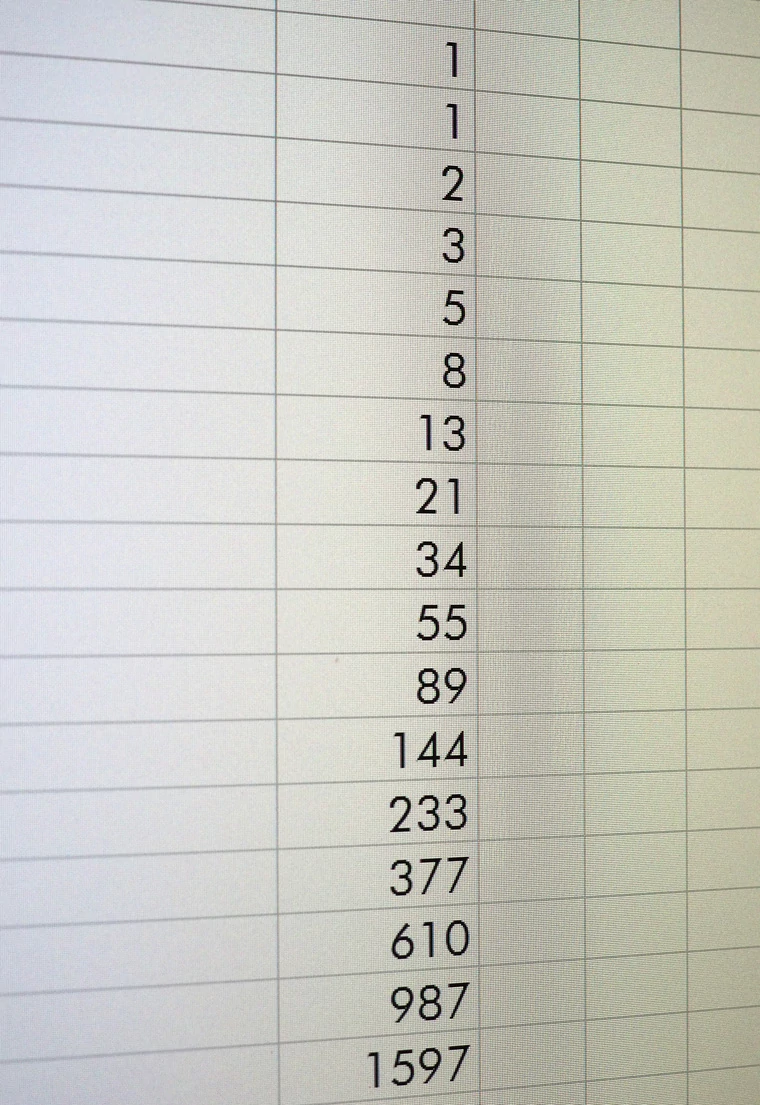 Exploring patterns trains students to spot rules, test ideas, and explain their reasoning.
4. How Many Ways Can You…?
Looking for more than one solution trains your child to think beyond the obvious. As they explore different approaches, they discover that math offers multiple paths to the same answer and is rarely a fixed path.
Looking for more than one answer strengthens skills like:
-
Creativity in problem-solving
-
Comfort working with open-ended questions
-
Stronger grasp of number relationships
Here’s how you might explore this together:
Give a target number or condition and ask your child how many different ways they can reach it.
For example:
How many pairs of numbers can add to 36? What if they must use three numbers instead? How many rectangles can you draw with a perimeter of 24 units?
Encourage them to represent their answers in different forms through addition, subtraction, multiplication, or a mix of these.
For geometry, use graph paper to experiment with shapes that share the same perimeter or area.
The real value shows up after that first solution.
When students search for many answers instead of stopping at the first, they begin to notice patterns and relationships they might otherwise miss.
That habit of looking deeper strengthens their ability to connect ideas and adapt their thinking when a problem changes.
📕You May Also Like: 10 Fun Math Games to Play at Home with Your Child
5. Estimation Jar
Estimation skills help students develop a sense of quantity that supports all areas of math. This activity turns that skill into a game that can be played at home with almost no setup.
While it feels like play, it supports:
-
Sense of scale and quantity
-
Ability to set reasonable upper and lower limits
-
More accurate mental math
You can turn this into a quick game using things you already have:
Place a collection of small items such as coins, marbles, or pasta in a jar or clear container. Invite your child to give three guesses: one that is definitely too low, one that is definitely too high, and one they believe comes closest to the actual total.
Once the guesses are in, count the items together. Discuss what clues or strategies might have guided each guess and consider what could be done differently next time.
Changing the size or type of objects from round to round keeps the challenge fresh.
This has proven effective because it shifts the focus from guessing to reasoning.
When students decide on a range before settling on a final guess, they approach the task like a detective narrowing down suspects.
They compare what they see with what they know, test possibilities in their mind, and land on the most reasonable number.
Each time they play, the link between observation and estimation grows sharper.
 An estimation jar turns guessing into a thinking exercise and helps kids judge quantities and set sensible limits.
6. Everyday Math Missions
Math gains meaning when it’s used to solve problems that actually matter to the child. Everyday tasks become “missions” where numbers guide decisions and outcomes.
Tasks like these support your child in developing:
To bring this into everyday life, invite your child to help with a task that involves numbers.
-
Plan a family meal by doubling or halving a recipe.
-
Compare unit prices in the grocery store to choose the best value.
-
Calculate travel time for a trip based on distance and speed.
Encourage them to explain how they reached each answer, even if they are estimating first and refining the calculation later.
We’ve seen this work well at Mathnasium because it gives math a purpose that feels real.
When math is tied to a task that matters, children see a reason to focus. They connect the numbers to a tangible result, such as saving money, planning a schedule, or preparing enough food for everyone.
It is moments like these that help them link classroom learning to decisions and actions in daily life.
 Everyday tasks like budgeting give kids a reason to use math, turning numbers into decisions they can own.
How Mathnasium Builds Confident Problem-Solvers
Strong problem-solving skills give students the confidence to face new challenges without hesitation. They learn to think for themselves, weigh different options, and arrive at solutions they truly understand. At Mathnasium, developing this ability is one of our central goals.
Mathnasium is a math-only learning center dedicated to helping children reach their full potential in math. Our focus goes beyond correct answers or higher test scores. We build independent mathematical thinkers.
How do we do it?
It starts with the Mathnasium Method™.
Unlike a rigid, one-size-fits-all curriculum, our proven approach is designed to help children learn math in a way that makes sense to them. The Mathnasium Method™ brings together:
-
Personalization: Each student starts with a diagnostic assessment to pinpoint both strengths and areas that need growth. Using these insights, we create a personalized learning plan that aligns with each student’s unique needs and learning style.
-
Teaching for Understanding: Once a plan is in place, our tutors follow it closely, adapting as the student progresses. We combine Socratic questioning with clear, direct instruction to draw out what a student knows and address what they don’t. Lessons use a mix of mental, visual, verbal, written, and tactile methods to ensure concepts click.
-
Special Focus on Problem-Solving Skills: We let students work independently before reviewing their process together because we won’t be sitting beside them during a test or quiz. We also guide them to discover the how and the why behind each step. Over time, this develops the independence they need to succeed in math and beyond.
-
Confidence-Building Environment: Our tutors are trained in math, but also to recognize the emotional side of learning. They know how to encourage, challenge, and guide students so that every session builds confidence along with skill.
The results speak for themselves:
-
94% of parents report an improvement in their child’s math skills and understanding
-
90% of students see better grades in school
-
93% of parents notice a more positive attitude toward math
Mathnasium of Lakewood
With over 1,000 locations across the U.S., Mathnasium brings its proven method and top-rated tutors to communities everywhere.
For families in Lakewood, CO, Mathnasium of Lakewood has been a trusted local resource for years, transforming how students think and feel about math.
If you want to see your child grow into a confident problem-solver, take the first step by scheduling a free diagnostic assessment.
From there, watch them progress, session by session, into a stronger, more independent math thinker.
📅 Schedule a Free Assessment at Mathnasium of Lakewood
Not in Lakewood?
📍 Find a Mathnasium Learning Center Near You


 (303) 975-6159
 (303) 975-6159