
 (301) 468-6284
 (301) 468-6284










What Is Algebraic Thinking? A Parent’s Guide to an Essential Math Skill
Aug 25, 2026 | North Bethesda
What Is Algebraic Thinking? A Parent’s Guide to an Essential Math Skill

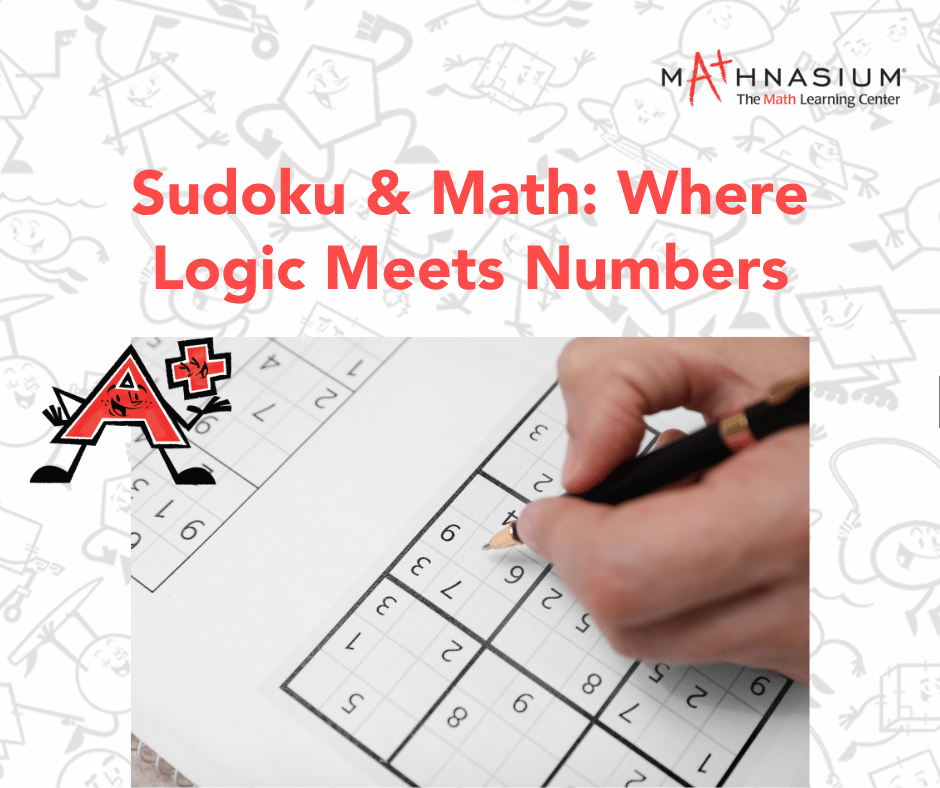
Ten-year-old Maya sat at the kitchen table, staring at a Sudoku puzzle her dad had printed for her. She had already filled in several numbers, but now she was stuck.
“I don't know what goes here,” she said, pushing the pencil aside.
Her dad smiled. “You don't have to know yet. What can you figure out?”
Maya looked at the grid again. She checked the row, then the column, and finally the smaller box around the empty square.
“Oh! It can't be 3 or 5… so it has to be 7!”
She filled in the square.
That small moment of figuring something out rather than being told the answer is one reason puzzles like Sudoku can be so engaging for children. And while Sudoku isn't technically a math game, the thinking skills it encourages have a lot in common with mathematical problem-solving.
Sudoku Isn't Just About Numbers
At first glance, Sudoku looks like a math activity. After all, the puzzle is filled with numbers. But solving Sudoku doesn't require addition, subtraction, multiplication, or division.
Instead, players rely on logic, patterns, deduction, concentration, and problem-solving.
Those same habits can be useful when students encounter challenging math problems.
A student might need to examine the information provided, identify what they already know, eliminate possibilities, recognize a pattern, choose a strategy, and check whether the solution makes sense. Sudoku gives children an entertaining way to practice approaching a challenge systematically.
What Can Sudoku Teach Young Math Learners?
1. Look for patterns
Sudoku players learn to notice relationships between numbers and spaces. They look across rows, down columns, and within individual boxes to identify what is missing.
Pattern recognition is also an important part of mathematics. From number sequences to algebra and geometry, noticing relationships can help students understand how mathematical ideas fit together.
2. Break a big problem into smaller steps
Looking at an entire Sudoku grid can feel overwhelming. But solving one square, row, or box at a time makes the challenge more manageable.
The same approach can help with math. Instead of thinking, “I can't solve this,” students can learn to ask:
What information do I have? What do I need to find? What can I figure out first?
Breaking a problem into smaller pieces can make even a complicated challenge feel more approachable.
3. Practice logical reasoning
Sudoku constantly asks players to think through possibilities.
Could this number go here? What can I eliminate? If I place this number here, does it create a conflict somewhere else?
This kind of step-by-step reasoning is closely connected to mathematical thinking. Students learn that they don't always have to guess they can use evidence to conclude.
4. Become comfortable with mistakes
Eventually, Maya made a wrong move.
A few steps later, she realized the puzzle no longer worked. Her first reaction was frustration.
But instead of giving up, she went back to find where her reasoning had changed the outcome. She corrected the mistake and tried again.
That's an important lesson for math, too. Mistakes can provide information. They can show students what to reconsider and encourage them to try a different strategy.
Making Math Feel Like a Puzzle
For some children, the word “math” can bring to mind homework, worksheets, or tests. A puzzle can feel different. There's curiosity, discovery, and the satisfaction of finding an answer independently.
Sudoku won't magically make a child better at math, but activities that encourage logical reasoning, persistence, pattern recognition, and strategic thinking can help children practice habits that are valuable when tackling mathematical challenges.
This World Sudoku Day, try solving a puzzle with your child. Instead of immediately giving them the answer, ask:
“What do you already know?”
“Which possibilities can you eliminate?”
“What pattern do you notice?”
You may discover that the most valuable part isn't finishing the puzzle. It's helping your child become more comfortable with the process of thinking, trying, checking, and trying again.
Because whether it's a Sudoku grid or a challenging math problem, sometimes the most important answer isn't simply what the solution is it's learning how to find it.
Help Your Child Build Math Confidence
At Mathnasium, learning math goes beyond memorizing formulas and getting the right answer. Students develop mathematical thinking and problem-solving skills through personalized instruction designed to help them understand why math works.
Ready to help your child approach math with greater confidence?
Explore Mathnasium and discover a different way to learn math. Visit www.mathnasium.com

