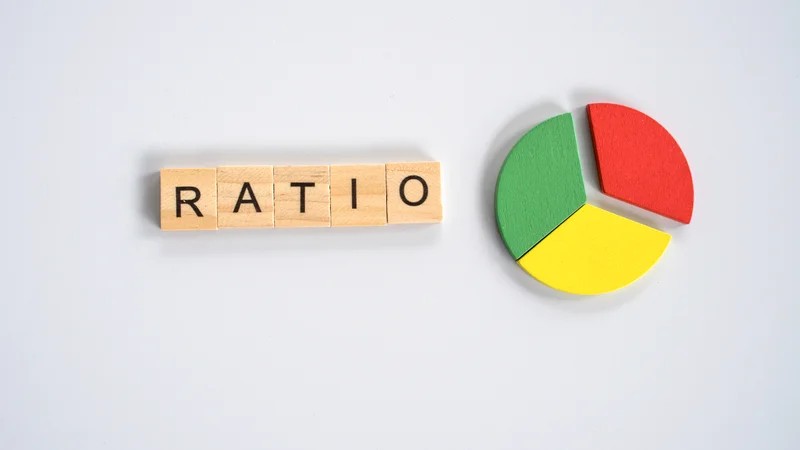
We probably don't think about math while sharing pizza with friends, following a favorite recipe, or mixing a pitcher of lemonade. But each of these everyday situations depends on comparing quantities.
Ratios help us share pizza fairly, keep recipes balanced, and mix lemonade with the right amount of water. So, how can one math idea connect such different everyday moments?
Let's find out together as our Mathnasium tutors show us what ratios are, how to simplify and create equivalent ratios, and where they appear in the world around us.

What Is a Ratio in Math?
A ratio is a comparison of two quantities that tells us how much of one thing there is relative to another.
We use ratios to compare groups, amounts, or measurements.
For example, if a jar contains 3 red marbles and 2 blue marbles, we can express that relationship as the ratio 3 to 2, meaning there are 3 red marbles for every 2 blue marbles.
We can write the same ratio in three distinct ways:
-
3 to 2
-
3:2
-
\(\Large\frac{3}{2}\)
Although these forms look different, they all represent the same comparison. We often write ratios as fractions because that notation becomes useful when we begin solving proportions later on.
The order is important because a ratio always compares the first quantity to the second quantity. 3 red marbles to 2 blue marbles means we are comparing red to blue. But 2 blue marbles to 3 red marbles means we are comparing blue to red.
We usually begin working with ratios in grade 6 and continue building these skills in grade 7 as we learn about unit rates and proportional relationships.
📕 You May Also Like: How to Cross-Multiply Fractions and Proportions
How to Simplify Ratios and Create Equivalent Ratios
We can simplify a ratio the same way we simplify a fraction, by dividing both numbers by their greatest common factor.
Our tutors like to remind students that simplifying does not change the comparison. It only rewrites the ratio with smaller numbers, so the relationship is easier to see and use.
1. Simplify a Ratio
We can break ratio simplification into a few simple steps. Here's how the method works:
-
Step 1: Write the ratio in its current form.
-
Step 2: Find the greatest common factor of both numbers.
-
Step 3: Divide both numbers by the greatest common factor.
-
Step 4: Write the simplified ratio.
-
Step 5: Compare the original and simplified ratios.
Let’s say we have 12 apples and 8 oranges. The ratio of apples to oranges is 12 to 8.
Now we can simplify it using the same five-step method.
-
Step 1: Write the ratio in its current form. 12 to 8
-
Step 2: Find the greatest common factor of both numbers. The GCF of 12 and 8 is 4
-
Step 3: Divide both numbers by the greatest common factor. 12 ÷ 4 = 3 and 8 ÷ 4 = 2
-
Step 4: Write the simplified ratio. 12 to 8 simplifies to 3 to 2
-
Step 5: Compare the original and simplified ratios. The ratios 12 to 8 and 3 to 2 compare apples to oranges in the same way.
We just wrote the ratio with smaller numbers because they are easier to compare and recognize as equivalent.
2. Create an Equivalent Ratio
Sometimes we need a larger version of the same ratio while keeping the relationship between the quantities the same. That’s when equivalent ratios become useful.
Here's how we find one:
-
Step 1: Write the ratio in its current form.
-
Step 2: Decide how much you want to scale the ratio.
-
Step 3: Multiply both numbers by that same value.
-
Step 4: Write the new equivalent ratio.
-
Step 5: Compare the original and equivalent ratios.
Let's use a recipe as an example. Suppose it calls for 2 cups of flour to 1 cup of sugar. If we want to make twice as much, we need an equivalent ratio.
-
Step 1: Write the ratio in its current form. 2 to 1
-
Step 2: Decide how much you want to scale the ratio. Twice as large, so we'll multiply by 2
-
Step 3: Multiply both numbers by the same value. 2 × 2 = 4 and 1 × 2 = 2
-
Step 4: Write the new equivalent ratio. 4 to 2
-
Step 5: Compare the original and equivalent ratios. The ratios 2 to 1 and 4 to 2 keep the same balance between the flour and sugar, even though the recipe now makes twice as much.
Equivalent ratios help us adjust quantities without changing the result.
📕 You May Also Like: What Is the Greatest Common Factor? A Complete Overview
Ratios We Use Every Day
We use ratios in everyday life, even if we don't describe those situations with math vocabulary. Let's look at a few common examples where ratio relationships naturally appear.
|
Everyday Situation
|
The Ratio
|
Why Is It Important to Us
|
| Sharing a bag of trail mix fairly among friends |
3 servings for 3 friends, or 1 serving per person |
We can divide the snacks fairly so everyone gets the same amount |
| Mixing a sports drink |
1 scoop to 16 ounces of water |
We can measure the correct amount of concentrate for the amount of water we're using |
| Tracking basketball shooting stats |
5 made baskets out of 8 attempts |
We can compare shooting accuracy across players or games |
| Measuring pet food by weight |
1 scoop for every 10 pounds |
We can match the amount of food to a pet's size |
| Making lemonade |
1 cup of lemon juice to 4 cups of water |
We can make a larger or smaller batch without changing the flavor |
📕 You May Also Like: Math for Life: Why Math Skills Matter Beyond School
Frequently Asked Questions About Ratios
Before we wrap up today’s topic, let's answer a few questions our Mathnasium tutors hear most often when students begin learning about ratios.
1. Is a ratio the same as a fraction?
We can write a ratio as a fraction, but the two represent different things. A ratio compares two separate quantities, while a fraction represents one part of a single whole.
2. What is the difference between a ratio and a rate?
A rate is a special kind of ratio that compares two different units, such as miles and hours. Students usually begin working with unit rates after learning basic ratios.
3. Can a ratio compare more than two things at once?
Yes. A trail mix blend is a good example. We might mix 2 parts pretzels to 1 part chocolate to 1 part nuts, which compares three quantities in a single ratio.
4. Do ratios only work for things we can count, or do they work for measurements too?
Ratios work for measurements too. On a map, 1 inch might represent 1 mile in real distance. That ratio compares two measurements rather than two countable quantities.
📕 You May Also Like: Ratio to Percentage: How to Convert Between the Two
 At Mathnasium, the same ratio concepts we use to split a pizza fairly become the foundation for proportions, scale drawings, and later algebra concepts.
How Mathnasium Helps Students Master Ratios and Proportional Thinking
Mathnasium is a math-only learning center dedicated to helping K–12 students of all skill levels excel in math.
Whether students are learning ratios for the first time, strengthening their math foundations, or advancing to proportional thinking, we can support them.
Our proprietary teaching approach, the Mathnasium Method™, is designed around each student's needs and learning style to help them learn and master math. Our approach includes:
-
Assessment and Personalized Learning Plans: Each student begins their Mathnasium journey with a diagnostic assessment that identifies current skills, strengths, and gaps. From those findings, we build a personalized learning plan tailored to their goals.
-
Teaching for Understanding: Our specially trained tutors use natural language and a mix of verbal, visual, mental, tactile, and written techniques so each concept lands before we move forward.
-
Problem-Solving and Critical Thinking: We give students time to work through problems independently. That productive struggle helps them learn to trust their own reasoning. When we do step in, we explain both the how and the why behind each answer, so students build problem-solving and critical thinking skills they can use in math and beyond.
-
An Engaging and Fun Learning Environment: Sessions include games, earned rewards, and consistent celebration of progress. Students build confidence alongside fluency, and many develop a more positive relationship with math over time.
We hear from parents and students alike that the progress shows up quickly:
-
94% of parents report improvement in their child's math skills and understanding
-
93% of parents report an improved attitude toward math after attending Mathnasium
-
90% of students saw improvement in their school grades
With over 1,100 learning centers across North America, there is likely a Mathnasium close to you.
Families across Phoenix, North Phoenix, Desert Ridge, Paradise Valley, and Scottsdale trust Mathnasium of Paradise Valley to help their children build lasting confidence in math at every level.
If ratios or any other math concept is giving your child trouble, our team is ready to help.
📅 Schedule a Free Assessment at Mathnasium of Paradise Valley
Not near Paradise Valley?
📍 Find a Mathnasium Learning Center Near You


 (602) 494-2076