Parent-teacher conferences are short, which means a little preparation can make a big difference. Rather than focusing only on grades or asking, “How is my child doing?”, try to leave the meeting with a clearer picture of your child’s strengths, challenges, and next steps, especially when it comes to math.
Start by Understanding Where Your Child Is
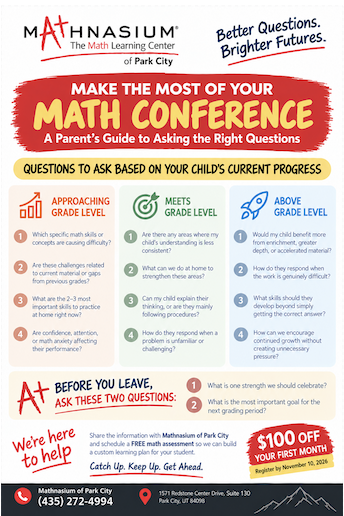
Ask the teacher how your child is currently progressing compared with grade-level expectations. Are they approaching grade level, comfortably meeting expectations, or ready for more challenge?
Once you understand where your child stands, you can tailor the rest of the conversation. A student who is struggling with foundational skills needs different support than a student who understands the material but needs greater depth or enrichment.
Ask Specific Questions
The more specific the question, the more useful the answer is likely to be. Instead of simply asking whether your child is “good at math,” consider questions such as:
-
Are there particular skills or concepts causing difficulty?
-
Are there gaps from previous grades that may be affecting current work?
-
Can my child explain their mathematical thinking, or are they mainly following procedures?
-
How do they respond when they encounter an unfamiliar or challenging problem?
-
If they’re doing well, would they benefit from enrichment, greater depth, or accelerated material?
These questions can help uncover things that may not show up on a report card.
Don’t Forget to Talk About Confidence
Math performance isn’t only about knowing how to solve a problem. Ask about your child’s confidence, persistence, attention, and willingness to try when something feels difficult.
A child may understand the material but hesitate to participate, rush through work, or give up when a problem looks unfamiliar. Those observations can be just as valuable as a test score.
Before You Leave, Ask Two Questions
If time is running short, there are two questions worth making room for:
1. What is one strength we should celebrate?
2. What is the most important goal for the next grading period?
Those two answers give you something positive to reinforce at home and a clear area to focus on moving forward.
Turn the Conversation Into a Plan
After the conference, talk with your child about what you learned—starting with the positives. Then choose one or two manageable goals rather than trying to address everything at once.
If the conversation reveals gaps in math skills, a need for additional challenge, or simply leaves you wondering exactly where your child stands, Mathnasium of Park City can help. Our free math assessment can identify strengths and areas for growth so we can create an individualized learning plan for your student.
Catch Up. Keep Up. Get Ahead.


 (435) 272-4994