At Mathnasium, we often find that efficient math practice is the kind your child does not recognize as practice.
A card game, a quick challenge at the kitchen table, or a race to beat their own score keeps your child doing real math long after a worksheet would have lost them.
Ten-sided dice are one of the simplest tools for exactly this kind of play. Each face shows a digit from 0 to 9, which maps directly onto the number system your child uses in school every day.
Today, we show you four games using ten-sided dice that build math skills from counting and place value all the way through probability. Each takes under a minute to explain and requires no prep to get started.
Why Games Work as a Math Learning Tool
Games give math repetition a purpose, and that changes everything about how long a child stays engaged.
A recent study published in 2023 found that game-based learning in mathematics can improve student engagement and performance. In other words, math games can turn repetition into something children are more willing to do, while still giving them the practice they need to build confidence and skill.
A child refusing to do five addition problems will happily play five rounds of a dice game that requires the same calculation. The math is identical, and the experience is completely different.
📕 You May Also Like: 10 Fun Math Games to Play at Home with Your Child
Why Ten-Sided Dice Are Great for Math Practice
Ten-sided dice fit naturally into this kind of play. Because each face shows a digit from 0 to 9, they map directly onto the base-ten number system your child uses in school every day.
A standard six-sided die stops at 6, which may limit the math. A ten-sided one opens up place value, multi-digit numbers, and probability in a way a cube simply cannot.
We’ll show you four games you can try with your child:
1. Grades K–2: ‘’Make a Number’’
This game builds number sense and early operations, and your child can start playing within minutes of reading this.
Each player rolls two ten-sided dice and reads the number aloud. The player with the higher number wins the round. That is the whole game for kindergartners.
As your child moves through first and second grade, you can raise the stakes slightly. Ask them to add the two dice together instead of just reading them, or challenge them to tell you which roll is closer to 10.
Young children learn numbers best when they handle them repeatedly in a context that feels fun. This game gives them exactly that: dozens of repetitions per session without a single worksheet in sight.
2. Grades 3-5: ‘’Build the Biggest Number’’
With this game, your child builds place value, understanding, and digit reasoning, and it tends to produce the kind of math conversations parents rarely get from homework.
Each player rolls three ten-sided dice and arranges the digits to form the largest number possible. Both players reveal their numbers at the same time, and the highest number wins the round.
The thinking happens in the arrangement. Your child has to decide where each digit belongs, and that decision is exactly what place value is about.
As your child moves through grades 3 to 5, add a fourth or fifth dice to work with larger numbers. You can also flip the goal and ask for the smallest number instead, which sharpens the same skill from a different angle.
📕 You May Also Like: How to Read & Write Large Numbers: Millions, Billions & More
3. Grades 6–8: ‘’Race to 100’’
This game builds addition fluency and mental math, and it moves fast enough to hold the attention of older students who have outgrown simpler dice games.
Each player rolls one ten-sided die and adds the result to a running total. Players take turns rolling until someone hits exactly 100 and wins. If a roll takes a player over 100, they subtract that roll instead.
That one rule change (subtract if you go over) introduces strategic thinking without complicating the setup.
For sixth graders, keep the target at 100. For seventh and eighth graders, switch to two dice per roll and use multiplication instead of addition, which pushes the mental math significantly harder.
4. Grades 9-12: ‘’Probability Challenge’’
This game builds probability reasoning and data thinking, and it works especially well because the results surprise most students the first time they play.
Each player rolls two ten-sided dice and records the sum. After 20 rounds, both players look at their results and identify which sums appeared most often.
Before the next round starts, ask your child to predict which sum will come up most. Most will guess randomly at first. After a few rounds of tracking, they start to notice that middle sums like 9 and 10 appear far more often than 1 or 18.
That observation is the entry point into probability. For older or more advanced students, take it further by asking them to calculate how many ways each sum can be made and compare that to what they actually recorded.
📕 You May Also Like: 6 Probability and Statistics Tips for Middle School

Mathnasium instructors prioritize making math fun and approachable over memorization or speed.
How We Make Math Learning Fun at Mathnasium
Mathnasium is a math-only learning center dedicated to empowering students of all skill levels to learn and master math.
When students come to us for support, we often notice that math has been carrying some weight for them. Sometimes it's a specific concept that never quite landed. Sometimes it's years of feeling behind or a single bad experience that subtly turned into a bigger fear.
At Mathnasium, we strive to rebuild the way students think and feel about math. To do that, we incorporate fun. The reason is simple: when kids are engaged and enjoying themselves, they are more open to learning, more willing to try, and far more likely to let go of the anxiety that's been getting in the way.
This is all part of our broader approach to math learning, or more precisely, our proprietary teaching method: the Mathnasium Method™.
Designed to unlock each student’s true math potential, our approach relies on:
-
Personalized learning plans: Each student begins with a diagnostic assessment that identifies their strengths, knowledge gaps, and how they approach math. From there, our specially trained tutors follow a personalized learning plan built around what that student actually needs.
-
Teaching for understanding: Our tutors explain math in clear, everyday language and use visual, verbal, written, mental, tactile, and hands-on techniques so students develop a deep understanding of math concepts.
-
Caring group environment: Students work in a fun, supportive setting where they feel comfortable asking questions, making mistakes, and trying again.
-
Independent problem-solving: Each session gives students time to work through problems on their own, building the critical thinking skills they can apply across topics and grade levels.
-
Math-only focus: We are dedicated to math and math only. This singular focus on math allows us to dive deeper into how students best learn, absorb, and retain math skills.
-
A confidence-building, fun learning environment: We often hear students say our sessions don’t feel like lessons at all. That’s by design. Our approach includes game-based activities and plenty of rewards to keep students motivated and engaged.
And the results speak for themselves:
-
94% of parents report an improvement in their child's math skills and understanding
-
93% of parents report their child's improved attitude toward math after attending Mathnasium
-
90% of students saw an improvement in their school grades
With over 1,100 centers, Mathnasium brings top-rated instruction close to your home.
If you are in or near Queen Creek, AZ, Mathnasium of Queen Creek is a trusted local center with years of experience helping students excel in math.
Our community recognizes our dedication to student success, honoring us with over 200 five-star Google reviews.
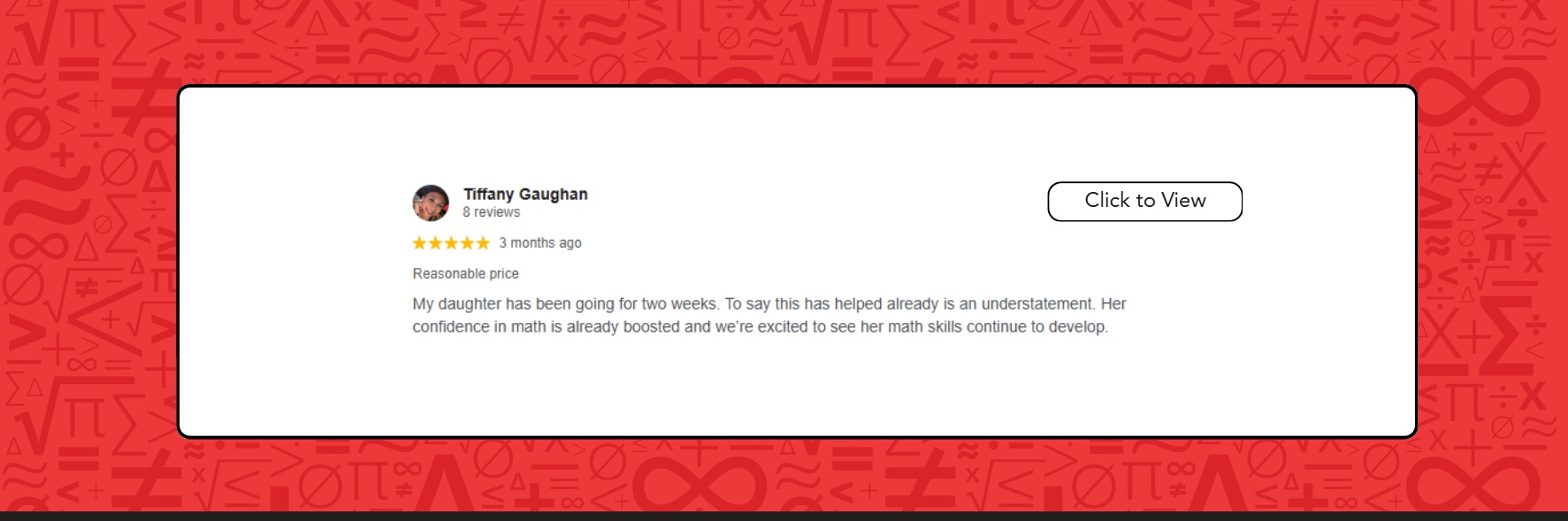
Here’s what one parent had to say about Mathnasium of Queen Creek.
Whether your child is looking to catch up, keep up, or get ahead, our team is ready to assist!
📅 Schedule a Free Diagnostic Assessment at Mathnasium of Queen Creek
Not near Queen Creek?
📍 Find a Mathnasium Learning Center Near You


 (480) 279-3122
 (480) 279-3122