When adding and subtracting negative numbers comes into play in middle school, students often lose the confidence they once had with standard positive numbers.
We notice this same hesitation very often at Mathnasium. This confusion simply stems from a change in math intuition.
Up to this point, students rely on concrete counting, like adding three items to two items builds a larger pile. Negative numbers break those physical rules. Addition no longer guarantees a larger total, subtraction no longer guarantees a smaller one, and abstract values become hard to picture.
However, this roadblock does not have to stay in your way. Our tutors prepared this guide to outline the core rules for adding and subtracting negative numbers, explain why those rules work, and share visual techniques that make every step make sense.

First Off, What Is a Negative Number?
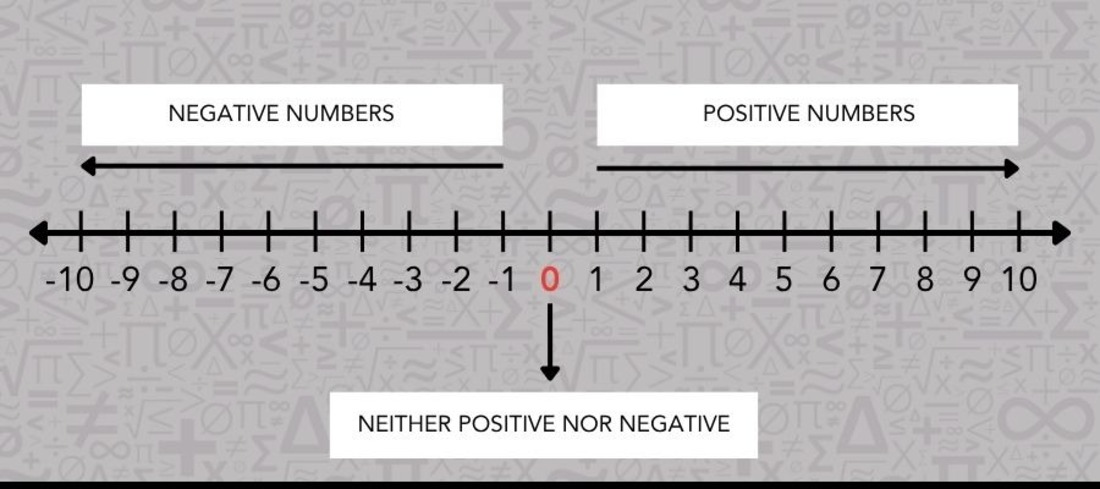
A negative number is simply any number with a value less than zero. We write negative numbers with a minus sign in front of them, such as –5, –12, or –100.
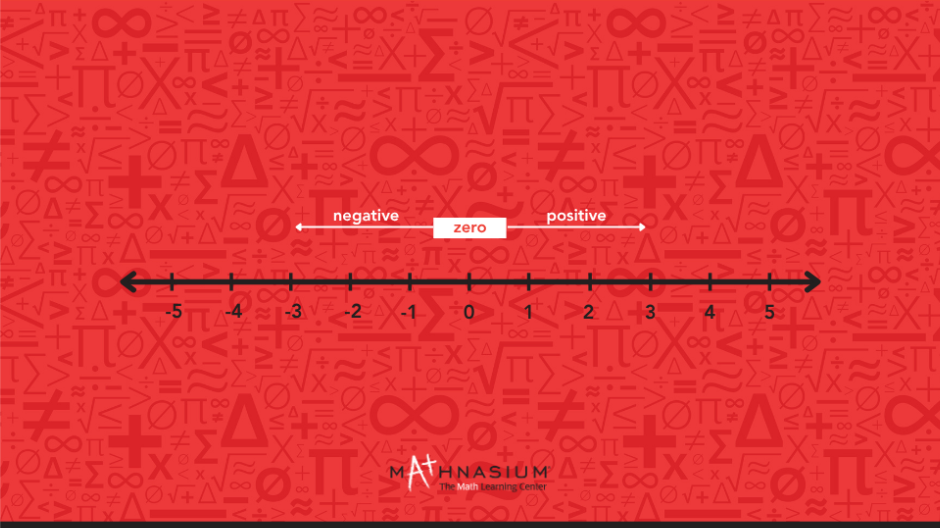
We can also think of a negative number as the mathematical opposite of a positive number. It sits the exact same distance from zero, just in the opposite direction.
If this idea feels a little abstract at first, we can just picture negative numbers in everyday situations:
-
Temperature: On a bitter cold winter day, we record a temperature like –5° because it sits five degrees below zero.
-
Money: If we owe a friend five dollars, we track that balance as –$5 because our account sits five dollars below zero.
-
Sports & Games: When our team loses ten yards in football or drops ten points in a video game, we write that change as –10.
-
Elevation: When a submarine travels 50 feet below sea level, we mark its depth at –50 feet.
How to Add and Subtract Negative Numbers
Addition combines values, and subtraction is just adding the opposite.
A. Adding a Positive Number
When we add a positive number, our value increases (it climbs toward or further into positive territory):
B. Adding a Negative Number
When we add a negative number, our value decreases (it pulls us toward or deeper into negative territory).
-
–5 + (–3) = –8
-
5 + (–3) = 2
C. Subtracting a Positive Number
When we subtract a positive number, it is just adding a negative number in disguise (our value decreases):
-
–5 – 3 -> –5 + (–3) = –8
-
5-8 -> 5 + (–8) = –3
D. Subtracting a Negative Number
When we subtract a negative number, it is just adding a positive number in disguise (our value increases):
-
–5 - (–3) = –5 + 3 = –2
-
2- (–5) = 2 + 5 = 7
Quick Sign Shortcut
When two signs sit right next to each other, we can simplify them instantly:

How Does a Number Line Help Us Add and Subtract Negative Numbers?
If sign changes feel a little abstract, number lines come to our rescue. Instead of memorizing rules, we can use them as a visual map to solve any problem:
Our starting number is where we stand on the number line.
The direction we move depends on whether our total value increases or decreases:
Shall we try that out with a couple of examples?
📕 You May Also Like: How Number Lines Improve Math Understanding in Grades 1 Through 5
Example 1: Adding a Positive Number
Let’s solve –5 + 6 on a number line.
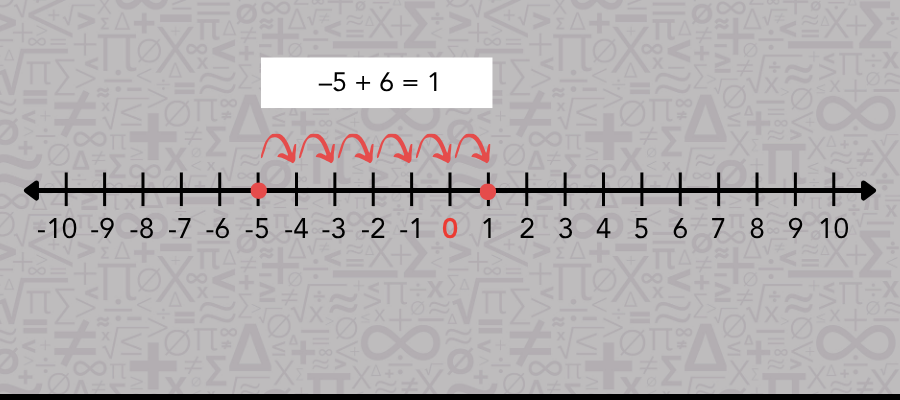
So, –5 + 6 = 1.
Example 2: Adding a Negative Number
This time, we want to solve 4 + (–6) on the number line:
-
Our starting position is +4.
-
Since we are adding a negative number, we step 6 units to the left.
-
We cross zero and end up at –2.
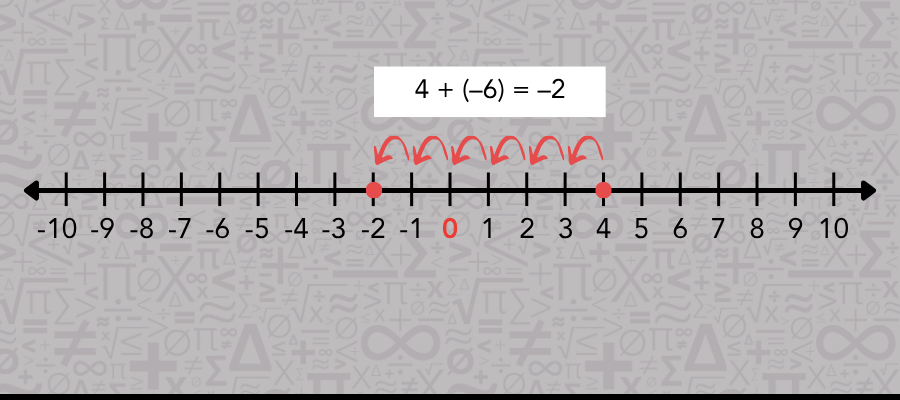
4 + (–6) = 2
Example 3: Subtracting a Positive Number
Let’s show what 9 − 13 looks like on the number line:
-
We stand at 9.
-
Subtracting a positive number decreases our value, so step 13 units to the left.
-
We cross zero and end up at –4.
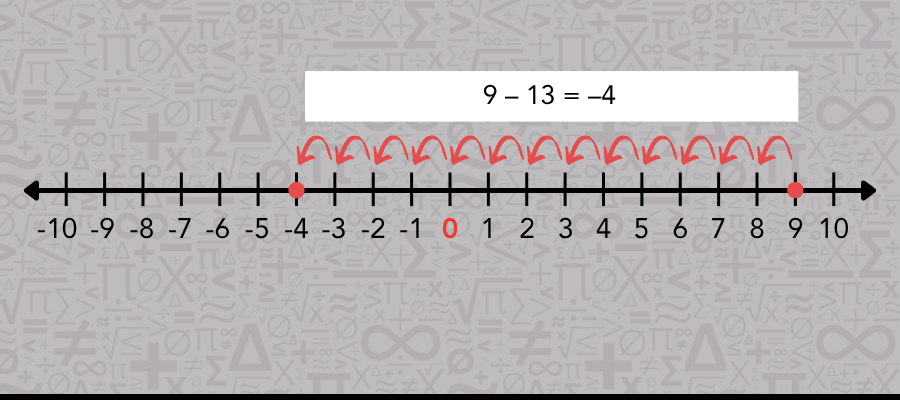
We found that 9 - 13 = –4.
Example 4: Subtracting a Negative Number
Lastly, let's see what 4 – (–6) looks like on the number line:
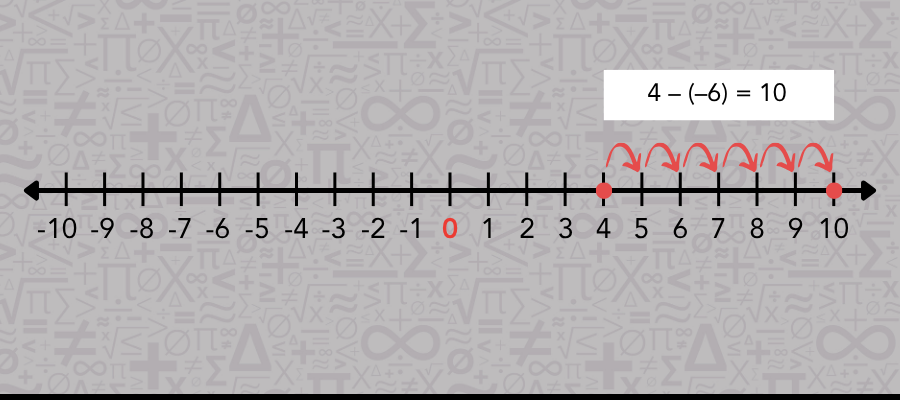
So, 4 – (–6) = 10.
And that’s how we do it. Not so difficult, right?
📕 You May Also Like: How to Add Positive and Negative Integers: A Complete Guide
Over to You: Can You Add and Subtract These Numbers?
You’ve seen the rules that govern adding and subtracting negative numbers. You’ve also seen how a number line makes the whole process easier. Now, let’s put those skills to a challenge with a nice mix of practice problems.
Exercise 1: Core Rules
Using the core rules of signed numbers, work out these:
-
–14 + 25
-
–12 + – 15
-
11 - 28
-
–9 - 30
Exercise 2: Number Line
Using the number line, find the answers for each:
-
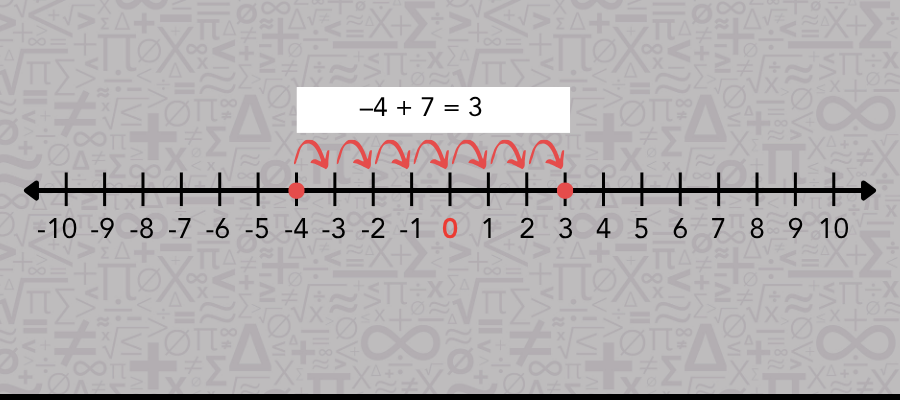
–4 + 7
-
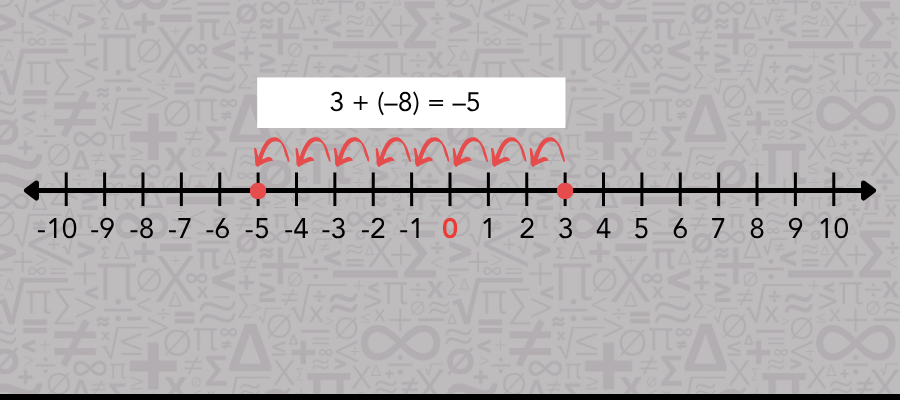
3 + (–8)
-
5 - 9
-
–2 - 6
When you finish, check your answers at the bottom of our guide.
 At Mathnasium, we use personalized learning plans and interactive teaching techniques to make concepts like negative numbers make sense.
How Mathnasium Helps Students Master Any Math Skill
Mathnasium is a math-only learning center dedicated to helping K–12 students of all skill levels excel in math.
We believe mastering math requires more than memorization and repetitive drills. Because every child learns differently, we tailor each student's journey to match their pace and style.
We make this possible through the Mathnasium Method™, our proprietary approach designed around individual students’ needs and learning styles.
Here’s how it works:
-
Assessment and Personalized Learning Plans: Each student begins their Mathnasium journey with a diagnostic assessment that identifies current skills, strengths, and gaps. From those findings, we build a personalized learning plan tailored to their goals, whether that means closing foundational gaps, deepening conceptual understanding, or building the mathematical reasoning competitive coursework requires.
-
Teaching for Understanding: Our specially trained instructors use natural, everyday language and a mix of verbal, visual, mental, tactile, and written techniques so each concept lands before we move forward.
-
Problem-Solving and Critical Thinking: We give students time to work through problems independently. That productive struggle helps them learn to trust their own reasoning. When we do step in, we explain both the how and the why behind each answer, so students build problem-solving and critical thinking skills they can use in math and beyond.
-
An Engaging and Fun Learning Environment: Sessions include games, earned rewards, and consistent celebration of progress. Students build confidence alongside fluency, and many develop a more positive relationship with math over time.
The impact extends beyond the classroom:
-
94% of parents report improvement in their child's math skills and understanding
-
93% of parents report an improved attitude toward math after attending Mathnasium
-
90% of students saw improvement in their school grades
With over 1,100 learning centers across North America, there is likely a Mathnasium close to you.
If you’re located in or near Redondo Beach, you can find us at Mathnasium of Redondo Beach, a trusted local center with years of experience building confident math thinkers.
Whether your child is looking to catch up, keep up, or get ahead in math, our team is happy to assist.
Ready to get started?
📅 Schedule a Free Assessment at Mathnasium of Redondo Beach
Not near Redondo Beach?
📍 Find a Mathnasium Learning Center Near
Pssst! Check Your Quiz Answers
If you’ve given our exercises a try, check how you did below.
Exercise 1: Core Rules
-
–14 + 25 = 11
-
–12 + (–15) = –27
-
11 -28 = –17
-
–9 -(–30) = 21
Exercise 2: Number Line
A. –4 + 7
B. 3 +(–8) = –5
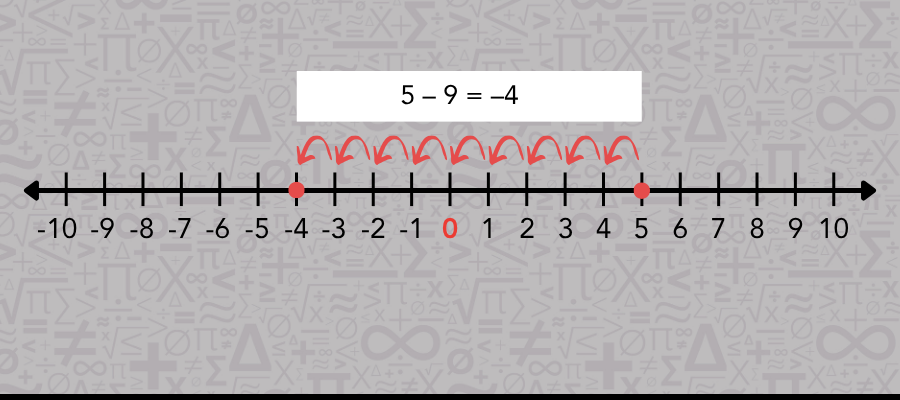
C. 5 -9 = –4
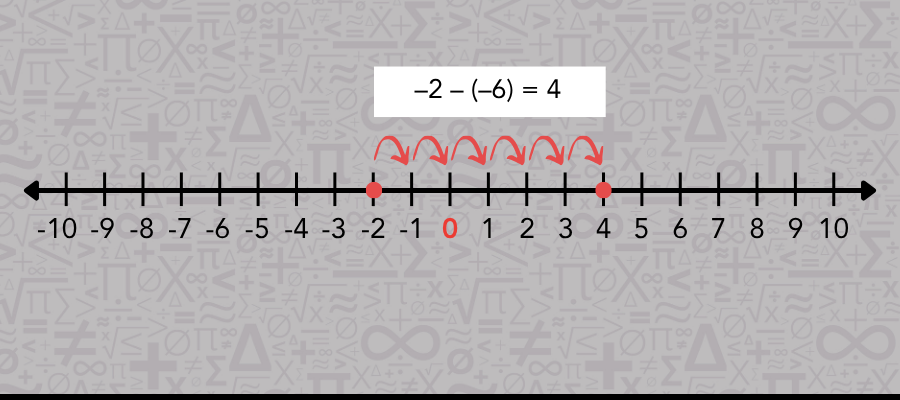
D. –2 - (–6) = 4


 (424) 247-7304