Number lines might seem like simple classroom visuals, but they’re one of the most powerful tools for helping kids truly understand math.
From early addition to negative numbers, fractions, and algebraic thinking, number lines give students a way to see math concepts, making them more intuitive and far less intimidating.
For parents, this makes number lines especially valuable. They’re easy to use at home, support many types of learners, and help children build number sense, which is the foundation for all future math success.
Let’s explore how number lines support learning across grade levels, why they’re so effective, and how you can use them to boost your child’s confidence and understanding of math at home.
What Are Number Lines (& How Do We Use Them)?
A number line is a simple visual that shows numbers laid out in order, with equal spacing between values. It gives kids a way to see how numbers relate to each other.
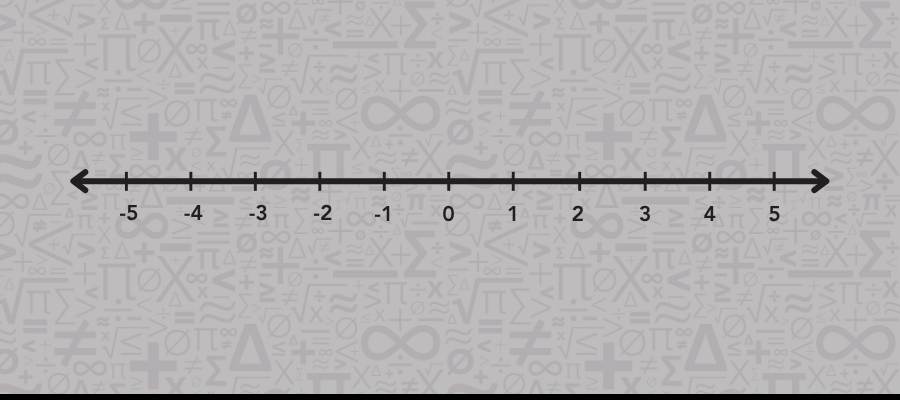
Using number lines can help students understand that numbers have position, distance, and direction. For example, they can see that 8 is closer to 10 than 0, or that adding 3 means jumping to the right on the line. These kinds of insights are key to building number sense—an intuitive feel for quantity and relationships.
Research shows that this kind of spatial reasoning supports long-term success. Studies from the National Institutes of Health and the U.S. Department of Education highlight number lines as one of the most effective tools for teaching estimation, operations, and place value across the elementary grades.
At Mathnasium, we use number lines early and often because they are one of those simple yet highly effective tools that help kids move from memorizing processes and procedures to understanding why their answers work.
Now, let’s walk through how number lines grow with your child, from simple addition in first grade to comparing mixed numbers and decimals by fifth grade.
📕 You May Also Like: 3 Ways Early Spatial Skills Impact Long-Term Math Success
How Number Lines Support Math Learning in Grades 1–5
As students progress through elementary school, number lines evolve alongside their understanding, starting with simple counting and growing into tools for reasoning, estimating, and solving complex problems.
Here’s a look at how number lines are used at each grade level and what skills they help reinforce:
Grade 1: Building the Basics
First graders begin by using number lines to count forward and backward, helping them understand number order and relative size.
Number lines support:
These early experiences lay the groundwork for understanding place value, a key concept in Grade 1 math.
Grade 2: Strengthening Addition and Subtraction
By second grade, students start using number lines to solve multi-digit problems and explain their thinking.
They use number lines to:
-
Break numbers apart (e.g., 47 = 40 + 7)
-
Make jumps in tens and ones
-
Visualize regrouping or "borrowing" during subtraction
This helps move students from rote steps to reasoning, something that boosts both accuracy and confidence.
Grade 3: Introducing Multiplication and Fractions
Number lines take a leap in grade 3 as students begin exploring multiplication and early fractions.
Here’s how they’re used:
-
Skip counting to model multiplication (e.g., three jumps of 4 = 12)
-
Beginning to divide the line into equal parts for fractions
-
Understanding unit fractions like \(\Large\frac{1}{3}\) or \(\Large\frac{1}{4}\) as points on the line
This is also when the connection between number lines and times tables starts to click.
Grade 4: Deepening Fraction Understanding
In fourth grade, students compare and operate with fractions more regularly. Number lines become crucial tools for:
This helps students see why fraction operations work, not just how to follow procedures.
📕 You May Also Like: How to Compare Fractions? A Kid-Friendly Guide
Grade 5: Working with Decimals and Precision
By fifth grade, number lines support work with decimals and more abstract comparisons. Students use them to:
-
Place decimals like 0.3 and 0.75 on a line
-
Compare and order decimals accurately
-
Understand place value to the hundredths
Students who use number lines for decimals tend to develop a better sense of scale and estimation, which are important for long-term math success.
Negative Numbers on the Number Line
Negative numbers can be tricky for students because they may feel abstract and unfamiliar. You won’t hear a child say they have “negative three apples,” so the idea often doesn’t click at first.
Number lines show that zero isn’t the beginning, just the middle. Move left, and values get smaller. Move right, and they grow. Suddenly, negative numbers become part of a system kids already understand.
Understanding this also allows students to start working with negative numbers, starting with adding and subtracting, then slowly working towards multiplying and dividing with them.
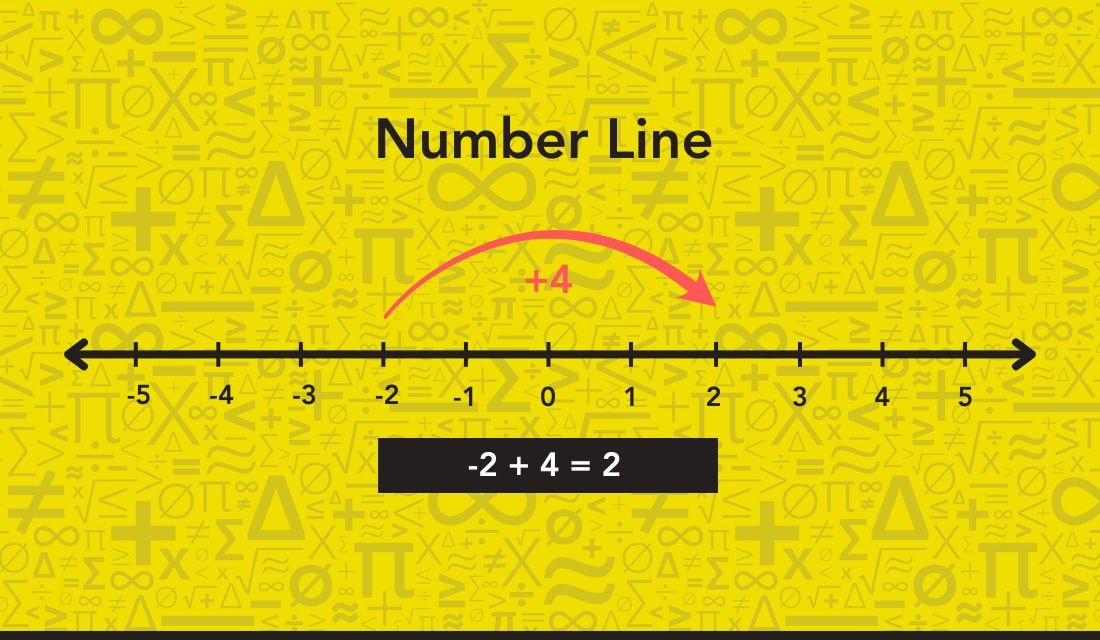
So, one simple tool unlocks a lot of clarity:
-
A number line gives direction meaning: forward for positives, backward for negatives
-
It shows how far a number is from zero, not just what it is
-
It lets kids compare values like -2 and -5 without memorizing rules
Real-life examples, like temperatures below freezing, bank account withdrawals, or elevation below sea level, help bring the concept home. And when kids practice simple moves like, “Start at 2 and go back 4,” they’re learning how numbers behave.
That confidence carries forward into algebra, coordinate planes, and problem solving later on.
Parent Tips: How to Use Number Lines at Home
As you can imagine, creating number lines is easy: You just need a piece of paper or a whiteboard, and you are all set! What’s important to keep in mind is that children should see these as thinking tools they can employ at any point, so keeping the whole setup as simple as possible is actually helpful in this case.
Here are a few easy ways to use number lines at home:
-
Create simple, visible number lines. Painter’s tape on the floor, sticky notes across the wall, or a quick sketch on paper all work. The point is to help kids visualize math and have fun, so don’t worry about precision.
-
Tie number lines into homework. Encourage your child to map their math problems on a number line and talk through their thinking. Ask questions like, “Where would that number go?” or “How far apart are these two numbers?”
-
Use number lines for estimation. Before solving, ask your child to predict where the answer will land. Estimating builds number sense and helps them self-check later.
-
Ask for explanations. Instead of focusing only on the final answer, ask your child how they know their solution makes sense. Reasoning out loud is a powerful learning tool.
-
Bring number lines into daily life. Show number relationships in real-world moments, like tracking time, measuring distances, or comparing scores in a game. It makes math feel useful and approachable.
📕 You May Also Like: 5 Ways Reflection Improves Math Retention & How to Encourage It at Home
How Mathnasium Builds Number Sense & Math Skills That Last
At Mathnasium, number lines are one of our favorite tools to help students, especially our young learners, to truly understand various math concepts.
This is at the core of our approach: We believe math should make sense at every stage. Whether your child is learning to use number lines in elementary school or applying those ideas to more advanced math later on, our approach is designed to meet them exactly where they are and move them forward with confidence.
Everything begins with a diagnostic assessment designed to give us a clear picture of what your child understands, where gaps may exist, and how they think about numbers. From there, we create a personalized learning plan that builds solid foundations first, including number sense, reasoning, and fluency, before layering in more complex concepts.
We guide students through the how and why behind each concept so they develop flexible problem‑solving skills they can use long after a worksheet is finished.
And it works:
-
94% of parents report improved math skills and understanding
-
90% of students see better grades at school
-
93% of parents notice a more positive attitude toward math
With more than 1,100 centers nationwide, Mathnasium brings proven, personalized instruction to communities across the country. For families in Lakewood, CO, Mathnasium of Lakewood is a trusted local resource, recognized as Best Tutoring Services in Lakewood by Business Rate.
Reach out to Mathnasium of Lakewood or your nearest learning center to schedule a diagnostic assessment and set your child on a clear, confident path forward.


 (303) 975-6159
 (303) 975-6159