Math builds gradually, and most new concepts depend on a solid understanding of earlier ones. Without regular practice, it becomes more difficult for students to recall procedures, apply strategies, or recognize patterns they’ve already learned.
Consistent, focused practice—even in small amounts—helps students retain what they’ve learned and continue making progress.
Let’s look at what tends to happen when math practice is skipped for too long, what a healthy learning routine looks like, and how parents can support their child’s learning during breaks.

What Happens When Students Skip Practice Too Long
What sets math apart from (most) other subjects is that it is cumulative; concepts build on one another. This means that students who do not master basic arithmetic are likely to struggle in algebra and geometry.
As such, math also requires consistent practice. Skill loss is quite common among math students, particularly during holiday seasons. To help parents truly understand the impact, we listed some of the most common consequences we see when students skip practice for too long.
1. Foundational Skills Begin to Erode
Working with young children is a delight. Their natural curiosity and love of learning bring a refreshing level of enthusiasm to our center. And they learn so quickly—it is impressive to witness!
But, without repetition, young learners can lose skills just as quickly. At this age, we are talking about core skills like number sense, fraction fluency, and place value, which build a foundation for their future learning and relationship with math.
While some students may manage to remember procedures, unless they put that theory to practice, they can lose clarity around why those procedures work.
📕 You May Also Like: Is My Child "Bad at Math" or Just Missing Key Foundational Skills?
2. Learning Gaps Grow Faster Than Expected
Math gaps rarely stay contained. International achievement data, including analyses tied to TIMSS, consistently show that frequency matters more than duration when it comes to practice (McJames, Parnell, & O'Shea, 2024).
Students who practice less often experience steeper declines over time. Remember the cumulative nature of math: each missed concept makes the next one harder to access, creating a compounding effect that can feel overwhelming by spring.
📕 You May Also Like: Parents’ Guide to Identifying Early Math Gaps (Grades 2-8)
3. Math Anxiety and Avoidance Increase
From a child psychology perspective, inconsistency plays a major role in math anxiety.
Families we work with usually sense this in their child’s changing attitude towards math. When students feel unprepared, they begin avoiding challenging problems and stop asking for help. Some signs are subtle, like homework dread, while others can be hard to miss; think test-day panic and even tantrums when conversations around math arise.
Research on math anxiety links irregular practice to avoidance behaviors and lower persistence (Wang et al., 2025). Over time, students associate math with stress rather than growth, which further limits progress.
📕 You May Also Like: Easing Back-to-School Math Anxiety for Elementary Students
4. Negative Mindsets Take Hold
As struggles continue, many students begin to internalize the idea that they are “bad at math.” This fixed mindset becomes self-reinforcing.
Instead of seeing mistakes as part of learning, students view them as proof that they do not belong in math. Once this belief settles in, rebuilding confidence takes more time than rebuilding skills alone.
This is why, at Mathnasium, we focus on rebuilding attitudes around math ability as much as we do on rebuilding math skills. Through personalized instruction, patient guidance, and observation, we help students begin to see themselves as capable problem-solvers.
📕 Parents can do this at home, too! We have covered this topic extensively, including Positive Math Talk: Encouraging a Growth Mindset at Home.
5. Catching Up Becomes Harder Than Staying Consistent
Consistent practice supports retention, confidence, and long-term learning.
Meta-analyses on worked examples show that students learn more efficiently when concepts are reinforced regularly and clearly. When practice stops, students do not just lose content. They lose momentum, habits, and trust in their own thinking.
Skipping math practice may feel harmless in the short term, especially during busy seasons or school breaks. But over time, it is known to increase learning loss and emotional resistance. The longer the pause, the harder the restart.
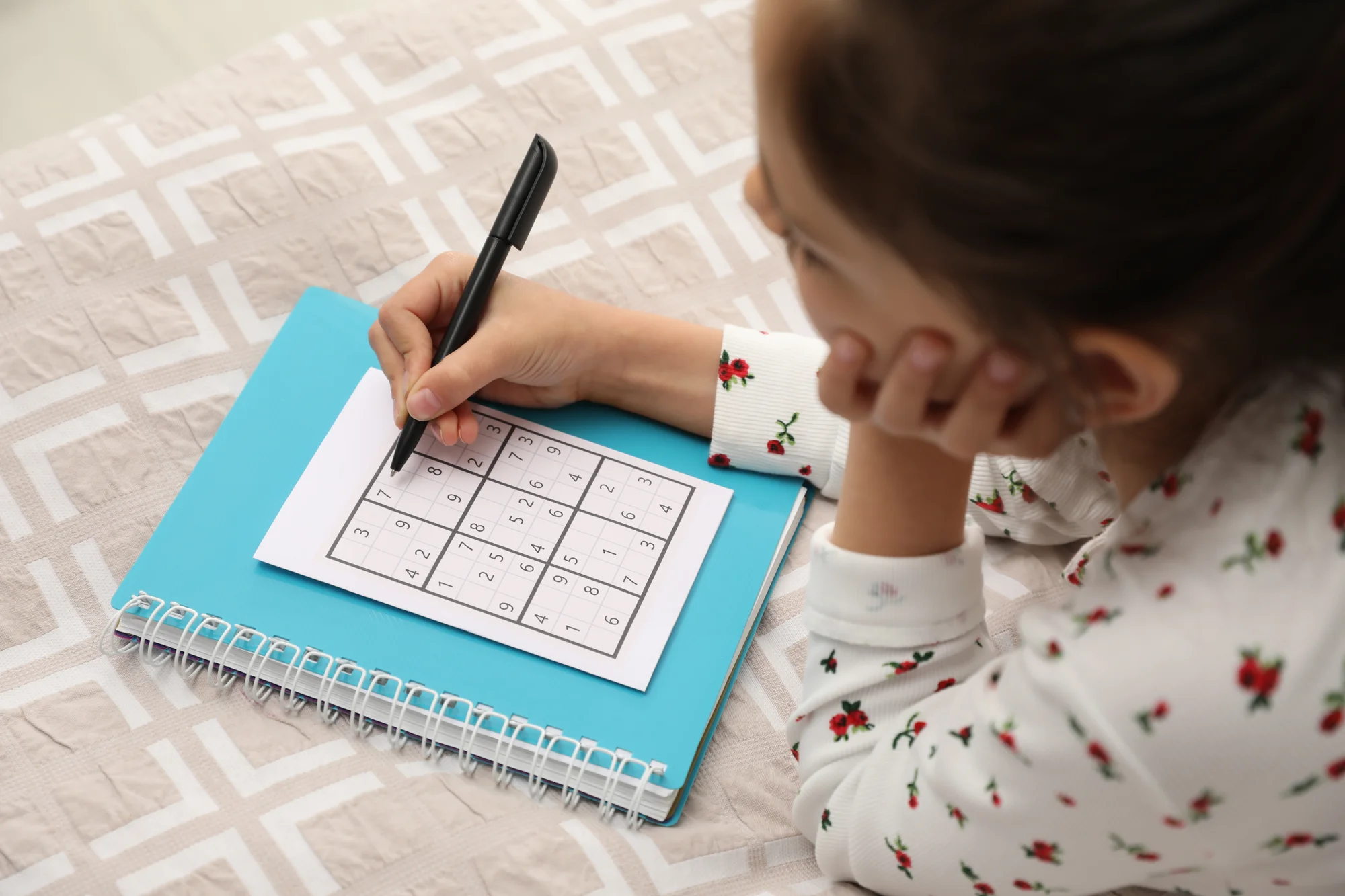
Maintaining a math learning routine can be fun! Students learn best through play.
What Consistency in Math Practice Looks Like
Contrary to popular belief, consistency in math practice isn’t about doing more but about doing it regularly and purposefully.
Students who engage in short, focused math sessions multiple times a week see greater gains than those who practice sporadically, even if they spend more time overall.
Here’s what effective consistency looks like:
-
Practice 2–3 times per week: For our students, Mathnasium typically recommends two to three sessions weekly. Parents can mimic this approach at home, too. This frequency keeps concepts fresh, supports long-term retention, and allows for steady, measurable progress, without overwhelming students or families.
-
Keep sessions short and focused: Around 15 to 30 minutes of intentional practice is ideal. Students benefit more from frequent short bursts than from occasional long sessions, especially when those sessions reinforce recent learning.
-
Use worked examples to reinforce understanding: Walking through fully solved problems helps students understand not just what to do, but why it works. Research by Barbieri et al. found that using worked examples improves performance significantly, especially for students who are still building confidence.
-
Prioritize process over perfection: Praise effort, strategy, and reasoning, rather than correct answers. This encourages students to stay engaged even when challenges arise and helps them develop resilience and a growth mindset.
-
Make math a predictable part of the week: Just like reading or brushing teeth, consistency in math becomes easier when it’s part of the routine. Whether it’s before dinner or after school, a regular time signals that math is important and doable.
With the right approach, consistency becomes a habit. It doesn’t take hours of daily work; just steady, supportive practice that reinforces what your child is ready to learn.
How to Prevent Math Learning Loss Over Holidays (Actionable Tips)
With a few simple strategies, you can keep your child engaged in math without disrupting your holiday rhythm.
Here are high-impact, low-effort tips parents can use right away:
-
Stick to a routine—just 15–20 minutes a day: Short, consistent sessions 3 to 5 times a week are enough to keep concepts fresh. Choose a predictable time, such as before screen time, after lunch, or first thing in the morning, and treat it like brushing teeth: expected and non-negotiable.
-
Incorporate real-life math into daily activities: Ask your child to calculate recipe conversions while cooking, estimate total costs while shopping, or figure out travel times and distances. These everyday math moments help reinforce fluency and show math’s real-world value.
-
Use worked examples to build understanding: Walk through fully solved problems together. Discuss each step: What’s happening? Why does it work? Research shows this method is especially effective in helping students retain and apply math concepts.
-
Break up longer sessions into smaller blocks: If your child resists, try two 10-minute sessions instead of one 30-minute block. The brain absorbs more when practice is spaced out, and shorter chunks feel more approachable during the holidays.
-
Avoid going a full week without math: Even two short math sessions a week can prevent major setbacks. Longer breaks without reinforcement often lead to forgotten steps, slower recall, and lost confidence.
-
Focus on effort, not perfection: Encourage your child to try, make mistakes, and ask questions. The goal isn’t to “finish a page,” but to stay mentally active and curious about math, even in small ways.
-
Make it positive and pressure-free: Keep the tone light. Use games, apps, or friendly competitions. Math doesn’t have to be serious to be effective—on the contrary, children learn best through play!
With just a little structure and encouragement, your child can return to school feeling confident, capable, and ready to learn.
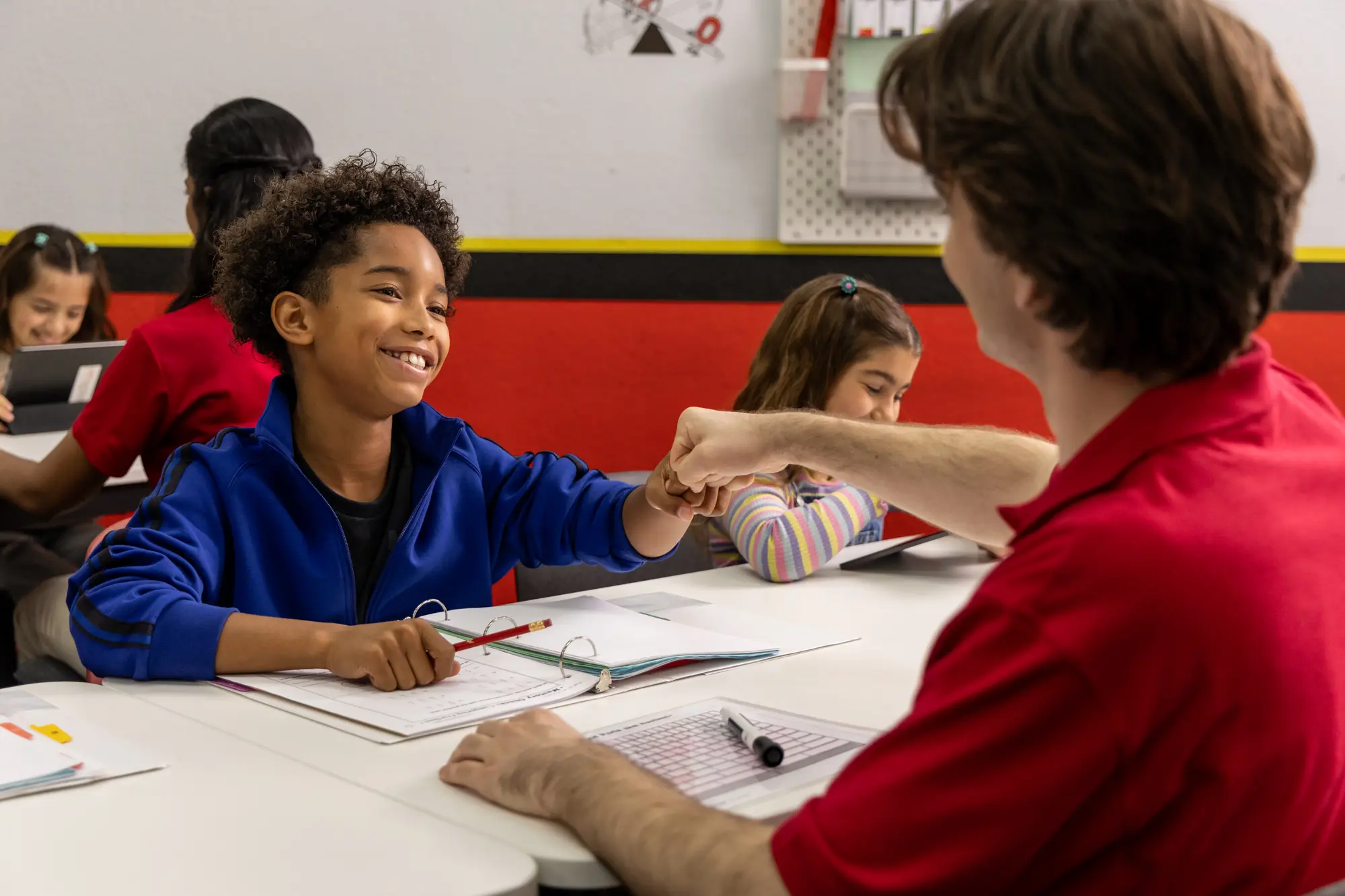
At Mathnasium, students can transform their relationship with math through personalized and engaging instruction, year-round.
Mathnasium Makes Math Fun and Keeps Learning Going Year-Round
Mathnasium is a math-only learning center that helps students of all skill levels learn and master math. Whether your child is struggling to catch up, working to stay on track, or eager to get ahead, our program is designed to meet them where they are and move them forward, at a pace that builds confidence, not pressure.
We believe that when students truly understand how math works, they stop feeling anxious and start feeling capable. That’s why our tutors use the Mathnasium Method™, a proprietary teaching approach designed to help students of all skill levels develop a deep understanding of math.
Using personalized learning plans, interactive instruction, and caring guidance, we help students make sense of math in a way that feels relevant and rewarding. As they progress, they gain the problem-solving skills and mental flexibility they need not just for the next test but for the long run.
Mathnasium offers in-center and live online tutoring year-round, including over school breaks, so families can choose the format and schedule that fits their needs.
With 2 to 3 sessions per week, students build lasting skills without the overwhelm of cramming. This steady, consistent approach is what helps so many students turn things around and stay on track for good.
In fact, 94% of parents report an improvement in their child’s math skills and understanding, and 90% of students see better grades. Just as importantly, 93% of parents say their child’s attitude toward math improved after enrolling at Mathnasium.
With over 1,000 locations across the country, families everywhere rely on Mathnasium for support, and families right here in Sparta, NJ, can get started today with Mathnasium of Sparta.
Enroll Your Child at Mathnasium of Sparta
Call us at (973) 726-6284 to learn more or to schedule a free assessment and see how we can help your child succeed in math, all year long.


 (973) 726-6284
 (973) 726-6284