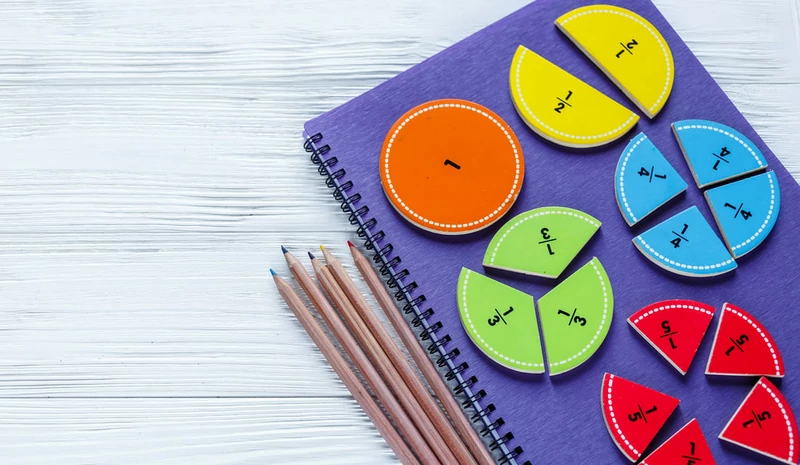
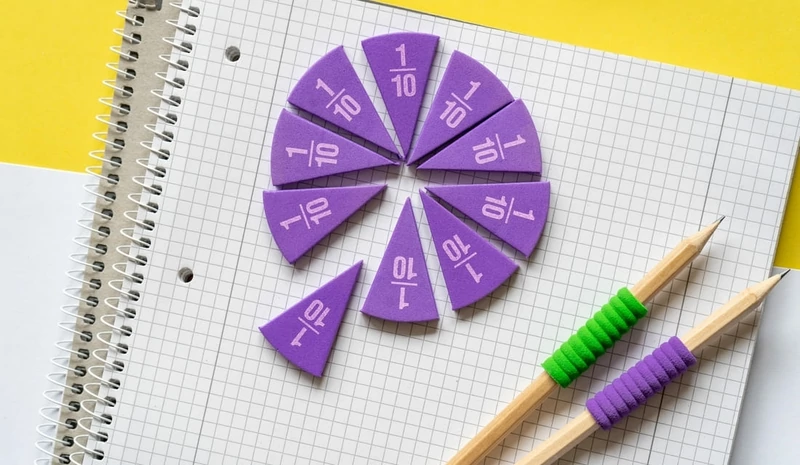
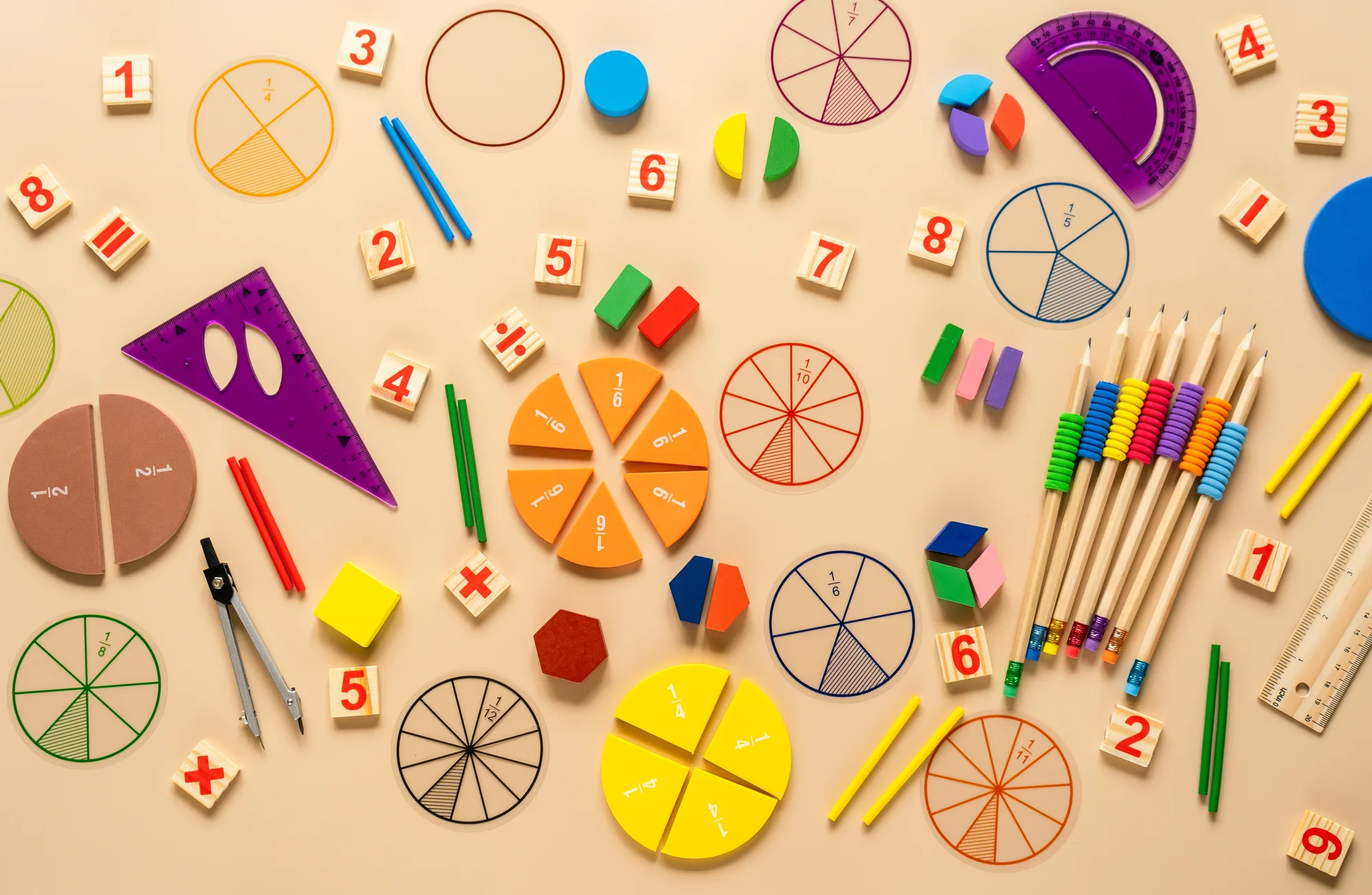
A whole cut into four equal parts. One of the four equal parts. Half of a half.
Fourths are what we get when we divide a whole into four equal pieces. Each piece is one-fourth of the whole, written as the fraction 1/4.
A helpful way to picture fourths: start with a whole, cut it in half, then cut each half in half again. Those four equal pieces are fourths. That is why one fourth is also called half of a half: \(\Large\frac{1}{2} × \Large\frac{1}{2} = \Large\frac{1}{4}\).
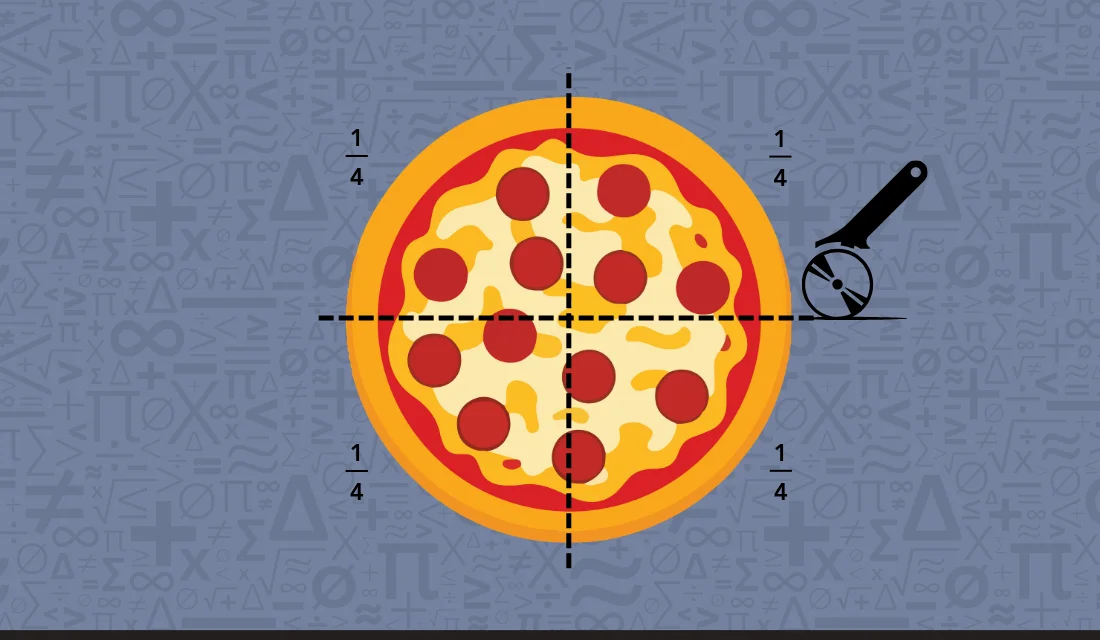
Some everyday examples:
-
A square divided into four equal smaller squares; each smaller square is one-fourth of the whole.
-
An hour has 60 minutes. One-fourth of an hour is 15 minutes.
-
A dollar has 100 cents. One-fourth of a dollar is 25 cents, or one quarter.
Fourths are also called quarters, which is why 25 cents is called a quarter (it is one-fourth of a dollar). Understanding fourths gives us a good foundation for working with equivalent fractions, decimals (0.25), and percentages (25%).
When Do Students Learn About Fourths?
Fourths are among the first fractions students encounter, introduced alongside halves and thirds.
Grades K–2 – Introduction to Fourths
Students divide shapes and groups into four equal parts and identify one fourth of a whole through hands-on activities and visual models.
Grades 3–5 – Fourths as Fractions, Decimals, and Percents
Students connect fourths to the fraction 1/4, the decimal 0.25, and 25%, and use them in operations, comparisons, and real-world problems.
Grades 6+ – Fourths in Ratios, Algebra, and Data
Students work with fourths in proportional reasoning, statistical quartiles, and algebraic expressions involving fractions.