The ratio of a distance measured on a scale drawing to the corresponding distance measured on the actual object.
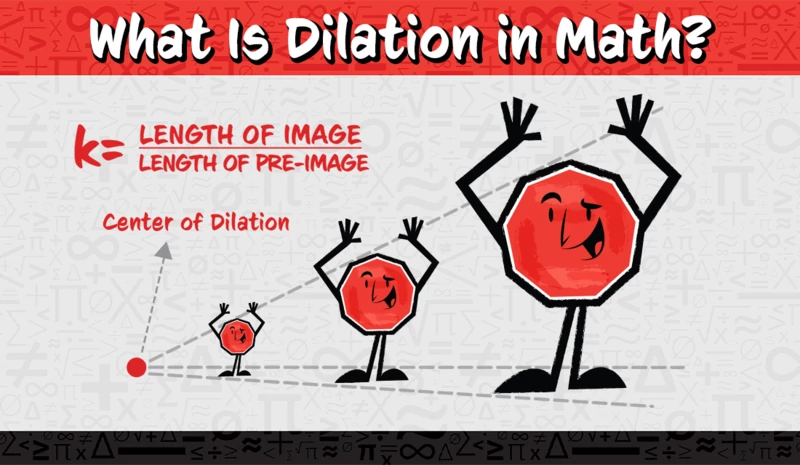
A scale factor tells us how much a figure has been enlarged or reduced. It is a ratio that compares the size of a drawing (or model) to the size of the real object.
For example, if:
- 1 inch on a map represents 5 miles in real life, the scale factor shows how distances compare.
- A triangle is enlarged so that each side becomes twice as long, the scale factor is 2.
- A shape is reduced so that each side becomes half as long, the scale factor is ½.
A scale factor:
- Greater than 1 makes a figure larger
- Between 0 and 1 makes a figure smaller
Scale factors are used in:
- Maps and blueprints
- Scale models
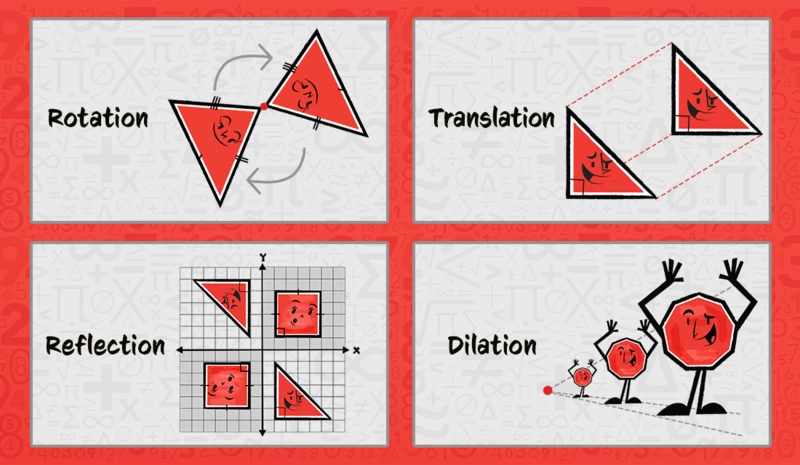
- Geometry (especially similarity and dilations)
When Do Students Learn About Scale Factors?
Students learn about scale factors when they begin studying proportional relationships and geometric similarity.
Grades 6–8 – Introduction to Scale Factor
Students use scale factors to enlarge and reduce shapes and explore similar figures.
Grades 9+ – Applying Scale Factor in Geometry
Students use scale factors in coordinate geometry, similarity proofs, and modeling real-world situations.