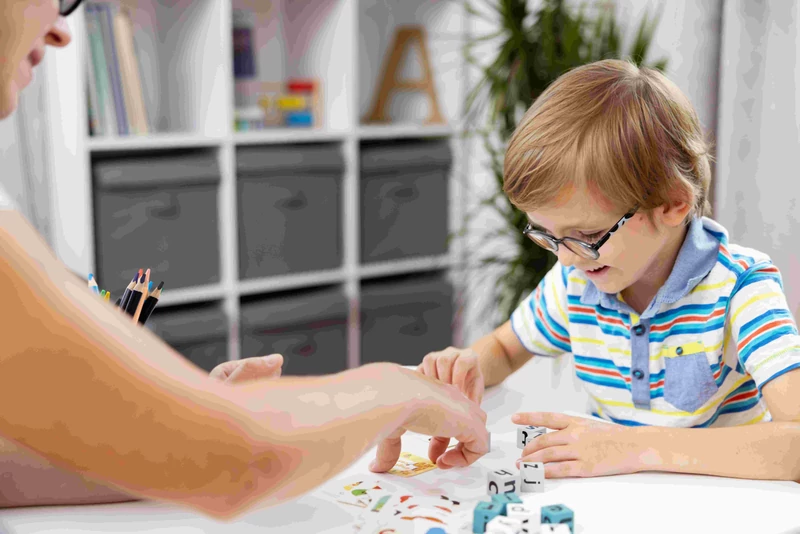
5 Early Signs of Math Aptitude and How Parents Can Support Their Kids
It starts with a moment you almost overlook: your child lining up crayons by length, noticing that their snack has fewer pieces than a sibling’s, tenaciously working through a puzzle, or clapping along to a rhythm with uncanny precision.
They’re not solving any equations. They’re noticing, comparing, organizing, wondering. And without realizing it, they’re thinking like a mathematician!
Read on and we’ll show you how to spot and support your child’s math aptitude in ways that feel playful, natural, and pressure-free.
What We Mean by “Math Aptitude”
When parents hear the word “aptitude,” they might picture a child racing ahead in math class or solving complex problems with ease. But math aptitude is less about speed or advancement and more about early signs of thinking that show a child is ready to grow in mathematical understanding.
True math aptitude often shows up as a child’s natural interest in patterns, puzzles, or comparisons – games that indicate early reasoning skills that develop through observation and play. This is different from achievement, which reflects what a child has learned through instruction and practice. Aptitude is the spark; achievement is the structure built over time.
Developmental research supports this view. Even infants have demonstrated a basic sense of quantity and number differences, what psychologists call "numerical magnitude awareness." This early number sense doesn’t guarantee future math success, but it highlights that foundational thinking can begin earlier than most people realize.
And here’s something important: Not seeing these signs right away doesn’t mean a child “lacks” math aptitude. Children develop at different paces, and math ability is never fixed. With the right support and encouragement, all children can develop a deep, lasting understanding of math.
At Mathnasium, we see this every day. Some students come to us already curious about math; others find their spark later, with the help of personalized learning, caring guidance, and the joy of problem-solving.
Early Signs of Math Readiness (What to Notice)
Math readiness begins when children start exploring their world in ways that reflect logical thinking, curiosity, and a sensitivity to patterns and numbers.
These signs may appear at different times and in different forms, and they often show up in the middle of play or conversation.
Here are five behaviors to keep an eye out for:
1. Pattern Sense & Predictability
Some children love to create or complete patterns. They might spend hours on puzzles, arranging blocks by color, lining up toys in symmetrical order, or even being fascinated by repetitive beats in music. In everyday routines, they may notice visual or auditory sequences that others overlook.
This early attraction to structure supports algebraic reasoning and has been shown to predict math achievement in preschool and beyond. In fact, children’s patterning ability is uniquely linked to later success in early mathematics, independent of general intelligence or literacy skills.
2. Number Sense & Subitizing
Before they can count aloud, many children start comparing quantities intuitively. For instance, they may say one pile of grapes has “more” without counting or know something is “gone” when only one toy is missing.
This instant recognition of small quantities, known as subitizing, is a core building block of number sense.
Studies suggest that children’s ability to estimate or recognize quantity without counting is strongly associated with future arithmetic development. It even plays a role in structuring how they eventually understand addition, subtraction, and proportions.
3. Spatial & Relational Thinking
You may notice your child rotating puzzle pieces until they fit or building elaborate structures with blocks. Others may show a great memory for directions or enjoy figuring out how to stack or nest objects efficiently.
Spatial reasoning is highly predictive of later math achievement.
Children who can mentally manipulate shapes and objects often do better not only in geometry but also in data interpretation and algebra as well. According to research, spatial skills in preschool contribute significantly to early math abilities, especially when paired with pattern recognition.
4. Curious Problem-Solving Behavior
Some children approach challenges like puzzles or games with persistence and flexibility. They might try one method, then pivot to another, asking “What if I do this instead?” or testing out new solutions without fear of mistakes.
This kind of experimentation reflects early executive function and self-regulated learning.
In the context of math, it signals that a child is not just following instructions but actively reasoning. Educators often describe this as “productive struggle,” where real learning happens through trying, adjusting, and reflecting.
5. Comparisons, Estimations & Proportional Thinking
You might hear your child say things like, “That’s bigger than this one,” or “We only have half of it now.” Even before formal lessons, some children show comfort making relative judgments about size or quantity.
These comparisons, especially when children relate parts to wholes, are foundational to understanding fractions, measurement, and proportional reasoning.
📕You May Also Like: How to Nurture Math Thinkers, Not Just Answer-Getters
It's important to remember that a child's abilities aren't set in stone.
A kid who shows early interest in a subject like math might develop a deep passion for it, but the main goal is to foster curiosity and perseverance.
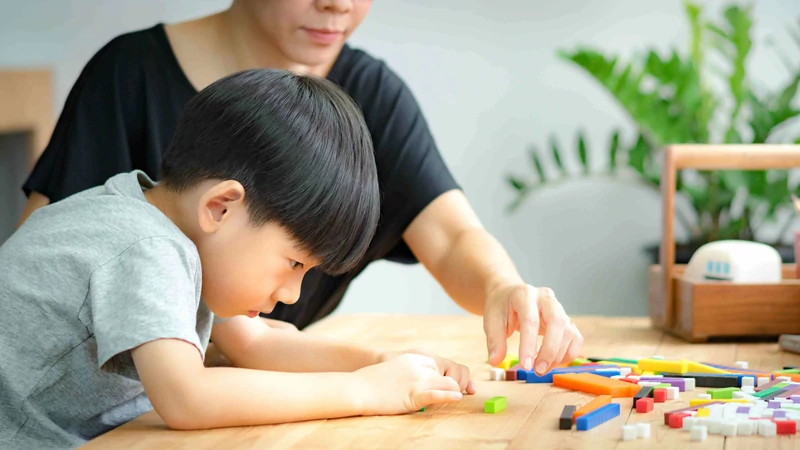
Early math curiosity often appears during play, when children notice patterns and order without being told to.
How Parents Can Support Math Development at Home
Supporting a child’s interest in math doesn’t require rigid lessons or formal instruction. In fact, the most effective support often happens in informal, playful moments that encourage curiosity and critical thinking.
Here are five ways to nurture math development at home:
1. Invite Math into Play
Math emerges naturally when children build, sort, compare, or create. Board games that involve dice, cards, or counting steps build number sense and strategic thinking.
Cooking together can introduce measurement, fractions, and timing. Even building forts or stacking blocks encourages exploration of balance, symmetry, and geometry.
Play gives children the space to explore ideas freely, and according to educational research, unstructured math-related play is linked to stronger problem-solving skills and number fluency in early learners.
📕You May Also Like: 10 Fun Math Games to Play at Home with Your Child
2. Use Natural Math Language
The words we use shape the way children think. When parents naturally include math vocabulary in daily conversations, it helps normalize abstract concepts. You might say:
-
“We need two more apples so everyone has one.”
-
“Your shoes are the same size now!”
-
“Let’s go to the park after lunch.”
These small verbal cues reinforce core concepts like quantity, comparison, sequence, and measurement, without turning it into a “lesson.”
📕You May Also Like: How Positive Math Talk Encourages a Growth Mindset at Home
3. Embrace Mistakes as Learning Opportunities
If the cookies come out flat or the puzzle doesn’t fit, pause and talk through what happened. Laugh about it. Try again. Children learn more from watching how we respond to setbacks than from what we say about success.
Psychologists call this “error framing,” and studies show that when adults model calm, constructive responses to mistakes, children are more likely to persist in the face of challenge and develop adaptive problem-solving behaviors.
📕You May Also Like: Why Parents Should Teach Kids to Embrace Math Mistakes
4. Praise Thinking, Not Speed
When your child solves a problem or sticks with it even when it’s tough, focus your praise on the process. Try saying:
This kind of feedback promotes a growth mindset, which is more predictive of long-term math success than quick recall or early achievement alone.
5. Point Out Patterns and Structures
Encourage your child to notice patterns and structures in their environment: the rhythm in a favorite song, the symmetry in a leaf, or the way scores change during a basketball game. Ask open-ended questions like:
When children see math as part of their world, it stops feeling like a school subject, and starts feeling like a tool for making sense of everyday life.
📕You May Also Like: Why Personalized Math Tutoring Makes All the Difference
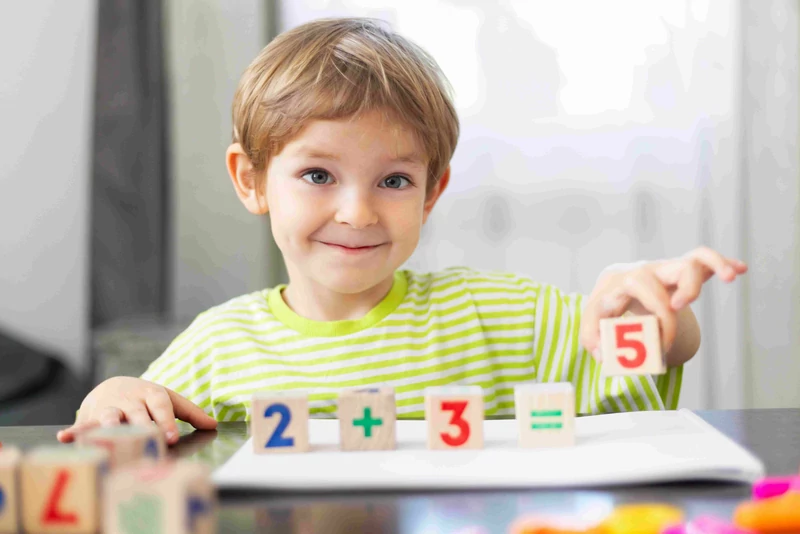
When math feels rewarding, confidence follows.
When to Look for Extra Support
Some children develop interest in math early on, while some may get discouraged along the way.
A child who loves puzzles and patterns may begin to disengage when classroom math feels repetitive or too easy. This can show up as restlessness, boredom, or even behavior that gets misread as disinterest. Sometimes, children who need more challenge mask their frustration with avoidance.
That’s when extra support can make a significant difference, not just to "advance" a child, but to reignite curiosity and sustain a healthy relationship with learning.
Math enrichment programs may help by:
-
Offering new ways to explore concepts they enjoy
-
Nurturing deeper reasoning, not just faster answers
-
Helping children feel seen and supported at their current level of thinking
Parents may also notice that their child thrives when they’re asked to explain their thinking, try new strategies, or solve open-ended problems. If schoolwork doesn’t offer those opportunities consistently, it may be time to supplement with personalized guidance.
At Mathnasium, we work with many students who enjoy math but need more challenge than the classroom currently provides. Whether a student is asking “what comes next?” or simply showing signs of intellectual readiness, the right support can help keep that spark alive, through middle school, high school, and beyond.
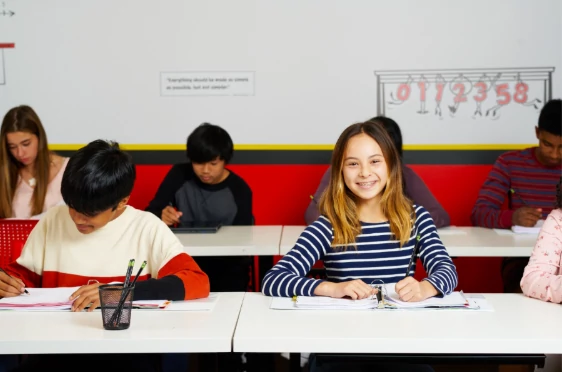
How Mathnasium of Buffalo Grove Helps Kids Thrive
Mathnasium is a math-only learning center that welcomes K-12 students of all skill levels.
Using a proprietary teaching method called the Mathnasium Method™, we teach math in a way that makes sense to each student, empowering them to unlock their full potential in math.
Our approach begins with a diagnostic assessment. This gives us a clear window into your homeschooler’s strengths, the areas where they need more support, and how they learn best, whether your student is more verbal, visual, or maybe hands-on.
Using assessment-based insights, we create a personalized learning plan tailored to your student’s specific needs. Our math tutors follow that plan closely, delivering face-to-face instruction in an environment that’s as engaging as it is confidence-building.
During sessions, we adapt to each learner’s style and use a mix of written, verbal, visual, mental, and tactile techniques. We also incorporate gamified challenges and rewards to keep students motivated and progressing.
Our specially trained math tutors offer personalized instruction and live, face-to-face online support to help students truly understand and enjoy math.
Schedule a free assessment to get started!


 (847) 777-1772
 (847) 777-1772